All Games
456 games
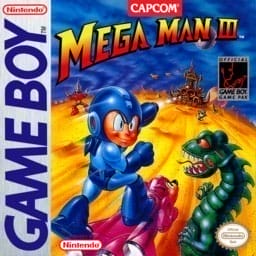
Mega Man III
Mega Man III#cite_note-5) is a 1992 platform game developed by Minakuchi Engineering and published by Capcom for the Game Boy. It is the third game in the handheld series of the Mega Man "Mega Man (original series)") franchise and the last to be published by Nintendo in Europe. The game follows the title character Mega Man "Mega Man (character)") as he fights the evil Dr. Wily. Along with foes from his past, Mega Man must contend with the next robot in Wily's line of "Mega Man Killers", Punk. Like its two consecutive predecessors on the Game Boy, the game combines elements from two previously released Nintendo Entertainment System (NES) titles: Mega Man 3 and Mega Man 4. The game received positive reviews from critics and was considered a notable improvement over its predecessors, though some criticized it for being too difficult, deeming its difficulty level overly frustrating.
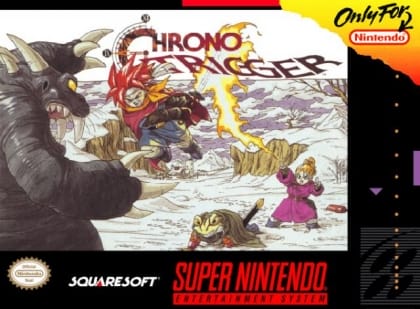
Chrono Trigger
Chrono Trigger is a 1995 role-playing video game developed and published by Square for the Super Nintendo Entertainment System. It is the first installment of the Chrono series "Chrono (series)"). The game's plot follows a group of adventurers who travel through time to prevent a global catastrophe. The game's development team included three designers that Square dubbed the "Dream Team": Hironobu Sakaguchi, creator of Square's Final Fantasy series; Yuji Horii, creator of Enix's Dragon Quest series; and Akira Toriyama, character designer of Dragon Quest and author of the _Dragon Ball "Dragon Ball (manga)")_manga series. In addition, Takashi Tokita co-directed the game and co-wrote the scenario, Kazuhiko Aoki "Kazuhiko Aoki (video game designer)") produced the game, while Masato Kato wrote most of the story.
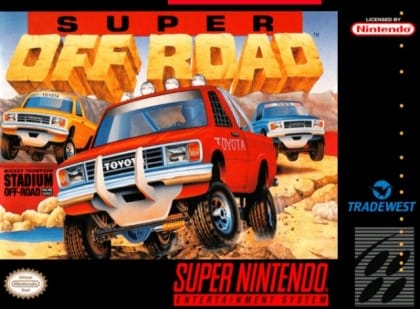
Super Off Road
Ivan 'Ironman' Stewart's Super Off Road is a 1989 racing video game developed and published by Leland Corporation for arcades. It was designed and managed by John Morgan, who was also lead programmer, and endorsed by professional off-road racer Ivan Stewart. Virgin Games produced several home computer versions in 1990, with a version for the Nintendo Entertainment System released by Leland's Tradewest subsidiary the same year. It was followed by versions for most major home consoles, including the Master System, Sega Genesis, and Super Nintendo Entertainment System. A port for the Atari Jaguar was announced but never released. Some ports lack the Ivan Stewart branding because of licensing issues, and are known simply as Super Off Road.

Pokémon Sword and Shield
Pokémon Sword and Pokémon Shield are 2019 role-playing video games developed by Game Freak and published by The Pokémon Company and Nintendo for the Nintendo Switch console. They are the first instalments in the 8th generation of the Pokémon video game series "Pokémon (video game series)"). First teased at E3 2017 and announced in February 2019, the games were released on 15 November 2019. The games were accompanied by a downloadable content (DLC) expansion pass consisting of Part 1—The Isle of Armor (released in June 2020) and Part 2—The Crown Tundra (October 2020); its launch marked the first ever DLC released as part of the Pokémon video game series instead of an improved version.
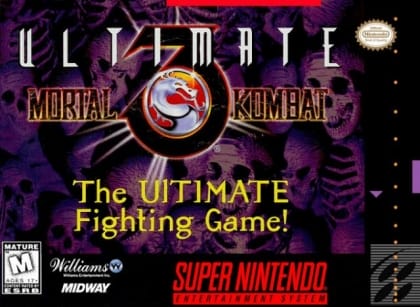
Ultimate Mortal Kombat 3
Ultimate Mortal Kombat 3 is a 1995 fighting game developed and published by Midway for arcades. Part of the Mortal Kombat series, it is a standalone update of 1995's earlier Mortal Kombat 3 with an altered gameplay system and some new features, as well as additional characters like the returning favorites Reptile, Kitana, Jade and Scorpion, who were missing from Mortal Kombat 3. Several home port versions of the game were soon released after the arcade original. Although none were completely identical to the arcade version, the Nintendo DS port came closest. Other versions followed, with some released under different titles, such as Mortal Kombat Advance (2001) for the Game Boy Advance. An iOS version recreating the game using a 3D graphics engine was released by Electronic Arts in 2010. Ultimate Mortal Kombat 3 was mostly well-received and has been considered a high point for the Mortal Kombat series. However, the iOS remake and some other home versions were received poorly.
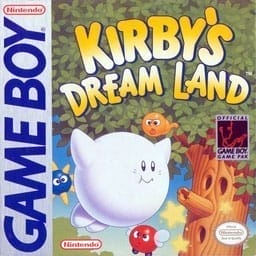
Kirby's Dream Land
Kirby's Dream Land is a 1992 platform game developed by HAL Laboratory and published by Nintendo for the Game Boy. It is the first game in the Kirby series and marks the debut of Kirby. It introduced many conventions that would appear in later games in the series. The game follows Kirby as he goes through five levels to retrieve the Sparkling Stars and food of Dream Land from King Dedede. Kirby's Dream Land was the debut game of designer Masahiro Sakurai. He intended it to be a simple game that could be easy to pick up and play by those unfamiliar with action games. For more advanced players, he offered additional optional challenges such as a hard mode and the ability to edit Kirby's maximum HP and starting number of lives. Kirby's Dream Land was re-released on the Nintendo 3DS via the Virtual Console in 2011; it is also one of the games included in the compilation game Kirby's Dream Collection for the Wii, released to celebrate the series' 20th anniversary.
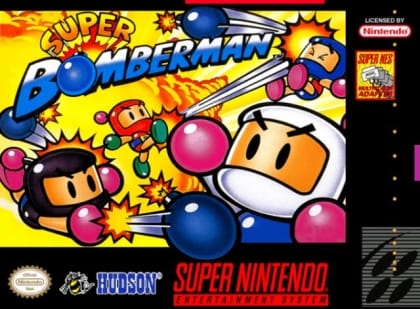
Super Bomberman
Super Bomberman is a 1993 action maze video game developed by Produce! and published by Hudson Soft for the Super Nintendo Entertainment System. Part of the Bomberman series, it is the first game in the series to retain the Bomberman title in Europe, instead of being renamed to Dynablaster or Eric and the Floaters. Super Bomberman spawned the Super Bomberman sub-series, of which seven more entries have been released: Super Bomberman 2 (1994), Super Bomberman 3 (1995), Super Bomberman 4 (1996), Super Bomberman 5 (1997), Super Bomberman R (2017), Super Bomberman R Online (2017), and Super Bomberman R 2 (2023). The game was re-released in 2026 as part of the Super Bomberman Collection compilation.
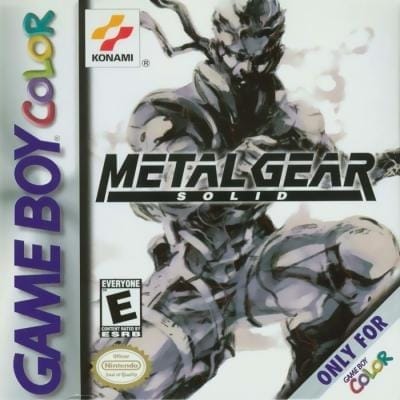
Metal Gear Solid
Metal Gear Solid#cite_note-8) is a 1998 action-adventurestealth game developed and published by Konami for the PlayStation. It was directed, produced, and written by Hideo Kojima, and follows the MSX2 games Metal Gear "Metal Gear (video game)") and Metal Gear 2: Solid Snake.#cite_note-techinfo-9) Players control Solid Snake, a soldier who infiltrates a nuclear weapons facility to neutralize the terrorist threat from FOXHOUND, a renegade special forces unit.#cite_note-10) Snake must liberate hostages and stop the terrorists from launching a nuclear strike.#cite_note-objectives-11) Cinematic cutscenes were rendered using the in-game engine and graphics, and voice acting is used throughout.#cite_note-12)Metal Gear Solid was unveiled at the 1996 Tokyo Game Show and demonstrated at trade shows including the 1997 Electronic Entertainment Expo. Metal Gear Solid received unanimous acclaim.
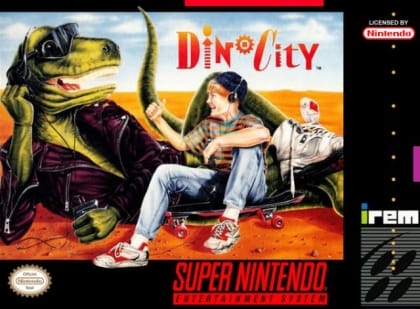
Dino City
DinoCity is a 1992 platform video game developed and published by Irem Corporation for the Super Nintendo Entertainment System. The game is loosely based on the 1991 made-for-television film Adventures in Dinosaur City, and borrows many of the film's characters, settings, and basic plot while providing its own unique art direction and style. Initially released in July 1992 in Japan, the game was later made available in North America the following September. The game centers on two friends, Timmy and Jamie, young children who are accidentally transported to a world resembling prehistoric Earth populated by anthropomorphic dinosaurs. While a device which will allow them to return home exists in this environment, a critical component has been stolen by Mr. Big, leader of a gang of Neanderthals known as The Rockeys, leaving the player to guide Timmy or Jamie to his castle to retrieve it. They are assisted by Rex, a Tyrannosaurus, and Tops, a Protoceratops, each with their own play-styles.
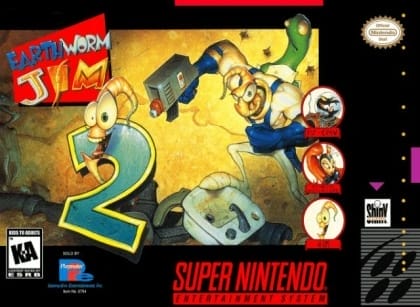
Earthworm Jim 2
Earthworm Jim 2 is a 1995 run and gun "Run and gun (video game)")platform game. It is the sequel to Earthworm Jim "Earthworm Jim (video game)"), and the second and final game in the Earthworm Jim series developed by original creators Doug TenNapel, David Perry "David Perry (game developer)"), and Shiny Entertainment. It was released in late 1995 and early 1996 depending on the region and video game console, initially for the Sega Genesis and Super Nintendo Entertainment System, before being ported to other platforms. The purpose of the game is largely the same as it was in the original Earthworm Jim; traverse through the levels in order to save Princess What's-Her-Name from Psy-Crow. However, gameplay is much more diverse than the original. While the majority of levels are still based on run and gun and platformer elements, separate levels incorporate different gameplay mechanics as well.
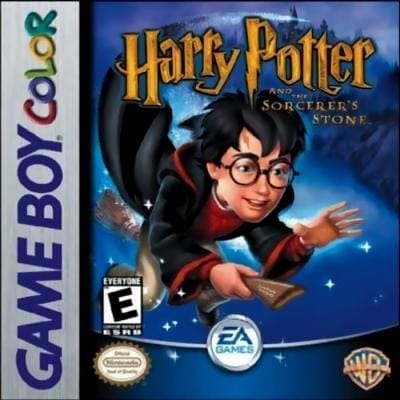
Harry Potter and the Sorcerer's Stone
Harry Potter and the Philosopher's Stone (released in the United States as Harry Potter and the Sorcerer's Stone) is a 2001 role-playing video game developed by Griptonite Games and published by Electronic Arts for the Game Boy Color. Based on the 1997 novel of the same name, the player controls Harry Potter "Harry Potter (character)"), who must navigate his first year in the Hogwarts School of Witchcraft and Wizardry and eventually confront the villainous Lord Voldemort. The Game Boy Color version was released simultaneously with the PlayStation and Game Boy Advance versions, and had the longest development cycle of the three versions. The game received mixed reviews from critics, who praised the visuals and faithfulness to the novel, but had lukewarm reactions to the audio and criticized the standard battle system and lack of a map function.
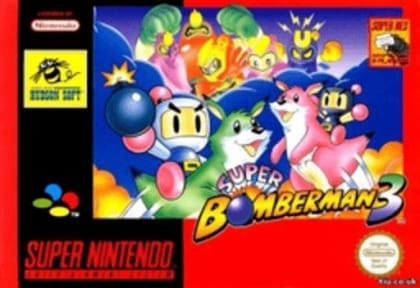
Super Bomberman 3
Super Bomberman 3 is a game released for the Super Nintendo Entertainment System in 1995. It is the third installment in the Super Bomberman series, and the third Bomberman game to be released for the system. Up to five players can play at the same time. The game was released in Japan and the PAL region, but not in North America due to the closure of Hudson Soft USA.
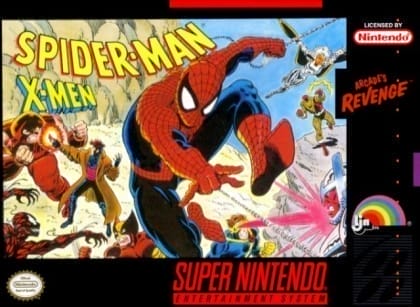
Spider-Man and the X-Men in Arcade's Revenge
While swinging his web throughout the city, Spider-Man notices the disappearances of X-Men Cyclops, Storm, and Wolverine; he then notices a tube from a garbage truck sucking up Gambit, and after figuring out it's Arcade, swings his web to the truck. He tracks Arcade down to an abandoned building, which is the location of the first stage; the player portrays Spider-Man de-activating "Security Eyes" in a set order (as indicated by the Spider-Sense) to enter. Inside, Spider-Man and the X-Men are placed in the deadly games of Murderworld, a simulated program designed by Arcade to torture and kill his victims. The player must successfully complete each Marvel hero's two "events" in order to get to control Spider-Man in a final battle with Arcade and escape. While any character's first event can be selected at the player's will, the second event is not playable until the completion of the first.
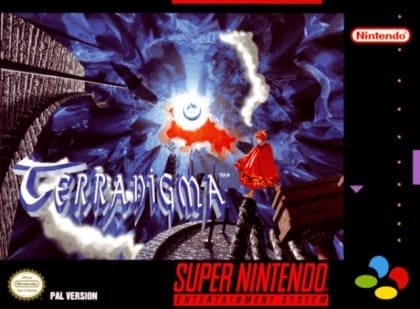
Terranigma
Terranigma is a 1995 action role-playing game developed by Quintet for the Super Nintendo Entertainment System (SNES), with manga artist Kamui Fujiwara acting as the character designer. The game tells the story of the Earth's resurrection by the hands of a boy named Ark, and its progress from the evolution of life to the present day. The game is the third entry in an unofficial trilogy of action role-playing games created by Quintet, also including Soul Blazer (1992) and Illusion of Gaia (1993). Terranigma was published in Japan by Enix on October 20, 1995, and in Europe and Australia by Nintendo starting in December 1996; the game was not released in North America due to Enix having already closed its U.S. branch by the time localization had finished, and has not been re-released due to complicated issues relating to its rights. The game has been met with critical acclaim for its presentation, gameplay, and story, although it has been criticized for its difficulty.
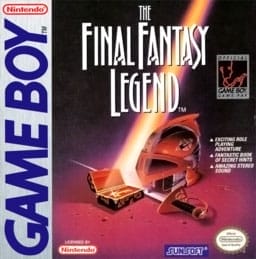
The Final Fantasy Legend
The Final Fantasy Legend, originally released in Japan as Makai Toushi Sa・Ga, is a 1989 role-playing video game developed and published by Square for the Game Boy. It was originally released in Japan in December 1989 and North America in September 1990. It is the first game in the SaGa series and the first role-playing game for the system. Square translated the game into English for worldwide release and renamed it, linking it with the Final Fantasy series to improve marketing. Sunsoft re-released it in North America during 1998; Square followed with a Japan-exclusive remake released for the WonderSwan Color and mobile phones in 2002 and 2007 respectively, it was also ported to the Nintendo Switch in 2020 and later ported to Android, iOS and Microsoft Windows in 2021. The Final Fantasy Legend operates on a turn-based system similar to that of Final Fantasy II.
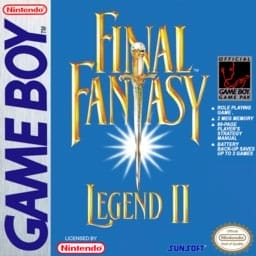
Final Fantasy Legend II
The music was co-composed by Nobuo Uematsu and Kenji Ito. While Uematsu had previously worked on the first SaGa, Ito had only just joined the company and this was his first title for Square. At the time, Uematsu was busy working on music for Final Fantasy IV, so Ito was brought in to create half the tracks. Composing for the game was a challenge for Ito as he had no experience with programming, needing to learn on the job. His first completed piece was the track "The Land of Peace"; as he had no experience with the short looping tracks common at the time, the theme was notably long. Kawazu asked for tracks based on particular scenes and moods, keeping the console's memory limitations in mind. Despite precautions, the number of planned parallel sounds was reduced, and several tracks needed to be cut. A compilation album featuring music from the three Game Boy SaGa titles, All Sounds of SaGa, was published in 1991 by NTT Publishing.
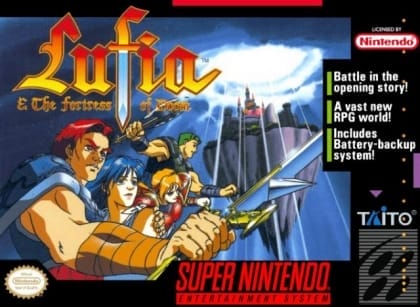
Lufia & The Fortress of Doom
Lufia & the Fortress of Doom, known as Estpolis Denki (エストポリス伝記, Esutoporisu Denki; officially translated Biography of Estpolis) in Japan, is a role-playing video game developed by Neverland and published by Taito in 1993, for the Super Nintendo Entertainment System. It is the first title in the Lufia series of video games and the only game from the series released under the Taito label in North America. The game's plot follows The Hero, Lufia, Aguro, and Jerin on a quest to prevent the resurrection of four superpowered beings called Sinistrals, and frequently delves into the political and personal lives of the subjects of kingdoms all around the world. Top-down exploration is mixed with traditional turn-based combat using 2D sprites. The game was generally well-received, and has spawned multiple sequels on the Super Nintendo as well as the Game Boy Color, Game Boy Advance and the Nintendo DS.
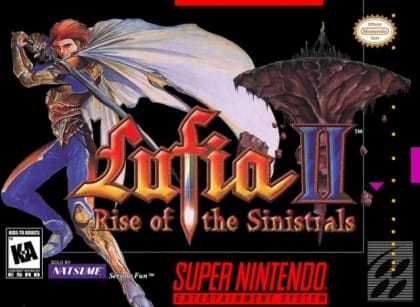
Lufia II: Rise of the Sinistrals
Lufia II: Rise of the Sinistrals, known as Estpolis Denki II (エストポリス伝記II, Esutoporisu Denki II; officially translated Biography of Estpolis II) in Japan, and as Lufia in Europe and Australia, is a role-playing video game with puzzle elements developed by Neverland and published in Japan in 1995 by Taito, and in North America and Europe in 1996 by Natsume and Nintendo respectively, for the Super Nintendo Entertainment System. It is the second game in the Lufia series. The game is a prequel to Lufia & the Fortress of Doom. It follows the story of the first main character's ancestor, Maxim, and explains the origins of the war between mankind and a group of gods called the Sinistrals. Lufia II made a number of changes from the first game. Dungeons no longer have random encounters and there are hundreds of puzzles throughout the game, ranging from simple to extremely challenging.
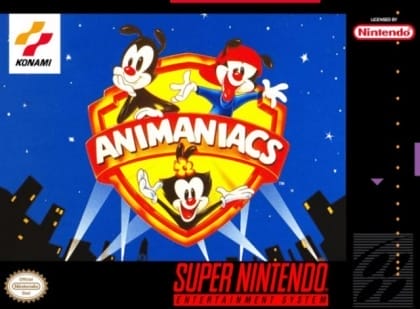
Animaniacs
In the SNES version, the Brain once again has another plan to conquer the world by deciding to steal the script of the new Warner Bros. film while it was under development. The CEO of Warner Bros. studio reluctantly asks the Warner Siblings for their assistance to retrieve all 24 pages of the script and foil the Brain's plan, which is the primary objective of the game. The ending of the game depends on how many script pages are collected, with the best ending leading to Warner Bros. being able to complete the film, pleasing the CEO, only to find out that the film was about the Warner Siblings, which pleases them.
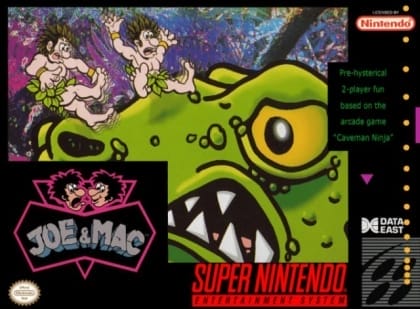
Joe & Mac
Joe & Mac, also known as Caveman Ninja or Caveman Ninja: Joe & Mac, is a 1991 run and gun "Run and gun (video game)")platform game developed and published by Data East for arcades. It was later ported to the Super Nintendo Entertainment System, MS-DOS, Amiga, Nintendo Entertainment System, Game Boy, Sega Genesis and Zeebo. The game stars the green-haired Joe and the blue-haired Mac, cavemen who battle through numerous prehistoric levels using weapons such as boomerangs, bones, fire, flints, electricity, stone wheels, and clubs "Club (weapon)"). The objective of the game is to rescue a group of women who were kidnapped by a rival tribe of cavemen. The game features a health system by which the player loses health over a period of time, apart from during boss battles. A two-player mode is available, and in some versions both characters are capable of damaging each other.
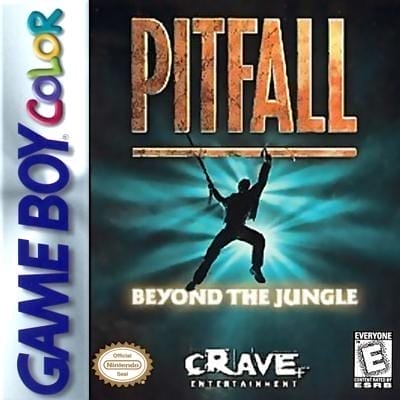
Pitfall: Beyond the Jungle
Pitfall: Beyond the Jungle is a 1998 platformer video game developed by David A. Palmer IMS Productions and published by Crave Entertainment for the Game Boy Color. The game features Pitfall Harry's son, Pitfall Harry Jr. as he enters an interdimensional rift to help a band of rebels led by a woman named Mira. The game features side-scrolling gameplay with the player controlling Pitfall Harry Jr. through various levels themed around areas like jungles and volcanoes. Pitfall: Beyond the Jungle was part of a series in Pitfall games that were released in 1982 to 1986. During the 1990s, Activision would resurrect the series with games like Pitfall: The Mayan Adventure (1994) and Pitfall 3D: Beyond the Jungle (1998). Following the 3D games release in early 1998, Pitfall: Beyond the Jungle was released in December 1998.
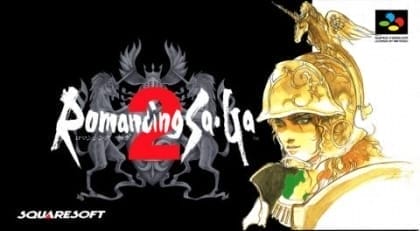
Romancing SaGa 2
Romancing SaGa 2 is a 1993 role-playing video game developed and published by Square for the Super Famicom. It is the fifth entry in the SaGa series. It received an expanded port for Japanese mobile devices from Square Enix in 2011. This version was remastered by ArtePiazza and released worldwide between 2016 and 2017 by Square Enix for Android, iOS, PlayStation Vita, Nintendo Switch, PlayStation 4, Windows and Xbox One. A 3D remake entitled Romancing SaGa 2: Revenge of the Seven was released on the Nintendo Switch, PlayStation 4, PlayStation 5 and Windows in 2024, and for Nintendo Switch 2 and Xbox Series X/S in 2025. Set during the history of the kingdom of Avalon, the player takes on the role of a dynasty of rulers as they fight the Seven Heroes, former saviors of the world corrupted into demons. Gameplay features nonlinear exploration and expansion of the game world and narrative, with the turn-based battles featuring group formations.
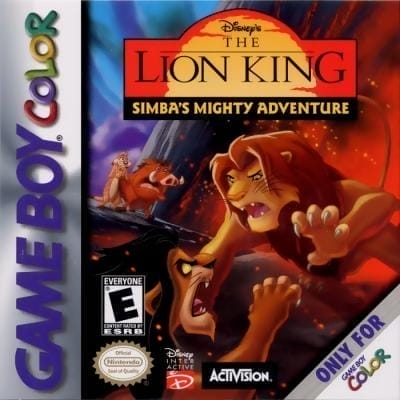
The Lion King: Simba's Mighty Adventure
The Lion King: Simba's Mighty Adventure is a 2000 platform game based on the 1994 animated film The Lion King. It was developed by Paradox Development for the PlayStation and by Torus Games for the Game Boy Color, and published by Activision. Unlike the previous The Lion King video game, it adhered more closely to the events in the film and the storyline carried on into the 1998 animated film The Lion King II: Simba's Pride, with Simba having to battle his evil uncle Scar, rescue his daughter Kiara (the protagonist from The Lion King II: Simba's Pride), and finally battle Zira. This game was the only console-based platform game to involve The Lion King II: Simba's Pride. All other games based on the title were educational or puzzle games and were released on the PC.
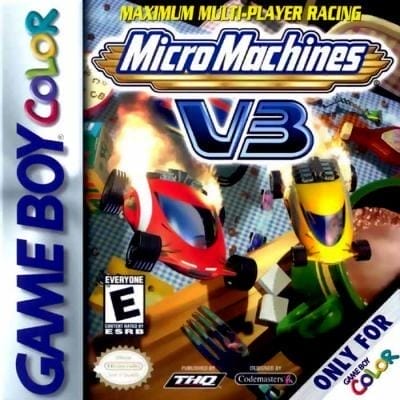
Micro Machines V3
Micro Machines V3 is a racing video game developed by Codemasters, the third title of the Micro Machines series following Micro Machines 2: Turbo Tournament (1994) and the first set in a 3D game environment. It was originally released for PlayStation in 1997 followed by ports to Microsoft Windows, Nintendo 64 (as Micro Machines 64 Turbo) in 1999, and a 2D version for Game Boy Color in 2000.
Browse our collection of 456 Games retro games, all playable instantly in your browser. No download required. Play classic games online in your browser and save your progress anytime.