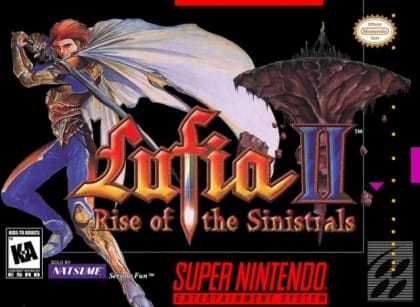
Lufia II: Rise of the Sinistrals
Play Now
Important Control Tip: If keys are unresponsive after the game loads, please [click on the game window] to activate input focus.
How to Play
How to Play
Press Play Now button to start the Super Nintendo Entertainment System emulator in your browser.
Control guide merged: use keyboard on PC and on-screen buttons on mobile.
🖥️ PC Controls
| Action | Key (Default) | Description |
|---|---|---|
| D-Pad | ↑↓←→ | Movement control |
| A Button | Z | Confirm / Attack |
| B Button | X | Cancel / Jump |
| Select | V | Select button |
| Start | Enter | Start button |
📱 Mobile Controls
- Movement
- D-pad (left side)
- Action Buttons
- A/B or X/Y/A/B (right side, varies by platform)
- Start / Select
- Center of screen
- Left-Handed Mode
- Swap layout in Control Settings
Mobile Controls: After starting the game, tap the menu in the top-right corner → "Control Settings" to view full key mappings and customize controls.
From Wikipedia, the free encyclopedia:
Source: Wikipedia
About This Game
Gameplay
Characters walk around an overworld map and then enter dungeons, where they fight monsters and either buy or find new equipment and spells. The player's party supports up to four characters at once, along with a Capsule Monster. There are various forms of transportation faster than walking, including a warping spell, a boat modified into a submarine, and a blimp. The game includes the casino minigames Pachinko Slot, Black Jack, Slot Machine, Stud Poker, and Action Bingo. In dungeons, monsters appear on the map, and can be avoided if the player wishes. Motion in dungeons is also turn-based, and monsters do not move unless the player does. The main player character, Maxim, gains a number of tools and weapons which can only be used in dungeons (similar to The Legend of Zelda titles), such as a bow and arrow, bombs and a hookshot. These, along with his sword, stun monsters temporarily and interact with obstacles. Dungeons place great emphasis on puzzles. On the world map, monsters are encountered randomly. Aside from the RPG standards of "Fight", "Use Item" and "Use Magic", characters have access to IP Skills, which are attached to weapons, armor and accessories.
History
The North American release of the game was initially slated for release in May 1996, but did not actually hit store shelves until around September. It has a few graphical and textual glitches which were corrected in the European version. The European versions were released in English, German, Spanish and Dutch for distribution in Australia, Germany, Spain and the Netherlands respectively. The Australian version was released in 1997, one year after the North American version. Both the European and Australian releases of the game were titled "Lufia", not "Lufia II", and included no subtitle because Lufia & the Fortress of Doom was never released in Europe and Australia.
More details about this game can be found on Wikipedia article .
Comments
Log in to leave a comment.
Sign InNo comments yet. Be the first!
Related Games
Lufia & The Fortress of Doom
Breath of Fire II
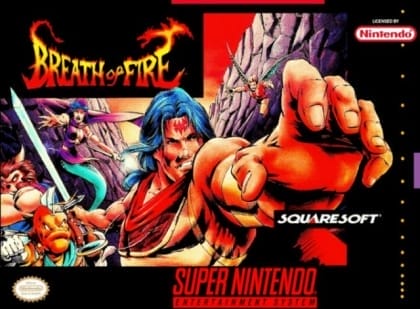
Breath of Fire
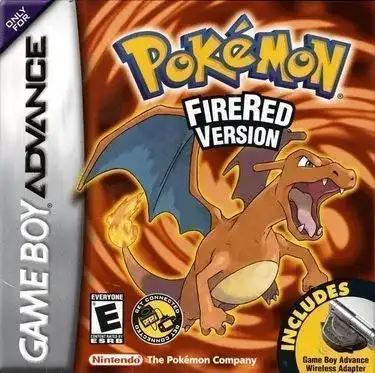
Pokémon Fire Red
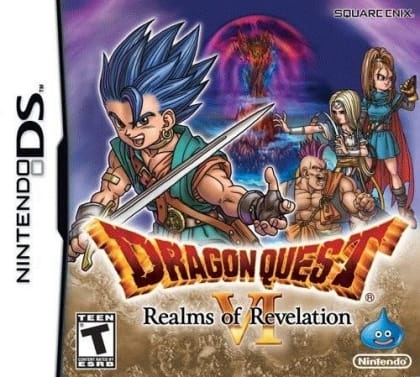
Dragon Quest VI: Realms of Revelation