All Games
456 games
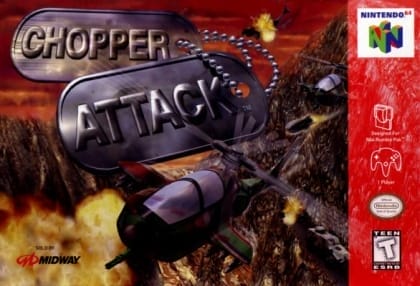
Chopper Attack
Chopper Attack, known as Wild Choppers (ワイルドチョッパーズ, Wairudo Choppāzu) in Japan, is a third-person helicopter-based shooting game developed by SETA Corporation for the Nintendo 64. It was released in 1997 in Japan and 1998 in other regions.
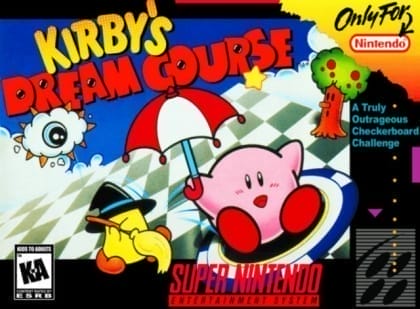
Kirby's Dream Course
Kirby's Dream Course is a 1994 miniature golf video game developed by HAL Laboratory and Nintendo EAD and published by Nintendo for the Super Nintendo Entertainment System (SNES). A spin-off of the Kirby series and the first released for the SNES, players control the pink spherical character Kirby through a series of courses by launching him towards the goal hole at the end. Kirby can hit enemies to collect power-ups that grant him unique abilities, such as those that allow him to destroy certain obstacles or fly around the level. HAL Laboratory originally designed Dream Course as a standalone game called Special Tee Shot. Though it was previewed in several magazines and displayed on the packaging for the console, HAL replaced the game's original characters with those from the Kirby series following its popularity on the Game Boy. Special Tee Shot was later released for the Satellaview peripheral in Japan.

Kirby Super Star
Kirby Super Star, released as Kirby's Fun Pak in PAL regions, is a 1996 anthologyplatform game developed by HAL Laboratory and published by Nintendo for the Super Nintendo Entertainment System. It is part of the Kirby series of video games by HAL Laboratory. The game was advertised as a compilation featuring eight games: seven short subsections with the same basic gameplay, and two minigames. An enhanced remake titled Kirby Super Star Ultra was released for the Nintendo DS in 2008 and 2009 to commercial and critical success, selling just under 3 million copies. The original game has also been digitally rereleased multiple times. Kirby Super Star is a side-scrollingplatform game. Similar to previous entries in the Kirby series, the player controls the titular character Kirby to complete various levels "Level (video games)") while avoiding obstacles and enemies. Kirby can walk or run, jump, swim, crouch, slide, and inhale enemies or objects to spit them out as bullets.
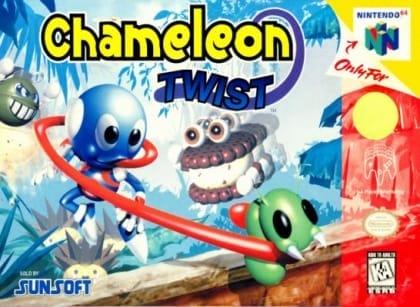
Chameleon Twist
Chameleon Twist is a 1997 video game developed by Japan System Supply, published by Japan System Supply in Japan, and published by Sunsoft in North America and Europe for the Nintendo 64. Though disliked by critics due to its easy gameplay, repetitive music, and awkward camera angles, Chameleon Twist was followed by a sequel titled Chameleon Twist 2. This 3D platform game has players take on the role of one of four anthropomorphic chameleons, and travel across six themed worlds. The chameleon's elongated tongue can be used as a weapon, a means to traverse gaps, or as a way to leap onto platforms. Once the tongue is unrolled, it can be guided in any direction using the analog stick. A five-room training area lets players practice the controls. The single-player game involves progressing through predominately indoor environments, each culminating in a boss battle, while collecting hearts to replenish health.
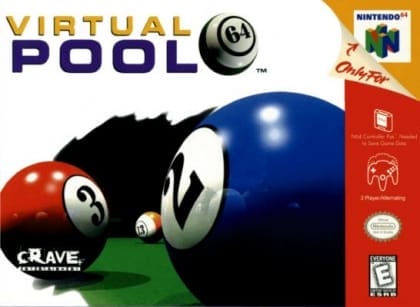
Virtual Pool 64
Virtual Pool 64 is a 3Dfirst-person "First person (video games)")sportssimulationvideo game that was developed by American studio Celeris and released for the Nintendo 64 by Crave Entertainment on December 17, 1998, in North America, and in Europe on February 26, 1999. The game features simulations of 11 forms of pool (pocket billiards). It is part of the "Virtual Pool" game franchise, which also includes the PC games Virtual Pool "Virtual Pool (video game)"), Virtual Pool 2, Virtual Pool Hall and Virtual Pool 3. The game has been simultaneously lauded as "a top-notch simulation" and criticized as dull, lacking both player incentive and engaging characters. Virtual Pool 64 as the follow-up to the main series title Virtual Pool 2 retains the same different pool games, and adds new games, such as Rotation pool "Rotation (pool)").
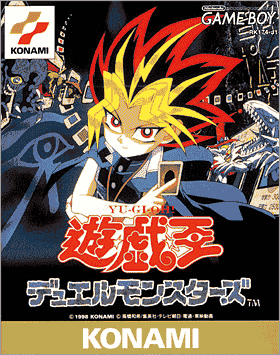
Yu-Gi-Oh! Duel Monsters
Yu-Gi-Oh!, known in Japan as Yu-Gi-Oh! Duel Monsters (Japanese: 遊☆戯☆王デュエルモンスターズ, Hepburn: Yū Gi Ō Dyueru Monsutāzu) and alternatively subtitled Rulers of the Duel in the United States and Canada, is a Japanese anime series animated by Studio Gallop based on the Yu-Gi-Oh! manga series written by Kazuki Takahashi. It is the second anime adaptation of the manga following the 1998 anime television series "Yu-Gi-Oh! (1998 TV series)") produced by Toei Animation. The series revolves around a young high school boy named Yugi Muto who battles opponents in the Duel Monsters card game. The series begins from chapter 60 in volume 7 before loosely adapting the remaining chapters of the original manga by making story changes that conflict with the events of the manga canon. Yu-Gi-Oh! Duel Monsters originally aired in Japan on TV Tokyo from April 2000 to September 2004, running for 224 episodes. A remastered version, highlighting certain duels, began airing in Japan in February 2015.
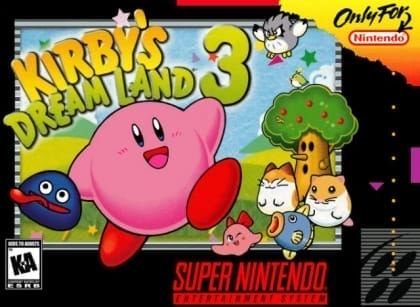
Kirby's Dream Land 3
Kirby's Dream Land 3 is a 1997 platform game developed by HAL Laboratory and published by Nintendo for the Super Nintendo Entertainment System. Starring Kirby, it is the fifth installment in the Kirby series "Kirby (series)") and the third game under the Kirby's Dream Land name. Although the first game was largely unrelated, Dream Land 3 features many similar characters to Dream Land 2. Dream Land 3 was followed by Kirby 64: The Crystal Shards in 2000. Kirby's Dream Land 3 was the last SNES game published by Nintendo in North America. Problems with the game's PAL conversion prevented it from being released in Europe and Australia for many years; it was eventually released for the Virtual Console in those regions in the form of an import from North America on July 24, 2009, for the Wii and on July 25, 2013, for the Wii U.
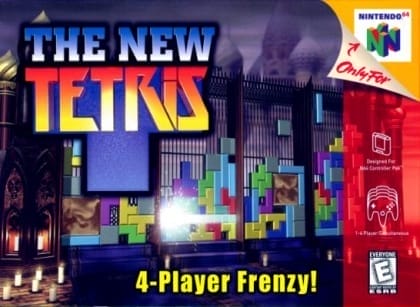
The New Tetris
The New Tetris is a 1999 puzzle video game developed by H2O Entertainment and Blue Planet Software and published by Nintendo for the Nintendo 64. An entry in the Tetris series, it showcases scenic fly-bys of structures, such as the Sphinx, the Pantheon, Saint Basil's Cathedral, a Mayan temple, and others, rendered in real-time. Achieving this level of quality was relatively challenging for the Nintendo 64 hardware.[citation needed]The New Tetris features a multiplayer mode with up to four players and an electronic dance music soundtrack by Neil Voss, who also composed the music for Tetrisphere. There are several key differences in gameplay from the original Tetris. First, in addition to clearing lines, players can also form 4x4 large squares of four pieces to create "blocks.
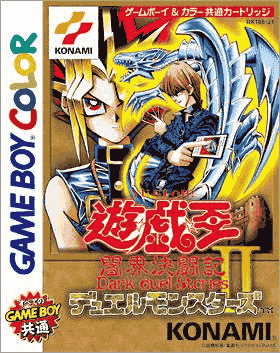
Yu-Gi-Oh! Duel Monsters II: Dark Duel Stories
Yu-Gi-Oh! Early Days Collection is a video game compilation developed by Digital Eclipse and published by Konami, released in commemoration of the Yu-Gi-Oh! Trading Card Game's 25th anniversary. It contains emulated versions of the first 14 handheld games based on the Yu-Gi-Oh franchise, originally released between 1998 and 2004. Several of the included games were localized and released outside of Japan for the first time as part of the collection. Early Days Collection was released worldwide on February 27, 2025 for Nintendo Switch and Windows. It received mixed reviews from critics, who praised the collection's preservational aspects and amount of content, but criticized the games themselves for their slow gameplay and lack of tutorials.
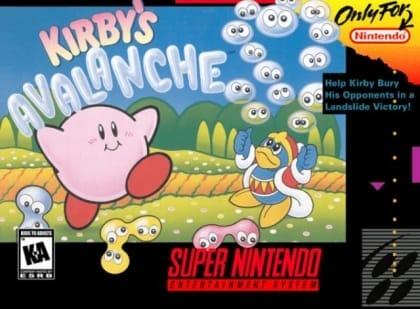
Kirby's Avalanche
Kirby's Avalanche, known in Europe as Kirby's Ghost Trap, is a puzzle video game developed by Compile and HAL Laboratory and published by Nintendo for the Super Nintendo Entertainment System. It was released in North America and Europe in February 1995. It is a Western release of the Japanese Super Puyo Puyo featuring characters from the Kirby series. There was not a Japanese release, and the game remains the only Kirby title not released there. In Europe and Australia, the game was re-released on the Wii's Virtual Console service on July 27, 2007, and in North America on September 24, 2007. The game was re-released for the Nintendo Classics service on July 21, 2022. The gameplay is the same as in Super Puyo Puyo, with groups of two colored blobs fall from the top of the screen. The player must rotate and move the groups before they touch the bottom of the screen or the pile, so that matching-colored blobs touch from above, below, the left or the right.
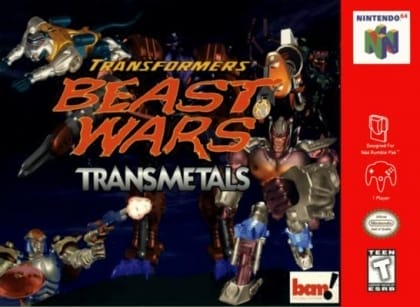
Transformers: Beast Wars Transmetals
Transformers: Beast Wars Transmetals is a 1999 3D fighting game for the Nintendo 64 and PlayStation, based on the Transformers: Beast Wars cartoon series and toy-line, It was published in Japan by Takara in 1999, and in North America by Bay Area Multimedia in 2000. Each version features different game mechanics and playable characters. The Nintendo 64 version of the game, known as Transformers: Beast Wars Metals 64 in Japan, was developed by Locomotive Corporation. It contains arcade mode endings for all characters and several mini-games. In North America, this version was a Blockbuster Video exclusive that was initially only available for rental. The PlayStation version of the game, known as Transformers Beast Wars Metals: Gekitotsu! Gangan Battle in Japan, was developed by WAVEDGE. It features alternate story campaigns for the Maximal and Predacon factions.
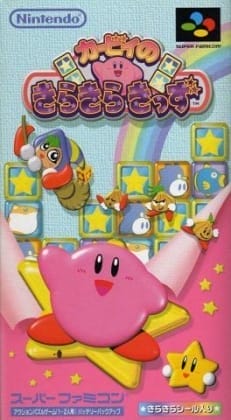
Kirby no Kirakira Kids
Kirby's Star Stacker is a 1997 puzzle video game developed by HAL Laboratory and published by Nintendo for the Game Boy. It is a spin-off of the Kirby series with Tile-matching gameplay. It was released for the Nintendo Classics service for the Nintendo Switch in May 2025. It received a remake for the Super Famicom in Japan.
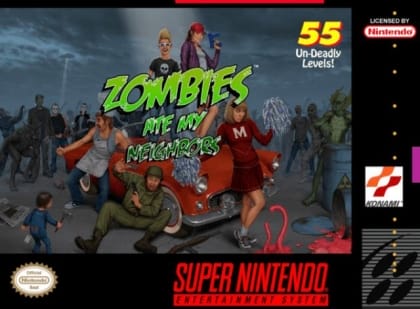
Zombies Ate My Neighbors
Zombies Ate My Neighbors is a 1993 run and gun video game developed by LucasArts and published by Konami for the Super Nintendo Entertainment System and Sega Genesis. The player controls the protagonists Zeke and Julie in order to rescue the titular neighbors from monsters often seen in horror films. Aiding them in this task are a variety of weapons and power-ups that can be used to battle the numerous enemies in each level. Various elements and aspects of horror movies are referenced in the game with some of its more violent content being censored in various territories such as Europe and Australia, where it is known only as Zombies. While not a great commercial success, the game was well-received for its graphical style, humor and deep gameplay. It spawned a sequel, Ghoul Patrol, released in 1994.
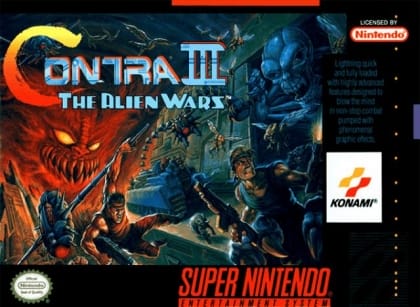
Contra III: The Alien Wars
Contra III: The Alien Wars is a 1992 run and gun video game developed and published by Konami for the Super Nintendo Entertainment System (SNES). It is the third home console entry in the Contra series after Contra (1988) and Super Contra (1990) for the Nintendo Entertainment System (NES). In PAL regions, it was known as Super Probotector: Alien Rebels, because due to Laws of Germany prohibiting the sale of violent games to minors, the main characters had to be replaced with Probotectors (robots) named "RD-008" and "RC-011", while the Japanese version is called Contra Spirits, with Bill and Lance being featured like the American version. The player is tasked with fighting off an alien invasion of Earth across six stages. Four stages feature side-scrolling action traditional to the series while two are presented from an overhead perspective. It is the first Contra title to have been directed by Nobuya Nakazato who later directed other games in the series.
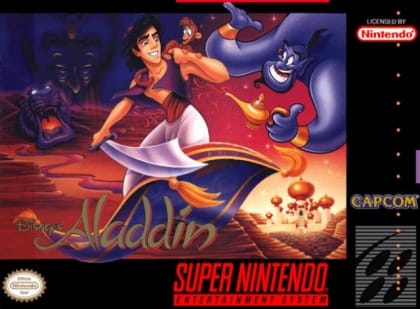
Aladdin
Aladdin is a 1993 platform game developed and published by Capcom for the Super Nintendo Entertainment System, based on the 1992 animated Disney film of the same name. Disney's Aladdin is a 2D side-scrolling video game in which the player controls Aladdin and his monkey Abu. It was designed by Shinji Mikami. The game was released in November 1993, the same month that another game with the same title was released by Virgin Games for the Sega Genesis. The two games vary in some respects; in the Genesis game, Aladdin wields a scimitar, which is not the case in the Capcom game. The Capcom game was ported to the Game Boy Advance (GBA) in Japan on August 1, 2003, in Europe on March 19, 2004, and in North America on September 28, 2004.
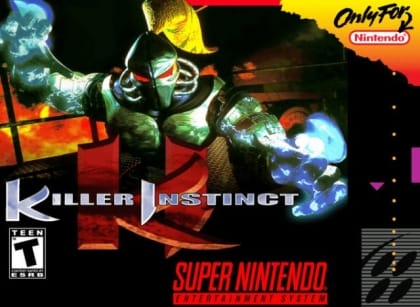
Killer Instinct
Killer Instinct is a series of fighting video games originally created by Rare and published by Midway, Nintendo, and later Xbox Game Studios since the remake. The original Killer Instinct "Killer Instinct (1994 video game)") was released for arcades in 1994; the game was then released for the Super NES and Game Boy in 1995. Its sequel, Killer Instinct 2, was released for arcades in 1996; the game was then released as Killer Instinct Gold for the Nintendo 64. The series was rebooted with the release of Killer Instinct "Killer Instinct (2013 video game)") (2013) for the Xbox One.
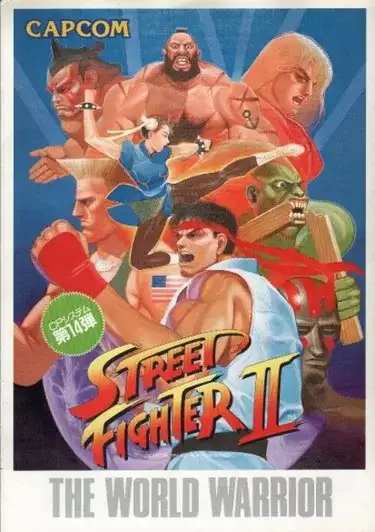
Street Fighter II: The World Warrior
Street Fighter II: The World Warrior is a 1991 fighting game developed and published by Capcom for arcades. It is the second installment in the Street Fighter series, and the sequel to 1987's Street Fighter. Designed by Yoshiki Okamoto and Akira Yasuda, who had previously worked on the game Final Fight, it is the fourteenth game to use Capcom's CP System arcade system board. Street Fighter II vastly improved many of the concepts introduced in the first game, including the use of special command-based moves, a combo system, a six-button configuration, and a wider selection of playable characters, each with a unique fighting style. Street Fighter II became the best-selling game since the golden age of arcade video games. By 1994, it had been played by an estimated 25 million people in the United States alone.
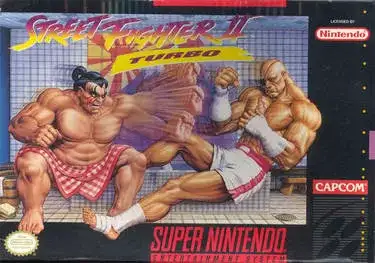
Street Fighter II Turbo: Hyper Fighting
Street Fighter II Turbo: Hyper Fighting, released as Street Fighter II Dash Turbo in Japan, is a 1992 fighting game developed and published by Capcom for arcades. It is the third arcade version of Street Fighter II, part of the Street Fighter franchise, following Street Fighter II: Champion Edition, and was initially released as an enhancement kit for that game. Released less than a year after the previous installment, Hyper Fighting introduced a faster playing speed and new special moves for certain characters, as well as further refinement to the character balance. Hyper Fighting is the final arcade game in the Street Fighter II series to use the original CP System hardware. It was distributed as an upgrade kit designed to be installed into Champion Edition printed circuit boards. The next game, Super Street Fighter II, uses the CP System's successor, the CP System II.
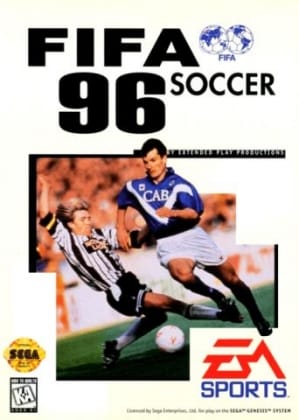
FIFA Soccer 96
FIFA Soccer 96 (also known as FIFA 96: Virtual Soccer Stadium) is a 1995 football video game developed by Extended Play Productions and released by EA Sports for the Mega Drive/Genesis, Sega Saturn, 32X, Game Gear, PlayStation, Super Nintendo Entertainment System, and MS-DOS-compatible operating systems. It is the third entry in the FIFA series "FIFA (video game series)"), its tagline being "Next Generation Soccer". It was the first in the series to feature real-time 3D graphics on the Saturn, PlayStation, 32X, and DOS versions, using technology called "Virtual Stadium". The SNES and Mega Drive/Genesis editions used the FIFA 95 engine. It is also the first in the series to use real player names and positions, with ranking, transfer and team customisation tools. The game's budget was $3 million.FIFA 96 was the first game in the series to use the Virtual Stadium game engine. The game was a bestseller in the UK.
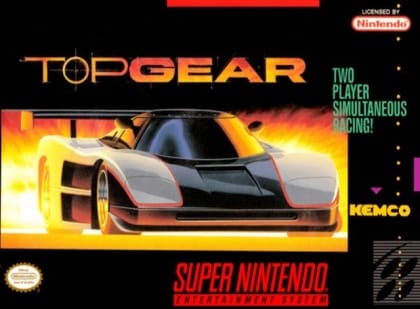
Top Gear
Top Gear is a 1992 racing video game developed by Gremlin Graphics and published by Kemco for the Super Nintendo Entertainment System. The objective of the game is to become the fastest driver in the world by racing other drivers across several nations. It marks the first game in the Top Gear racing game franchise, and it is one of the first racing games to be released on the SNES. This game and its next two sequels were created by the same developers as the similar Lotus series of games was released earlier on the Amiga and Mega Drive.
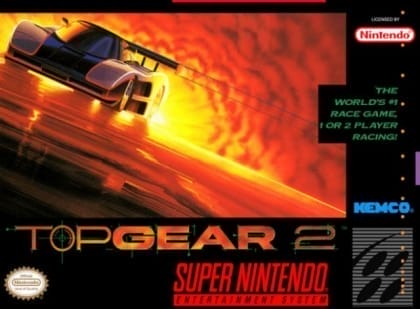
Top Gear 2
Top Gear 2 (released as Top Racer 2 in Japan) is a racing video game developed and published by Gremlin Interactive. A direct sequel to the 1992 game Top Gear, it was first released by Kemco for the SNES in North America in September 1993, and then the Super Famicom in Japan on December 22. It was later ported to the Amiga and Amiga CD32 in September 1994 by Gremlin Interactive, and to the Sega Genesis in September by Vic Tokai. While more realistic than its predecessor, Top Gear 2 maintained the arcade-style gameplay the series is known for.
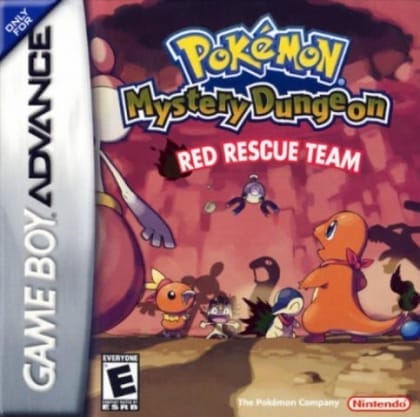
Pokémon Mystery Dungeon: Red Rescue Team
Pokémon Mystery Dungeon: Blue Rescue Team and Pokémon Mystery Dungeon: Red Rescue Team are a matched pair of Pokémon video games for the Nintendo DS and Game Boy Advance, respectively. The games were developed by Chunsoft and published by The Pokémon Company and Nintendo. Red Rescue Team was the last Pokémon game released for the Game Boy Advance. The two versions are mostly identical, with Blue Rescue Team taking advantage of the dual-screen features and increased graphical and sound capabilities of the Nintendo DS. The game has six Pokémon exclusive to each version. Mystery Dungeon differs from the mainline games in that the player character is a Pokémon rather than a trainer. Similar to the other Mystery Dungeon titles, the roguelike gameplay revolves around randomly changing dungeons which need to be explored by the player and their partner Pokémon using turn-based moves.
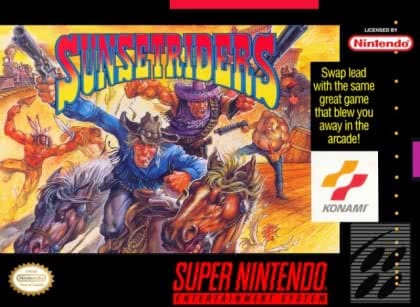
Sunset Riders
Sunset Riders is a 1991 run and gunvideo game developed and published by Konami for arcades. It was released in North America in October 1991 and Japan in November 1991. It is set in the American Old West, where the player(s) take control of bounty hunters who are seeking the rewards offered for various criminals. The arcade version was released in two variants: a two-player version and a four-player version. Home console versions of Sunset Riders were released for the Mega Drive/Genesis in 1992 and for the Super Nintendo Entertainment System in 1993 to a positive reception. Hamster Corporation released the game as part of their Arcade Archives series for the Nintendo Switch and PlayStation 4 in June 2020. The game, which is set in a fanciful version of the American Old West, revolves around four bounty hunters named Steve, Billy, Bob, and Cormano, who are out to claim rewards offered for eliminating the most wanted outlaws in the West. Each bounty hunter wields different guns.
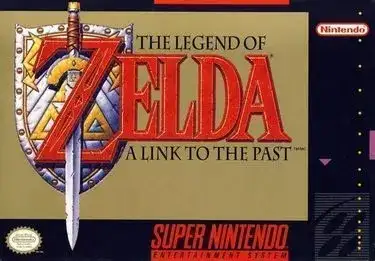
The Legend of Zelda: A Link to the Past
The Legend of Zelda: A Link to the Past is a 1991 action-adventure game developed and published by Nintendo for the Super Nintendo Entertainment System (SNES). It is the third game in The Legend of Zelda series, following 1987's Zelda II: The Adventure of Link, and is the first entry in the series to be released for the SNES. The story is set many years before the events of the first two Zelda games. The player assumes the role of Link as he journeys to save Hyrule, defeat the demon king Ganon, and rescue the descendants of the Seven Sages. It returns to a top-down perspective similar to the original The Legend of Zelda "The Legend of Zelda (video game)"), dropping the side-scrolling gameplay of The Adventure of Link. It also introduced series staples such as parallel worlds and items including the Master Sword. A Link to the Past is considered among the greatest video games ever made, with particular praise for its presentation and innovative gameplay.
Browse our collection of 456 Games retro games, all playable instantly in your browser. No download required. Play classic games online in your browser and save your progress anytime.