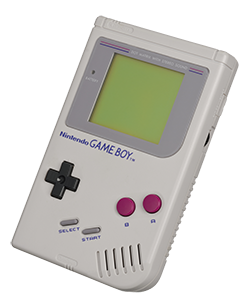
Game Boy
The Game Boy is a handheld game console developed and marketed by Nintendo. It was released in Japan on April 21, 1989, in North America on July 31, 1989, and in Europe on September 28, 1990. Nintendo's first handheld to use ROM cartridges, it succeeded the Game & Watch line of handheld electronic games and competed with Sega's Game Gear, Atari's Lynx, and NEC's TurboExpress in the fourth generation of video game consoles.
11 games
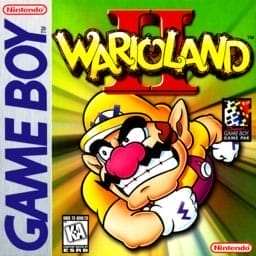
Wario Land 2
Wario Land II, known in Japan as Wario Land 2: The Stolen Treasure, is a 1998 platform game developed and published by Nintendo for the Game Boy. Players control Wario as he sets out to recover his stolen treasure from Captain Syrup. The gameplay retains the side-scrolling platforming of Wario Land: Super Mario Land 3, with the player guiding Wario through various levels with the goal of finishing with as many coins as possible. Wario Land II introduces an immortality game mechanic in which enemies cannot inflict damage, but instead cause Wario to lose coins or transform into forms with abilities that allow players to access new areas. The original version was released for the Game Boy in North America and Europe in March 1998. A colorized version, sometimes called Wario Land II DX, was released in Japan in October 1998 as a launch game for the Game Boy Color, and later in other regions. It received positive reviews.
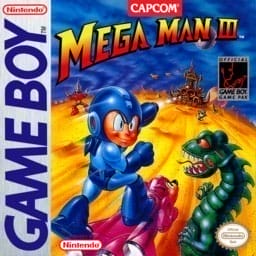
Mega Man III
Mega Man III#cite_note-5) is a 1992 platform game developed by Minakuchi Engineering and published by Capcom for the Game Boy. It is the third game in the handheld series of the Mega Man "Mega Man (original series)") franchise and the last to be published by Nintendo in Europe. The game follows the title character Mega Man "Mega Man (character)") as he fights the evil Dr. Wily. Along with foes from his past, Mega Man must contend with the next robot in Wily's line of "Mega Man Killers", Punk. Like its two consecutive predecessors on the Game Boy, the game combines elements from two previously released Nintendo Entertainment System (NES) titles: Mega Man 3 and Mega Man 4. The game received positive reviews from critics and was considered a notable improvement over its predecessors, though some criticized it for being too difficult, deeming its difficulty level overly frustrating.
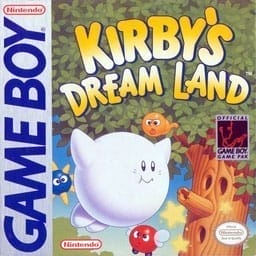
Kirby's Dream Land
Kirby's Dream Land is a 1992 platform game developed by HAL Laboratory and published by Nintendo for the Game Boy. It is the first game in the Kirby series and marks the debut of Kirby. It introduced many conventions that would appear in later games in the series. The game follows Kirby as he goes through five levels to retrieve the Sparkling Stars and food of Dream Land from King Dedede. Kirby's Dream Land was the debut game of designer Masahiro Sakurai. He intended it to be a simple game that could be easy to pick up and play by those unfamiliar with action games. For more advanced players, he offered additional optional challenges such as a hard mode and the ability to edit Kirby's maximum HP and starting number of lives. Kirby's Dream Land was re-released on the Nintendo 3DS via the Virtual Console in 2011; it is also one of the games included in the compilation game Kirby's Dream Collection for the Wii, released to celebrate the series' 20th anniversary.
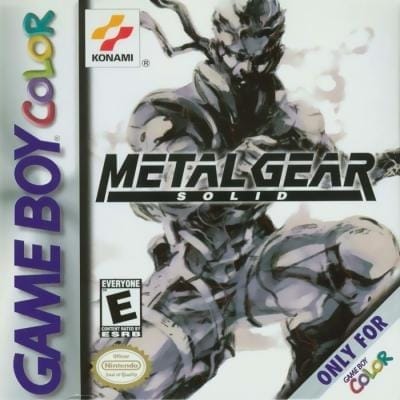
Metal Gear Solid
Metal Gear Solid#cite_note-8) is a 1998 action-adventurestealth game developed and published by Konami for the PlayStation. It was directed, produced, and written by Hideo Kojima, and follows the MSX2 games Metal Gear "Metal Gear (video game)") and Metal Gear 2: Solid Snake.#cite_note-techinfo-9) Players control Solid Snake, a soldier who infiltrates a nuclear weapons facility to neutralize the terrorist threat from FOXHOUND, a renegade special forces unit.#cite_note-10) Snake must liberate hostages and stop the terrorists from launching a nuclear strike.#cite_note-objectives-11) Cinematic cutscenes were rendered using the in-game engine and graphics, and voice acting is used throughout.#cite_note-12)Metal Gear Solid was unveiled at the 1996 Tokyo Game Show and demonstrated at trade shows including the 1997 Electronic Entertainment Expo. Metal Gear Solid received unanimous acclaim.
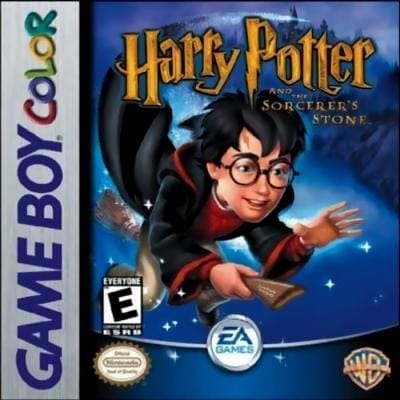
Harry Potter and the Sorcerer's Stone
Harry Potter and the Philosopher's Stone (released in the United States as Harry Potter and the Sorcerer's Stone) is a 2001 role-playing video game developed by Griptonite Games and published by Electronic Arts for the Game Boy Color. Based on the 1997 novel of the same name, the player controls Harry Potter "Harry Potter (character)"), who must navigate his first year in the Hogwarts School of Witchcraft and Wizardry and eventually confront the villainous Lord Voldemort. The Game Boy Color version was released simultaneously with the PlayStation and Game Boy Advance versions, and had the longest development cycle of the three versions. The game received mixed reviews from critics, who praised the visuals and faithfulness to the novel, but had lukewarm reactions to the audio and criticized the standard battle system and lack of a map function.
The Final Fantasy Legend
The Final Fantasy Legend, originally released in Japan as Makai Toushi Sa・Ga, is a 1989 role-playing video game developed and published by Square for the Game Boy. It was originally released in Japan in December 1989 and North America in September 1990. It is the first game in the SaGa series and the first role-playing game for the system. Square translated the game into English for worldwide release and renamed it, linking it with the Final Fantasy series to improve marketing. Sunsoft re-released it in North America during 1998; Square followed with a Japan-exclusive remake released for the WonderSwan Color and mobile phones in 2002 and 2007 respectively, it was also ported to the Nintendo Switch in 2020 and later ported to Android, iOS and Microsoft Windows in 2021. The Final Fantasy Legend operates on a turn-based system similar to that of Final Fantasy II.
Final Fantasy Legend II
The music was co-composed by Nobuo Uematsu and Kenji Ito. While Uematsu had previously worked on the first SaGa, Ito had only just joined the company and this was his first title for Square. At the time, Uematsu was busy working on music for Final Fantasy IV, so Ito was brought in to create half the tracks. Composing for the game was a challenge for Ito as he had no experience with programming, needing to learn on the job. His first completed piece was the track "The Land of Peace"; as he had no experience with the short looping tracks common at the time, the theme was notably long. Kawazu asked for tracks based on particular scenes and moods, keeping the console's memory limitations in mind. Despite precautions, the number of planned parallel sounds was reduced, and several tracks needed to be cut. A compilation album featuring music from the three Game Boy SaGa titles, All Sounds of SaGa, was published in 1991 by NTT Publishing.
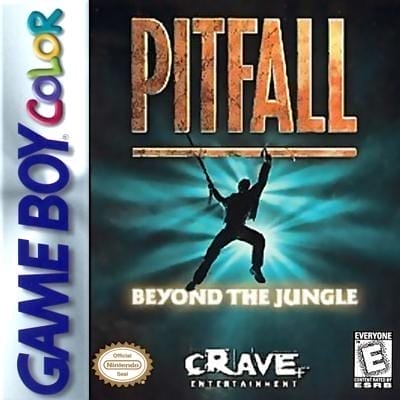
Pitfall: Beyond the Jungle
Pitfall: Beyond the Jungle is a 1998 platformer video game developed by David A. Palmer IMS Productions and published by Crave Entertainment for the Game Boy Color. The game features Pitfall Harry's son, Pitfall Harry Jr. as he enters an interdimensional rift to help a band of rebels led by a woman named Mira. The game features side-scrolling gameplay with the player controlling Pitfall Harry Jr. through various levels themed around areas like jungles and volcanoes. Pitfall: Beyond the Jungle was part of a series in Pitfall games that were released in 1982 to 1986. During the 1990s, Activision would resurrect the series with games like Pitfall: The Mayan Adventure (1994) and Pitfall 3D: Beyond the Jungle (1998). Following the 3D games release in early 1998, Pitfall: Beyond the Jungle was released in December 1998.
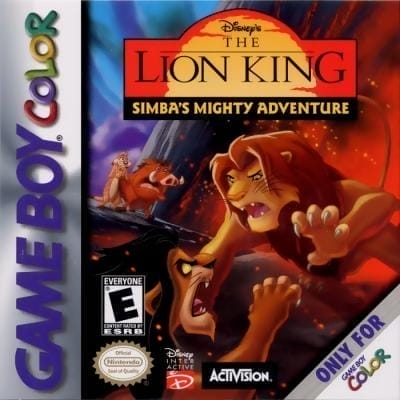
The Lion King: Simba's Mighty Adventure
The Lion King: Simba's Mighty Adventure is a 2000 platform game based on the 1994 animated film The Lion King. It was developed by Paradox Development for the PlayStation and by Torus Games for the Game Boy Color, and published by Activision. Unlike the previous The Lion King video game, it adhered more closely to the events in the film and the storyline carried on into the 1998 animated film The Lion King II: Simba's Pride, with Simba having to battle his evil uncle Scar, rescue his daughter Kiara (the protagonist from The Lion King II: Simba's Pride), and finally battle Zira. This game was the only console-based platform game to involve The Lion King II: Simba's Pride. All other games based on the title were educational or puzzle games and were released on the PC.
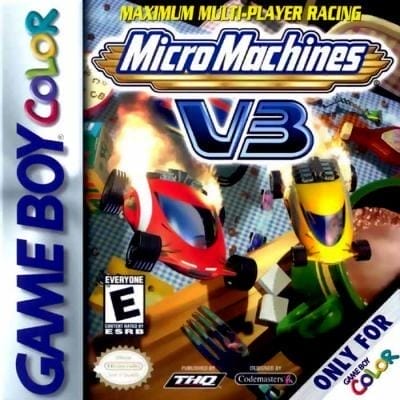
Micro Machines V3
Micro Machines V3 is a racing video game developed by Codemasters, the third title of the Micro Machines series following Micro Machines 2: Turbo Tournament (1994) and the first set in a 3D game environment. It was originally released for PlayStation in 1997 followed by ports to Microsoft Windows, Nintendo 64 (as Micro Machines 64 Turbo) in 1999, and a 2D version for Game Boy Color in 2000.
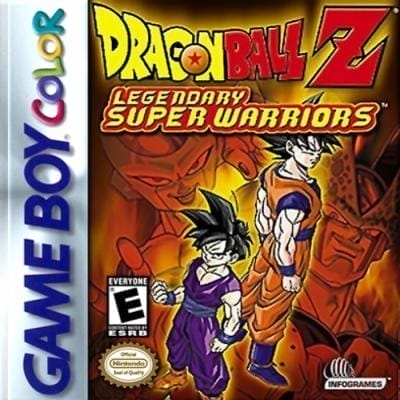
Dragon Ball Z: Legendary Super Warriors
Dragon Ball Z: Legendary Super Warriors is a turn-based fighting game released for the Game Boy Color. It is played with the use of in-game cards for attacks, techniques and support items. The game's story takes place from the start of Dragon Ball Z, the Saiyan Saga, and runs until the end of the Buu Saga. The game includes two extra stories involving Future Trunks's timeline. Once the game has been completed, the player can replay the story mode or battle modes the game has with the freedom to use any characters and forms they choose in any of the given battles. During the player's second playthrough, they may be able to unlock additional characters if certain criteria are met.
Browse our collection of 11 Game Boy retro games, all playable instantly in your browser. No download required. Play classic games online in your browser and save your progress anytime.