All Games
456 games
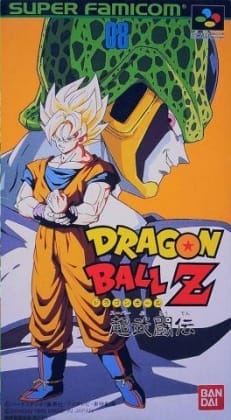
Dragon Ball Z: Super Butōden
Dragon Ball Z: Super Butōden, known as Dragon Ball Z in Europe, is a 1993 fighting video game developed by Tose and published by Bandai for the Super Nintendo Entertainment System. It is based upon Akira Toriyama's Dragon Ball franchise, and was its first fighting game. Due to the popularity of Street Fighter II: The World Warrior at the time, producer Toshihiro Suzuki chose to work on a fighting game when assigned to a new project due to it being his preferred genre. Its gameplay consists of one-on-one fights, with a main six-button configuration, featuring special moves, as well as three playable modes. Dragon Ball Z: Super Butōden garnered mostly positive reception from critics; most reviewers praised the presentation and gameplay but others felt divided in regards to several design aspects. The game sold approximately 1.3 million units in its first two months of release in Japan.
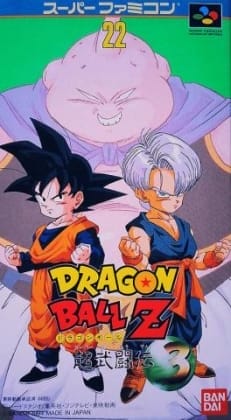
Dragon Ball Z: Super Butouden 3
Dragon Ball Z: Super Butōden 3 is a 1994 fighting video game developed by Tose and published by Bandai for the Super Nintendo Entertainment System. Based upon Akira Toriyama's Dragon Ball franchise, it is the sequel to Dragon Ball Z: Super Butōden 2, which was released earlier in 1993 for SNES. Following the Majin Buu arc, its gameplay remains relatively the same as the previous two Super Butōden entries, consisting of one-on-one fights using a main six-button configuration, featuring special moves as well as two playable modes. Dragon Ball Z: Super Butōden 3 was created by most of the same team who previously worked on the first two Super Butōden entries on Super Nintendo, with producer Toshihiro Suzuki returning to lead its production, with additional support from staff of both Toei Animation and V Jump magazine. Like its predecessors, Super Butōden 3 garnered positive reception from critics, however the lack of a story mode was heavily criticized by reviewers.
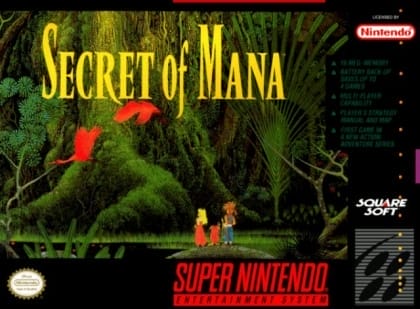
Secret of Mana
Secret of Mana, originally released in Japan as Seiken Densetsu 2, is a 1993 action role-playing game developed and published by Square for the Super Nintendo Entertainment System. It is the sequel to the 1991 game Seiken Densetsu, released in North America as Final Fantasy Adventure and in Europe as Mystic Quest. Secret of Mana was the first Seiken Densetsu title to be marketed as part of the Mana series "Mana (series)") rather than the Final Fantasy series. Set in a high fantasy universe, the game follows three heroes as they attempt to prevent an empire from conquering the world with the power of an ancient flying fortress. Rather than using a turn-based battle system like contemporaneous role-playing games, Secret of Mana features real-time battles with a power bar mechanic. The game has a unique Ring Command menu system, which pauses the action and allows the player to make decisions in the middle of battle.
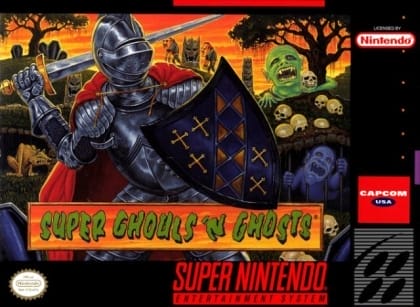
Super Ghouls 'n Ghosts
Super Ghouls 'n Ghosts, known as Chō Makaimura in Japan, is a 1991 platform video game developed and published by Capcom for the Super Nintendo Entertainment System. The third installment in the Ghosts 'n Goblins series and the first not to be released for arcades, it again depicts knight Arthur saving Princess Guinevere and the kingdom from Emperor Sardius, who has cast a spell that has revived the Ghoul Realm. The game has been included in multiple compilations of Capcom classics. A remake was released for the Game Boy Advance which features an additional game mode with new stages.
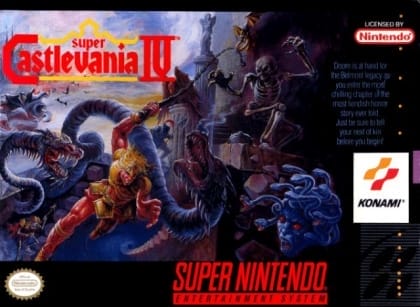
Super Castlevania IV
Super Castlevania IV is a 1991 platform game developed and published by Konami for the Super Nintendo Entertainment System. It has been re-released multiple times, including for the Super NES Classic Edition. Super Castlevania IV features expanded play control, 16-bit graphics featuring Super NES's Mode 7, and a soundtrack featuring new pieces and arrangements based on previous Castlevania music. Following the same setting as Castlevania on the NES, the game takes place in 1691 Transylvania, where the vampire hunter Simon Belmont must defeat the vampire Dracula. The game received critical acclaim and is considered one of the greatest video games ever made.
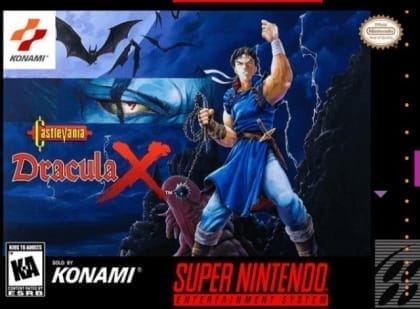
Castlevania: Dracula X
Castlevania: Dracula X, titled Castlevania: Vampire's Kiss in Europe and Akumajou Dracula XX in Japan, is a 1995 platform game developed and published by Konami for the Super Nintendo Entertainment System. It is the second Castlevania installment to be released for the Super NES. It is a remake of Castlevania: Rondo of Blood, which was previously released in Japan on the PC Engine Super CD-ROM2 in 1993. While the plot is similar to Rondo of Blood and it uses many of that game's graphics, it features new levels and altered gameplay elements, rather than being a direct port because of the limits of the Super NES cartridge format and exclusivity agreements with PC Engine maker NEC. It was released on July 21, 1995 in Japan, in September 1995 in North America, February 22, 1996 in Europe, and on June 22, 1996, in Australia. The game received mixed reviews, with journalists considering it inferior to Rondo of Blood and criticizing its high difficulty.
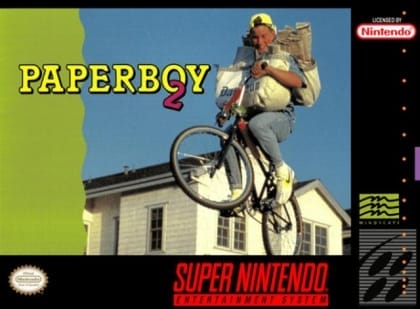
Paperboy 2
Among the four reviewers in Electronic Gaming Monthly, they described the Game Boy version of the game as suffering from the limitations of the size of the Game Boy's screen and the black and white graphics with two reviewers recommending it to fans of the original game.#cite_note-EGMRev-3) Ed Ricketts of Amiga Format gave the Amiga version a 44 percent rating.#cite_note-6)N-Force gave the NES version a 42 percent rating.#cite_note-7) Jonathan Gagnon of Game Players gave the Game Gear version a 5 out of 10.#cite_note-8) Jonathan Davies of Super Play gave the SNES version a 29 percent rating.#cite_note-9) Brett Alan Weiss of AllGame gave the SNES version one and a half stars out of five.#cite_note-10)Total! gave the NES version 50 out of 100, criticizing its poor camera and controls, as well as the music and gameplay.#cite_note-11)Sega Force reviewed the Mega Drive/Genesis version and rated it 55 out of 100.
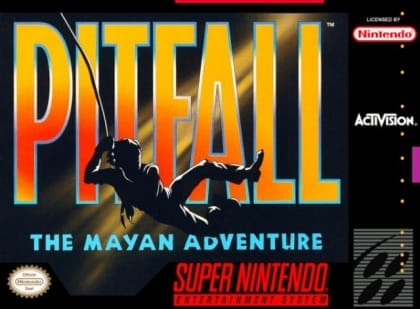
Pitfall: The Mayan Adventure
Pitfall: The Mayan Adventure is a 1994 action-platformvideo game developed by Activision in conjunction with Kroyer Films. The fourth installment in the Pitfall! franchise, players assume the role of Pitfall Harry Jr. as he embarks on a journey through the Mayan jungles of Central America in an attempt to rescue Pitfall Harry, his father and the protagonist of previous entries in the series, from the evil Mayan warrior spirit Zakelua. Its gameplay mainly consists of action and platforming mixed with stage-based exploration using a main six-button configuration. Pitfall: The Mayan Adventure began its development on the Super Nintendo Entertainment System and formed part in a string of planned franchise revivals by Activision along with other games from the Atari 2600 such as Kaboom! "Kaboom! (video game)") and River Raid.
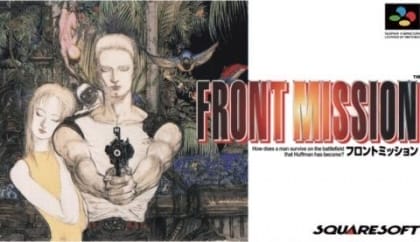
Front Mission
Front Mission#cite_note-1) is a tactical role-playing game developed by G-Craft and published by Square for the Super Famicom. It was originally released only in Japan on February 24, 1995. Front Mission is the first main entry and the first entry overall in the Front Mission series.#cite_note-gamespy-2)Front Mission is part of a serialized storyline that follows the stories of various characters and their struggles involving mecha known as wanzers.#cite_note-dengeki2004-3) A direct port of the game was released for the WonderSwan Color in Japan on July 12, 2002. A remake of the game developed by Square Enix Co., Ltd. was released for the PlayStation in Japan on October 23, 2003, titled Front Mission 1st.#cite_note-4) It included new content and offered a new USN scenario to play through. Front Mission 1st was then ported to the Nintendo DS with more additional content and was released in Japan on March 22, 2007.
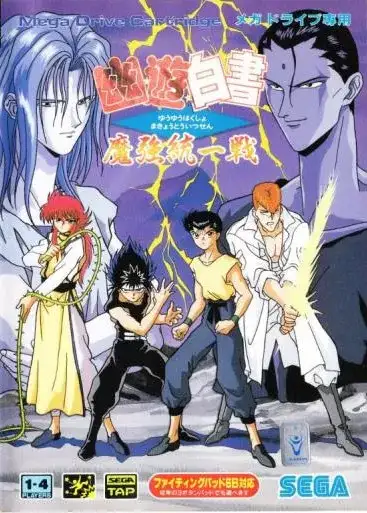
Yu Yu Hakusho
Yu Yu Hakusho Makyō Tōitsusen is a 1994 fighting game developed by Treasure and published by Sega for the Mega Drive. It is based on the manga series Yu Yu Hakusho by Yoshihiro Togashi. The plot follows the protagonist Yusuke Urameshi, who is tasked by the ruler of the afterlife with solving detective-style cases involving both humans and demons threatening the living world. The story begins to focus heavily on martial arts battles as it progresses. The game features 11 playable characters from the manga and traditional 2D fighting gameplay. Opponents compete in rounds, attempting to deplete each other's health by utilizing short and long-range attacks and special combos "Combo (video gaming)"). It also integrates other mechanics, such as allowing up to four players to compete simultaneously and letting fighters alternate between horizontal planes in the foreground and background.
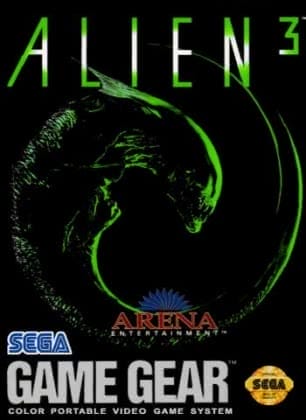
Alien 3
Alien 3 (stylized as ALIEN3) is a 1992 run and gun video game based on the film of the same name. It was released for the Sega Genesis and Amiga in 1992, then for the Commodore 64, Game Boy, Game Gear, Nintendo Entertainment System, Super Nintendo Entertainment System, and Master System. Each version was developed by Probe Software, except for the Game Boy version, which was developed by Bits Studios.
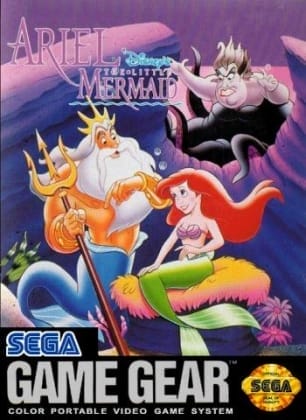
The Little Mermaid
The game begins underwater, where Ariel can shoot bubbles to trap her foes and throw them. She can also dig through sand to find treasure and pick up sea shells to break open treasure chests. Treasure chests contain power-ups to increase her bubbles' power and range. Ariel can collect icons scattered throughout the levels to restore health, gain extra lives, or increase the range/power of her bubbles. There are six stages that Ariel must traverse to find Ursula. The stages are The Coral Sea, Sunken Ship, Sea of Ice, Undersea Volcano, and finally two battles at Ursula's Castle.
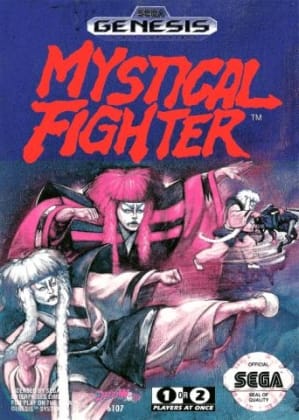
Mystical Fighter
Mystical Fighter, originally released in Japan as Maō Renjishi (魔王連獅子, Demon King Renjishi) is a beat 'em up game for the Sega Genesis. The story, designs and characters are based on Japanese mythology.
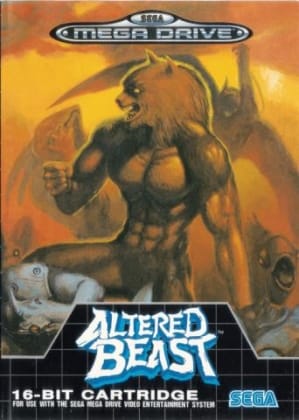
Altered Beast
Altered Beast is a 1988 beat 'em upvideo game developed by Team Shinobi and published by Sega for arcades. Set in Ancient Greece, the game follows a Roman centurion who is resurrected by the Olympian god Zeus to rescue his daughter Athena from Neff, the demonic ruler of the underworld. By collecting three power-ups in a level, the player character can transform into one of five mythical beasts. The game's development was led by Makoto Uchida "Makoto Uchida (game developer)"), and marked his first role as a project lead. Uchida and his team used the System 16arcade system board. Altered Beast was ported to several consoles and home computers, and was the original pack-in game for the Sega Genesis/Mega Drive when the console was launched in North America in 1989 and Europe in 1990. Altered Beast's arcade release and its ports received generally positive reviews, with mainly praising the gameplay and graphics.
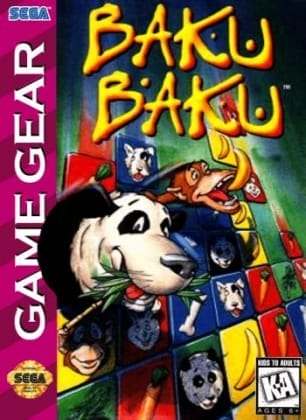
Baku Baku Animal
Baku Baku, released in Japan as Baku Baku Animal, is a 1995 puzzle video game developed and published by Sega for Japanese arcades. It was later ported to the Sega Saturn, Game Gear, and Microsoft Windows, with the latter version being Sega's first network-compatible PC game. A Sega NetLink-compatible version of the game was also announced, but never released. The Japanese onomatopoeia "Baku Baku" roughly translates to "Chomp chomp". The King is hosting a competition to hire a royal zoo keeper for his daughter's numerous pets. The main character, Polly, must fight her way through other applicants to earn the position. Each opponent has an intro dialogue with different responses based on if the player wins or loses. > Bug: "How lucky, my opponent is only a little girl!" Polly: "Hmph! How rude! I'll show you who's the weak one!" — Sega, Baku Baku Animal Baku Baku Animal is a falling block puzzle game in which the player lines up falling animal and food tiles.
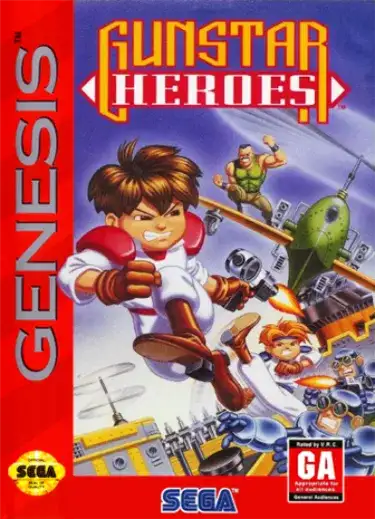
Gunstar Heroes
Gunstar Heroes is a 1993 run and gun video game developed by Treasure and published by Sega for the Sega Genesis. It was Treasure's first developed video game. The premise is centered around a pair of characters, the Gunstars, in their efforts to stop an evil empire from recovering four powerful gems. The characters can fire guns and perform a series of acrobatic maneuvers to fight enemies across each stage. There are four weapons which can be combined with one another to create different shot types. Development on Gunstar Heroes began among a team of staff working at Konami in 1991. Following an unwillingness of Konami to embrace their original game ideas, the team quit in 1992 and formed Treasure to see their project through. The team wanted to develop their game for the Genesis because of the system's powerful Motorola 68000 microprocessor.
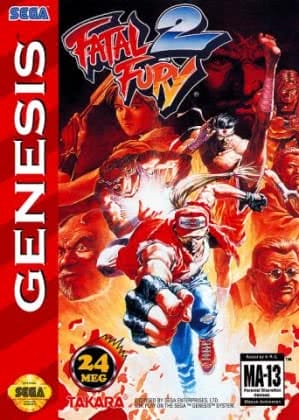
Fatal Fury 2
Fatal Fury 2, known as Garō Densetsu 2: Aratanaru Tatakai in Japan, is a 1992 fighting game developed and published by SNK for arcades. It is the second installment in the Fatal Fury franchise and the sequel to Fatal Fury: King of Fighters (1991). It was later ported to several home systems, including the Super Nintendo Entertainment System and Sega Genesis by Takara. Its updated version, Fatal Fury Special, was released in 1993. The game introduced Kim Kaphwan, the first Taekwondo and the first Korean character in fighting games, and Mai Shiranui, one of SNK's mascots, their primary sex symbol, and one of the most well-known female video game characters. Both of them went on to become mainstays in both Fatal Fury games as well as The King of Fighters series. Fatal Fury 2 was the second game in SNK's 100-Mega Shock series, offering improved graphics and gameplay over the original Fatal Fury: King of Fighters.
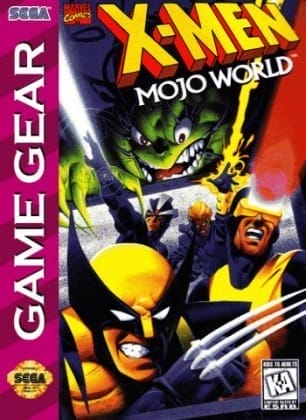
X-Men: Mojo World
X-Men: Mojo World is a video game released in 1996 on the Game Gear system. The game starts off with Wolverine and Rogue as playable X-Men; Gambit, Cyclops, Havok, and Shard can be unlocked later on. The game shares the same engine as its predecessor, X-Men: Gamesmaster's Legacy. The game was also released for the Master System in Brazil by Tec Toy.
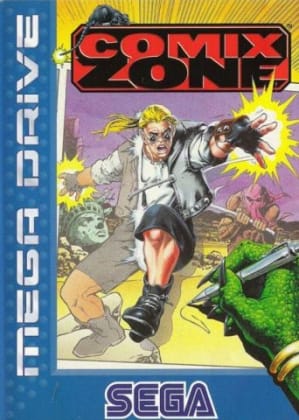
Comix Zone
Comix Zone is a 1995 beat 'em up game developed by Sega Technical Institute (STI) and published by Sega for the Sega Genesis. Set within the panels "Panel (comics)") of a comic book, it follows the comic writer/artist Sketch Turner who, after being transported into the comic by one of his creations, attempts to escape while contending with various threats. The game sees the player traversing six levels "Level (video games)"), where they interact with the comic world and must defeat enemies, or occasionally solve puzzles, to progress. Conceived by STI programmer Peter Morawiec, the concept for the game was originally shown off in 1992 via a demonstration video, entitled Joe Pencil Trapped In The Comix Zone. The concept was greenlit by Sega of America CEO Tom Kalinske and development began on the game in late 1993.
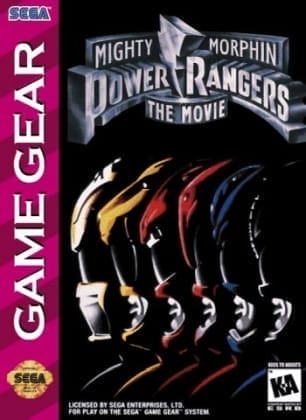
Mighty Morphin Power Rangers: The Movie
Mighty Morphin Power Rangers: The Movie is the title of four different video game adaptations of the film of the same name which were released for the Super NES, Genesis, Game Boy, and Game Gear. While the games are ostensibly based on the film, they also feature characters and plot elements from the second season of the original TV series. Like the previous game versions "Mighty Morphin Power Rangers (video game)") of the original Mighty Morphin Power Rangers, none of the four versions of the movie game are ports of each other. The Super NES version is a side-scrolling action game similar to the previous SNES game based on the series. The game can be played by one or two players with six available characters. Billy and Kimberly return from the previous game along with the introduction of Tommy, as the White Ranger (opposed to appearing as the Green Ranger), and three new rookie rangers, Rocky, Adam, and Aisha, who replace Jason, Zack, and Trini from the original.
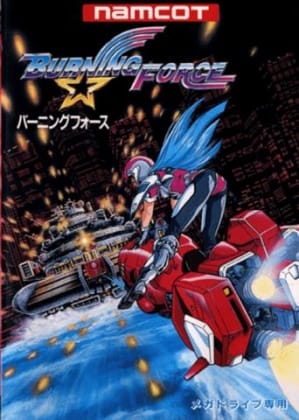
Burning Fight
Burning Fight is a 1991 beat 'em upvideo game developed and published by SNK for arcades on the Neo Geo MVS system. Introduced to capture a share in the then-popular beat 'em ups market, it was meant to compete with Technōs' Double Dragon "Double Dragon (video game)"), the leader of the genre at the time. Three years after its release in the arcades and on the Neo Geo AES, it was released on Neo Geo CD as the only other home version. The game was produced by SNK co-founder Eikichi Kawasaki, best known for his work on various other SNK titles, such as the Fatal Fury, Art of Fighting, and Samurai Shodown series. A re-release version of Burning Fight is included in SNK Arcade Classics Vol. 1, which was released for the PlayStation 2, PlayStation Portable and Wii in 2008. Duke Edwards and Billy King, two renowned New York City Police detectives, are hot on the trail of a dangerous Japanese crime syndicate.
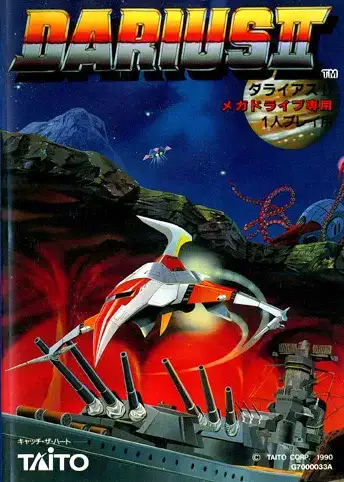
Darius II
Following the death of Artaxerxes I, in 424 BC or 423 BC, there was a struggle for power between his sons. The victor, Ochus, adopted the name Darius (Greek sources often call him Darius Nothos, "Bastard"), in reference to his unattested lineage. His reign was marked by a series of revolts by various satraps and involvement in the Greek Peloponnesian War. It seems that Darius II was quite dependent on his wife Parysatis. In excerpts from Ctesias, some harem intrigues are recorded, in which he played a disreputable part. The Elephantine papyri#Archaeology "Johanan (High Priest)") mention Darius II as a contemporary of the high priest Johanan of Ezra 6:10. Darius II is potentially mentioned in the books of Haggai, Zechariah, and Ezra–Nehemiah of the Hebrew Bible (the ChristianOld Testament). There is some debate on whether these books refer to Darius the Great though.
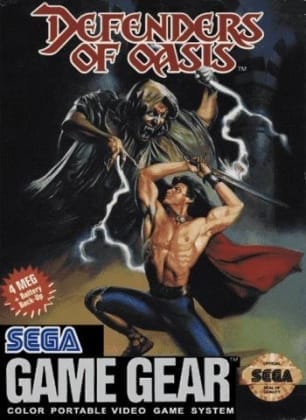
Defenders of Oasis
Defenders of Oasis is a role-playing video game developed and published by Sega for the Game Gear in 1992. The game's setting is based on One Thousand and One Nights, and the plot centers on a heroic prince and his companions, who set out to confront an empire attempting to revive the dark god Ahriman. The game was one of the few original RPGs made for the Game Gear, and features an overhead gameplay perspective, a command-based combat system, and an autosave feature. Defenders of Oasis was commercially successful and positively received by reviewers, who praised the game's visuals and level of detail.
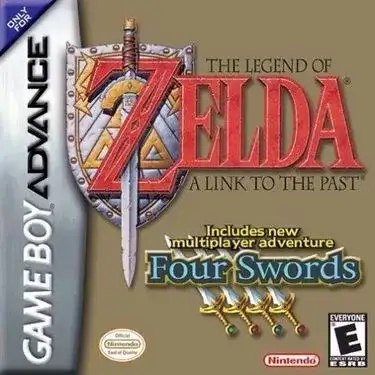
The Legend of Zelda: A Link to the Past & Four Swords
The Legend of Zelda: A Link to the Past and Four Swords is a 2002 action-adventure game compilation developed by Nintendo R&D2 and Flagship and published by Nintendo for the Game Boy Advance. The game was released in December 2002 in North America and in March 2003 in Japan and Europe. The cartridge contains a modified port of A Link to the Past, originally released for the Super Nintendo Entertainment System in 1991, and an original multiplayer-only game titled Four Swords, which serves as the ninth installment in The Legend of Zelda series. A stand-alone port of Four Swords was released for a limited time on Nintendo's DSiWare service as The Legend of Zelda: Four Swords Anniversary Edition on September 28, 2011; this version includes new content, such as a single-player mode and additional areas.
Browse our collection of 456 Games retro games, all playable instantly in your browser. No download required. Play classic games online in your browser and save your progress anytime.