Nintendo EAD
20 games — Nintendo EAD
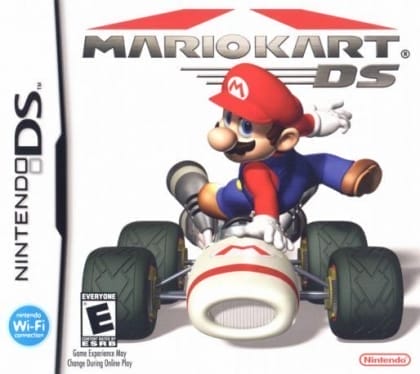
Mario Kart DS
Mario Kart DS is a 2005 kart racing game developed and published by Nintendo for the Nintendo DShandheld game console. Like other games in the series, Mario Kart DS features characters from the Mario series "Mario (franchise)") and pits them against each other as they race in karts on tracks based on locations in the Mario series. It was released in November 2005 in North America, Europe, and Australia, and on December 8, 2005, in Japan, and rereleased for the Wii U's Virtual Console in North America and PAL regions in April 2015 and in Japan in May 2016. The game is the fifth main entry in the Mario Kart series, and the first playable via the Nintendo Wi-Fi Connection online service. Mario Kart DS was acclaimed for its refined gameplay, robust single-player content, and innovative multiplayer features, particularly its pioneering online Wi-Fi functionality.
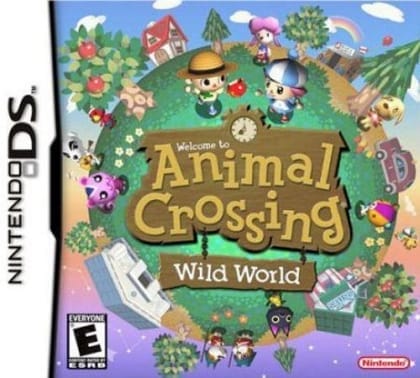
Animal Crossing: Wild World
Animal Crossing: Wild World is a 2005 social simulationvideo game developed and published by Nintendo for the Nintendo DShandheld game console. It was released in Japan in November 2005, in North America and Australia in December 2005, and in Europe in March 2006. It is the second installment in the Animal Crossing series, and the sequel to Animal Crossing "Animal Crossing (video game)") on the GameCube. Wild World focuses on living in a remote village populated with anthropomorphic animals, where the player character is encouraged to perform a number of tasks, such as collecting and planting. Like all Animal Crossing titles, the game is synced to the console's clock and calendar, allowing the game to be played in real-time "Real-time (media)"), which affects the occurrence of in-game events based on the current time of day or season.
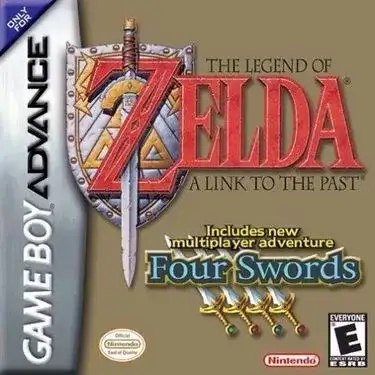
The Legend of Zelda: A Link to the Past & Four Swords
The Legend of Zelda: A Link to the Past and Four Swords is a 2002 action-adventure game compilation developed by Nintendo R&D2 and Flagship and published by Nintendo for the Game Boy Advance. The game was released in December 2002 in North America and in March 2003 in Japan and Europe. The cartridge contains a modified port of A Link to the Past, originally released for the Super Nintendo Entertainment System in 1991, and an original multiplayer-only game titled Four Swords, which serves as the ninth installment in The Legend of Zelda series. A stand-alone port of Four Swords was released for a limited time on Nintendo's DSiWare service as The Legend of Zelda: Four Swords Anniversary Edition on September 28, 2011; this version includes new content, such as a single-player mode and additional areas.
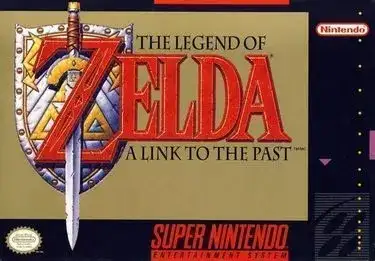
The Legend of Zelda: A Link to the Past
The Legend of Zelda: A Link to the Past is a 1991 action-adventure game developed and published by Nintendo for the Super Nintendo Entertainment System (SNES). It is the third game in The Legend of Zelda series, following 1987's Zelda II: The Adventure of Link, and is the first entry in the series to be released for the SNES. The story is set many years before the events of the first two Zelda games. The player assumes the role of Link as he journeys to save Hyrule, defeat the demon king Ganon, and rescue the descendants of the Seven Sages. It returns to a top-down perspective similar to the original The Legend of Zelda "The Legend of Zelda (video game)"), dropping the side-scrolling gameplay of The Adventure of Link. It also introduced series staples such as parallel worlds and items including the Master Sword. A Link to the Past is considered among the greatest video games ever made, with particular praise for its presentation and innovative gameplay.
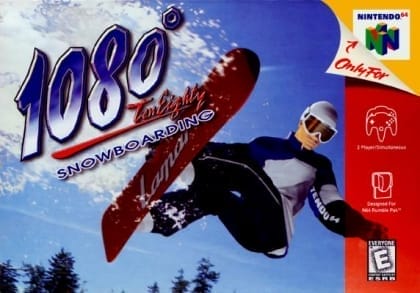
1080° Snowboarding
Commercially, 1080° Snowboarding was a significant success in the United States. According to PC Data, the game sold 817,529 units and generated $40.9 million in revenue by the end of 1998, making it the seventh-best-selling Nintendo 64 game of the year. Over its lifetime, the game sold 1,230,000 units in the U.S. and over 23,000 in Japan. However, it did not surpass the commercial success of the developers' previous game, Wave Race 64, which sold 1,950,000 units in the U.S. and 154,000 in Japan. 1080° Snowboarding was later re-released on the Wii's Virtual Console service in 2008 and on the Wii U in 2016. It was also made available on the Nintendo Classics service on December 7, 2023. 1080° Avalanche, the sequel to 1080° Snowboarding, was released for the GameCube in 2003. Unlike its predecessor, the sequel received mixed reviews.
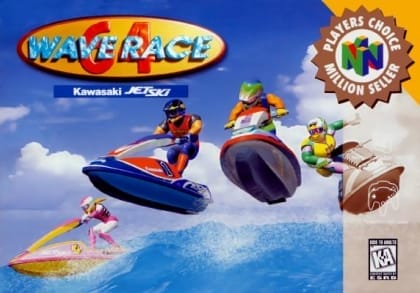
Wave Race 64
Wave Race 64 is a 1996 racing video game developed and published by Nintendo for the Nintendo 64. It is the second entry in the Wave Race series following the 1992 Game Boy game Wave Race. Gameplay involves the player racing on a personal watercraft on a variety of courses while successfully manoeuvring the vehicle around various buoys. A multiplayer mode where two players can compete against each other on a chosen course is also included. The game supports the Controller Pak, which allows players to transfer saved data from one game cartridge to another. The game is presented in a letterboxed 14:9 aspect ratio. Originally referred to as "F-Zero on water", the game was intended to feature high-speed boats with transforming capabilities, but these were ultimately replaced with Jet Skis as producer Shigeru Miyamoto felt that the game would not be differentiated enough from other titles on other systems.
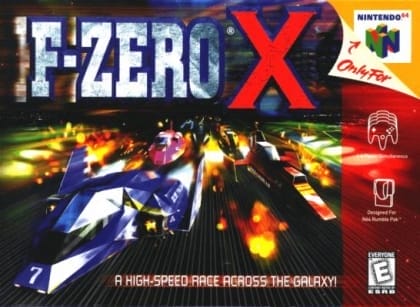
F-Zero X
F-Zero X is a 1998 racing game developed and published by Nintendo for the Nintendo 64. It is the sequel to the original F-Zero (1990), and the first F-Zero game with 3D graphics. It has a steep learning curve and its gameplay experience is similar to that of the original. The F-Zero X Expansion Kit, an expansion pack for the 64DD featuring 12 more tracks and track and vehicle editors, was released in Japan in 2000. F-Zero X introduced the ability to attack other racers, a Death Race mode, and a random track generator called the "X Cup". In the Death Race, the player's objective is to rapidly annihilate or pass the 29 other racers, and the X Cup generates a different set of tracks each time played. Critics generally praised F-Zero X for its fast gameplay, abundance of courses and vehicles, track design, and maintaining a high framerate, although it has been widely criticized for its lack of graphical detail.
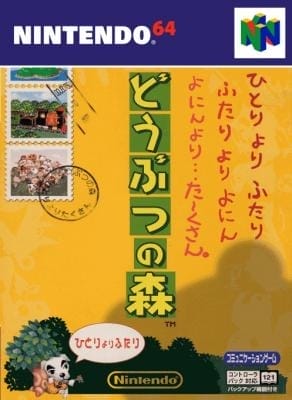
Animal Forest
Animal Crossing, known in Japan as Dōbutsu no Mori, is a social simulation game developed and published by Nintendo. It was first released in 2001 for the Nintendo 64 in Japan, followed by an enhanced port for the GameCube. The GameCube version was localized for North America, Australia, and Europe between 2002 and 2004. It is the first game in the Animal Crossing series. Animal Crossing features nonlinear gameplay in which the player takes up residence in a village inhabited by anthropomorphic animals. The goal is to save money to pay off the mortgage on the player's house by collecting and selling natural materials. The player can engage in everyday life in the village, interact with the animals, attend events, and contribute to the village's development. The western localization replaces Japanese holidays and cultural references with Western ones. Animal Crossing was conceived as a role-playing adventure for the 64DD, with the main action taking place in dungeons.
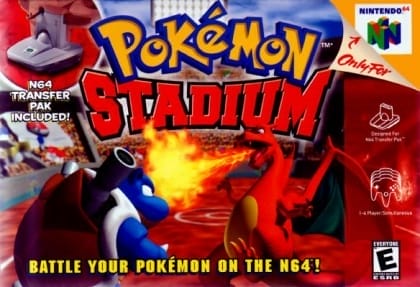
Pokémon Stadium
Pokémon Stadium is a 1999 strategy video game developed and published by Nintendo for the Nintendo 64. The gameplay revolves around a 3D turn-based battling system using the 151 Pokémon from the Game Boy games Pokémon Red, Blue, and Yellow, with several in-game challenges for players to overcome. The game includes four "Cups", each of which is a series of three-on-three Pokémon battles against an ordered lineup of opponents. The "Gym Leader Castle" mode involves battles against several boss opponents who appeared in the Game Boy games. Pokémon Stadium also features mini-games and numerous features available through its compatibility with Pokémon Red, Blue, and Yellow. Using the Transfer Pak accessory that was bundled with the game, players are able to view, organize, store, trade, and battle using Pokémon uploaded from Pokémon Red, Blue, and Yellow. It was the first Stadium title released in Western regions, succeeding the Japan-only 1998 Nintendo 64 release Pocket Monsters Stadium.
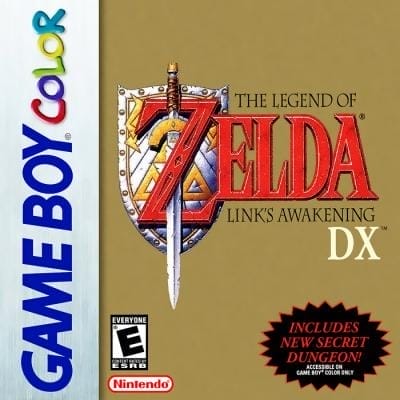
The Legend of Zelda: Link's Awakening DX
The Legend of Zelda: Link's Awakening DX is a 1998 action-adventure game developed and published by Nintendo for the Game Boy Color. The game is a colorized version of the 1993 Game Boy title The Legend of Zelda: Link's Awakening, in which protagonist Link must fight monsters, explore dungeons and solve puzzles to escape from Koholint Island. The DX version of Link's Awakening features gameplay additions including a color-themed dungeon and support for the Game Boy Printer. Upon release, Link's Awakening DX was critically acclaimed, with reviewers commending the game on the strengths of the original title and welcoming the addition of color graphics and new features, although noting the additions were largely insubstantial compared to the original game. The DX version of Link's Awakening has retrospectively been cited by critics as one of the best games for the Game Boy and Game Boy Color systems.
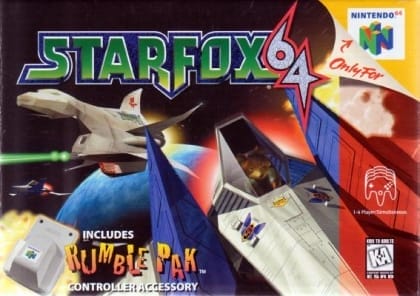
Star Fox 64
Star Fox 64, known as Lylat Wars in PAL regions, is a 1997 rail shooter game developed and published by Nintendo for the Nintendo 64. It is the second installment in the Star Fox series and a reboot of the original Star Fox for the Super Nintendo Entertainment System. Star Fox 64 was the first Nintendo 64 game to feature support for the system's Rumble Pak peripheral, which initially came bundled with retail copies of the game. Since its release in 1997, the game has sold over 4 million copies, making it the best-selling game in the series and the ninth best-selling game on the system. The game received critical acclaim for its precise controls, voice acting, multiplayer modes, and replay value through the use of branching gameplay paths. Like the SNES Star Fox game before it, Star Fox 64 has been deemed one of the greatest video games of all time.
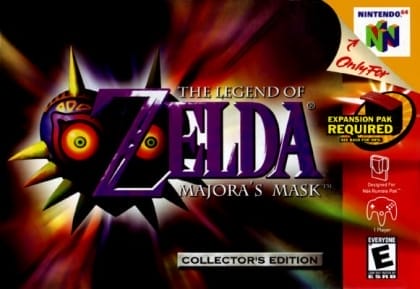
The Legend of Zelda: Majora's Mask
The Legend of Zelda: Majora's Mask is a 2000 action-adventure game developed and published by Nintendo for the Nintendo 64. It is the second game in The Legend of Zelda series to use 3D graphics, following Ocarina of Time (1998). Designed by a creative team led by Eiji Aonuma, Yoshiaki Koizumi, and Shigeru Miyamoto, Majora's Mask was completed in less than two years. It features enhanced graphics and several gameplay changes, but reuses elements and character models from Ocarina of Time, a creative decision made necessary by time constraints. A few months after Ocarina of Time, the character Link arrives in a parallel world, Termina, and becomes embroiled in a quest to prevent the moon from crashing in three days' time. The game introduces gameplay concepts revolving around a perpetually repeating three-day cycle and the use of various masks that transform Link into different forms.
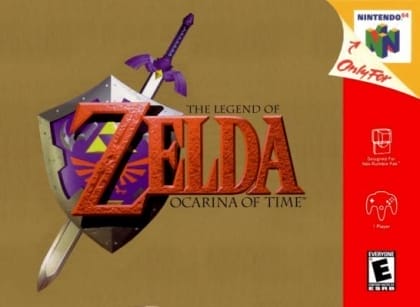
The Legend of Zelda: Ocarina of Time
Ocarina of Time was developed by Nintendo's Entertainment Analysis & Development division. It was led by five directors, including Eiji Aonuma and Yoshiaki Koizumi, produced by series co-creator Shigeru Miyamoto, and written by Kensuke Tanabe. Series composer Koji Kondo wrote its soundtrack. The player controls Link in the realm of Hyrule on a quest to stop the evil king Ganondorf by traveling through time and navigating dungeons and an overworld. The game introduced features such as a target-lock system and context-sensitive buttons, which have since become common in 3D adventure games. The player must play songs on an ocarina to progress. Ocarina of Time was acclaimed by critics and consumers, who praised its visuals, sound, gameplay, soundtrack, and writing. It has been ranked by numerous publications as one of the greatest video games of all time and is the highest-rated game on the review aggregator Metacritic.
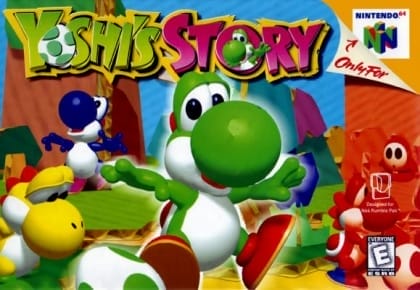
Yoshi's Story
Yoshi's Story is a 1997 platform game published and developed by Nintendo for the Nintendo 64. Following the Super NES game Yoshi's Island (1995), it is the second main installment in the Yoshi series and the second released for a home console. It was released in Japan in December 1997, and worldwide the following year. The game has been subsequently re-released on the Wii, Wii U, and Nintendo Switch. Development was handled by Nintendo EAD and led by Hideki Konno and Takashi Tezuka. It was the first Yoshi platformer not to be produced nor directed by Shigeru Miyamoto, although he contributed design ideas and acted as supervisor for the game. The score was composed by Kazumi Totaka, who provided the voice of Yoshi in the game. Continuing within the platform genre with gameplay similar to its predecessor, Yoshi's Story is more puzzle-oriented, with most challenges being tied to the strategic achievement of a high score.
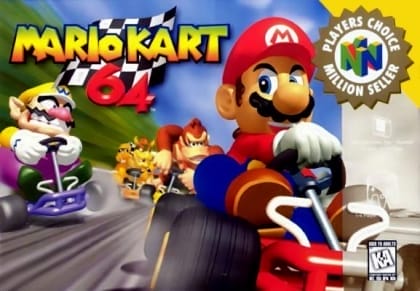
Mario Kart 64
Mario Kart 64 was first revealed in 1995 alongside the N64. The development team focused on best utilising the console's technology for smooth gameplay, rather than innovating significantly on its predecessor, in order to appeal to a wide audience. Developers were bounded by the N64's processing power and made use of rendering techniques "Rendering (computer graphics)") to save on memory, and used car physics simulations to aid the game's kart design. Mario Kart 64 was released in late 1996 in Japan and in 1997 worldwide, months after the launch of the N64. Mario Kart 64 was received positively by critics. The track designs, multiplayer, and presentation were lauded, while criticism was directed towards its technical issues and difficulty. The game sold 9.87 million copies worldwide, making it the second-bestselling N64 game. Mario Kart 64 was nominated for awards following its release, and retrospectively has been considered one of the greatest video games of all time.
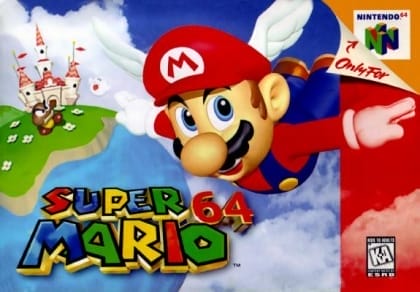
Super Mario 64
Super Mario 64 is a 1996 platform game developed and published by Nintendo for the Nintendo 64. It is the first Super Mario game to feature 3D gameplay, combining traditional Super Mario gameplay, visual style, and characters in a large open world. In the game, Bowser invades Princess Peach's castle, kidnaps her, and hides the castle's Power Stars in different worlds inside magical paintings. As Mario, the player traverses levels and collects Power Stars to unlock areas of the castle, reach Bowser and rescue Peach. Director Shigeru Miyamoto conceived a 3D Super Mario game during the production of Star Fox "Star Fox (1993 video game)") (1993). The team spent about one year on design and twenty months on production, starting with the virtual camera system. The team continued with illustrating the 3D character models and refining sprite movements. Yoji Inagaki recorded the sound effects, and the score was composed by Koji Kondo.
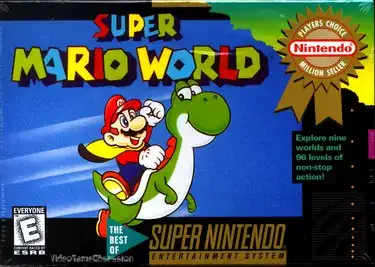
Super Mario World
Not to be confused with Super Mario 3D World or Super Nintendo World. "Super Mario 4" and "Mario 4" redirect here. For the bootleg game Super Mario IV, see Armadillo (video game) § Gameplay#Gameplay "Armadillo (video game)"). For the bootleg game Mario 4: A Space Odyssey, see List of unofficial Mario media § Console games. Super Mario World is a 1990 platform game developed and published by Nintendo for the Super Nintendo Entertainment System (SNES). It was released in Japan in 1990, in North America in 1991 and PAL territories in 1992. The player controls Mario on his quest to save Princess Peach and Dinosaur Land from the series' antagonist Bowser and the Koopalings. The gameplay is similar to that of earlier Super Mario games; players control Mario through a series of levels "Level (gaming)") in which the goal is to reach the goalpost at the end. Super Mario World introduces Yoshi, a ridable dinosaur who can eat enemies and spit some of them out as projectiles.
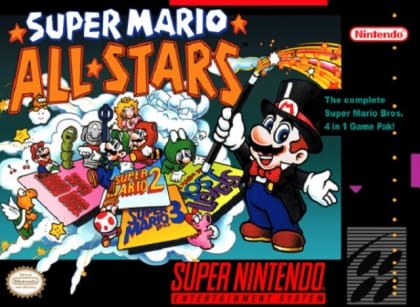
Super Mario All-Stars
Super Mario All-Stars is a 1993 platform game compilation developed and published by Nintendo for the Super Nintendo Entertainment System (SNES). It contains remakes of four Super Mario games released for the Nintendo Entertainment System (NES) and the Famicom Disk System: Super Mario Bros. (1985), Super Mario Bros.: The Lost Levels (1986; released as Super Mario Bros. 2 in Japan), Super Mario Bros. 2 (1988), and Super Mario Bros. 3 (1988). As in the original games, players control the Italian plumber Mario and his brother Luigi through themed worlds, collecting power-ups, avoiding obstacles, and finding secrets. The remakes feature updated graphics—including the addition of parallax scrolling—and music, modified game physics, a save feature, and bug fixes. Nintendo Entertainment Analysis & Development developed the compilation after completing Super Mario Kart (1992), at the suggestion of the Mario creator, Shigeru Miyamoto.
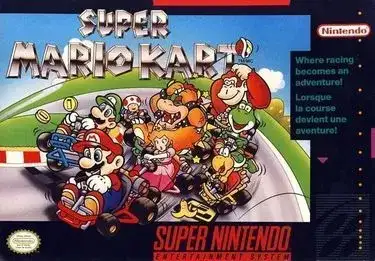
Super Mario Kart
Super Mario Kart is a 1992 kart racing game developed and published by Nintendo for the Super Nintendo Entertainment System (SNES). The first game in the Mario Kart series, it was released in Japan on August 27, 1992, North America on September 1, 1992, and Europe on January 21, 1993. Selling 8.76 million copies worldwide, the game went on to become the fourth best-selling SNES game of all time. Super Mario Kart was re-released on the Wii's Virtual Console in 2009, on the Wii U's Virtual Console in 2013, and on the New Nintendo 3DS's Virtual Console in 2016. Nintendo re-released Super Mario Kart in 2017 as part of the company's Super NES Classic Edition. In Super Mario Kart, the player takes control of one of eight Mario series characters, each with differing capabilities. In single-player mode, players can race against computer-controlled characters in 4 multi-race cups consisting of 20 tracks (5 in each cup) over three difficulty levels (50cc, 100cc and 150cc).
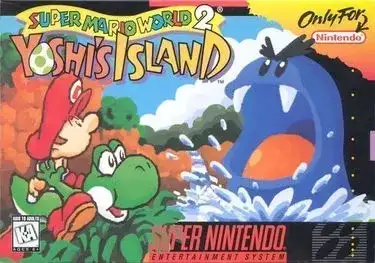
Super Mario World 2: Yoshi's Island
Super Mario World 2: Yoshi's Island is a 1995 platform game developed and published by Nintendo for the Super Nintendo Entertainment System (SNES). The player controls Yoshi dinosaurs on their quest to reunite baby Mario with his brother Luigi, who has been kidnapped by the wizard Kamek. Yoshi runs and jumps to reach the end of each level while solving puzzles and collecting items with Mario's help. Having introduced the character in the previous Super Mario game, Super Mario World (1990), Nintendo decided to develop a game starring Yoshi, with the aim of making it more accessible. Yoshi's Island introduced his signature flutter jump and egg-spawning abilities. The marker-drawn art style was created by scanning hand-drawn pictures and approximating them pixel-by-pixel. Some special effects were powered by a new Super FX2 microchip. After four years of development, Yoshi's Island was released in Japan in August 1995 and worldwide two months later. It sold more than four million copies.
Browse our collection of 20 Nintendo EAD retro games, all playable instantly in your browser. No download required. Play classic games online in your browser and save your progress anytime.