All Games
456 games
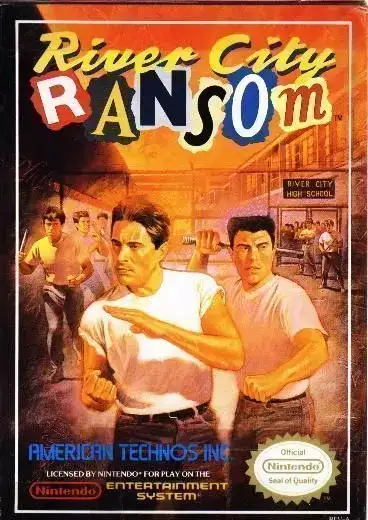
River City Ransom
Downtown Nekketsu Monogatari, released as River City Ransom in North America and Street Gangs in PAL regions, is a 1989 action-adventure beat 'em up video game developed and published by Technōs Japan for the Nintendo Entertainment System. It is the third installment of the Kunio-kun series released for the NES, preceded by Renegade and Super Dodge Ball, and the first to be developed specifically for the system. Gameplay is similar to that of Renegade, but set in a non-linear open world, a first for the series. It was the first console game published by the developer's North American subsidiary American Technos, without input from previous series publisher Taito. Outside Japan, River City Ransom was not highly successful when initially released. However, it received positive reviews from critics for its innovative gameplay and humor, retaining a dedicated cult following to this day, while also making the Kunio-kun series prominent in the beat 'em up space.
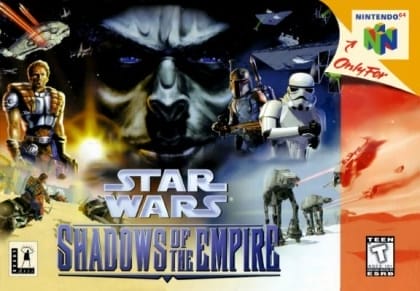
Star Wars: Shadows of the Empire
Star Wars: Shadows of the Empire is a 1996 video game developed by LucasArts and published by Nintendo for the Nintendo 64. It is primarily a third-person shooter, with multiple types of vehicular combat and third-person shooting sequences. A version for Windows was released by LucasArts in 1997. The player controls the mercenary Dash Rendar to help Luke Skywalker and rescue Princess Leia from Prince Xizor. It is part of the Star Wars: Shadows of the Empire multimedia project and takes place between The Empire Strikes Back and Return of the Jedi. Tracks from the multimedia project's soundtrack are in the musical score. The game received mixed reviews from critics. Shadows of the Empire was the third-best-selling Nintendo 64 game for 1997, with more than one million copies sold. Star Wars: Shadows of the Empire plays primarily as a third-person shooter. Players control the protagonist, Dash Rendar.
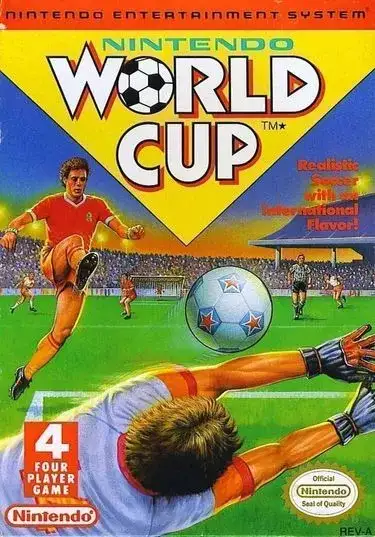
Nintendo World Cup
Nintendo World Cup, released in Japan as Nekketsu High School Dodgeball Club: Soccer Story, is a 1990 soccer video game developed by Technōs Japan for the Nintendo Entertainment System. It was localized and released outside Japan by Nintendo, with a Game Boy port also being released. It is the fourth installment of the Kunio-kun series. Ports for the PC Engine and Mega Drive were also released in Japan.
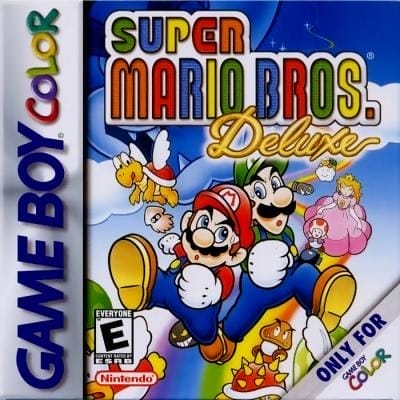
Super Mario Bros. Deluxe
Super Mario Bros. Deluxe (also known as Super Mario Bros. DX) is a 1999 platform game developed and published by Nintendo for the Game Boy Color. It is a largely unaltered port of the 1985 Super Mario Bros., originally released for the Nintendo Entertainment System (NES), with an unlockable version of its 1986 Japanese sequel, Super Mario Bros.: The Lost Levels. The game also introduces several new features, including a single-player and two-player race mode, a challenge mode for individual levels, and various toys and collectibles, some of which utilize the functionality of the Game Boy Printer. Upon release, Super Mario Bros. Deluxe received widespread acclaim. Critics praised its faithful adaptation of Super Mario Bros. on the Game Boy Color, as well as the additional gameplay modes and features, with minor criticism directed at the gameplay effects of the smaller screen size compared to the NES.
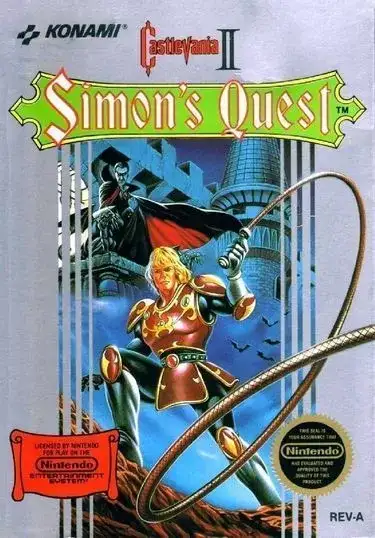
Castlevania II: Simon's Quest
Castlevania II: Simon's Quest is a 1987 action role-playing game developed and published by Konami. It was originally released in Japan in 1987 for the Famicom Disk System, and in North America in 1988 for the Nintendo Entertainment System. It is the second Castlevania game released for the NES, following the original Castlevania (1986). Set seven years after the events of the first installment, the player once again assumes the role of vampire hunter Simon Belmont, who is on a journey to undo a curse placed on him by Dracula at the end of their previous encounter. Dracula's body was split into five parts, which Simon must find and bring to the ruins of Castle Dracula in order to defeat him. The game deviates from the traditional platforming of its predecessor, incorporating role-playing and open world elements.
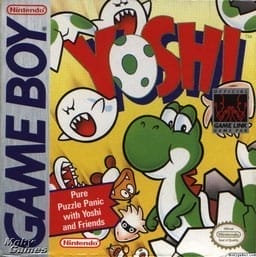
Yoshi
Yoshi,#cite_note-4) known as Mario & Yoshi in PAL regions, is a 1991 puzzle video game developed by Game Freak and published by Nintendo for the Nintendo Entertainment System and Game Boy. Both versions were first released simultaneously in Japan on December 14, 1991, and released in all other regions the following year. In Yoshi, the player is tasked with clearing monsters from the on-screen playing field. The monsters fall in from the top of the screen to build vertical stacks; the player must prevent a stack from growing too high such that it exits the play field. In order to do so, the player swaps and moves the stacks about such that falling monsters collide with identical monsters stationed atop the stacks, causing them to be removed from play. Yoshi offers both a scoring "Score (game)")-focused single-player mode and a competitive two-player mode.
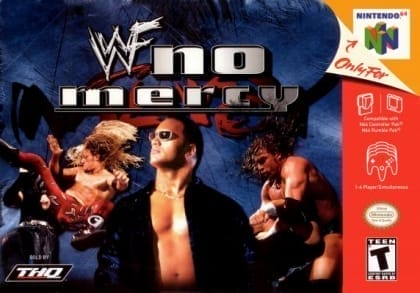
WWF No Mercy
WWF No Mercy is a professional wrestlingvideo game released in 2000 by THQ for the Nintendo 64. It is based on the World Wrestling Federation (WWF, now WWE) and is named after the WWF's annual event of the same name. Developed by Asmik Ace Entertainment and AKI Corporation, No Mercy is the last in a series of Nintendo 64 wrestling games from the companies that started with WCW vs. nWo: World Tour. No Mercy features various improvements over its predecessor, 1999's WWF WrestleMania 2000 "WWF WrestleMania 2000 (video game)"), such as improved graphics, a "Championship" mode that allows players to participate in various branching storylines "Angle (professional wrestling)"), and a more in-depth character creation mode. The improvements made to the game, combined with the series' vaunted gameplay and controls garnered praise from critics upon release. Nevertheless, the game was faulted by some for its blocky graphics, slowdown and the difficulty level of computer-controlled opponents.
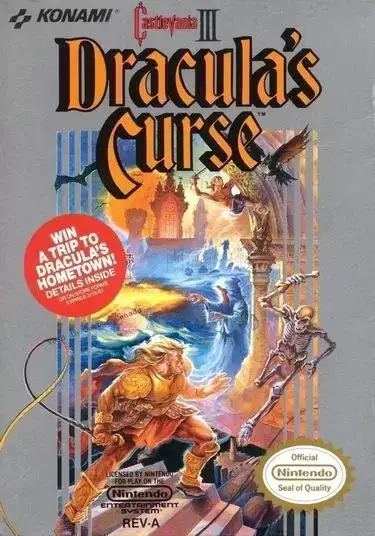
Castlevania III: Dracula's Curse
Castlevania III: Dracula's Curse is a 1989 platform game developed and published by Konami for the Nintendo Entertainment System. It was released on December 22, 1989, in Japan, September 19, 1990, in North America and in May 1992 in PAL regions by Konami's Palcom publishing label. Despite being the third numbered installment in the Castlevania series, Castlevania III: Dracula's Curse is a prequel to the original Castlevania (1986), being set a few centuries before its events. The game's protagonist is Trevor Belmont, an ancestor of Simon Belmont, who is called into action to vanquish the forces of Dracula. Relinquishing the role-playing and action-adventure elements from Castlevania II: Simon's Quest, the game returns to the action-platforming gameplay of the original Castlevania but also introduces new concepts to the formula such as branching level paths and multiple playable characters. Castlevania III received positive critical reception.
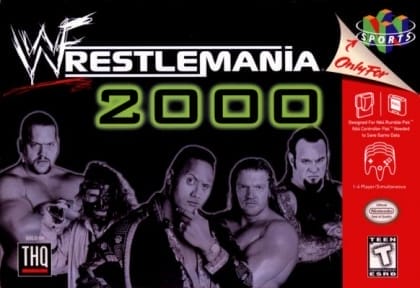
WWF WrestleMania 2000
WWF WrestleMania 2000 is a professional wrestling video game released in 1999 on the Nintendo 64 (N64) console. It was based on the World Wrestling Federation's (WWF, now WWE) annual pay-per-view, WrestleMania. Despite the fact that this game is based upon WrestleMania 2000, the game was released five months prior (and four months prior on the Game Boy Color) to the actual PPV itself, therefore resulting in the game using the stage design from the 1999 event, WrestleMania XV, instead. Released at the height of the WWF's Attitude Era, WrestleMania 2000 was the first WWF game released by THQ. The WWF ended its long relationship with Acclaim Entertainment after witnessing the video game success of its competitor, World Championship Wrestling (WCW), on behalf of THQ. WrestleMania 2000 shares its game engine with the Japan-only release Virtual Pro Wrestling 2: Ōdō Keishō. The game would be followed with a sequel WWF No Mercy in 2000.
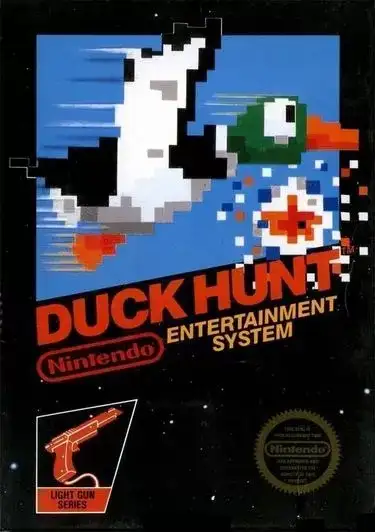
Duck Hunt
Duck Hunt#cite_note-7) is a 1984 light gun shootervideo game developed and published by Nintendo for the Nintendo Entertainment System (NES). The game was first released in April 1984 in Japan for the Family Computer (Famicom) console and in North America as an arcade game for the Nintendo VS. System. It became a launch game for the NES in North America in October 1985, and was re-released in Europe two years later. Players fire the NES Zapper at a CRT television,#cite_note-howtogeek.com-8) with three attempts per round "Level (video gaming)") to shoot ducks and clay pigeons. The game initially received a positive reception in the mid-1980s,#cite_note-Adlum-9) but was later given mild praise in retrospective reviews.#cite_note-Allgame_review-10)#cite_note-Gamespot_people-11) The game was inspired by Nintendo's previous electro-mechanical arcade game which was based on the Laser Clay Shooting System released in 1976.
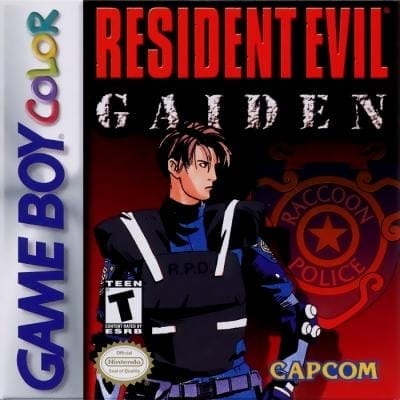
Resident Evil: Gaiden
Resident Evil Gaiden is a 2001 action-adventure game developed by M4 for the Game Boy Color. It was published by Capcom in Japan and North America, and by Virgin Interactive in Europe. Receiving generally mixed reviews by critics, the game marks a departure from other entries in the series, insofar as areas are explored with the playable character seen from a top-down perspective and with battles fought in first-person view. The story revolves around a viral outbreak on a passenger ship and has Leon S. Kennedy and Barry Burton return as protagonists. This game is non-canon, as its plot is contradicted by the main series in key parts, and its events are ignored. The game features three playable characters and consists of exploring areas, collecting items and combating enemies in the process.
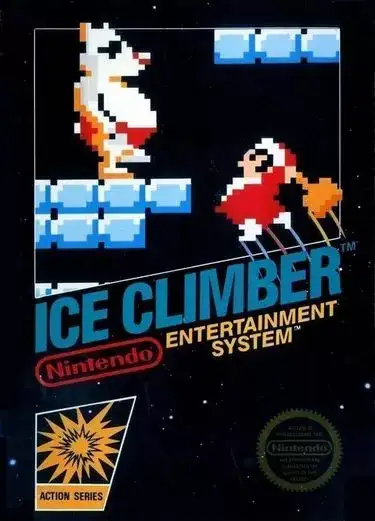
Ice Climber
Ice Climber is a 1985 platformvideo game developed and published by Nintendo. It was released for both the arcadeVS. System and the Famicom/Nintendo Entertainment System console. The main protagonists, Popo and Nana, collectively known as the Ice Climbers, scale 32 vertically scrolling, ice-covered mountains to recover stolen vegetables from a giant condor. In some European countries, Ice Climber was bundled with the Nintendo Entertainment System. The arcade expansion, VS. Ice Climber, features exclusive content from the traditional NES release; including an animated title screen "Title screen (gaming)"), a stage select menu at the start of the game and between levels, 16 more mountains, occasional blizzard and wind effects, more enemies and vegetables, and bonus multiplier items "Item (gaming)"). Popo and Nana are playable characters in the Super Smash Bros. series, starting with the 2001 game, Super Smash Bros. Melee for the GameCube.
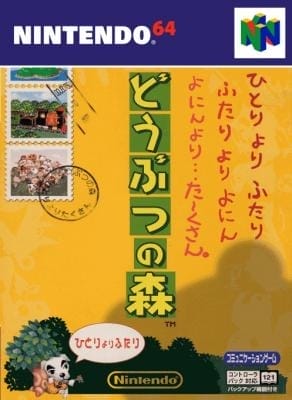
Animal Forest
Animal Crossing, known in Japan as Dōbutsu no Mori, is a social simulation game developed and published by Nintendo. It was first released in 2001 for the Nintendo 64 in Japan, followed by an enhanced port for the GameCube. The GameCube version was localized for North America, Australia, and Europe between 2002 and 2004. It is the first game in the Animal Crossing series. Animal Crossing features nonlinear gameplay in which the player takes up residence in a village inhabited by anthropomorphic animals. The goal is to save money to pay off the mortgage on the player's house by collecting and selling natural materials. The player can engage in everyday life in the village, interact with the animals, attend events, and contribute to the village's development. The western localization replaces Japanese holidays and cultural references with Western ones. Animal Crossing was conceived as a role-playing adventure for the 64DD, with the main action taking place in dungeons.
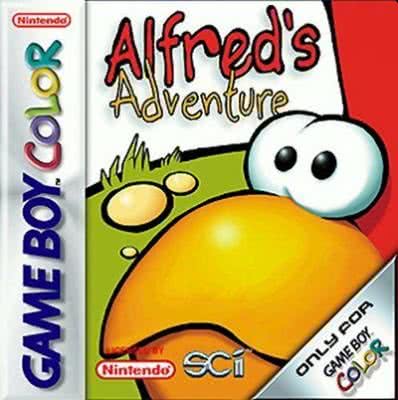
Alfred's Adventure
Alfred Chicken is a platform video game developed by Twilight and published by Mindscape for the Game Boy. It was later ported to the Amiga, Amiga CD32, NES, and Super NES in 1993 and February 1994, in Europe and North America, respectively. A Europe-exclusive remake of the game, entitled Alfred's Adventure, was developed by Möbius Entertainment and released by SCi for Game Boy Color in June 2000. Another remake, named Alfred Chicken, was also developed by King Monkey, a division of Möbius Entertainment, and released by Sony Computer Entertainment for PlayStation in 2002. Rockstar Games does not own the title's rights, despite buying Möbius later on, as Jason McGann personally held the rights.
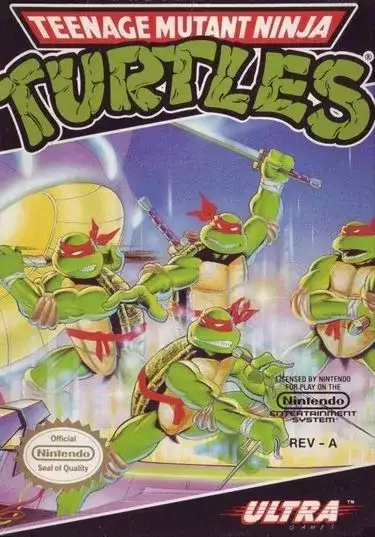
Teenage Mutant Ninja Turtles
Teenage Mutant Ninja Turtles is a 2003 beat 'em up game developed and published by Konami, based on the 2003 Teenage Mutant Ninja Turtles TV series "Teenage Mutant Ninja Turtles (2003 TV series)"). It loosely adapts the events of the show's first season. The game is the first Teenage Mutant Ninja Turtles video game to be developed by Konami in a roughly decade, following the release of Teenage Mutant Ninja Turtles: Tournament Fighters (1993). It was released for GameCube, PlayStation 2, Xbox and Windows in late 2003 in North America, followed by a European release the following April. A demo was also available via a special edition bonus disc packaged with Mario Kart: Double Dash (2003) in North America.#cite_note-2)#cite_note-3) The game received two sequels: Teenage Mutant Ninja Turtles 2: Battle Nexus in 2004, and Teenage Mutant Ninja Turtles 3: Mutant Nightmare in 2005. The player can play as either Leonardo, Donatello, Michelangelo or Raphael.
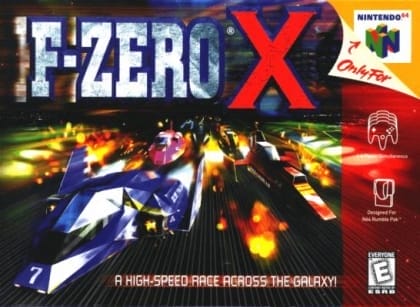
F-Zero X
F-Zero X is a 1998 racing game developed and published by Nintendo for the Nintendo 64. It is the sequel to the original F-Zero (1990), and the first F-Zero game with 3D graphics. It has a steep learning curve and its gameplay experience is similar to that of the original. The F-Zero X Expansion Kit, an expansion pack for the 64DD featuring 12 more tracks and track and vehicle editors, was released in Japan in 2000. F-Zero X introduced the ability to attack other racers, a Death Race mode, and a random track generator called the "X Cup". In the Death Race, the player's objective is to rapidly annihilate or pass the 29 other racers, and the X Cup generates a different set of tracks each time played. Critics generally praised F-Zero X for its fast gameplay, abundance of courses and vehicles, track design, and maintaining a high framerate, although it has been widely criticized for its lack of graphical detail.
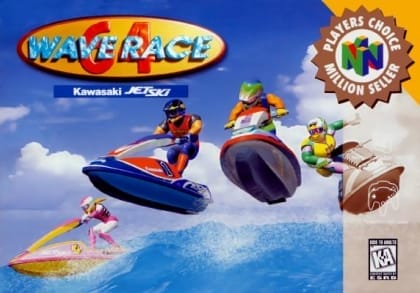
Wave Race 64
Wave Race 64 is a 1996 racing video game developed and published by Nintendo for the Nintendo 64. It is the second entry in the Wave Race series following the 1992 Game Boy game Wave Race. Gameplay involves the player racing on a personal watercraft on a variety of courses while successfully manoeuvring the vehicle around various buoys. A multiplayer mode where two players can compete against each other on a chosen course is also included. The game supports the Controller Pak, which allows players to transfer saved data from one game cartridge to another. The game is presented in a letterboxed 14:9 aspect ratio. Originally referred to as "F-Zero on water", the game was intended to feature high-speed boats with transforming capabilities, but these were ultimately replaced with Jet Skis as producer Shigeru Miyamoto felt that the game would not be differentiated enough from other titles on other systems.
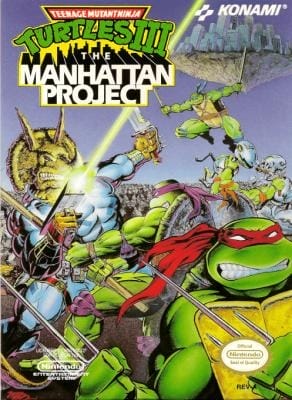
Teenage Mutant Ninja Turtles III: The Manhattan Project
Teenage Mutant Ninja Turtles III: The Manhattan Project is a 1991 beat 'em up game developed and published by Konami for the Family Computer (Famicom) in Japan and for the Nintendo Entertainment System in North America in 1992. It is the third video game iteration of the Teenage Mutant Ninja Turtles for the NES. The game features play mechanics similar to the previous game, _Teenage Mutant Ninja Turtles II: The Arcade Game#Nintendo\_Entertainment\System "Teenage Mutant Ninja Turtles (arcade game)"), but it is an original title for the NES without any preceding arcade version. It is based on the 1987 Teenage Mutant Ninja Turtles "Teenage Mutant Ninja Turtles (1987 TV series)") animated series, being released after the show's 5th season. The game was re-released as part of Teenage Mutant Ninja Turtles: The Cowabunga Collection in 2022. The game begins with the Turtles spending their vacation in Key West, Florida.
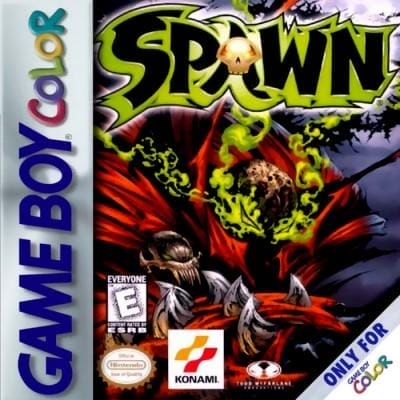
Spawn
Spawn is an action-adventure platformer with some shooter elements. The player controls Spawn and must guide him through four stages of combat, navigating various environmental obstacles while defeating enemies, various thugs and occasional bosses. In each of the stages, Spawn must eliminate the enemies by punching, kicking, and using his weapons; a chain, which unleashes a powerful attack, a gun, and a machine gun. The player can find and collect items along the way, such as a "Spawn" symbol that restores a small amount of Spawn's health, a "G" symbol for gun ammunition, and an "M" symbol for machine gun ammunition. The game contains both horizontal and vertical stages, as well as a motorcycle chase stage. There are three difficulty modes. In each mode, enemies can take more damage. One punch will knock out any minor enemy in easy mode and the player can start at any stage. It takes two punches in normal mode and the player must play through from stage one.
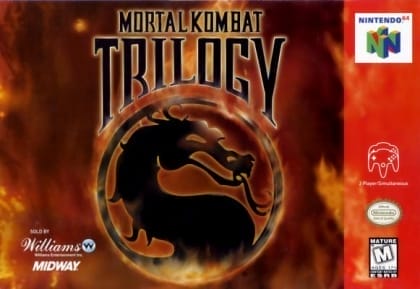
Mortal Kombat Trilogy
Mortal Kombat Trilogy is a 1996 fighting game released by Midway as the second and final update to Mortal Kombat 3 (the first being Ultimate Mortal Kombat 3) for the PlayStation, Nintendo 64, Sega Saturn and PCs. Further versions were also released for the Game.com and R-Zone. It features a similar basic gameplay system and the same story as Ultimate Mortal Kombat 3, but adds characters and stages restored from Mortal Kombat and Mortal Kombat II. New additions to the game included the "Aggressor" bar and the Brutality mechanic. The game was met with mixed to positive reviews upon release.
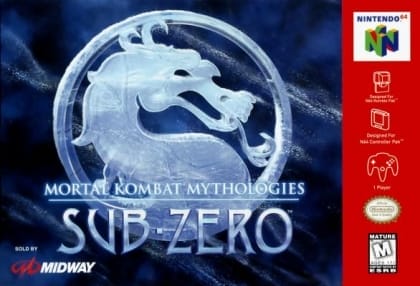
Mortal Kombat Mythologies: Sub-Zero
Mortal Kombat Mythologies: Sub-Zero is a 1997 action-adventure game developed and published by Midway for the PlayStation and Nintendo 64. A spin-off of the Mortal Kombat franchise, it is the first installment not to be a fighting game. Set before the Mortal Kombat, it follows Bi-Han, the elder Sub-Zero, in his quest to find Shinnok's amulet. It also serves as a prequel to Mortal Kombat 4, which was released the same year, introducing characters and story elements that would be used by the fourth main installment. Mythologies is the final game in the series to use digitized actors. The game drew a divisive response from critics, with the PlayStation version considered the superior of the two releases. Praise was directed at the transition from the fighting game genre to action-adventure and the PlayStation version's live-action cutscenes, but the controls and punishing level design received criticism.
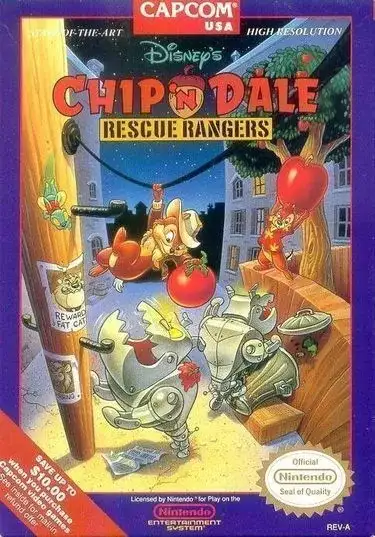
Chip 'n Dale: Rescue Rangers
Chip 'n Dale Rescue Rangers is a platform video game developed and published by Capcom for the Nintendo Entertainment System. It is based on the Disney animated series of the same name. It was released in North America and Japan in 1990, and Europe in 1991. An arcade version was released by Nintendo in 1990. It sold approximately 1.2 million copies worldwide. The game was included in The Disney Afternoon Collection compilation for PlayStation 4, Windows, and Xbox One released in April 2017.
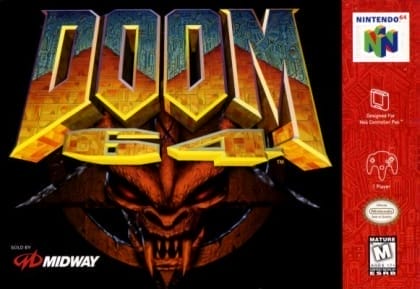
Doom 64
Doom 64 is a 1997 first-person shooter game developed and published by Midway Games for the Nintendo 64. It is the second spin-off in id Software's Doom series "Doom (franchise)") after Final Doom (1996), and the fourth game in the series overall. Doom 64 was developed from 1994 by Midway Studios San Diego under supervision of id Software, the main developer of the Doom franchise, and was tentatively titled Doom: The Absolution. It uses a customized version of the Doom engine, enabling new kinds of level geometry, and dynamic colored lighting. The game features new sprite graphics for weapons and monsters. Doom 64 received positive reviews from critics, who praised its graphics, level design, soundtrack, and atmosphere, although some criticized the lack of new gameplay elements compared to the previous games of the series. It gained a cult following, with several fan-made PC source ports and mods.
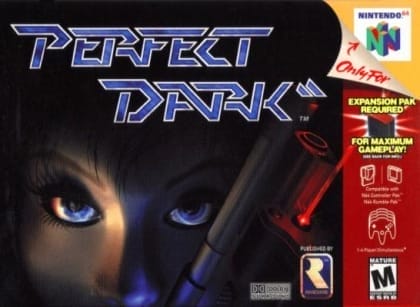
Perfect Dark
Perfect Dark is a 2000 first-person shooter game developed and published by Rare for the Nintendo 64. The first game of the Perfect Dark "Perfect Dark (series)") series, it follows Joanna Dark, an agent of the Carrington Institute research centre, as she attempts to stop an extraterrestrial conspiracy by rival corporation dataDyne. The game features a campaign mode where the player must complete a series of levels "Level (video games)") to progress through the story, as well as a range of multiplayer options, including a co-operative mode and traditional deathmatch settings with computer-controlled bots. As a spiritual successor to Rare's 1997 first-person shooter GoldenEye 007 "GoldenEye 007 (1997 video game)"), Perfect Dark shares many features with its predecessor and runs on an upgraded version of its game engine.
Browse our collection of 456 Games retro games, all playable instantly in your browser. No download required. Play classic games online in your browser and save your progress anytime.