All Games
456 games
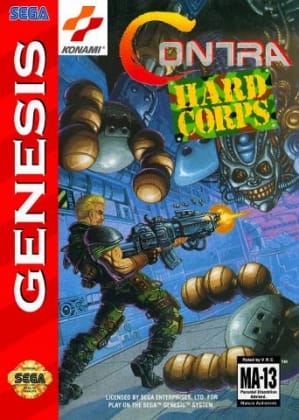
Contra: Hard Corps
Contra: Hard Corps, released as Contra: The Hard Corps in Japan and Probotector in Europe and Australia, is a 1994 run and gun game developed and published by Konami for the Sega Genesis, making it the first game in the Contra series released for a Sega platform. Set five years after the events of Contra III: The Alien Wars, a terrorist group led by the renegade Colonel Bahamut has stolen an alien cell recovered from the war and now intends to use it to produce weapons. A new task force, known as the titular "Hard Corps", are sent to deal with the situation. The game features a branching storyline with multiple possible endings. Hard Corps spawned its own series of follow-ups; including the Appaloosa-developed sequels, Contra: Legacy of War & C: The Contra Adventure; and the Arc System Works-developed prequel, Hard Corps: Uprising. Hard Corps has since been considered to be a spin-off from the mainline Contra entries.
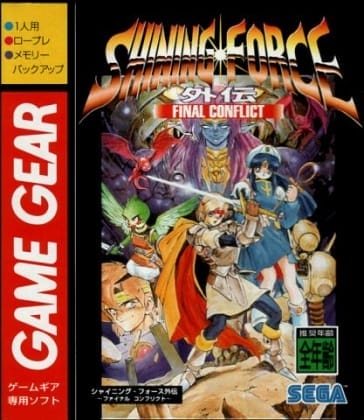
Shining Force Gaiden: Final Conflict
Shining Force Gaiden: Final Conflict (シャイニング・フォース外伝 ~ファイナル コンフリクト~) is a 1995 tactical role-playing game for the Game Gear, taking place between the games Shining Force and Shining Force II. It was released after both games, with the intention of connecting their plots. Despite its name, it is not directly story-related to Shining Force Gaiden or Shining Force Gaiden II, also released for Game Gear. Unlike most of its predecessors, the game was never released outside Japan. English patches have been created by fans for players who cannot read Japanese. Bottom: A battle taking place. Final Conflict uses gameplay identical to the previous Gaiden games, Shining Force Gaiden and Shining Force Gaiden II. The player progresses through a series of turn-based tactical battles interspersed with short cutscenes. Between the cutscenes, the player is allowed to save the game, promote characters, resurrect fallen characters, and sometimes buy and sell weapons and healing items.
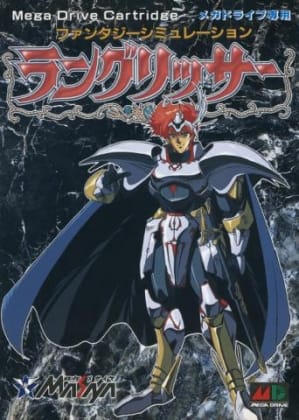
Langrisser
Units work on an affinity system. Fliers are strong to soldiers but weak to bowmen. Soldiers are strong to pikemen but weak to cavalry. Cavalry are strong to soldiers and weak to pikemen. Holy units are strong against demon units. Seafaring units get a tactical advantage when attacking from water. The game engine used in Langrisser III is a considerable departure from the rest of the series, relying on mass battles between a commander's entire platoon against his enemy's. Since Der Langrisser, the series offered non-linear branching paths and multiple endings. The player's choices and actions in Der Langrisser affected which of four different paths they followed, either aligning "Alignment (role-playing games)") themselves with one of three different factions or fighting against all of them. Each of the four paths leads to a different ending and there are over 75 possible scenarios. Langrisser III introduced a relationship system similar to dating sims.
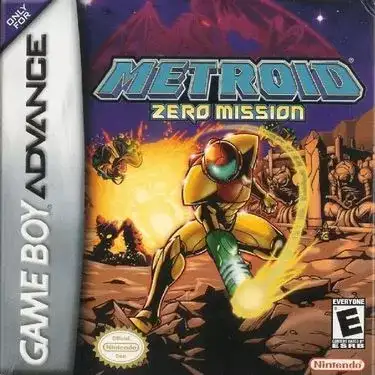
Metroid: Zero Mission
Metroid: Zero Mission is a 2004 action-adventure game developed and published by Nintendo for the Game Boy Advance. It is a remake of the original Metroid (1986), with updated visuals and gameplay. Like other Metroid games, the player controls the bounty hunter Samus Aran. Samus travels to the planet Zebes after learning that the Space Pirates are experimenting with Metroids, hostile parasitic creatures, which they plan to use to take over the universe. The gameplay focuses on exploration, with the player searching for power-ups to reach previously inaccessible areas. The remake adds items, additional areas, mini-bosses, difficulty levels "Balance (game design)") and a rewritten story that explores Samus's past. Zero Mission received praise for its new content, graphics, gameplay and improvements over the original, but criticism for its short length. Nintendo Power named it one of the best Nintendo games.
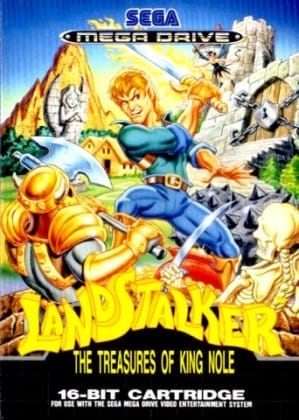
Landstalker: The Treasures of King Nole
Landstalker: The Treasures of King Nole is a 1992 action role-playing video game developed by Climax Entertainment and published by Sega for the Sega Genesis. The player takes on the role of the treasure hunter Nigel as they navigate a three-dimensional world through an isometric viewpoint, solving puzzles and fighting enemies. The game was a critical and commercial success. A spinoff called Lady Stalker: Challenge from the Past was released in Japan for the Super NES in 1995. A sequel was in the planning stages but was cancelled. Dark Savior and Alundra are considered spiritual successors. Nigel is a playable character in Time Stalkers. It has been re-released several times: on the Wii's Virtual Console in 2007, Steam in 2011, on the Sega Genesis Mini in 2019, and on the Nintendo Classics service in 2023.
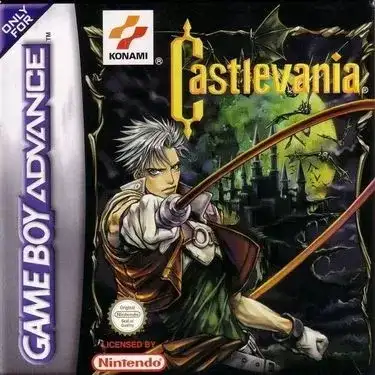
Castlevania: Circle of the Moon
Castlevania: Circle of the Moon, titled Castlevania in PAL regions, is a 2001 action role-playing game developed and published by Konami for the Game Boy Advancehandheld game console. The game was developed as a stand-alone title in the Castlevania series and as a launch title for the Game Boy Advance. The game's plot follows a vampire hunter named Nathan Graves as he attempts to rescue his mentor from the clutches of Dracula. Following the Metroidvania style of gameplay established by Castlevania: Symphony of the Night, Circle of the Moon expands on the magic attack mechanics of the former with the Dual Set-Up System, which allows for attacks to be mixed and matched by players as they see fit. The game sold 500,000 units worldwide and received critical acclaim, with praise for its level design, mechanics, music, and scope, while some criticized the dark visuals.
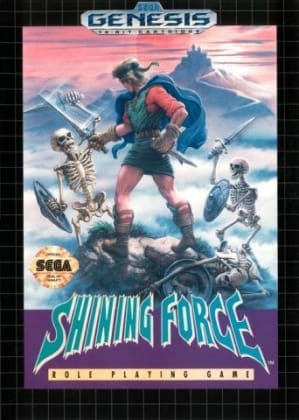
Shining Force: The Legacy of Great Intention
Shining Force: The Legacy of Great Intention, commonly referred to as Shining Force, is a 1992 turn-based tactical role-playing game developed by Climax Entertainment and Sonic! Software Planning and published by Sega for the Sega Genesis. It is the second entry of the Shining series, following 1991's Shining in the Darkness. While primarily a traditional fantasy-themed game, it contains some science fiction elements. The game has been re-released for various platforms: in Sega Smash Pack Volume 1 for the Dreamcast and Sega Smash Pack 2 for Microsoft Windows, in Sonic's Ultimate Genesis Collection for Xbox 360 and PlayStation 3, and as a standalone game for the Wii Virtual Console and Windows via Steam. Additionally, a remake was released for the Game Boy Advance in 2004 under the title Shining Force: Resurrection of the Dark Dragon. In 2010, the game was released for iOS but was discontinued in 2015. It was re-released again on the Nintendo Classics service in 2021.
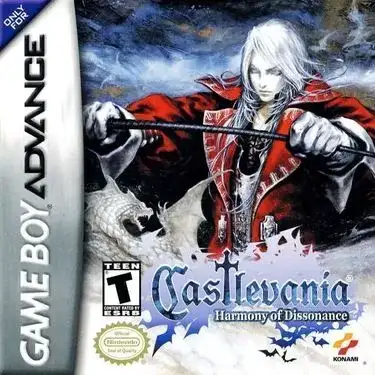
Castlevania: Harmony of Dissonance
Castlevania: Harmony of Dissonance is a 2002 action role-playing game developed and published by Konami for the Game Boy Advance. The second installment of the Castlevania series on the Game Boy Advance, the game was released in Japan in June 2002 and in North America and PAL regions later that same year. Harmony of Dissonance is set in the year 1748, fifty years after Simon Belmont vanquished Dracula's curse in Castlevania II: Simon's Quest. Harmony of Dissonance focuses on Simon's grandson, Juste Belmont, and his quest to rescue a kidnapped childhood friend. Similarly to previous Castlevania titles, the game employs role-playing game features alongside more traditional action adventure game elements. Progression is split between two versions of the titular castle, requiring Juste to traverse both maps in search of abilities, armor and weapons to combat an assortment of enemies, including various bosses.
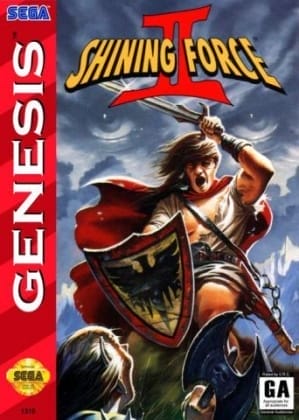
Shining Force II
Shining Force II (シャイニング・フォースII 古えの封印, Shainingu Fōsu Tsū: Inishie no Fūin; lit. "Shining Force II: The Ancient Seal") is a 1993 tactical role-playing game developed by Sonic! Software Planning and published by Sega for the Sega Genesis. Its storyline is not directly connected to the original Shining Force, although the Game Gear title Shining Force Gaiden: Final Conflict links the two games' plots. The game is much longer than Shining Force, and contains more free roaming. There is no chapter system, so the player can return to previously visited parts of the world. There are also two different ways of promoting certain characters. Shining Force II was met with positive reviews and acclaim during its initial release, with critics citing it as superior to its predecessor for its straightforward storyline and charming characters. Amongst critics, the game is often regarded as one of the best RPGs of all time, and a highlighted title for the Sega Genesis.
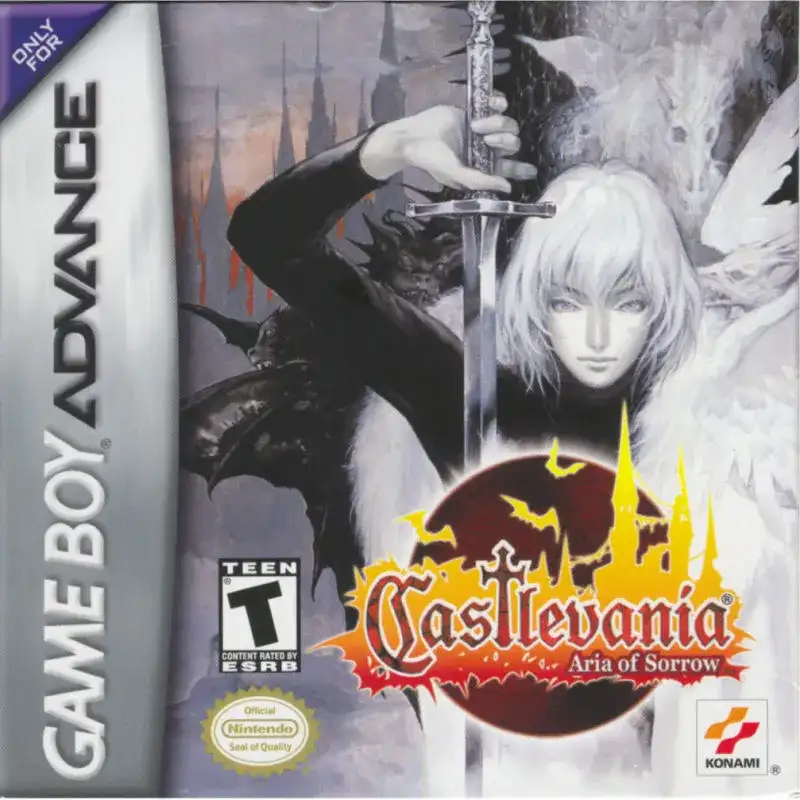
Castlevania: Aria of Sorrow
Castlevania: Aria of Sorrow is a 2003 action role-playing game developed by Konami Computer Entertainment Tokyo and published by Konami for the Game Boy Advance. It is the 20th main entry in the Castlevania series, as well as the third and final game produced for the system. Producer Koji Igarashi, who had led the production teams for previous Castlevania games, oversaw Aria of Sorrow's development in parallel with its predecessor Castlevania: Harmony of Dissonance (2002). Michiru Yamane returned to compose the music alongside Takashi Yoshida and Soshiro Hokkai. Director Junichi Murakami was new to the Castlevania series. In contrast with other Castlevania titles taking place in the late medieval period or the early 20th century, Aria of Sorrow is set in 2035, decades after a climactic war resulted in Dracula's permanent demise and his castle being sealed in a solar eclipse.
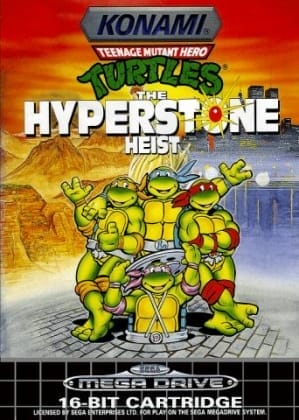
Teenage Mutant Ninja Turtles: Turtles in Time
Teenage Mutant Ninja Turtles: Turtles in Time, released as Teenage Mutant Hero Turtles: Turtles in Time in Europe, is a 1991 beat 'em up game developed and published by Konami for arcades. A sequel to the original Teenage Mutant Ninja Turtles "Teenage Mutant Ninja Turtles (arcade game)") arcade game, it is a side-scrolling game based mainly on the 1987 TMNT animated series "Teenage Mutant Ninja Turtles (1987 TV series)"). Originally an arcade game, Turtles in Time was ported to the Super Nintendo Entertainment System in 1992 under the title Teenage Mutant Ninja Turtles IV: Turtles in Time, continuing the numbering from the earlier Turtles games released on the original NES. That same year, a game that borrowed many elements, Teenage Mutant Ninja Turtles: The Hyperstone Heist, was released for the Sega Genesis. In 2005, the arcade version of Turtles in Time was rereleased on newer consoles.
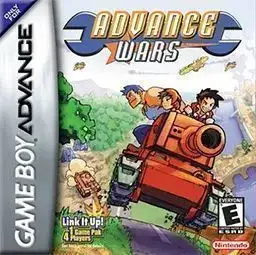
Advance Wars
Advance Wars is a turn-based strategyvideo game developed by Intelligent Systems and published by Nintendo for the Game Boy Advance. It is the seventh title in the Wars series "Wars (series)") of video games, and the first in the Advance Wars sub-series. The game takes place on a fictional continent, where two nations, Orange Star and Blue Moon, have been fighting each other for years. The conflict enters a new stage when an Orange Star commanding officer named Andy is accused of attacking the armies of two other nations, Yellow Comet and Green Earth, without reason, resulting in a worldwide war. As with previous Wars titles, Advance Wars was not originally intended for release outside Japan, due to Nintendo feeling that Western consumers would not be interested in turn-based games because of their complex mechanics.
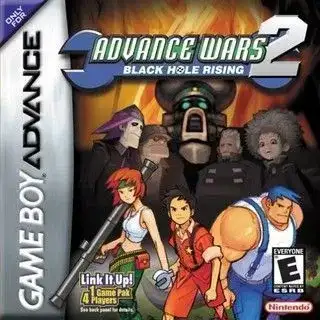
Advance Wars 2: Black Hole Rising
Advance Wars 2: Black Hole Rising is a turn-based strategyvideo game developed by Intelligent Systems and published by Nintendo for the Game Boy Advance. It was released in North America and PAL regions in 2003. It is the second game in the Advance Wars sub-series of Nintendo Wars. It is preceded by Advance Wars and followed by Advance Wars: Dual Strike. Despite being developed in the region, the original Japanese release was canceled, but the game was later released in the region alongside the original Advance Wars as part of a compilation cartridge called Game Boy Wars Advance 1+2 in 2004. The game was released on the Wii U's Virtual Console in North America and Europe in 2015. At E3 2021, Nintendo announced that Black Hole Rising, alongside the original Advance Wars, would be remade and released together for the Nintendo Switch by WayForward in another compilation titled Advance Wars 1+2: Re-Boot Camp.
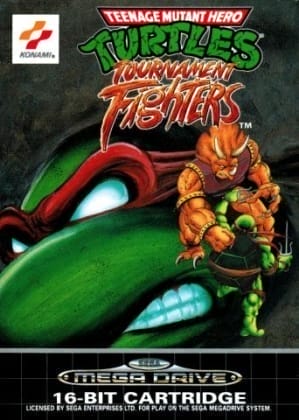
Teenage Mutant Hero Turtles: Tournament Fighters
Teenage Mutant Ninja Turtles: Tournament Fighters, or Teenage Mutant Hero Turtles: Tournament Fighters in Europe, is the title of three different fighting games based on the Teenage Mutant Ninja Turtles, produced by Konami for the Nintendo Entertainment System, Sega Genesis, and Super NES and released during a period between 1993 and 1994. Konami produced a different fighting game based on the franchise each featuring a differing cast of characters for the platforms. All three versions of the game were re-released as part of Teenage Mutant Ninja Turtles: The Cowabunga Collection in 2022, with online play using rollback netcode for the Super NES version of the game.
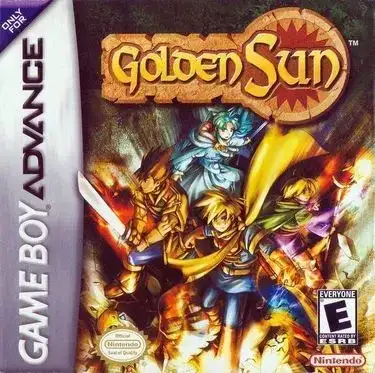
Golden Sun
Golden Sun#cite_note-2) is a 2001 role-playing video game developed by Camelot Software Planning and published by Nintendo for the Game Boy Advance. The game follows a band of magic-attuned teenagers called Adepts on a mission to protect the world of Weyard from alchemy, a potentially destructive power that was sealed away long ago. During their quest, the Adepts develop new magic abilities called Psynergy, assist others, and learn more about why alchemy was sealed away. Golden Sun is followed by a sequel, The Lost Age, which together form a complete story. Golden Sun was released in August 2001 in Japan, November 2001 in North America, and February 2002 in Europe. It began as a single planned game for the Nintendo 64, but production shifted to the Game Boy Advance over the course of development. After facing hardware constraints, the developers decided to split the game into two.
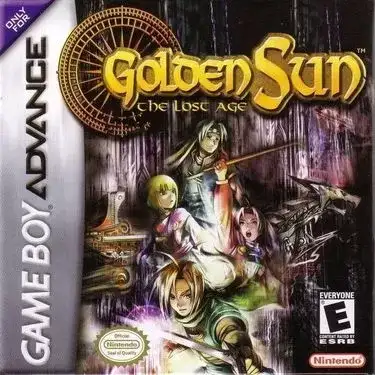
Golden Sun: The Lost Age
Golden Sun: The Lost Age is a 2002 role-playing video game for the Game Boy Advance, developed by Camelot Software Planning and published by Nintendo. It is the second installment in the Golden Sun series and was released on June 28, 2002, in Japan, and in 2003 in North America and Europe. Taking place after the events of the previous game "Golden Sun (video game)"), The Lost Age puts the player into the roles of the previous games' antagonists, primarily from the perspective of magic-attuned "adepts" Felix and his allies as they seek to restore the power of alchemy to the world of Weyard. Along the way, the player uses Psynergy to defeat enemies and discover new locations, help out local populations, and find elemental djinn which augment the characters' powers. Players can transfer their characters and items from Golden Sun to The Lost Age through a password system or Game Link Cable, and are rewarded for fully completing both games.
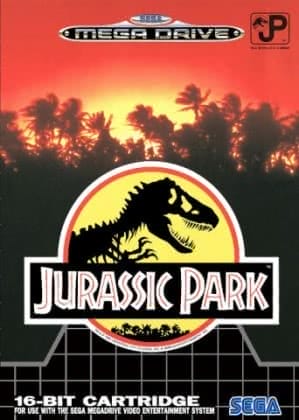
Jurassic Park
Jurassic Park is a 1993 action-adventure game developed by BlueSky Software and published by Sega for the Sega Genesis. It was released as a tie-in with the 1993 film of the same name, and features elements from Michael Crichton's 1990 novel "Jurassic Park (novel)") on which the film is based. In 1994, after the financial success of the film and its merchandise, Sega released a sequel video game titled Jurassic Park: Rampage Edition.#cite_note-3) Both games were re-released in 2023 as part of Jurassic Park: Classic Games Collection. Jurassic Park is a standard side-scrollingaction game with platform elements.#cite_note-AG-4) The end objective is to reach the end of each level, using items placed at fixed locations. However, the game features a then-uncommon variation in action games,[citation needed] giving players the option of using two characters that played independently to one another. The game is playable as either paleontologistDr.
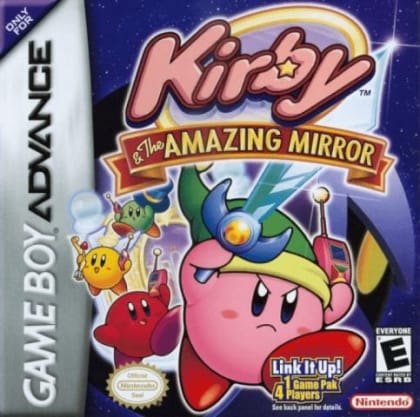
Kirby & the Amazing Mirror
Kirby & The Amazing Mirror is a 2004 platform game developed by HAL Laboratory, Flagship and Dimps and published by Nintendo for the Game Boy Advance. The seventh mainline Kirby entry, the game is notable for its unique Metroidvania playstyle and being the first in the series to support cooperative four-player multiplayer, and follows Kirby as he goes on a journey through the Mirror Dimension to reassemble a mirror after Dark Meta Knight traps Meta Knight inside it. Unlike the other Kirby games, Kirby & The Amazing Mirror features a nonlinear design, and is traversed in a Metroidvania style. The Mirror World is divided into nine themed areas. The player begins in an over-world with doors that connect to a few other areas. From there the game map branches out in several directions and, providing Kirby has the proper power at his disposal, he is able to go anywhere in almost any order, excluding the final sequence.
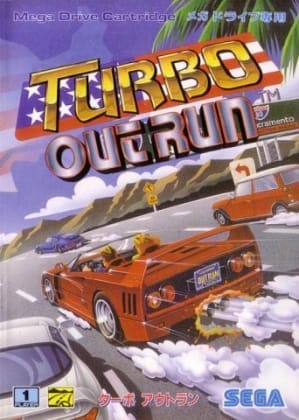
Turbo Outrun
Turbo OutRun (ターボアウトラン) is a 1989 racing game developed and published by Sega for arcades. A follow-up to 1986's Out Run, it was released as a dedicated game, as well as an upgrade kit for the original Out Run board. Like its predecessor, Turbo OutRun has players driving a Ferrari, this time a Ferrari F40. Players traverse a set route across the continental United States from New York City to Los Angeles. In addition to a time limit, Turbo OutRun also adds a computer-controlled opponent driving a Porsche 959. The "Turbo" in the title plays a factor as players can press a button to receive a brief turbo boost of speed. Various power-ups which increase the vehicle's attributes can be chosen at various stages of the game. Ports of Turbo OutRun were released for home computers as well as Sega's own Mega Drive. Computer ports of the game were received with varying degrees of enthusiasm.
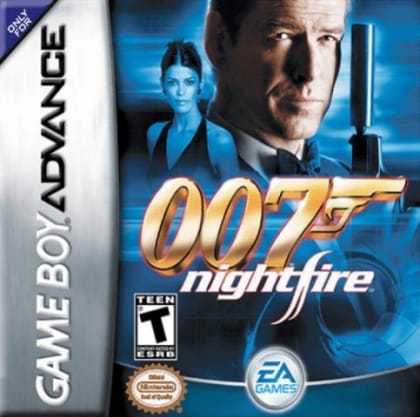
007: Nightfire
James Bond 007: Nightfire (sometimes stylised NightFire) is a 2002 first-person shooter game published by Electronic Arts for the GameCube, PlayStation 2, Xbox and Microsoft Windows, with additional versions released for the Game Boy Advance in 2003, and Mac OS X in 2004. Eurocom developed the console versions, Gearbox Software developed the Windows version, and JV Games developed the Game Boy Advance version. The computer versions feature modifications to the storyline, different missions, and the removal of driving sections used in home console versions. The game's story involves fictional British Secret Service agent James Bond, as he undertakes a mission to investigate the operations of a noted industrialist, uncovering a plot by them to conquer the world via a major defence satellite created by the United States. The game uses the likeness of James Bond actor Pierce Brosnan, although the character is voiced by Maxwell Caulfield.
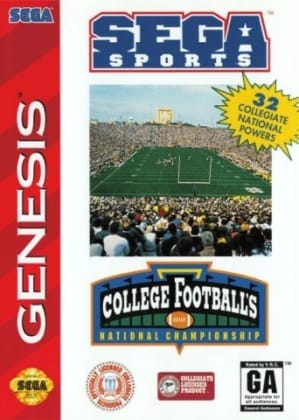
College Football's National Championship
College Football's National Championship is a 1994 American football video game that was released exclusively for the North American Sega Genesis video game system. A sequel, College Football's National Championship II, was released in 1995.
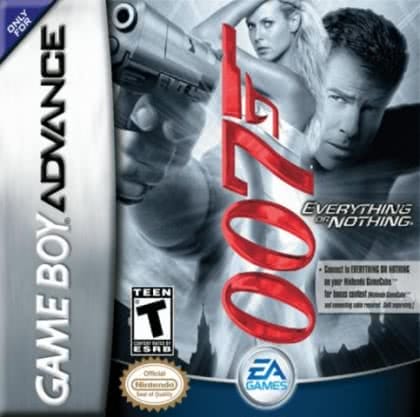
007: Everything or Nothing
James Bond 007: Everything or Nothing is a 2004 action adventure game developed by EA Redwood Shores and published by Electronic Arts for the PlayStation 2, GameCube, and Xbox. The game features a cast of voice actors including Pierce Brosnan, reprising his film role as MI6 agent James Bond. Other returning actors include Richard Kiel, John Cleese and Judi Dench, as Jaws, Q and M respectively, alongside Willem Dafoe, Heidi Klum, Misaki Ito, Shannon Elizabeth, and Mýa. It is considered a continuation of Die Another Day (2002), featuring Brosnan and Cleese in their final performances as Bond and Q, respectively. Development of the game began in 2001. Written by Bruce Feirstein, Danny Bilson, and Paul De Meo, Everything or Nothing centers around Bond dealing with the use of nanotechnology as terrorism. The player controls Bond, and the game includes several driving levels.
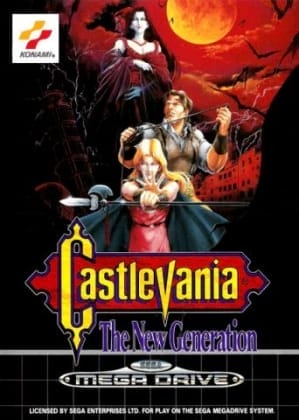
Castlevania: Bloodlines
Castlevania: Bloodlines, known in Japan as Vampire Killer and in PAL regions as Castlevania: The New Generation, is a 1994 platform game developed and published by Konami for the Sega Genesis as part of the Castlevania series. A vampire named Elizabeth Bartley is orchestrating the beginning of World War I to serve as the catalyst for the resurrection of her uncle, Dracula. Players take on the role of Quincey Morris' son, John, and his friend Eric Lecarde to take up the fight against evil. The development team approached Bloodlines as a unique Castlevania experience tailor-made for the Genesis. In this sense, the gameplay was made more fast and action-oriented. Writer Toshiki Yamamura also took creative liberties to craft what he viewed was a new chapter in the Castlevania saga. The game was the first Castlevania title for which Michiru Yamane composed music. She used her Bach influences to compose a renowned soundtrack, leading to her becoming a recurring series composer.
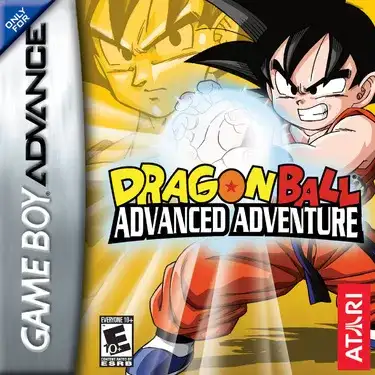
Dragon Ball: Advanced Adventure
Dragon Ball: Advanced Adventure is a 2004 video game released for Game Boy Advance based on the Dragon Ball franchise.
Browse our collection of 456 Games retro games, all playable instantly in your browser. No download required. Play classic games online in your browser and save your progress anytime.