Shining Force: The Legacy of Great Intention
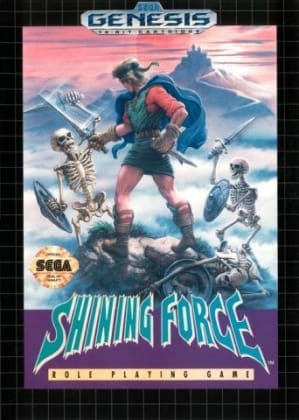
Play Now
Important Control Tip: If keys are unresponsive after the game loads, please [click on the game window] to activate input focus.
How to Play
How to Play
Press Play Now button to start the Sega Genesis emulator in your browser.
Control guide merged: use keyboard on PC and on-screen buttons on mobile.
🖥️ PC Controls
| Action | Key (Default) | Description |
|---|---|---|
| D-Pad | ↑↓←→ | Movement control |
| A Button | Z | Confirm / Attack |
| B Button | X | Cancel / Jump |
| Select | V | Select button |
| Start | Enter | Start button |
📱 Mobile Controls
- Movement
- D-pad (left side)
- Action Buttons
- A/B or X/Y/A/B (right side, varies by platform)
- Start / Select
- Center of screen
- Left-Handed Mode
- Swap layout in Control Settings
Mobile Controls: After starting the game, tap the menu in the top-right corner → "Control Settings" to view full key mappings and customize controls.
From Wikipedia, the free encyclopedia:
Source: Wikipedia
About This Game
Gameplay
Shining Force is a turn-based tactical role-playing game. Battles take place in square grids, and each unit occupies one square. Each unit can move up to a fixed amount of squares along the battlefield, determined by its Move statistic. Depending on its location relative to enemies and to allies, a unit can also perform one action: attack, cast a spell, use an item, or search the area. Some commands, such as equipping or dropping items, do not count as actions. The order of turns is determined by the unit's agility score and a random seed. As is most common for the RPG genre, units become stronger by fighting enemies or by performing other actions in battle, such as healing allies. These actions give the units experience points (EXP), which allow them to gain levels. In Shining Force, each allied unit is represented by a character with his or her own background and personality, much like in the Fire Emblem series. Although there are no "generic" units, except on the enemy side, most characters contribute little or nothing to the plot upon joining the player army.
History
Despite being the sequel to the successful Shining in the Darkness, Sega allotted only a minimal budget to the development of Shining Force. Contrary to popular assumption, Shining Force was not influenced by archetypal tactical RPG Fire Emblem: Shadow Dragon and the Blade of Light. In fact, when asked about the game, lead Shining Force developer Hiroyuki Takahashi remarked: "The tempo of that title was so bad that it wasn't something I even wanted to play." Takahashi recalled that Shining Force was chiefly inspired by Dragon Quest.
More details about this game can be found on Wikipedia article .
Comments
Log in to leave a comment.
Sign InNo comments yet. Be the first!
Related Games
Shining Force Gaiden: Final Conflict
Shining Force II
Fire Emblem: Thracia 776
Fire Emblem: Mystery of the Emblem
Advance Wars 2: Black Hole Rising