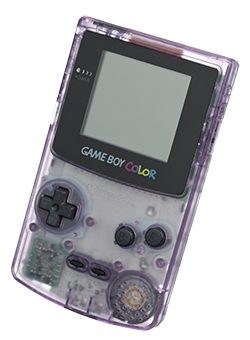
Game Boy Color
The Game Boy Color is an 8-bit handheld game console developed by Nintendo. It was released in Japan on October 21, 1998, and in international markets the following month. Compared with the original Game Boy, the Game Boy Color features a color TFT screen instead of monochrome, a CPU running at up to twice the speed, and four times as much memory. It is backward compatible with games developed for its predecessor. The Game Boy Color was released during the fifth generation of video game consoles and competed with SNK's Neo Geo Pocket Color, Bandai's Japan-only WonderSwan, and Sega's North America-only Genesis Nomad.
51 games
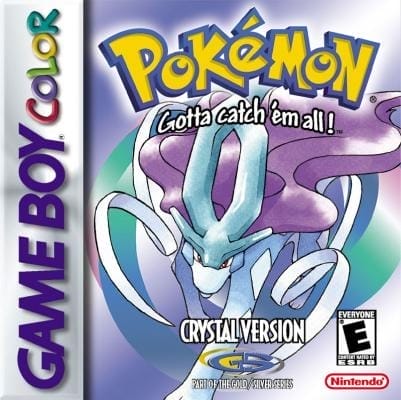
Pokémon Crystal
Although Pokémon Crystal is the lowest-selling main series Pokémon game to date, it still ranks among the top ten best-selling Game Boy titles. Critics praised Crystal for its additional features and improvements but noted that many of these features were less significant in the non-Japanese versions, which lacked Mobile Adapter GB support. Retrospective reviews have been highly positive, with many acknowledging Crystal's introduction of features that would become commonplace in later iterations of the Pokémon series, and its role in maintaining interest during a waning period for the franchise.
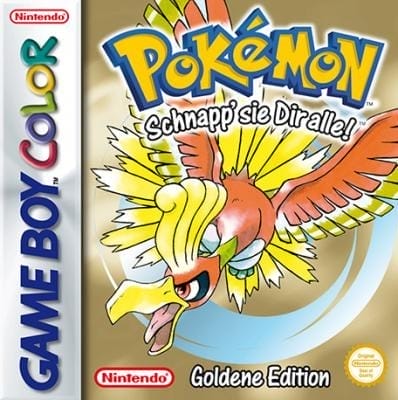
Pokémon Gold
1999 video games Pokémon Gold Version and Pokémon Silver Version are 1999 role-playing video games developed by Game Freak and published by Nintendo for the Game Boy Color. They are the first installments in the second generation of the Pokémon video game series "Pokémon (video game series)"). They were released in Japan in 1999, Australia and North America in 2000, and Europe in 2001. The games introduce 100 new species of Pokémon and follow the progress of the player character in their quest to master Pokémon battling. Both games are independent of each other but feature largely the same plot and, while both can be played separately, it is necessary to trade between these games and their predecessors in order to fully complete each games' Pokédex. The Johto Saga of the Pokémon anime "Pokémon (anime)") is based on the new region introduced in the games.
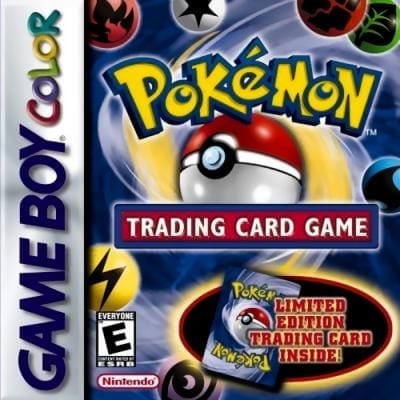
Pokémon Trading Card Game
The Pokémon Trading Card Game is a strategy-based card game that is usually played on a designated playmat or digitally on an official game client (usually Pokémon Trading Card Game Live) where two players (assuming the role of Pokémon Trainer) use their Pokémon to battle one another. Pokémon that have sustained enough damage from attacks–that reaches or exceeds its HP–is referred to as being "Knocked Out", granting the opponent a prize card; however, powerful card mechanics like Pokémon-V and Pokémon ex (which have higher HP and are harder to "Knock Out") grant extra prize cards when Knocked Out. Taking all six prize cards is the most common win condition. Other ways to win are by "Knocking Out" or by removing all opponent's Pokémon in play–the Active and those on the Bench (i.e.
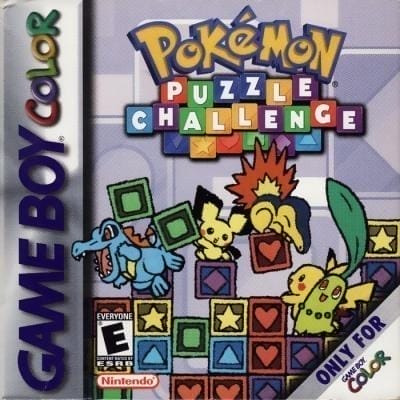
Pokémon Puzzle Challenge
Pokémon Puzzle Challenge is a puzzle video game developed by Intelligent Systems and published by Nintendo for the Game Boy Color. It was released in Japan on September 21, 2000; in North America on December 4, 2000; and in PAL regions on June 15, 2001, it is the second Pokémon-themed entry in the Puzzle League series. While its Nintendo 64 counterpart Pokémon Puzzle League is visually based on the Pokemon anime "Pokémon (TV series)"), Puzzle Challenge instead draws inspiration from the Pokémon Gold and Silver games. The game features multiple modes of play and support for competitive play between two players. Puzzle Challenge was later digitally re-released via the Nintendo 3DS's Virtual Console line on November 6, 2014.
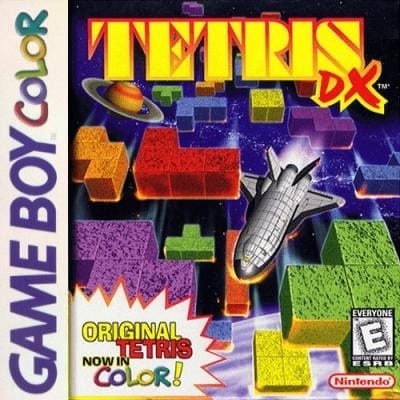
Tetris DX
Tetris DX is a 1998 video game developed and published by Nintendo for the Game Boy Color. It is a version of the game Tetris and unlike the 1989 port of the game "Tetris (Game Boy video game)"), it introduces color, new gameplay modes, save games, and multiplayer using the Game Link Cable. DX was released as a launch title for the Game Boy Color in October 1998. Upon release, the game received a positive reception, with praise directed towards its gameplay additions. Following release, critics praised the game as one of the best titles for the Game Boy Color. As in Tetris, DX is a puzzle video game in which players must fit a vertically descending series of blocks to form complete rows, making the blocks disappear; with the game ending if the blocks fill the screen beyond the top row of the play space.DX introduces additional gameplay modes.
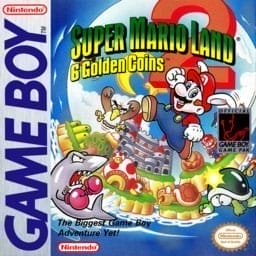
Super Mario Land 2: 6 Golden Coins
Super Mario Land 2: 6 Golden Coins is a 1992 platform game developed and published by Nintendo for the Game Boy. It is the sequel to Super Mario Land. In Super Mario Land 2, the player assumes the role of the protagonist Mario, whose main objective is to reclaim his personal island, Mario Land, from the clutches of his greedy rival Wario. The gameplay builds and expands on that of its precursor with innovations carried over from Super Mario World and Super Mario Bros. 3. Super Mario Land 2 received critical acclaim upon release and sold over 11 million copies, becoming one of the most successful and highest-rated titles on the Game Boy. Reviewers emphasized that the game surpassed its predecessor in all aspects. Super Mario Land 2 marks the debut appearance of Wario, who would become a prominent character in the Super Mario series as the antihero of several games "Wario (series)"), the first being this game's sequel Wario Land: Super Mario Land 3.
Wario Land: Super Mario Land 3
Wario Land: Super Mario Land 3, known in Japan as Super Mario Land 3: Wario Land, is a 1994 platform game developed and published by Nintendo for the Game Boy. A spin-off of the Mario series, it follows Wario, the antagonist of Super Mario Land 2: 6 Golden Coins (1992), as he travels around an island in an attempt to find the treasures necessary to purchase his own castle. The player traverses through side-scrolling levels, avoiding obstacles and jumping between platforms, while collecting coins and treasure in order to progress. Wario Land received positive reviews from critics, lauding its length and aesthetic quality, though it garnered mixed opinions on the game's difficulty. It sold more than five million copies and established the Wario series of spin-offs and sequels. The game was re-released for the Nintendo 3DS's Virtual Console.
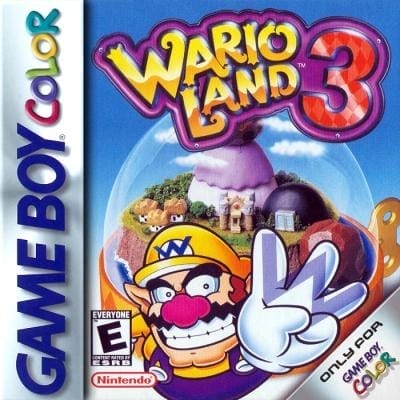
Wario Land 3
Wario Land 3, known in Japan as Wario Land 3: Mysterious Music Box, is a 2000 platform game developed by Nintendo R&D1 and published by Nintendo for the Game Boy Color. The game's plot centers around Wario who must free a mysterious figure who is trapped inside a music box. The game was released in Japan on March 21, 2000, Europe on April 14, 2000, and North America on May 30, 2000. The game was later re-released for the Nintendo 3DSVirtual Console in 2013, and as part of the Nintendo Classics service on February 8, 2023. The gameplay in Wario Land 3 is very similar to that of its predecessor, Wario Land II. Wario must take advantage of his enemies' attacks to physically change and access new areas. For example, if Wario eats a donut thrown by a certain enemy, he temporarily bulks up to twice his size, giving him extra protection against attacks and the ability to break certain blocks.
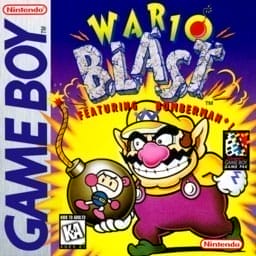
Wario Blast featuring Bomberman!
Bomberman GB is a sub-series of video games in Hudson Soft's Bomberman series released for the Game Boy. The first entry was Bomberman GB, released as Wario Blast: Featuring Bomberman! in North America and Europe, later succeeded by Bomberman GB 2, under the name Bomberman GB internationally, and Bomberman GB 3, which was only released in Japan.
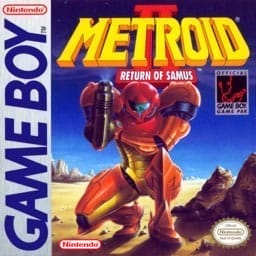
Metroid II: Return of Samus
Metroid II: Return of Samus is a 1991 action-adventure game developed and published by Nintendo for the Game Boy. The first Metroid game for a handheld game console, it was released in North America in November 1991 and in Japan and Europe in 1992. It follows the bounty hunter Samus Aran on her mission to eradicate the Metroids from their home planet, SR388, before the Space Pirates can obtain them. Players must find and exterminate the Metroids to progress. Like the original Metroid, released in 1986 for the Nintendo Entertainment System, Metroid II was developed by Nintendo Research & Development 1 and produced by Gunpei Yokoi. It introduced several features that became staples of the series, including Samus's Space Jump, Spazer Beam and the Spider Ball, and round-shouldered Varia Suit. Metroid II received positive reviews, with praise for its story, setting, and improved gameplay, but was criticized for its graphics and audio. By late 2003, it had sold 1.72 million copies worldwide.
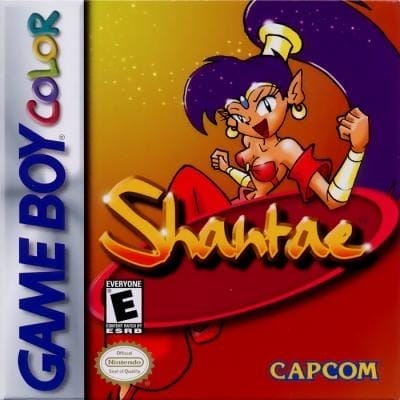
Shantae
Shantae is a 2002 platformvideo game developed by WayForward and originally published by Capcom for the Game Boy Color. The video game follows the adventures of the titular half-genie Shantae as she travels across Sequin Land to thwart the domination plans of the evil lady pirate Risky Boots. During her quest, she learns various dances and acquires items which make her progressively stronger as well as unlocking new abilities and locations, culminating in a final showdown with Risky at her hideout. Upon its release, Shantae received favorable reviews but struggled to find an audience due to its launch a year after the Game Boy Color was succeeded by the Game Boy Advance. Despite this, it has since been recognized as a "cult classic" and is frequently included in lists of the best Game Boy Color games. The game later spawned a successful series of sequels. Shantae was re-released for the Nintendo 3DS in 2013 via the Virtual Console emulator, marking its debut in Europe.
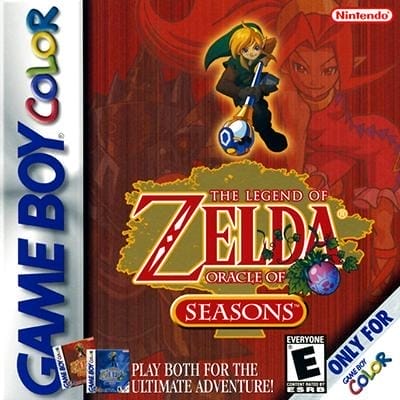
The Legend of Zelda: Oracle of Seasons
The Legend of Zelda: Oracle of Seasons and The Legend of Zelda: Oracle of Ages are 2001 action-adventure games developed by Flagship and published by Nintendo for the Game Boy Color. They are the seventh and eighth installments in the Legend of Zelda series. The player controls Link from an overhead perspective. In Seasons, the Triforce transports Link to the land of Holodrum, where he sees Onox kidnap Din, the Oracle of Seasons. In Ages, the Triforce transports Link to Labrynna, where Veran possesses Nayru. The main plot is revealed once the player finishes both games. Link is armed with a sword and shield as well as a variety of secondary weapons and items for battling enemies and solving puzzles. The central items are the Rod of Seasons, which controls the seasons in Holodrum, and the Harp of Ages, which lets Link travel through time in Labrynna.
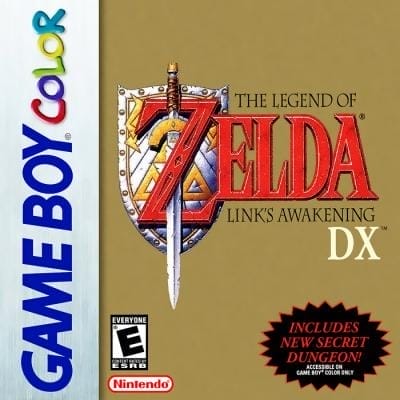
The Legend of Zelda: Link's Awakening DX
The Legend of Zelda: Link's Awakening DX is a 1998 action-adventure game developed and published by Nintendo for the Game Boy Color. The game is a colorized version of the 1993 Game Boy title The Legend of Zelda: Link's Awakening, in which protagonist Link must fight monsters, explore dungeons and solve puzzles to escape from Koholint Island. The DX version of Link's Awakening features gameplay additions including a color-themed dungeon and support for the Game Boy Printer. Upon release, Link's Awakening DX was critically acclaimed, with reviewers commending the game on the strengths of the original title and welcoming the addition of color graphics and new features, although noting the additions were largely insubstantial compared to the original game. The DX version of Link's Awakening has retrospectively been cited by critics as one of the best games for the Game Boy and Game Boy Color systems.
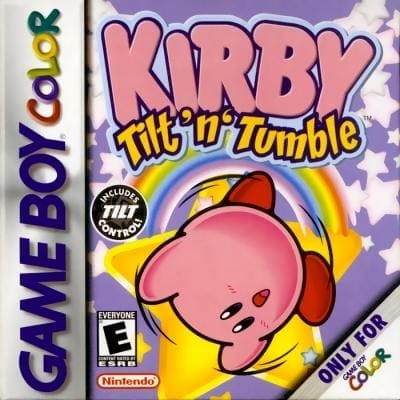
Kirby: Tilt 'n' Tumble
It was the sixth best selling Game Boy Color game in Japan, with 563,914 copies sold. A planned sequel to the original game, titled Kirby Tilt 'n' Tumble 2, was shown at Nintendo Space World 2001, which was being developed for the GameCube and was planned to require Game Boy Advance connectivity. Video game designer Shigeru Miyamoto demonstrated the gameplay, showing Kirby falling off a ledge on the television screen to the Game Boy Advance screen. He also mentioned that the player could write "programs", such as minigames, into the game cartridge. Originally planned for release in May 2002, the game was retitled as Roll-O-Rama, replacing Kirby with a marble ball. While shown at E3 2002, the title was never released. Koro Koro Puzzle Happy Panechu! WarioWare: Twisted! Yoshi's Universal Gravitation 1. ^Known in Japan as Korokoro Kirby (Japanese: コロコロカービィ, Hepburn: Korokoro Kābī; Roly-Poly Kirby) 1. ^Plant, Logan (2023-02-08).
Mega Man IV
Mega Man IV is a 1993 platform game developed by Minakuchi Engineering and published by Capcom for the Game Boy. It is the fourth game in the handheld series of the Mega Man "Mega Man (original series)") franchise. The game continues the quest of the protagonist Mega Man "Mega Man (character)") in the struggle with his long-time nemesis Dr. Wily, who sends out a disruptive radio signal to cause a rampage, citywide destruction from dormant robots. Mega Man IV features the traditional action platforming gameplay of the prior games while introducing one new feature, the ability to purchase items with power-ups found throughout each stage. As with previous Game Boy releases, the game incorporates gameplay elements and bosses from two sequential Nintendo Entertainment System (NES) games: Mega Man 4 and Mega Man 5. The game received positive reviews from critics, with significant praise for its improvements from its predecessors, though its low level of innovation was criticized.
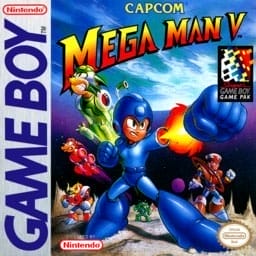
Mega Man V
Mega Man V is a video game developed by Minakuchi Engineering and published by Capcom for the Game Boy. It is the fifth game in the handheld series of the Mega Man "Mega Man (original series)") franchise. The game follows the adventures of the protagonist Mega Man "Mega Man (character)") as he must defend the Earth from a group of powerful robots from outer space called the Stardroids. Mega Man V is unique among the Game Boy Mega Man games as it features original bosses rather than recycling those from the Nintendo Entertainment System (NES) Mega Man games. Mega Man V is an action platformer in which the player selects stages in a non-linear fashion and acquires the weapon of each boss defeated to use as their own. Although it plays nearly identical to other games in the series, Mega Man V features a new default weapon (the powerful "Mega Arm") and introduces Tango, a new assistant character.
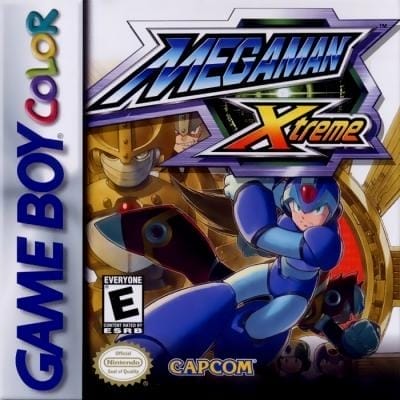
Mega Man Xtreme
Mega Man Xtreme is a 2000 platform game developed and published by Capcom for the Game Boy Color. It is a spin-off title in the Mega Man X series of video games that originated on the Super Nintendo Entertainment System. Mega Man Xtreme takes place within the series timeline during the 22nd century, in which a group of "Maverick" androids "Android (robot)") called the "Shadow Hunters" hack "Hacker (computer security)") into the world's "Mother Computer" system, destabilize all of the networks, and allow other Mavericks to cause rampant destruction all over the world. The heroic "Maverick Hunter" X is tasked with going into cyberspace to relive his past missions and put a stop to the group's plans. Mega Man Xtreme contains the same gameplay as its home console counterparts. An action-platform game, the player must attempt a series of stages, gain various power-ups such as armor parts, and defeat each stage's boss, assimilating its signature weapon.
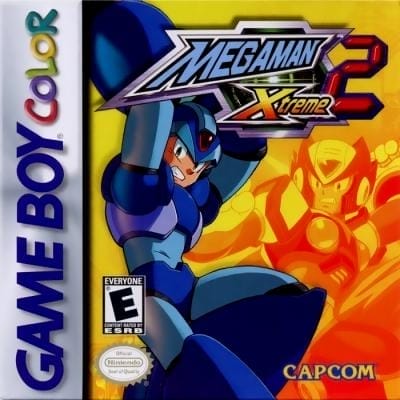
Mega Man Xtreme 2
Mega Man Xtreme 2 is a 2001 platform game developed and published by Capcom for the Game Boy Color. It is a spin-off title in the Mega Man X series and a follow-up to Mega Man Xtreme, which was released the previous year. Mega Man Xtreme 2 is set in the 22nd century between the events of Mega Man X3 and Mega Man X4. The DNA souls of robots known as "Reploids" are being stolen and used to create an army of undead "Mavericks". The "Maverick Hunters" X and Zero quickly spring into action with the help of their young ally Iris. Gameplay in Mega Man Xtreme 2 is similar to that of earlier Mega Man games, retaining most elements from the home-console versions of the series, but adding the ability to switch between characters, use unique abilities and obtain upgrades through "DNA Souls" collected from fallen enemies. Each character has a different set of stages and bosses; defeating the stage's boss will earn the character a special weapon.
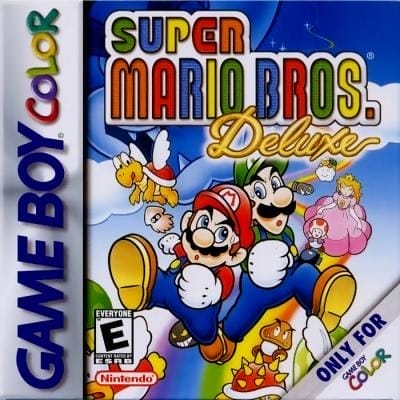
Super Mario Bros. Deluxe
Super Mario Bros. Deluxe (also known as Super Mario Bros. DX) is a 1999 platform game developed and published by Nintendo for the Game Boy Color. It is a largely unaltered port of the 1985 Super Mario Bros., originally released for the Nintendo Entertainment System (NES), with an unlockable version of its 1986 Japanese sequel, Super Mario Bros.: The Lost Levels. The game also introduces several new features, including a single-player and two-player race mode, a challenge mode for individual levels, and various toys and collectibles, some of which utilize the functionality of the Game Boy Printer. Upon release, Super Mario Bros. Deluxe received widespread acclaim. Critics praised its faithful adaptation of Super Mario Bros. on the Game Boy Color, as well as the additional gameplay modes and features, with minor criticism directed at the gameplay effects of the smaller screen size compared to the NES.
Yoshi
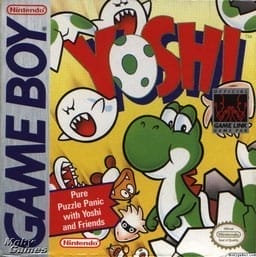
Yoshi,#cite_note-4) known as Mario & Yoshi in PAL regions, is a 1991 puzzle video game developed by Game Freak and published by Nintendo for the Nintendo Entertainment System and Game Boy. Both versions were first released simultaneously in Japan on December 14, 1991, and released in all other regions the following year. In Yoshi, the player is tasked with clearing monsters from the on-screen playing field. The monsters fall in from the top of the screen to build vertical stacks; the player must prevent a stack from growing too high such that it exits the play field. In order to do so, the player swaps and moves the stacks about such that falling monsters collide with identical monsters stationed atop the stacks, causing them to be removed from play. Yoshi offers both a scoring "Score (game)")-focused single-player mode and a competitive two-player mode.
Resident Evil: Gaiden
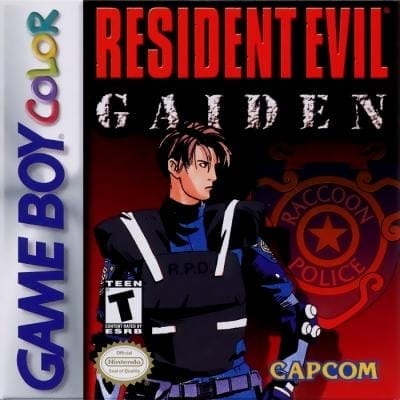
Resident Evil Gaiden is a 2001 action-adventure game developed by M4 for the Game Boy Color. It was published by Capcom in Japan and North America, and by Virgin Interactive in Europe. Receiving generally mixed reviews by critics, the game marks a departure from other entries in the series, insofar as areas are explored with the playable character seen from a top-down perspective and with battles fought in first-person view. The story revolves around a viral outbreak on a passenger ship and has Leon S. Kennedy and Barry Burton return as protagonists. This game is non-canon, as its plot is contradicted by the main series in key parts, and its events are ignored. The game features three playable characters and consists of exploring areas, collecting items and combating enemies in the process.
Alfred's Adventure
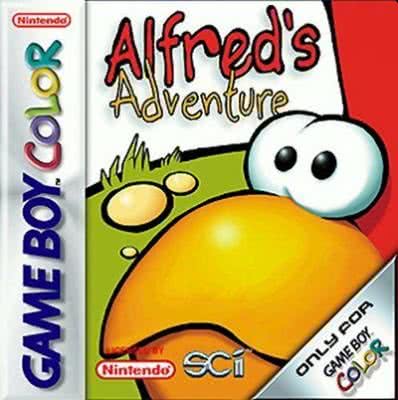
Alfred Chicken is a platform video game developed by Twilight and published by Mindscape for the Game Boy. It was later ported to the Amiga, Amiga CD32, NES, and Super NES in 1993 and February 1994, in Europe and North America, respectively. A Europe-exclusive remake of the game, entitled Alfred's Adventure, was developed by Möbius Entertainment and released by SCi for Game Boy Color in June 2000. Another remake, named Alfred Chicken, was also developed by King Monkey, a division of Möbius Entertainment, and released by Sony Computer Entertainment for PlayStation in 2002. Rockstar Games does not own the title's rights, despite buying Möbius later on, as Jason McGann personally held the rights.
Spawn
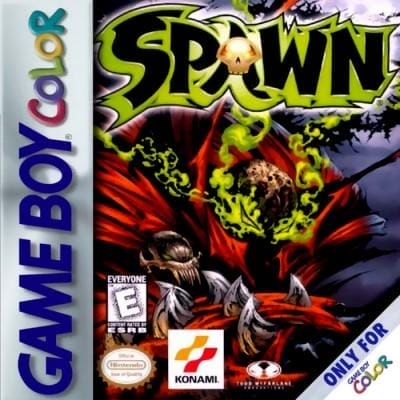
Spawn is an action-adventure platformer with some shooter elements. The player controls Spawn and must guide him through four stages of combat, navigating various environmental obstacles while defeating enemies, various thugs and occasional bosses. In each of the stages, Spawn must eliminate the enemies by punching, kicking, and using his weapons; a chain, which unleashes a powerful attack, a gun, and a machine gun. The player can find and collect items along the way, such as a "Spawn" symbol that restores a small amount of Spawn's health, a "G" symbol for gun ammunition, and an "M" symbol for machine gun ammunition. The game contains both horizontal and vertical stages, as well as a motorcycle chase stage. There are three difficulty modes. In each mode, enemies can take more damage. One punch will knock out any minor enemy in easy mode and the player can start at any stage. It takes two punches in normal mode and the player must play through from stage one.
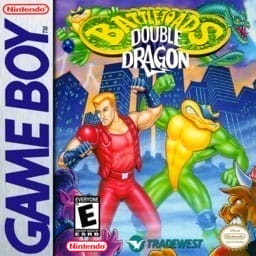
Battletoads & Double Dragon: The Ultimate Team
Battletoads/Double Dragon (fully titled Battletoads & Double Dragon - The Ultimate Team) is a 1993 beat 'em up developed by Rare and published by Tradewest. It was originally released for the Nintendo Entertainment System and later ported to the Mega Drive/Genesis, Super NES, and Game Boy. The SNES version was released on the Nintendo Classics service in September 2024; it was the game's first re-release as it was not released on the Rare Replay collection. The Ultimate Team is a crossover of Technos Japan's Double Dragon and Rare's Battletoads game franchises, although Technos had little or no credited involvement in production beyond providing the Double Dragon license. The game features the characters from the Double Dragon series, Billy and Jimmy Lee, two young martial arts experts; also included are the three humanoid toad protagonists from the Battletoads game. It is also the first Battletoads game to feature all three toads as playable characters.
Browse our collection of 51 Game Boy Color retro games, all playable instantly in your browser. No download required. Play classic games online in your browser and save your progress anytime.