Super Mario
12 games — Super Mario
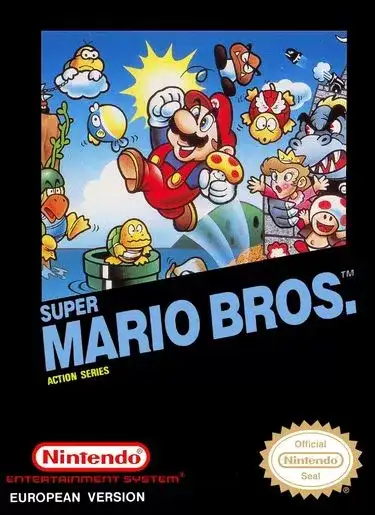
Super Mario Bros
Super Mario Bros. is a 1985 platform game developed and published by Nintendo for the Nintendo Entertainment System (NES). Directed and produced by Shigeru Miyamoto, it is the successor to the 1983 arcade game Mario Bros. and the first game in the Super Mario series. Players control Mario, or his brother Luigi in the multiplayer mode, to traverse the Mushroom Kingdom to rescue Princess Toadstool from King Koopa (later named Bowser). They traverse side-scrolling stages while avoiding hazards such as enemies and pits and collecting power-ups such as the Super Mushroom, Fire Flower, and Starman. Miyamoto and Takashi Tezuka designed Super Mario Bros. as a culmination of the team's experience working on Devil World and the side-scrollers Excitebike and Kung Fu "Kung-Fu Master (video game)"). Miyamoto wanted to create a more colorful platform game with a scrolling screen and larger characters. The team designed the first level, World 1-1, as a tutorial for platform gameplay.
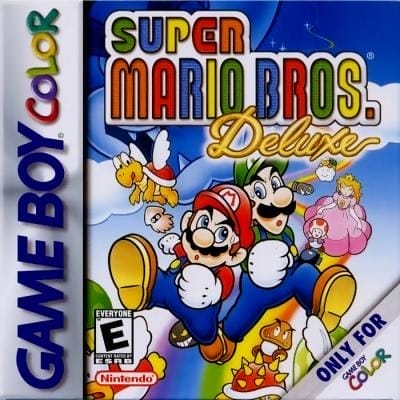
Super Mario Bros. Deluxe
Super Mario Bros. Deluxe (also known as Super Mario Bros. DX) is a 1999 platform game developed and published by Nintendo for the Game Boy Color. It is a largely unaltered port of the 1985 Super Mario Bros., originally released for the Nintendo Entertainment System (NES), with an unlockable version of its 1986 Japanese sequel, Super Mario Bros.: The Lost Levels. The game also introduces several new features, including a single-player and two-player race mode, a challenge mode for individual levels, and various toys and collectibles, some of which utilize the functionality of the Game Boy Printer. Upon release, Super Mario Bros. Deluxe received widespread acclaim. Critics praised its faithful adaptation of Super Mario Bros. on the Game Boy Color, as well as the additional gameplay modes and features, with minor criticism directed at the gameplay effects of the smaller screen size compared to the NES.
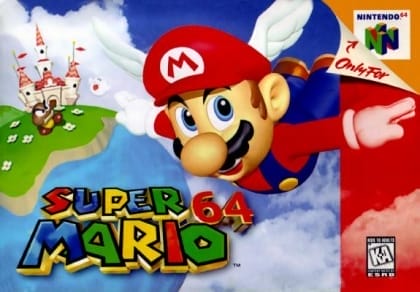
Super Mario 64
Super Mario 64 is a 1996 platform game developed and published by Nintendo for the Nintendo 64. It is the first Super Mario game to feature 3D gameplay, combining traditional Super Mario gameplay, visual style, and characters in a large open world. In the game, Bowser invades Princess Peach's castle, kidnaps her, and hides the castle's Power Stars in different worlds inside magical paintings. As Mario, the player traverses levels and collects Power Stars to unlock areas of the castle, reach Bowser and rescue Peach. Director Shigeru Miyamoto conceived a 3D Super Mario game during the production of Star Fox "Star Fox (1993 video game)") (1993). The team spent about one year on design and twenty months on production, starting with the virtual camera system. The team continued with illustrating the 3D character models and refining sprite movements. Yoji Inagaki recorded the sound effects, and the score was composed by Koji Kondo.
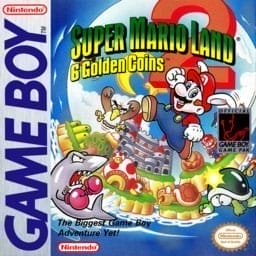
Super Mario Land 2: 6 Golden Coins
Super Mario Land 2: 6 Golden Coins is a 1992 platform game developed and published by Nintendo for the Game Boy. It is the sequel to Super Mario Land. In Super Mario Land 2, the player assumes the role of the protagonist Mario, whose main objective is to reclaim his personal island, Mario Land, from the clutches of his greedy rival Wario. The gameplay builds and expands on that of its precursor with innovations carried over from Super Mario World and Super Mario Bros. 3. Super Mario Land 2 received critical acclaim upon release and sold over 11 million copies, becoming one of the most successful and highest-rated titles on the Game Boy. Reviewers emphasized that the game surpassed its predecessor in all aspects. Super Mario Land 2 marks the debut appearance of Wario, who would become a prominent character in the Super Mario series as the antihero of several games "Wario (series)"), the first being this game's sequel Wario Land: Super Mario Land 3.
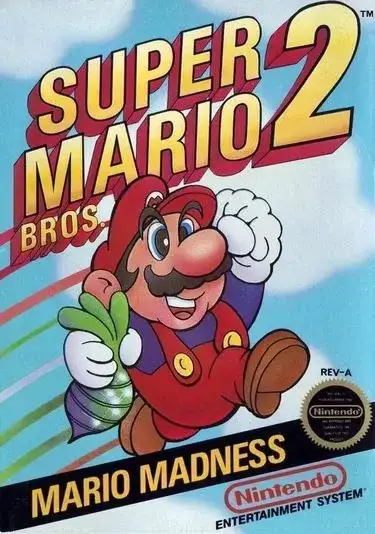
Super Mario Bros 2
Super Mario Bros. 2 is a 1988 platform game developed and published by Nintendo for the Nintendo Entertainment System. After the smash hit Super Mario Bros. in 1985, Nintendo quickly released an adaptation of the original with advanced difficulty titled Super Mario Bros. 2 for its market in Japan in 1986. However, Nintendo of America found this sequel too similar to its predecessor, and its difficulty too frustrating, for the nascent American market. This prompted a second Super Mario Bros. sequel based on Yume Kōjō: Doki Doki Panic, Nintendo's 1987 Family Computer Disk System game that had been based on a prototype platforming game and released as an advergame for Fuji Television's Yume Kōjō '87 media technology expo. The characters, enemies, and themes in Doki Doki Panic have the mascots and theme of the festival, and were adapted into the Super Mario theme to make a Western Super Mario Bros. sequel. Super Mario Bros.
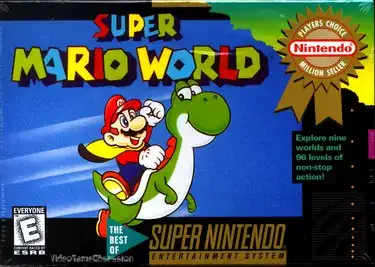
Super Mario World
Not to be confused with Super Mario 3D World or Super Nintendo World. "Super Mario 4" and "Mario 4" redirect here. For the bootleg game Super Mario IV, see Armadillo (video game) § Gameplay#Gameplay "Armadillo (video game)"). For the bootleg game Mario 4: A Space Odyssey, see List of unofficial Mario media § Console games. Super Mario World is a 1990 platform game developed and published by Nintendo for the Super Nintendo Entertainment System (SNES). It was released in Japan in 1990, in North America in 1991 and PAL territories in 1992. The player controls Mario on his quest to save Princess Peach and Dinosaur Land from the series' antagonist Bowser and the Koopalings. The gameplay is similar to that of earlier Super Mario games; players control Mario through a series of levels "Level (gaming)") in which the goal is to reach the goalpost at the end. Super Mario World introduces Yoshi, a ridable dinosaur who can eat enemies and spit some of them out as projectiles.
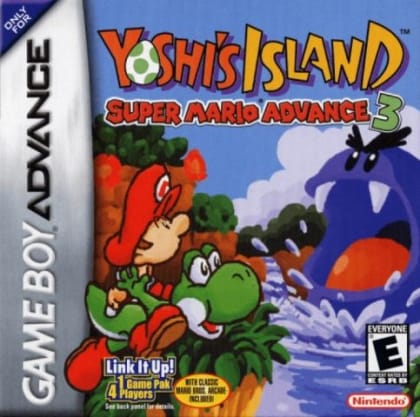
Super Mario Advance 3: Yoshi's Island
Super Mario World 2: Yoshi's Island is a 1995 platform game developed and published by Nintendo for the Super Nintendo Entertainment System (SNES). The player controls Yoshi dinosaurs on their quest to reunite baby Mario with his brother Luigi, who has been kidnapped by the wizard Kamek. Yoshi runs and jumps to reach the end of each level while solving puzzles and collecting items with Mario's help. Having introduced the character in the previous Super Mario game, Super Mario World (1990), Nintendo decided to develop a game starring Yoshi, with the aim of making it more accessible. Yoshi's Island introduced his signature flutter jump and egg-spawning abilities. The marker-drawn art style was created by scanning hand-drawn pictures and approximating them pixel-by-pixel. Some special effects were powered by a new Super FX2 microchip. After four years of development, Yoshi's Island was released in Japan in August 1995 and worldwide two months later. It sold more than four million copies.
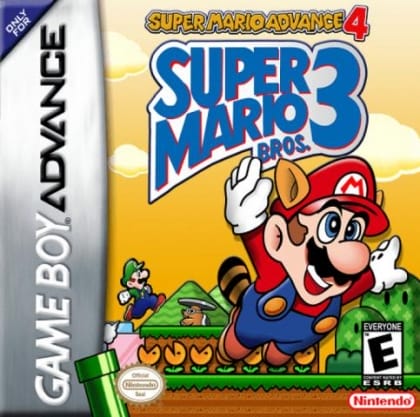
Super Mario Advance 4: Super Mario Bros. 3
Super Mario Advance 4: Super Mario Bros. 3 is a 2003 platform game developed and published by Nintendo for the Game Boy Advance. It was released in Japan, and later released in Europe, North America, and Australia. It is an enhanced remake of the NES video game Super Mario Bros. 3, and is based on the remake found in Super Mario All-Stars for the Super Nintendo Entertainment System. Players control either Mario or Luigi as they travel through the eight kingdoms of the Mushroom World to rescue Princess Peach from Bowser. The game was revealed at Nintendo's conference at the E3 2003 convention. It contains several enhancements, including the addition of Mario and Luigi's voices by Charles Martinet, the ability to scan e-Cards into Nintendo's e-Reader to add certain content, and a multiplayer mode based on the original arcade game Mario Bros.. The game also allows players to save replays of their gameplay.
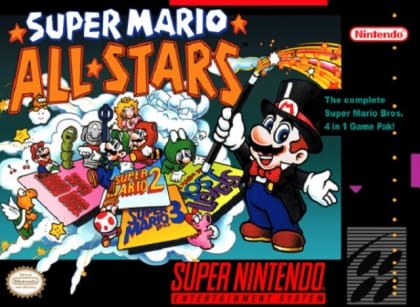
Super Mario All-Stars
Super Mario All-Stars is a 1993 platform game compilation developed and published by Nintendo for the Super Nintendo Entertainment System (SNES). It contains remakes of four Super Mario games released for the Nintendo Entertainment System (NES) and the Famicom Disk System: Super Mario Bros. (1985), Super Mario Bros.: The Lost Levels (1986; released as Super Mario Bros. 2 in Japan), Super Mario Bros. 2 (1988), and Super Mario Bros. 3 (1988). As in the original games, players control the Italian plumber Mario and his brother Luigi through themed worlds, collecting power-ups, avoiding obstacles, and finding secrets. The remakes feature updated graphics—including the addition of parallax scrolling—and music, modified game physics, a save feature, and bug fixes. Nintendo Entertainment Analysis & Development developed the compilation after completing Super Mario Kart (1992), at the suggestion of the Mario creator, Shigeru Miyamoto.
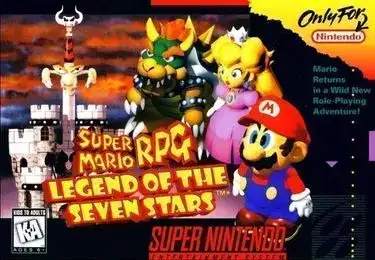
Super Mario RPG: Legend of the Seven Stars
Super Mario RPG: Legend of the Seven Stars is a 1996 role-playing video game developed by Square and published by Nintendo for the Super Nintendo Entertainment System (SNES). It was the final Mario game for the SNES, and was directed by Chihiro Fujioka and Yoshihiko Maekawa, produced by Shigeru Miyamoto, and scored by Yoko Shimomura. Super Mario RPG's story focuses on Mario and his friends as they seek to defeat the Smithy Gang, who have crashed into their world and scattered the seven star pieces of Star Road. It is the first RPG in the Mario franchise, drawing from major elements of Square's RPG franchises such as Final Fantasy. The main form of fighting enemies is turn-based combat with a party of up to three characters. It is also the first game in the Mario franchise to have gameplay within an isometric 3D environment, allowing for a new variety of the exploration and platforming elements reminiscent of the Super Mario series.
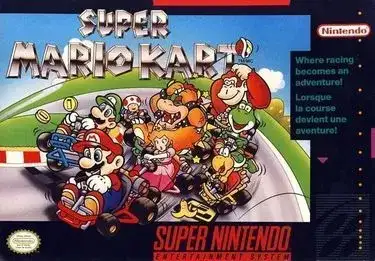
Super Mario Kart
Super Mario Kart is a 1992 kart racing game developed and published by Nintendo for the Super Nintendo Entertainment System (SNES). The first game in the Mario Kart series, it was released in Japan on August 27, 1992, North America on September 1, 1992, and Europe on January 21, 1993. Selling 8.76 million copies worldwide, the game went on to become the fourth best-selling SNES game of all time. Super Mario Kart was re-released on the Wii's Virtual Console in 2009, on the Wii U's Virtual Console in 2013, and on the New Nintendo 3DS's Virtual Console in 2016. Nintendo re-released Super Mario Kart in 2017 as part of the company's Super NES Classic Edition. In Super Mario Kart, the player takes control of one of eight Mario series characters, each with differing capabilities. In single-player mode, players can race against computer-controlled characters in 4 multi-race cups consisting of 20 tracks (5 in each cup) over three difficulty levels (50cc, 100cc and 150cc).
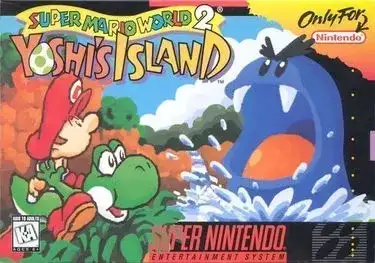
Super Mario World 2: Yoshi's Island
Super Mario World 2: Yoshi's Island is a 1995 platform game developed and published by Nintendo for the Super Nintendo Entertainment System (SNES). The player controls Yoshi dinosaurs on their quest to reunite baby Mario with his brother Luigi, who has been kidnapped by the wizard Kamek. Yoshi runs and jumps to reach the end of each level while solving puzzles and collecting items with Mario's help. Having introduced the character in the previous Super Mario game, Super Mario World (1990), Nintendo decided to develop a game starring Yoshi, with the aim of making it more accessible. Yoshi's Island introduced his signature flutter jump and egg-spawning abilities. The marker-drawn art style was created by scanning hand-drawn pictures and approximating them pixel-by-pixel. Some special effects were powered by a new Super FX2 microchip. After four years of development, Yoshi's Island was released in Japan in August 1995 and worldwide two months later. It sold more than four million copies.
Browse our collection of 12 Super Mario retro games, all playable instantly in your browser. No download required. Play classic games online in your browser and save your progress anytime.