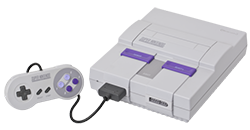
Super Nintendo Entertainment System
The Super Nintendo Entertainment System is a home video game console developed and marketed by Nintendo. It was released as the Super Famicom, in Japan on November 21, 1990, as the Super NES in North America on August 23, 1991, and internationally throughout 1992. It was Nintendo's second programmable home console, following the Nintendo Entertainment System (NES). A fourth-generation console, the Super NES primarily competed with Sega's Genesis in the console war, a fierce battle for market share in the United States and Europe.
67 games
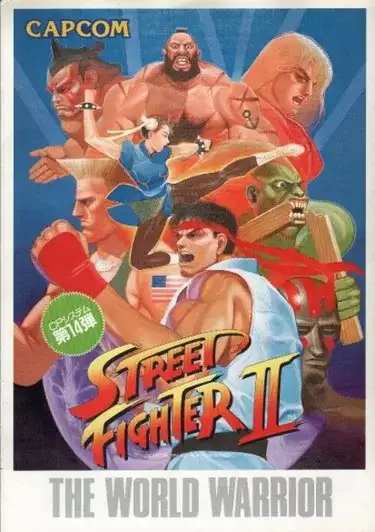
Street Fighter II: The World Warrior
Street Fighter II: The World Warrior is a 1991 fighting game developed and published by Capcom for arcades. It is the second installment in the Street Fighter series, and the sequel to 1987's Street Fighter. Designed by Yoshiki Okamoto and Akira Yasuda, who had previously worked on the game Final Fight, it is the fourteenth game to use Capcom's CP System arcade system board. Street Fighter II vastly improved many of the concepts introduced in the first game, including the use of special command-based moves, a combo system, a six-button configuration, and a wider selection of playable characters, each with a unique fighting style. Street Fighter II became the best-selling game since the golden age of arcade video games. By 1994, it had been played by an estimated 25 million people in the United States alone.
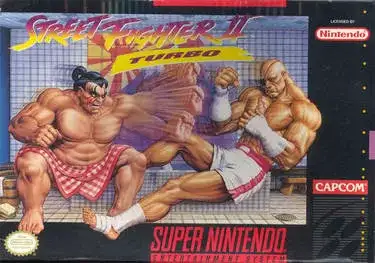
Street Fighter II Turbo: Hyper Fighting
Street Fighter II Turbo: Hyper Fighting, released as Street Fighter II Dash Turbo in Japan, is a 1992 fighting game developed and published by Capcom for arcades. It is the third arcade version of Street Fighter II, part of the Street Fighter franchise, following Street Fighter II: Champion Edition, and was initially released as an enhancement kit for that game. Released less than a year after the previous installment, Hyper Fighting introduced a faster playing speed and new special moves for certain characters, as well as further refinement to the character balance. Hyper Fighting is the final arcade game in the Street Fighter II series to use the original CP System hardware. It was distributed as an upgrade kit designed to be installed into Champion Edition printed circuit boards. The next game, Super Street Fighter II, uses the CP System's successor, the CP System II.
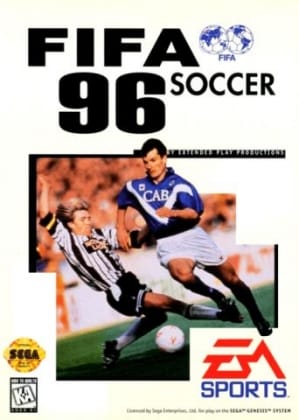
FIFA Soccer 96
FIFA Soccer 96 (also known as FIFA 96: Virtual Soccer Stadium) is a 1995 football video game developed by Extended Play Productions and released by EA Sports for the Mega Drive/Genesis, Sega Saturn, 32X, Game Gear, PlayStation, Super Nintendo Entertainment System, and MS-DOS-compatible operating systems. It is the third entry in the FIFA series "FIFA (video game series)"), its tagline being "Next Generation Soccer". It was the first in the series to feature real-time 3D graphics on the Saturn, PlayStation, 32X, and DOS versions, using technology called "Virtual Stadium". The SNES and Mega Drive/Genesis editions used the FIFA 95 engine. It is also the first in the series to use real player names and positions, with ranking, transfer and team customisation tools. The game's budget was $3 million.FIFA 96 was the first game in the series to use the Virtual Stadium game engine. The game was a bestseller in the UK.
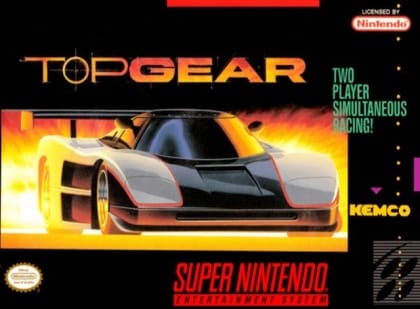
Top Gear
Top Gear is a 1992 racing video game developed by Gremlin Graphics and published by Kemco for the Super Nintendo Entertainment System. The objective of the game is to become the fastest driver in the world by racing other drivers across several nations. It marks the first game in the Top Gear racing game franchise, and it is one of the first racing games to be released on the SNES. This game and its next two sequels were created by the same developers as the similar Lotus series of games was released earlier on the Amiga and Mega Drive.
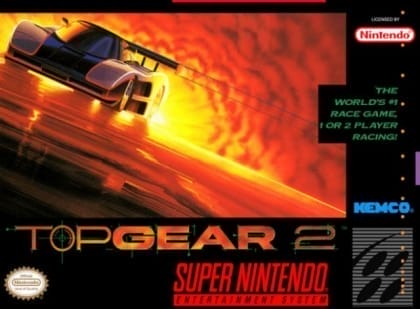
Top Gear 2
Top Gear 2 (released as Top Racer 2 in Japan) is a racing video game developed and published by Gremlin Interactive. A direct sequel to the 1992 game Top Gear, it was first released by Kemco for the SNES in North America in September 1993, and then the Super Famicom in Japan on December 22. It was later ported to the Amiga and Amiga CD32 in September 1994 by Gremlin Interactive, and to the Sega Genesis in September by Vic Tokai. While more realistic than its predecessor, Top Gear 2 maintained the arcade-style gameplay the series is known for.
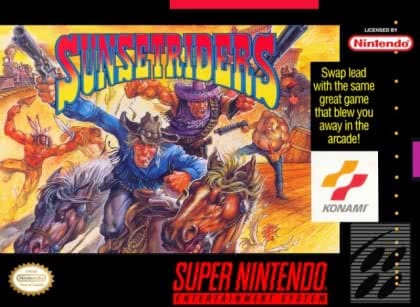
Sunset Riders
Sunset Riders is a 1991 run and gunvideo game developed and published by Konami for arcades. It was released in North America in October 1991 and Japan in November 1991. It is set in the American Old West, where the player(s) take control of bounty hunters who are seeking the rewards offered for various criminals. The arcade version was released in two variants: a two-player version and a four-player version. Home console versions of Sunset Riders were released for the Mega Drive/Genesis in 1992 and for the Super Nintendo Entertainment System in 1993 to a positive reception. Hamster Corporation released the game as part of their Arcade Archives series for the Nintendo Switch and PlayStation 4 in June 2020. The game, which is set in a fanciful version of the American Old West, revolves around four bounty hunters named Steve, Billy, Bob, and Cormano, who are out to claim rewards offered for eliminating the most wanted outlaws in the West. Each bounty hunter wields different guns.
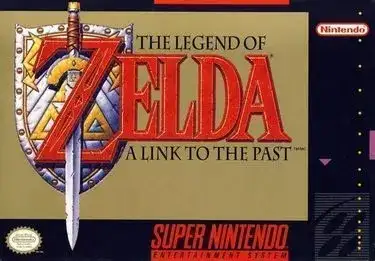
The Legend of Zelda: A Link to the Past
The Legend of Zelda: A Link to the Past is a 1991 action-adventure game developed and published by Nintendo for the Super Nintendo Entertainment System (SNES). It is the third game in The Legend of Zelda series, following 1987's Zelda II: The Adventure of Link, and is the first entry in the series to be released for the SNES. The story is set many years before the events of the first two Zelda games. The player assumes the role of Link as he journeys to save Hyrule, defeat the demon king Ganon, and rescue the descendants of the Seven Sages. It returns to a top-down perspective similar to the original The Legend of Zelda "The Legend of Zelda (video game)"), dropping the side-scrolling gameplay of The Adventure of Link. It also introduced series staples such as parallel worlds and items including the Master Sword. A Link to the Past is considered among the greatest video games ever made, with particular praise for its presentation and innovative gameplay.
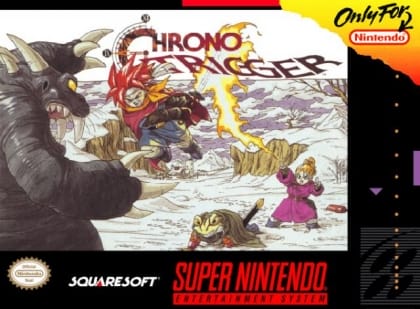
Chrono Trigger
Chrono Trigger is a 1995 role-playing video game developed and published by Square for the Super Nintendo Entertainment System. It is the first installment of the Chrono series "Chrono (series)"). The game's plot follows a group of adventurers who travel through time to prevent a global catastrophe. The game's development team included three designers that Square dubbed the "Dream Team": Hironobu Sakaguchi, creator of Square's Final Fantasy series; Yuji Horii, creator of Enix's Dragon Quest series; and Akira Toriyama, character designer of Dragon Quest and author of the _Dragon Ball "Dragon Ball (manga)")_manga series. In addition, Takashi Tokita co-directed the game and co-wrote the scenario, Kazuhiko Aoki "Kazuhiko Aoki (video game designer)") produced the game, while Masato Kato wrote most of the story.
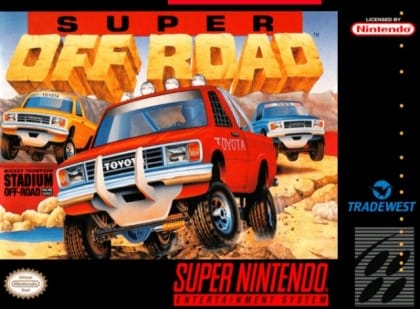
Super Off Road
Ivan 'Ironman' Stewart's Super Off Road is a 1989 racing video game developed and published by Leland Corporation for arcades. It was designed and managed by John Morgan, who was also lead programmer, and endorsed by professional off-road racer Ivan Stewart. Virgin Games produced several home computer versions in 1990, with a version for the Nintendo Entertainment System released by Leland's Tradewest subsidiary the same year. It was followed by versions for most major home consoles, including the Master System, Sega Genesis, and Super Nintendo Entertainment System. A port for the Atari Jaguar was announced but never released. Some ports lack the Ivan Stewart branding because of licensing issues, and are known simply as Super Off Road.
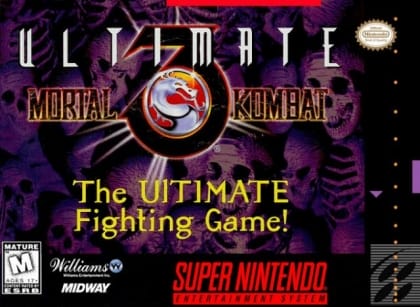
Ultimate Mortal Kombat 3
Ultimate Mortal Kombat 3 is a 1995 fighting game developed and published by Midway for arcades. Part of the Mortal Kombat series, it is a standalone update of 1995's earlier Mortal Kombat 3 with an altered gameplay system and some new features, as well as additional characters like the returning favorites Reptile, Kitana, Jade and Scorpion, who were missing from Mortal Kombat 3. Several home port versions of the game were soon released after the arcade original. Although none were completely identical to the arcade version, the Nintendo DS port came closest. Other versions followed, with some released under different titles, such as Mortal Kombat Advance (2001) for the Game Boy Advance. An iOS version recreating the game using a 3D graphics engine was released by Electronic Arts in 2010. Ultimate Mortal Kombat 3 was mostly well-received and has been considered a high point for the Mortal Kombat series. However, the iOS remake and some other home versions were received poorly.
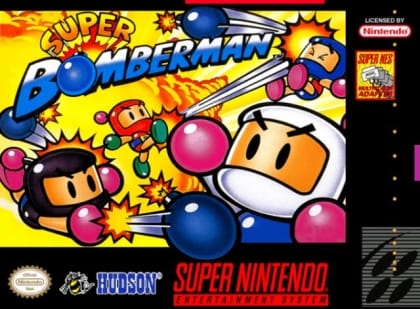
Super Bomberman
Super Bomberman is a 1993 action maze video game developed by Produce! and published by Hudson Soft for the Super Nintendo Entertainment System. Part of the Bomberman series, it is the first game in the series to retain the Bomberman title in Europe, instead of being renamed to Dynablaster or Eric and the Floaters. Super Bomberman spawned the Super Bomberman sub-series, of which seven more entries have been released: Super Bomberman 2 (1994), Super Bomberman 3 (1995), Super Bomberman 4 (1996), Super Bomberman 5 (1997), Super Bomberman R (2017), Super Bomberman R Online (2017), and Super Bomberman R 2 (2023). The game was re-released in 2026 as part of the Super Bomberman Collection compilation.
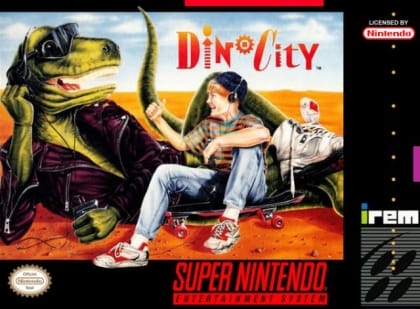
Dino City
DinoCity is a 1992 platform video game developed and published by Irem Corporation for the Super Nintendo Entertainment System. The game is loosely based on the 1991 made-for-television film Adventures in Dinosaur City, and borrows many of the film's characters, settings, and basic plot while providing its own unique art direction and style. Initially released in July 1992 in Japan, the game was later made available in North America the following September. The game centers on two friends, Timmy and Jamie, young children who are accidentally transported to a world resembling prehistoric Earth populated by anthropomorphic dinosaurs. While a device which will allow them to return home exists in this environment, a critical component has been stolen by Mr. Big, leader of a gang of Neanderthals known as The Rockeys, leaving the player to guide Timmy or Jamie to his castle to retrieve it. They are assisted by Rex, a Tyrannosaurus, and Tops, a Protoceratops, each with their own play-styles.
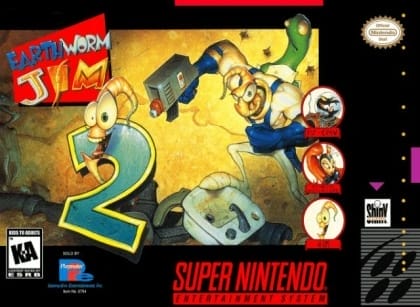
Earthworm Jim 2
Earthworm Jim 2 is a 1995 run and gun "Run and gun (video game)")platform game. It is the sequel to Earthworm Jim "Earthworm Jim (video game)"), and the second and final game in the Earthworm Jim series developed by original creators Doug TenNapel, David Perry "David Perry (game developer)"), and Shiny Entertainment. It was released in late 1995 and early 1996 depending on the region and video game console, initially for the Sega Genesis and Super Nintendo Entertainment System, before being ported to other platforms. The purpose of the game is largely the same as it was in the original Earthworm Jim; traverse through the levels in order to save Princess What's-Her-Name from Psy-Crow. However, gameplay is much more diverse than the original. While the majority of levels are still based on run and gun and platformer elements, separate levels incorporate different gameplay mechanics as well.
Super Bomberman 3
Super Bomberman 3 is a game released for the Super Nintendo Entertainment System in 1995. It is the third installment in the Super Bomberman series, and the third Bomberman game to be released for the system. Up to five players can play at the same time. The game was released in Japan and the PAL region, but not in North America due to the closure of Hudson Soft USA.
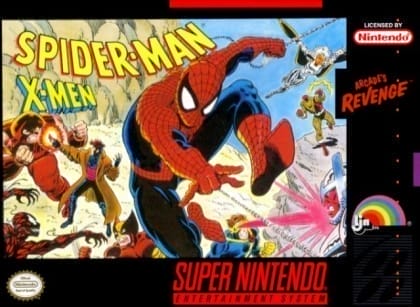
Spider-Man and the X-Men in Arcade's Revenge
While swinging his web throughout the city, Spider-Man notices the disappearances of X-Men Cyclops, Storm, and Wolverine; he then notices a tube from a garbage truck sucking up Gambit, and after figuring out it's Arcade, swings his web to the truck. He tracks Arcade down to an abandoned building, which is the location of the first stage; the player portrays Spider-Man de-activating "Security Eyes" in a set order (as indicated by the Spider-Sense) to enter. Inside, Spider-Man and the X-Men are placed in the deadly games of Murderworld, a simulated program designed by Arcade to torture and kill his victims. The player must successfully complete each Marvel hero's two "events" in order to get to control Spider-Man in a final battle with Arcade and escape. While any character's first event can be selected at the player's will, the second event is not playable until the completion of the first.
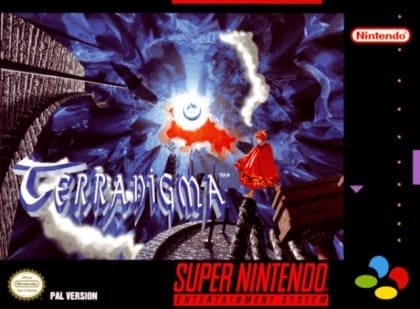
Terranigma
Terranigma is a 1995 action role-playing game developed by Quintet for the Super Nintendo Entertainment System (SNES), with manga artist Kamui Fujiwara acting as the character designer. The game tells the story of the Earth's resurrection by the hands of a boy named Ark, and its progress from the evolution of life to the present day. The game is the third entry in an unofficial trilogy of action role-playing games created by Quintet, also including Soul Blazer (1992) and Illusion of Gaia (1993). Terranigma was published in Japan by Enix on October 20, 1995, and in Europe and Australia by Nintendo starting in December 1996; the game was not released in North America due to Enix having already closed its U.S. branch by the time localization had finished, and has not been re-released due to complicated issues relating to its rights. The game has been met with critical acclaim for its presentation, gameplay, and story, although it has been criticized for its difficulty.
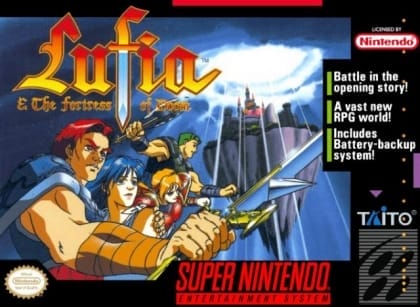
Lufia & The Fortress of Doom
Lufia & the Fortress of Doom, known as Estpolis Denki (エストポリス伝記, Esutoporisu Denki; officially translated Biography of Estpolis) in Japan, is a role-playing video game developed by Neverland and published by Taito in 1993, for the Super Nintendo Entertainment System. It is the first title in the Lufia series of video games and the only game from the series released under the Taito label in North America. The game's plot follows The Hero, Lufia, Aguro, and Jerin on a quest to prevent the resurrection of four superpowered beings called Sinistrals, and frequently delves into the political and personal lives of the subjects of kingdoms all around the world. Top-down exploration is mixed with traditional turn-based combat using 2D sprites. The game was generally well-received, and has spawned multiple sequels on the Super Nintendo as well as the Game Boy Color, Game Boy Advance and the Nintendo DS.
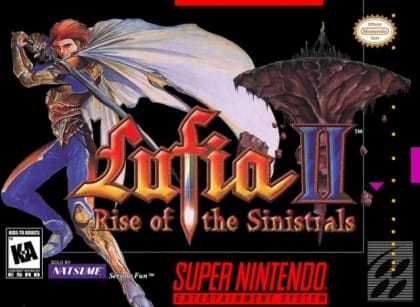
Lufia II: Rise of the Sinistrals
Lufia II: Rise of the Sinistrals, known as Estpolis Denki II (エストポリス伝記II, Esutoporisu Denki II; officially translated Biography of Estpolis II) in Japan, and as Lufia in Europe and Australia, is a role-playing video game with puzzle elements developed by Neverland and published in Japan in 1995 by Taito, and in North America and Europe in 1996 by Natsume and Nintendo respectively, for the Super Nintendo Entertainment System. It is the second game in the Lufia series. The game is a prequel to Lufia & the Fortress of Doom. It follows the story of the first main character's ancestor, Maxim, and explains the origins of the war between mankind and a group of gods called the Sinistrals. Lufia II made a number of changes from the first game. Dungeons no longer have random encounters and there are hundreds of puzzles throughout the game, ranging from simple to extremely challenging.
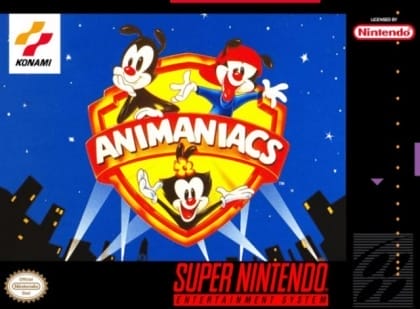
Animaniacs
In the SNES version, the Brain once again has another plan to conquer the world by deciding to steal the script of the new Warner Bros. film while it was under development. The CEO of Warner Bros. studio reluctantly asks the Warner Siblings for their assistance to retrieve all 24 pages of the script and foil the Brain's plan, which is the primary objective of the game. The ending of the game depends on how many script pages are collected, with the best ending leading to Warner Bros. being able to complete the film, pleasing the CEO, only to find out that the film was about the Warner Siblings, which pleases them.
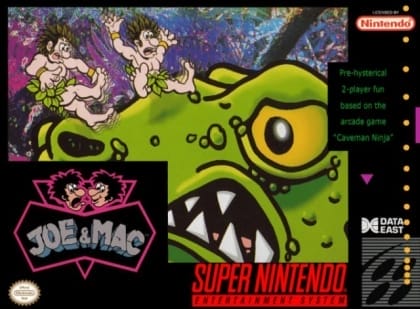
Joe & Mac
Joe & Mac, also known as Caveman Ninja or Caveman Ninja: Joe & Mac, is a 1991 run and gun "Run and gun (video game)")platform game developed and published by Data East for arcades. It was later ported to the Super Nintendo Entertainment System, MS-DOS, Amiga, Nintendo Entertainment System, Game Boy, Sega Genesis and Zeebo. The game stars the green-haired Joe and the blue-haired Mac, cavemen who battle through numerous prehistoric levels using weapons such as boomerangs, bones, fire, flints, electricity, stone wheels, and clubs "Club (weapon)"). The objective of the game is to rescue a group of women who were kidnapped by a rival tribe of cavemen. The game features a health system by which the player loses health over a period of time, apart from during boss battles. A two-player mode is available, and in some versions both characters are capable of damaging each other.
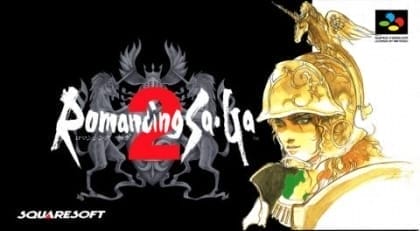
Romancing SaGa 2
Romancing SaGa 2 is a 1993 role-playing video game developed and published by Square for the Super Famicom. It is the fifth entry in the SaGa series. It received an expanded port for Japanese mobile devices from Square Enix in 2011. This version was remastered by ArtePiazza and released worldwide between 2016 and 2017 by Square Enix for Android, iOS, PlayStation Vita, Nintendo Switch, PlayStation 4, Windows and Xbox One. A 3D remake entitled Romancing SaGa 2: Revenge of the Seven was released on the Nintendo Switch, PlayStation 4, PlayStation 5 and Windows in 2024, and for Nintendo Switch 2 and Xbox Series X/S in 2025. Set during the history of the kingdom of Avalon, the player takes on the role of a dynasty of rulers as they fight the Seven Heroes, former saviors of the world corrupted into demons. Gameplay features nonlinear exploration and expansion of the game world and narrative, with the turn-based battles featuring group formations.
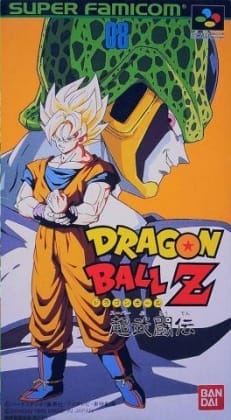
Dragon Ball Z: Super Butōden
Dragon Ball Z: Super Butōden, known as Dragon Ball Z in Europe, is a 1993 fighting video game developed by Tose and published by Bandai for the Super Nintendo Entertainment System. It is based upon Akira Toriyama's Dragon Ball franchise, and was its first fighting game. Due to the popularity of Street Fighter II: The World Warrior at the time, producer Toshihiro Suzuki chose to work on a fighting game when assigned to a new project due to it being his preferred genre. Its gameplay consists of one-on-one fights, with a main six-button configuration, featuring special moves, as well as three playable modes. Dragon Ball Z: Super Butōden garnered mostly positive reception from critics; most reviewers praised the presentation and gameplay but others felt divided in regards to several design aspects. The game sold approximately 1.3 million units in its first two months of release in Japan.
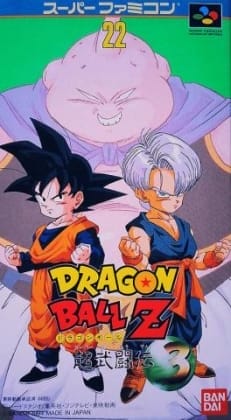
Dragon Ball Z: Super Butouden 3
Dragon Ball Z: Super Butōden 3 is a 1994 fighting video game developed by Tose and published by Bandai for the Super Nintendo Entertainment System. Based upon Akira Toriyama's Dragon Ball franchise, it is the sequel to Dragon Ball Z: Super Butōden 2, which was released earlier in 1993 for SNES. Following the Majin Buu arc, its gameplay remains relatively the same as the previous two Super Butōden entries, consisting of one-on-one fights using a main six-button configuration, featuring special moves as well as two playable modes. Dragon Ball Z: Super Butōden 3 was created by most of the same team who previously worked on the first two Super Butōden entries on Super Nintendo, with producer Toshihiro Suzuki returning to lead its production, with additional support from staff of both Toei Animation and V Jump magazine. Like its predecessors, Super Butōden 3 garnered positive reception from critics, however the lack of a story mode was heavily criticized by reviewers.
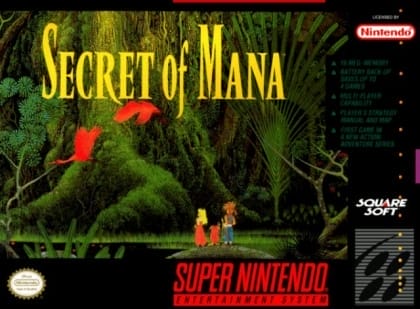
Secret of Mana
Secret of Mana, originally released in Japan as Seiken Densetsu 2, is a 1993 action role-playing game developed and published by Square for the Super Nintendo Entertainment System. It is the sequel to the 1991 game Seiken Densetsu, released in North America as Final Fantasy Adventure and in Europe as Mystic Quest. Secret of Mana was the first Seiken Densetsu title to be marketed as part of the Mana series "Mana (series)") rather than the Final Fantasy series. Set in a high fantasy universe, the game follows three heroes as they attempt to prevent an empire from conquering the world with the power of an ancient flying fortress. Rather than using a turn-based battle system like contemporaneous role-playing games, Secret of Mana features real-time battles with a power bar mechanic. The game has a unique Ring Command menu system, which pauses the action and allows the player to make decisions in the middle of battle.
Browse our collection of 67 Super Nintendo Entertainment System retro games, all playable instantly in your browser. No download required. Play classic games online in your browser and save your progress anytime.