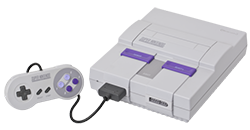
Super Nintendo Entertainment System
The Super Nintendo Entertainment System is a home video game console developed and marketed by Nintendo. It was released as the Super Famicom, in Japan on November 21, 1990, as the Super NES in North America on August 23, 1991, and internationally throughout 1992. It was Nintendo's second programmable home console, following the Nintendo Entertainment System (NES). A fourth-generation console, the Super NES primarily competed with Sega's Genesis in the console war, a fierce battle for market share in the United States and Europe.
67 games
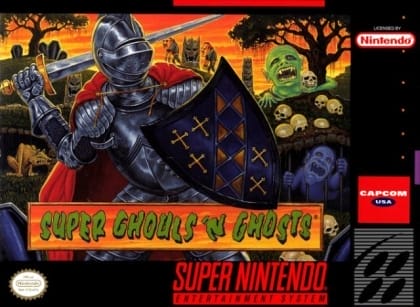
Super Ghouls 'n Ghosts
Super Ghouls 'n Ghosts, known as Chō Makaimura in Japan, is a 1991 platform video game developed and published by Capcom for the Super Nintendo Entertainment System. The third installment in the Ghosts 'n Goblins series and the first not to be released for arcades, it again depicts knight Arthur saving Princess Guinevere and the kingdom from Emperor Sardius, who has cast a spell that has revived the Ghoul Realm. The game has been included in multiple compilations of Capcom classics. A remake was released for the Game Boy Advance which features an additional game mode with new stages.
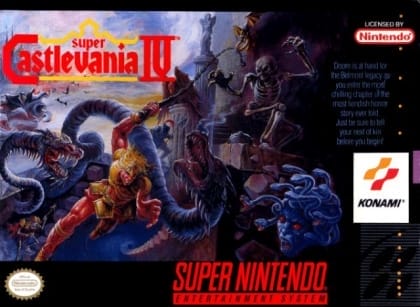
Super Castlevania IV
Super Castlevania IV is a 1991 platform game developed and published by Konami for the Super Nintendo Entertainment System. It has been re-released multiple times, including for the Super NES Classic Edition. Super Castlevania IV features expanded play control, 16-bit graphics featuring Super NES's Mode 7, and a soundtrack featuring new pieces and arrangements based on previous Castlevania music. Following the same setting as Castlevania on the NES, the game takes place in 1691 Transylvania, where the vampire hunter Simon Belmont must defeat the vampire Dracula. The game received critical acclaim and is considered one of the greatest video games ever made.
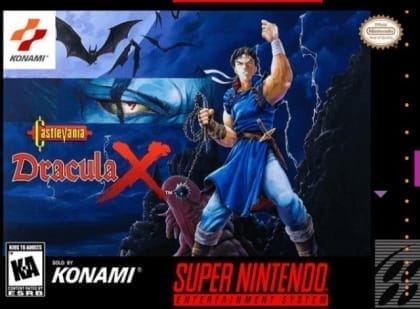
Castlevania: Dracula X
Castlevania: Dracula X, titled Castlevania: Vampire's Kiss in Europe and Akumajou Dracula XX in Japan, is a 1995 platform game developed and published by Konami for the Super Nintendo Entertainment System. It is the second Castlevania installment to be released for the Super NES. It is a remake of Castlevania: Rondo of Blood, which was previously released in Japan on the PC Engine Super CD-ROM2 in 1993. While the plot is similar to Rondo of Blood and it uses many of that game's graphics, it features new levels and altered gameplay elements, rather than being a direct port because of the limits of the Super NES cartridge format and exclusivity agreements with PC Engine maker NEC. It was released on July 21, 1995 in Japan, in September 1995 in North America, February 22, 1996 in Europe, and on June 22, 1996, in Australia. The game received mixed reviews, with journalists considering it inferior to Rondo of Blood and criticizing its high difficulty.
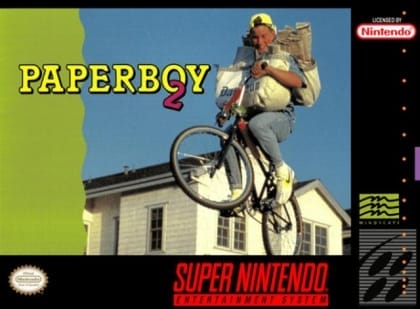
Paperboy 2
Among the four reviewers in Electronic Gaming Monthly, they described the Game Boy version of the game as suffering from the limitations of the size of the Game Boy's screen and the black and white graphics with two reviewers recommending it to fans of the original game.#cite_note-EGMRev-3) Ed Ricketts of Amiga Format gave the Amiga version a 44 percent rating.#cite_note-6)N-Force gave the NES version a 42 percent rating.#cite_note-7) Jonathan Gagnon of Game Players gave the Game Gear version a 5 out of 10.#cite_note-8) Jonathan Davies of Super Play gave the SNES version a 29 percent rating.#cite_note-9) Brett Alan Weiss of AllGame gave the SNES version one and a half stars out of five.#cite_note-10)Total! gave the NES version 50 out of 100, criticizing its poor camera and controls, as well as the music and gameplay.#cite_note-11)Sega Force reviewed the Mega Drive/Genesis version and rated it 55 out of 100.
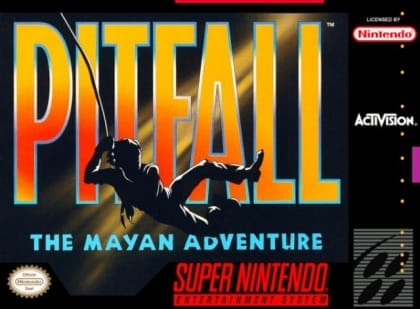
Pitfall: The Mayan Adventure
Pitfall: The Mayan Adventure is a 1994 action-platformvideo game developed by Activision in conjunction with Kroyer Films. The fourth installment in the Pitfall! franchise, players assume the role of Pitfall Harry Jr. as he embarks on a journey through the Mayan jungles of Central America in an attempt to rescue Pitfall Harry, his father and the protagonist of previous entries in the series, from the evil Mayan warrior spirit Zakelua. Its gameplay mainly consists of action and platforming mixed with stage-based exploration using a main six-button configuration. Pitfall: The Mayan Adventure began its development on the Super Nintendo Entertainment System and formed part in a string of planned franchise revivals by Activision along with other games from the Atari 2600 such as Kaboom! "Kaboom! (video game)") and River Raid.
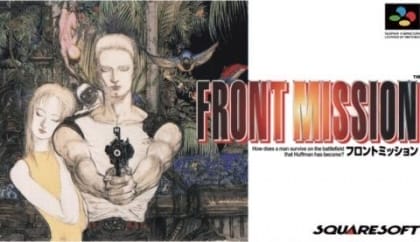
Front Mission
Front Mission#cite_note-1) is a tactical role-playing game developed by G-Craft and published by Square for the Super Famicom. It was originally released only in Japan on February 24, 1995. Front Mission is the first main entry and the first entry overall in the Front Mission series.#cite_note-gamespy-2)Front Mission is part of a serialized storyline that follows the stories of various characters and their struggles involving mecha known as wanzers.#cite_note-dengeki2004-3) A direct port of the game was released for the WonderSwan Color in Japan on July 12, 2002. A remake of the game developed by Square Enix Co., Ltd. was released for the PlayStation in Japan on October 23, 2003, titled Front Mission 1st.#cite_note-4) It included new content and offered a new USN scenario to play through. Front Mission 1st was then ported to the Nintendo DS with more additional content and was released in Japan on March 22, 2007.
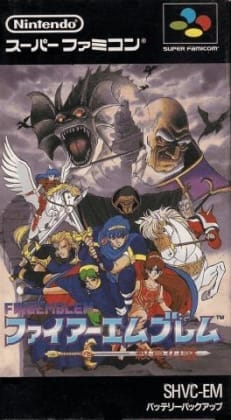
Fire Emblem: Mystery of the Emblem
Fire Emblem: Mystery of the Emblem, known in Japan as Fire Emblem: Monshō no Nazo, is a 1994 tactical role-playing video game developed by Intelligent Systems and published by Nintendo for the Super Famicom. It is the third installment of the Fire Emblem series, and the first to be developed for the Super Famicom. The story is divided into two parts: the first is a retelling of Fire Emblem: Shadow Dragon and the Blade of Light, while the second is an original story acting as a sequel to the first game. After defeating the sorcerer Gharnef and the Dark Dragon Medeus, peace is restored to Archanea and Marth restores his kingdom. His ally Hardin ascends to the throne of Archanea, but begins hostile military expansion across the continent, forcing Marth to confront his old friend and the force driving him. Gameplay follows the traditional Fire Emblem system of tactical battles taking place on grid-based maps.
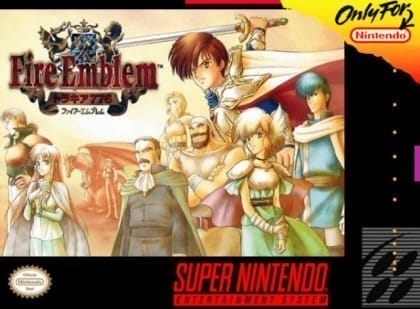
Fire Emblem: Thracia 776
Fire Emblem: Thracia 776 is a tactical role-playing game developed by Intelligent Systems and published by Nintendo for the Super Famicom; it was originally released through the Nintendo Power flash cartridge "Nintendo Power (cartridge)") in 1999, then on a ROM cartridge the following year. It is the fifth installment in the Fire Emblem series, the third and last title to be developed for the Super Famicom, and the last home console Fire Emblem until the release of Fire Emblem: Path of Radiance in 2005. Thracia 776 takes place on the continent of Jugdral. Set in the generational gap within Fire Emblem: Genealogy of the Holy War, the story follows main protagonist Leif as he rallies a private army in an attempt to defeat the ruling Grannvale Empire and restore his lost kingdom of Thracia.
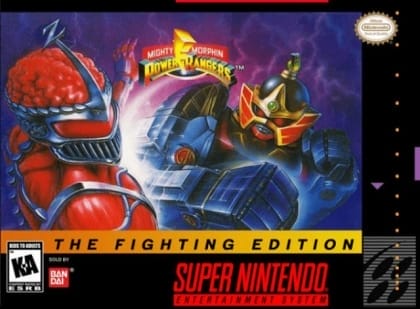
Mighty Morphin Power Rangers: The Fighting Edition
Mighty Morphin Power Rangers: The Fighting Edition is a 2D competitive fightingvideo game based on the Mighty Morphin Power Rangers television series that was released exclusively for the Super Nintendo Entertainment System developed by Natsume Co., Ltd. and published by Bandai in 1995. Unlike previous Power Rangers video games, which had the player controlling the titular heroes, the player controls their giant robots (known as Zords) in this title. A bootleg Genesis port is known to exist, though who actually made it is currently unknown.
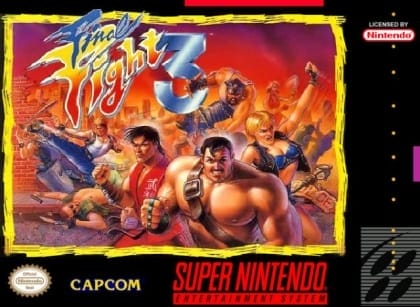
Final Fight 3
Final Fight 3, released in Japan as Final Fight Tough (Japanese: ファイナルファイト タフ, Hepburn: Fainaru Faito Tafu), is a 1995 beat 'em up video game developed and published by Capcom for the Super Nintendo Entertainment System. It is the second sequel to Final Fight released for the Super NES, following Final Fight 2. Like its predecessor, it was produced by Capcom's consumer division with no preceding arcade version released. The game features the return of the protagonist Guy along with Haggar and also introduces new characters Lucia and Dean. The game's plot takes them through their efforts to rid Metro City of the new Skull Cross gang. Final Fight 3 introduced new moves, as well as branching paths during gameplay and multiple endings. Also available is the option to fight alongside a CPU-controlled partner. However, most critics felt these changes did too little in the way of expanding and improving upon the original Final Fight, and the game was released to little fanfare.
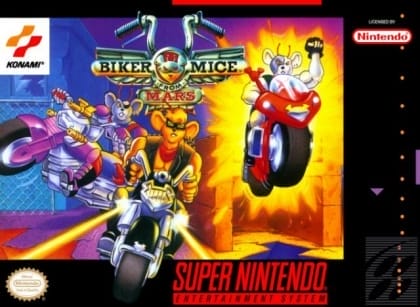
Biker Mice from Mars
Biker Mice From Mars is a racing video game released by Konami for the Super Nintendo Entertainment System. It is a tie-in to the animated series of the same title. The PAL version of the game features in-game product placement for Snickers candy bars.
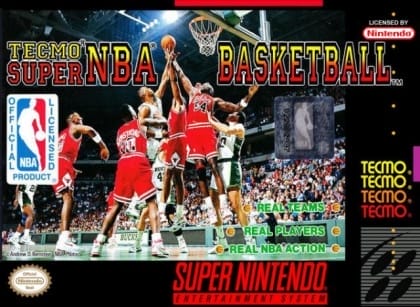
Tecmo Super NBA Basketball
Tecmo Super NBA Basketball (テクモスーパーNBAバスケットボール) is a basketball video game developed by Sculptured Software for the Super NES. The game is the SNES equivalent of the original Tecmo NBA Basketball. It also came out a year later (with updated rosters) for the Sega Genesis.
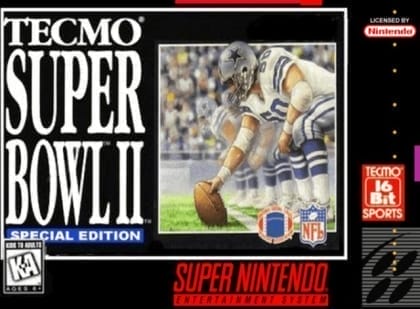
Tecmo Super Bowl II - Special Edition
Tecmo Super Bowl II (テクモスーパーボウルII スペシャルエディション) is an update of the previous Tecmo Super Bowl released for Super NES and Genesis.
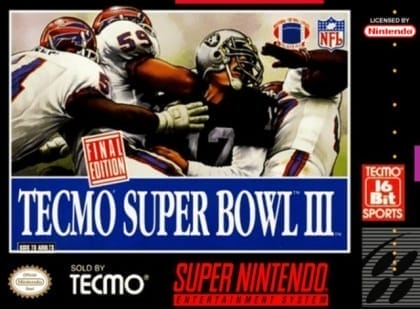
Tecmo Super Bowl III: Final Edition
Tecmo Super Bowl III: Final Edition is a 1995 American football video game released on the Super Nintendo Entertainment System and the Sega Genesis. According to a spokesperson for the game's developer/publisher, Tecmo, the subtitle "Final Edition" refers to it being the last football game Tecmo would make for 16-bit systems. The game features the full NFL and NFLPA licenses. The game is closer to the real-life sport in comparison to the NES and the previous two SNES/Sega Genesis_Tecmo Super Bowl_ games in several ways. Each team has a playbook of eight passing plays and eight running plays, any one of which can be switched out and another put in its place in the middle of a game. It also includes some of the more nuanced strategies of football, such as attempting two-point conversions. Also setting itself apart from the NES-era games was the in-game presentation, which is more akin to the realistic "TV style" presentation of modern football games like the Madden series.
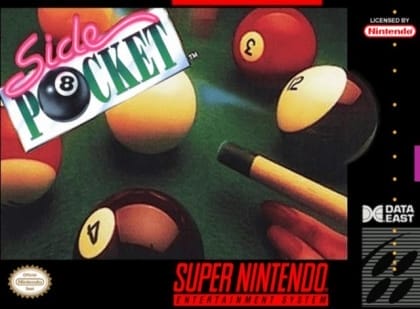
Side Pocket
The Game Boy version of Side Pocket is a slight modification from the NES version, featuring a smaller playing field (to compensate with Game Boy's screen), new set of soundtrack and a different screen layout. Like in NES version, the Pocket Game mode features 4 levels and the player starts with 5 lives. One unique addition to the Game Boy version is the ability to play single-player nine-ball mode, while in other versions this mode is limited only to two players. Enhanced remakes of the game were later released for the Sega Genesis, Super Nintendo Entertainment System, and Game Gear. This version features updated contents compared to the original NES and Game Boy versions, including revamped graphics, new soundtrack, and photo-realistic background sceneries during gameplay. The main game modes remain identical to the original, with several alteration on the Pocket Game mode.
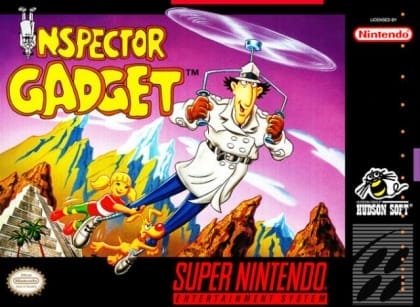
Inspector Gadget
Inspector Gadget is a 1993 side-scrollingaction video game for the Super Nintendo Entertainment System based on the television show of the same title "Inspector Gadget (1983 TV series)"). The game was released by Hudson Soft, with developers who also worked on Hudson's video game adaptations SWAT Kats: The Radical Squadron "SWAT Kats: The Radical Squadron (video game)") and An American Tail: Fievel Goes West "An American Tail: Fievel Goes West (video game)"). The normally bumbling Gadget is portrayed as fairly competent as he must rescue his niece Penny from the clutches of Dr. Claw and his M.A.D. terrorist organization. Dr. Claw's face makes a rare appearance in the game, unlike the cartoon, which keeps his face hidden.#cite_note-1) The player controls Inspector Gadget as he travels around the world to rescue his niece Penny, who has been kidnapped by the terrorist organization M.A.D. and its leader Dr. Claw.
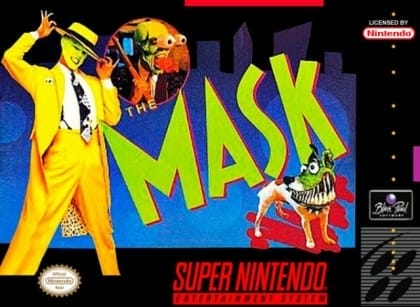
The Mask
The Mask is a 1995 side-scrollingactionvideo game developed and published by THQ subsidiary Black Pearl Software for the Super Nintendo Entertainment System which is based on the film of the same name "The Mask (1994 film)"). The film, in turn, was loosely based on the Dark Horse comic book series of the same name "The Mask (comics)").#cite_note-allgame-2) The game received moderately positive reviews from critics, who were particularly pleased with its faithful recreation of the humor and visual style of the film, while criticizing the level design and difficulty. Mob boss Dorian Tyrell and his gang of rogues are secretly planning to take over Edge City, a small and prosperous city where the nightlife revolves around the wealthy patrons who attend the nightclub that Dorian owns and operates for the benefit of himself and his henchmen.
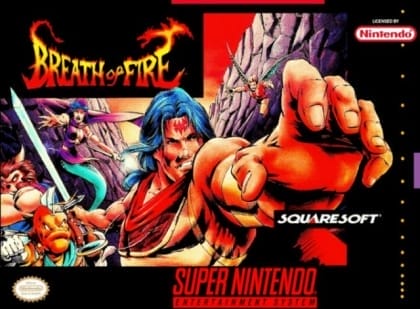
Breath of Fire
Breath of Fire[a] is a role-playing video game developed by Capcom originally for the Super Nintendo Entertainment System. Initially released in Japan in April 1993, the game was later made available in North America in August 1994 by Square Soft, who handled the title's English localization and promotion. It is the first entry in the Breath of Fire series. Recognized by Capcom as their first traditional role-playing video game, Breath of Fire would set the precedent for future entries in the series, and features character designs artist Keiji Inafune, as well as music by members of Capcom's in-house sound team Alph Lyla. In 2001, the game was re-released for the Game Boy Advance handheld system with new save features and minor graphical enhancements, with the English version being released in Europe for the first time. In 2016, it was released for the New Nintendo 3DS Virtual Console.[4] In 2019, it was released for the Nintendo Switch SNES games library.
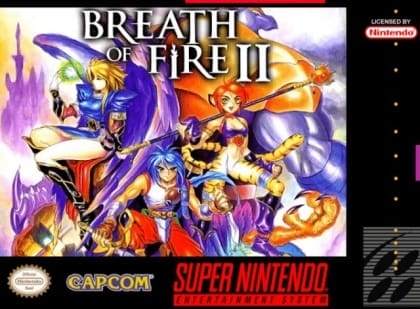
Breath of Fire II
Breath of Fire II is a role-playing video game developed and published by Capcom. First released in 1994, the game was licensed to Laguna for European release in 1996. It is the second entry in the Breath of Fire series. It was later ported to Game Boy Advance and re-released worldwide. The game was released on Wii's Virtual Console in North America on August 27, 2007. Nintendo of Europe's website mistakenly announced it for release on July 27, 2007, but it was in fact released two weeks later, on August 10, 2007. In 2013, it was released for the Wii U Virtual Console. In 2016, it was released for the New Nintendo 3DS Virtual Console. In 2019, it was released for the Nintendo Switch SNES games library. Unlike later installments in the series, Breath of Fire II is a direct sequel to Breath of Fire. Set 500 years after the original game, the story centers on an orphan named Ryu Bateson, whose family vanished mysteriously long ago.
Browse our collection of 67 Super Nintendo Entertainment System retro games, all playable instantly in your browser. No download required. Play classic games online in your browser and save your progress anytime.