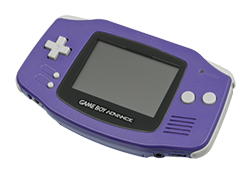
Game Boy Advance
The Game Boy Advance (GBA) is a 32-bit handheld game console, manufactured by Nintendo, which was released in Japan on March 21, 2001, and to international markets that June. It was later released in mainland China in 2004, under the name iQue Game Boy Advance. Compared to the Game Boy Color it succeeded, the console offered a significantly more powerful ARM7 processor and improved graphics, while retaining backward compatibility with games initially developed for its predecessor.
33 games
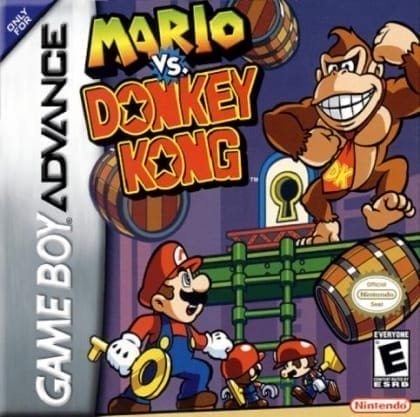
Mario vs. Donkey Kong
Mario vs. Donkey Kong#cite_note-1) is a 2004 puzzle-platform game developed by Nintendo Software Technology and published by Nintendo for the Game Boy Advance. The game is the spiritual successor to Donkey Kong "Donkey Kong (1994 video game)"), which was released in 1994 for the Game Boy. The gameplay revolves around a combination of platform and puzzle elements. Players control Mario through small sets of challenges to find a key and rescue Mini-Marios from Donkey Kong "Donkey Kong (character)"). Mario vs. Donkey Kong received positive reviews, particularly for its gameplay and graphics. It spawned a franchise "Mario vs. Donkey Kong (sub-series)") of the same name with the first sequel, Mario vs. Donkey Kong 2: March of the Minis, was released on Nintendo DS in September 2006. A remake for the Nintendo Switch was released in February 2024.
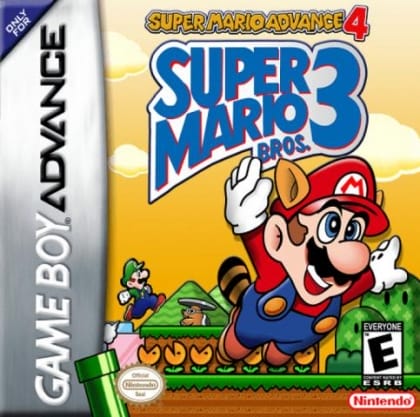
Super Mario Advance 4: Super Mario Bros. 3
Super Mario Advance 4: Super Mario Bros. 3 is a 2003 platform game developed and published by Nintendo for the Game Boy Advance. It was released in Japan, and later released in Europe, North America, and Australia. It is an enhanced remake of the NES video game Super Mario Bros. 3, and is based on the remake found in Super Mario All-Stars for the Super Nintendo Entertainment System. Players control either Mario or Luigi as they travel through the eight kingdoms of the Mushroom World to rescue Princess Peach from Bowser. The game was revealed at Nintendo's conference at the E3 2003 convention. It contains several enhancements, including the addition of Mario and Luigi's voices by Charles Martinet, the ability to scan e-Cards into Nintendo's e-Reader to add certain content, and a multiplayer mode based on the original arcade game Mario Bros.. The game also allows players to save replays of their gameplay.
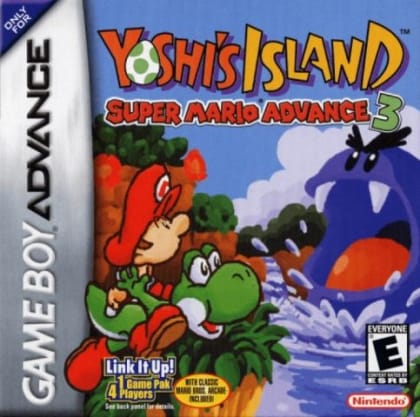
Super Mario Advance 3: Yoshi's Island
Super Mario World 2: Yoshi's Island is a 1995 platform game developed and published by Nintendo for the Super Nintendo Entertainment System (SNES). The player controls Yoshi dinosaurs on their quest to reunite baby Mario with his brother Luigi, who has been kidnapped by the wizard Kamek. Yoshi runs and jumps to reach the end of each level while solving puzzles and collecting items with Mario's help. Having introduced the character in the previous Super Mario game, Super Mario World (1990), Nintendo decided to develop a game starring Yoshi, with the aim of making it more accessible. Yoshi's Island introduced his signature flutter jump and egg-spawning abilities. The marker-drawn art style was created by scanning hand-drawn pictures and approximating them pixel-by-pixel. Some special effects were powered by a new Super FX2 microchip. After four years of development, Yoshi's Island was released in Japan in August 1995 and worldwide two months later. It sold more than four million copies.
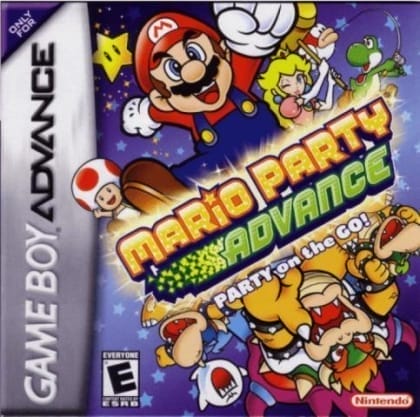
Mario Party Advance
Mario Party Advance is a 2005 party video game developed by Hudson Soft and published by Nintendo for the Game Boy Advance. It is the first handheld game in the Mario Party series and the seventh entry in the series overall. The game was released in Japan on January 13, 2005, North America on March 28, 2005, Europe on June 10, 2005, and Australia on September 15, 2005. The game was re-released on the Virtual Console for the Wii U in 2014. Mario Party Advance differs from other titles in the Mario Party series in its focus on one single-player mode rather than several multiplayer modes. However, traditional Mario Party gameplay is present in players choosing a character from the Mario franchise, moving around an interactive game board, and playing a variety of minigames. Upon release, the game received mixed reviews from critics, many of whom panned its single-player focus.
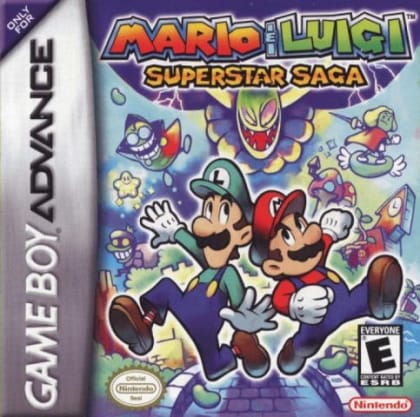
Mario & Luigi: Superstar Saga
Mario & Luigi: Superstar Saga is a 2003 role-playing video game developed by AlphaDream and published by Nintendo for the Game Boy Advance. It is the first game in the Mario & Luigi series. The story follows Mario and Luigi as they travel to the Beanbean Kingdom in order to combat Cackletta and Fawful, who stole Princess Peach's voice for the purpose of harnessing the power of a special artifact called the Beanstar. Superstar Saga is the third role-playing game in the Mario franchise, following Super Mario RPG (1996) and Paper Mario (2000), and features a lighthearted, whimsical script with a greater emphasis on comedy than earlier titles. The player controls Mario and Luigi simultaneously as they traverse the overworld, fight enemies, gain experience points, and find new items and gear. The battle system differs from traditional role-playing games, with more emphasis on timing and elaborate attacks called Action Commands.
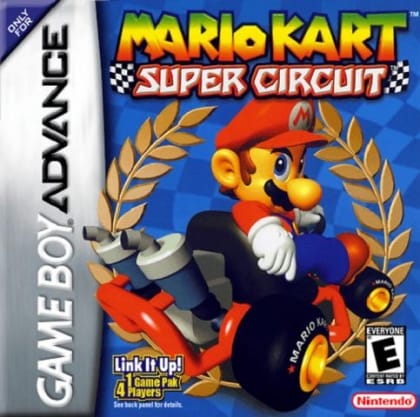
Mario Kart: Super Circuit
Mario Kart: Super Circuit is a 2001 kart racing game for the Game Boy Advance (GBA). It is the third Mario Kart game and retains its predecessors' gameplay: as a Mario franchise character, the player races opponents around tracks based on locales from the Super Mario platform games. Tracks contain obstacles and power-ups that respectively hamper and aid the player's progress. Super Circuit includes various single-player and multiplayer game modes, including a Grand Prix racing mode and a last man standing battle mode. Super Circuit was developed by Intelligent Systems and published by Nintendo. It was the first handheld Mario Kart game and the only game in the series developed by Intelligent Systems. Its graphical style changed drastically from early demos, with the final release resembling Super Mario Kart (1992) visually. Nintendo revealed Super Circuit alongside the GBA in 2000 and released it in mid-2001, months after the console's launch.
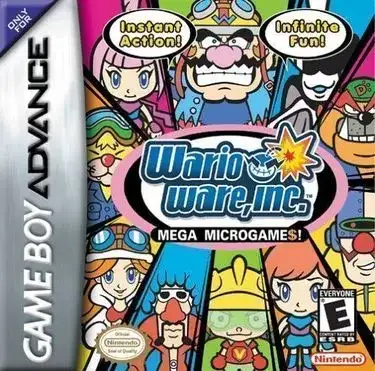
WarioWare, Inc.: Mega Microgames!
WarioWare, Inc.: Mega Microgames!, known as WarioWare, Inc.: Minigame Mania in PAL regions, is a 2003 action game developed and published by Nintendo for the Game Boy Advance. The debut title in the WarioWare series, the game is about rapid completion of "microgames", short minigames given to the player consecutively and with increasing speed per each game complete. The game's concept was inspired by the "Sound Bomber" mode of Mario Artist: Polygon Studio for the Nintendo 64DD. Many of the music tracks and sound effects (including Wario's voice clips) were recycled from Wario Land 4. The game was produced by Takehiro Izushi and directed by Hirofumi Matsuoka. Matsuoka was also the director of Polygon Studio. Mega Microgames! was released in 2003; in Japan in March, in North America and Europe in May and in Australia in June. Upon its release, WarioWare, Inc.
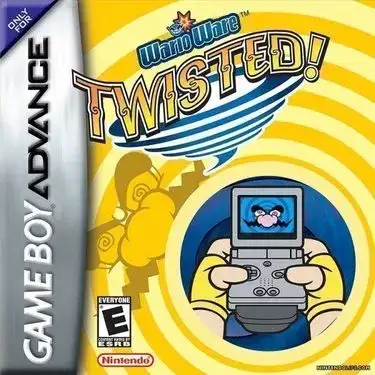
WarioWare: Twisted!
WarioWare: Twisted! is an actionvideo game developed by Nintendo and Intelligent Systems and published by Nintendo for the Game Boy Advance. It was released on October 14, 2004 in Japan; May 19, 2005 in Australia; and May 23, 2005 in North America. The third game in the WarioWare series and the seventh in the Wario series overall, Twisted! was the last Wario game to be released on a Game Boy family system, having been released after the launch of the Nintendo DS outside of Japan. Wario and his friend Dr. Crygor invent Game Boy Advance games and units that only react when tilted around. The game follows the WarioWare formula with a variety of games that last for only a few seconds. The cartridge utilizes a gyro sensor and players must spin and twist in order to play the games. Twisted! was critically acclaimed and has won numerous awards. Reviewers found the gyro sensor to be innovative and adding to the gameplay aspect.
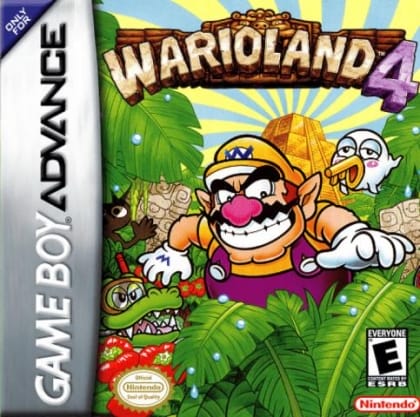
Wario Land 4
Wario Land 4 is a 2001 platform game developed by Nintendo R&D1 and published by Nintendo for the Game Boy Advance. It is the fourth installment in the Wario Land subseries of the Wario series. It was released in Japan in August 2001 and November 2001 internationally. In the game, Wario has to gather four treasures to unlock a pyramid and save Princess Shokora from the Golden Diva. The game received acclaim for its graphics and gameplay.
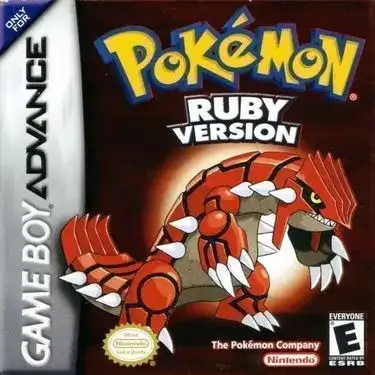
Pokémon Ruby
Pokémon Ruby Version and Pokémon Sapphire Version are role-playing video games developed by Game Freak and published by The Pokémon Company and Nintendo for the Game Boy Advance. They are the first installments in the third generation of the Pokémon video game series "Pokémon (video game series)"), also known as the "advanced generation". After years of Nintendo being the sole publisher of the franchise in all regions, The Pokémon Company co-published the games for the first time since the establishment of the joint-owned company in 1998. They were first released in Japan in late 2002, and internationally in 2003. Pokémon Emerald, a third version, was released two years later in each region. Remakes of the two games, titled Pokémon Omega Ruby and Alpha Sapphire, were released for the Nintendo 3DS worldwide in November 2014, exactly twelve years to the date of the original Ruby and Sapphire release date, with the exception of Europe, where it released a week later.
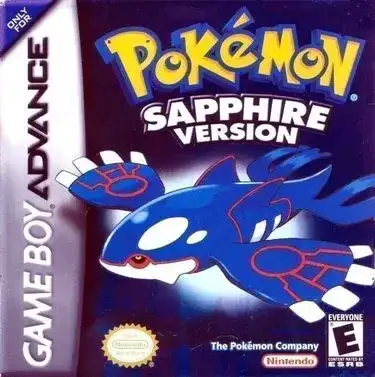
Pokémon Sapphire
Pokémon Ruby Version and Pokémon Sapphire Version are role-playing video games developed by Game Freak and published by The Pokémon Company and Nintendo for the Game Boy Advance. They are the first installments in the third generation of the Pokémon video game series, also known as the "advanced generation". After years of Nintendo being the sole publisher of the franchise in all regions, The Pokémon Company co-published the games for the first time since the establishment of the joint-owned company in 1998. They were first released in Japan in late 2002, and internationally in 2003. Pokémon Emerald, a third version, was released two years later in each region. Remakes of the two games, titled Pokémon Omega Ruby and Alpha Sapphire, were released for the Nintendo 3DS worldwide in November 2014, exactly twelve years to the date of the original Ruby and Sapphire release date, with the exception of Europe, where it released a week later.
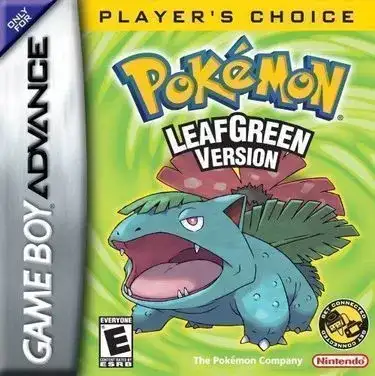
Pokémon LeafGreen
As with almost all Pokémon role-playing games released for handheld consoles, FireRed and LeafGreen are in a third-person, overhead perspective. The main screen is an overworld, in which the player navigates the protagonist. Here, a menu interface may be accessed, in which the player may configure their Pokémon, items, and gameplay settings. When the player encounters a wild Pokémon or is challenged by a trainer, the screen switches to a turn-based battle screen that displays the player's Pokémon and the engaged Pokémon. During a battle, the player may select a move for their Pokémon to perform, use an item, switch their active Pokémon, or attempt to flee (in wild battles only). All Pokémon moves have power points (PP); when a Pokémon tries to perform a move while awake, the move's PP is reduced by 1. When the PP of a move hits zero, the Pokémon is not able to use that move.
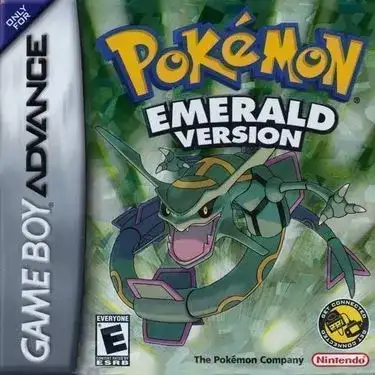
Pokémon Emerald
Pokémon Emerald Version is a 2004 role-playing video game developed by Game Freak and published by The Pokémon Company and Nintendo for the Game Boy Advance. It was first released in Japan in 2004, and was later released internationally in 2005. It is the fifth version, after both Pokémon Ruby and Sapphire and Pokémon FireRed and LeafGreen, and is the final game of the third generation of the Pokémon video game series "Pokémon (video game series)"). The gameplay and controls are largely the same as the previous games in the series; players control a Pokémon trainer from an overhead perspective. As with Ruby and Sapphire, the player's general goal is to explore the Hoenn Region and conquer a series of eight Pokémon Gyms in order to challenge the Elite Four and the Hoenn League Champion, while the main subplot is to defeat two criminal organizations attempting to harness a legendary Pokémon's power for their own goals.
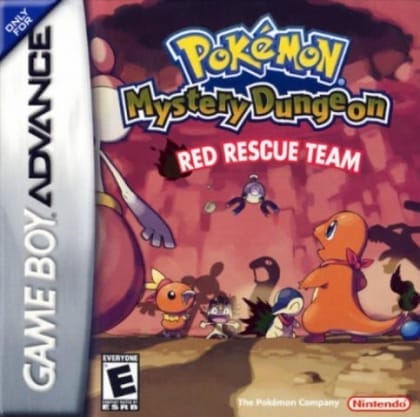
Pokémon Mystery Dungeon: Red Rescue Team
Pokémon Mystery Dungeon: Blue Rescue Team and Pokémon Mystery Dungeon: Red Rescue Team are a matched pair of Pokémon video games for the Nintendo DS and Game Boy Advance, respectively. The games were developed by Chunsoft and published by The Pokémon Company and Nintendo. Red Rescue Team was the last Pokémon game released for the Game Boy Advance. The two versions are mostly identical, with Blue Rescue Team taking advantage of the dual-screen features and increased graphical and sound capabilities of the Nintendo DS. The game has six Pokémon exclusive to each version. Mystery Dungeon differs from the mainline games in that the player character is a Pokémon rather than a trainer. Similar to the other Mystery Dungeon titles, the roguelike gameplay revolves around randomly changing dungeons which need to be explored by the player and their partner Pokémon using turn-based moves.
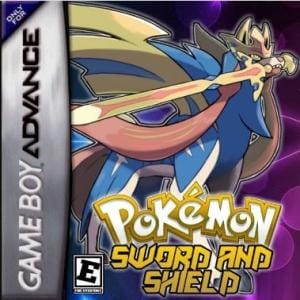
Pokémon Sword and Shield
Pokémon Sword and Pokémon Shield are 2019 role-playing video games developed by Game Freak and published by The Pokémon Company and Nintendo for the Nintendo Switch console. They are the first instalments in the 8th generation of the Pokémon video game series "Pokémon (video game series)"). First teased at E3 2017 and announced in February 2019, the games were released on 15 November 2019. The games were accompanied by a downloadable content (DLC) expansion pass consisting of Part 1—The Isle of Armor (released in June 2020) and Part 2—The Crown Tundra (October 2020); its launch marked the first ever DLC released as part of the Pokémon video game series instead of an improved version.
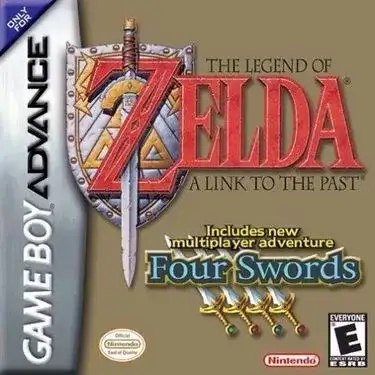
The Legend of Zelda: A Link to the Past & Four Swords
The Legend of Zelda: A Link to the Past and Four Swords is a 2002 action-adventure game compilation developed by Nintendo R&D2 and Flagship and published by Nintendo for the Game Boy Advance. The game was released in December 2002 in North America and in March 2003 in Japan and Europe. The cartridge contains a modified port of A Link to the Past, originally released for the Super Nintendo Entertainment System in 1991, and an original multiplayer-only game titled Four Swords, which serves as the ninth installment in The Legend of Zelda series. A stand-alone port of Four Swords was released for a limited time on Nintendo's DSiWare service as The Legend of Zelda: Four Swords Anniversary Edition on September 28, 2011; this version includes new content, such as a single-player mode and additional areas.
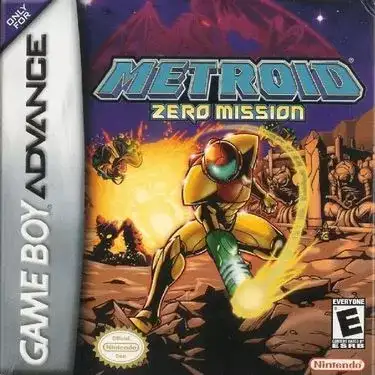
Metroid: Zero Mission
Metroid: Zero Mission is a 2004 action-adventure game developed and published by Nintendo for the Game Boy Advance. It is a remake of the original Metroid (1986), with updated visuals and gameplay. Like other Metroid games, the player controls the bounty hunter Samus Aran. Samus travels to the planet Zebes after learning that the Space Pirates are experimenting with Metroids, hostile parasitic creatures, which they plan to use to take over the universe. The gameplay focuses on exploration, with the player searching for power-ups to reach previously inaccessible areas. The remake adds items, additional areas, mini-bosses, difficulty levels "Balance (game design)") and a rewritten story that explores Samus's past. Zero Mission received praise for its new content, graphics, gameplay and improvements over the original, but criticism for its short length. Nintendo Power named it one of the best Nintendo games.
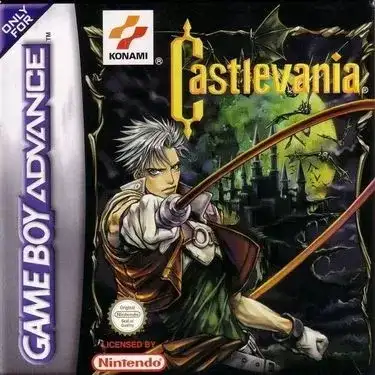
Castlevania: Circle of the Moon
Castlevania: Circle of the Moon, titled Castlevania in PAL regions, is a 2001 action role-playing game developed and published by Konami for the Game Boy Advancehandheld game console. The game was developed as a stand-alone title in the Castlevania series and as a launch title for the Game Boy Advance. The game's plot follows a vampire hunter named Nathan Graves as he attempts to rescue his mentor from the clutches of Dracula. Following the Metroidvania style of gameplay established by Castlevania: Symphony of the Night, Circle of the Moon expands on the magic attack mechanics of the former with the Dual Set-Up System, which allows for attacks to be mixed and matched by players as they see fit. The game sold 500,000 units worldwide and received critical acclaim, with praise for its level design, mechanics, music, and scope, while some criticized the dark visuals.
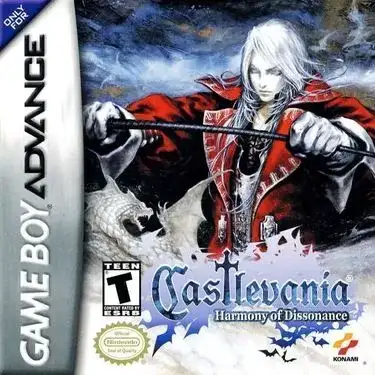
Castlevania: Harmony of Dissonance
Castlevania: Harmony of Dissonance is a 2002 action role-playing game developed and published by Konami for the Game Boy Advance. The second installment of the Castlevania series on the Game Boy Advance, the game was released in Japan in June 2002 and in North America and PAL regions later that same year. Harmony of Dissonance is set in the year 1748, fifty years after Simon Belmont vanquished Dracula's curse in Castlevania II: Simon's Quest. Harmony of Dissonance focuses on Simon's grandson, Juste Belmont, and his quest to rescue a kidnapped childhood friend. Similarly to previous Castlevania titles, the game employs role-playing game features alongside more traditional action adventure game elements. Progression is split between two versions of the titular castle, requiring Juste to traverse both maps in search of abilities, armor and weapons to combat an assortment of enemies, including various bosses.
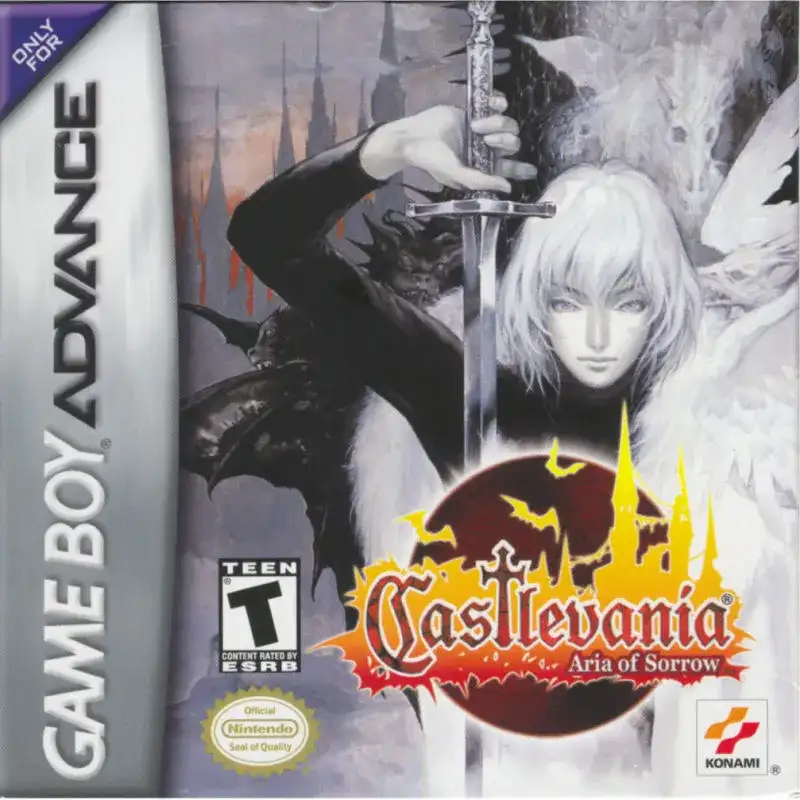
Castlevania: Aria of Sorrow
Castlevania: Aria of Sorrow is a 2003 action role-playing game developed by Konami Computer Entertainment Tokyo and published by Konami for the Game Boy Advance. It is the 20th main entry in the Castlevania series, as well as the third and final game produced for the system. Producer Koji Igarashi, who had led the production teams for previous Castlevania games, oversaw Aria of Sorrow's development in parallel with its predecessor Castlevania: Harmony of Dissonance (2002). Michiru Yamane returned to compose the music alongside Takashi Yoshida and Soshiro Hokkai. Director Junichi Murakami was new to the Castlevania series. In contrast with other Castlevania titles taking place in the late medieval period or the early 20th century, Aria of Sorrow is set in 2035, decades after a climactic war resulted in Dracula's permanent demise and his castle being sealed in a solar eclipse.
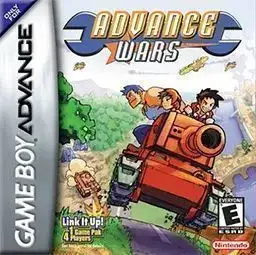
Advance Wars
Advance Wars is a turn-based strategyvideo game developed by Intelligent Systems and published by Nintendo for the Game Boy Advance. It is the seventh title in the Wars series "Wars (series)") of video games, and the first in the Advance Wars sub-series. The game takes place on a fictional continent, where two nations, Orange Star and Blue Moon, have been fighting each other for years. The conflict enters a new stage when an Orange Star commanding officer named Andy is accused of attacking the armies of two other nations, Yellow Comet and Green Earth, without reason, resulting in a worldwide war. As with previous Wars titles, Advance Wars was not originally intended for release outside Japan, due to Nintendo feeling that Western consumers would not be interested in turn-based games because of their complex mechanics.
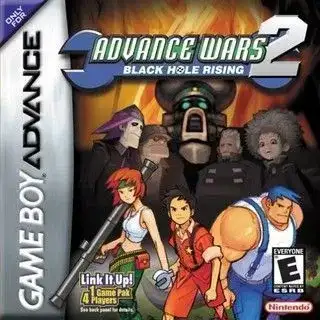
Advance Wars 2: Black Hole Rising
Advance Wars 2: Black Hole Rising is a turn-based strategyvideo game developed by Intelligent Systems and published by Nintendo for the Game Boy Advance. It was released in North America and PAL regions in 2003. It is the second game in the Advance Wars sub-series of Nintendo Wars. It is preceded by Advance Wars and followed by Advance Wars: Dual Strike. Despite being developed in the region, the original Japanese release was canceled, but the game was later released in the region alongside the original Advance Wars as part of a compilation cartridge called Game Boy Wars Advance 1+2 in 2004. The game was released on the Wii U's Virtual Console in North America and Europe in 2015. At E3 2021, Nintendo announced that Black Hole Rising, alongside the original Advance Wars, would be remade and released together for the Nintendo Switch by WayForward in another compilation titled Advance Wars 1+2: Re-Boot Camp.
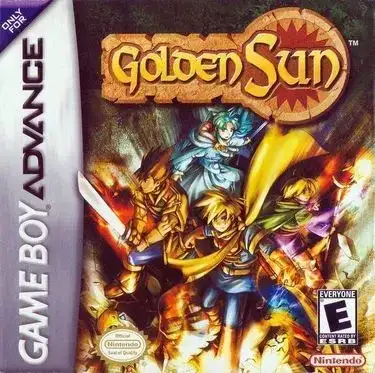
Golden Sun
Golden Sun#cite_note-2) is a 2001 role-playing video game developed by Camelot Software Planning and published by Nintendo for the Game Boy Advance. The game follows a band of magic-attuned teenagers called Adepts on a mission to protect the world of Weyard from alchemy, a potentially destructive power that was sealed away long ago. During their quest, the Adepts develop new magic abilities called Psynergy, assist others, and learn more about why alchemy was sealed away. Golden Sun is followed by a sequel, The Lost Age, which together form a complete story. Golden Sun was released in August 2001 in Japan, November 2001 in North America, and February 2002 in Europe. It began as a single planned game for the Nintendo 64, but production shifted to the Game Boy Advance over the course of development. After facing hardware constraints, the developers decided to split the game into two.
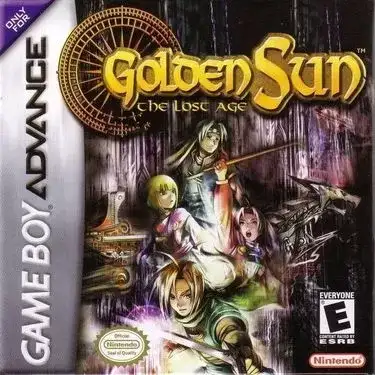
Golden Sun: The Lost Age
Golden Sun: The Lost Age is a 2002 role-playing video game for the Game Boy Advance, developed by Camelot Software Planning and published by Nintendo. It is the second installment in the Golden Sun series and was released on June 28, 2002, in Japan, and in 2003 in North America and Europe. Taking place after the events of the previous game "Golden Sun (video game)"), The Lost Age puts the player into the roles of the previous games' antagonists, primarily from the perspective of magic-attuned "adepts" Felix and his allies as they seek to restore the power of alchemy to the world of Weyard. Along the way, the player uses Psynergy to defeat enemies and discover new locations, help out local populations, and find elemental djinn which augment the characters' powers. Players can transfer their characters and items from Golden Sun to The Lost Age through a password system or Game Link Cable, and are rewarded for fully completing both games.
Browse our collection of 33 Game Boy Advance retro games, all playable instantly in your browser. No download required. Play classic games online in your browser and save your progress anytime.