RPG
Role-playing games
39 games
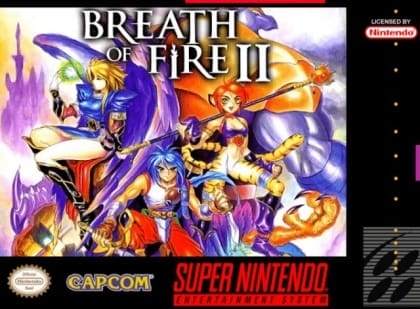
Breath of Fire II
Breath of Fire II is a role-playing video game developed and published by Capcom. First released in 1994, the game was licensed to Laguna for European release in 1996. It is the second entry in the Breath of Fire series. It was later ported to Game Boy Advance and re-released worldwide. The game was released on Wii's Virtual Console in North America on August 27, 2007. Nintendo of Europe's website mistakenly announced it for release on July 27, 2007, but it was in fact released two weeks later, on August 10, 2007. In 2013, it was released for the Wii U Virtual Console. In 2016, it was released for the New Nintendo 3DS Virtual Console. In 2019, it was released for the Nintendo Switch SNES games library. Unlike later installments in the series, Breath of Fire II is a direct sequel to Breath of Fire. Set 500 years after the original game, the story centers on an orphan named Ryu Bateson, whose family vanished mysteriously long ago.
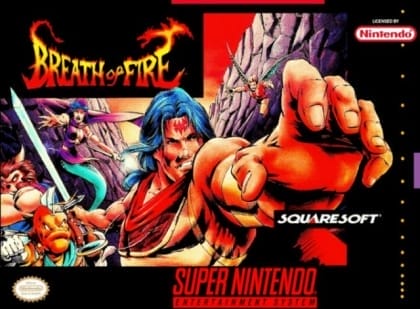
Breath of Fire
Breath of Fire[a] is a role-playing video game developed by Capcom originally for the Super Nintendo Entertainment System. Initially released in Japan in April 1993, the game was later made available in North America in August 1994 by Square Soft, who handled the title's English localization and promotion. It is the first entry in the Breath of Fire series. Recognized by Capcom as their first traditional role-playing video game, Breath of Fire would set the precedent for future entries in the series, and features character designs artist Keiji Inafune, as well as music by members of Capcom's in-house sound team Alph Lyla. In 2001, the game was re-released for the Game Boy Advance handheld system with new save features and minor graphical enhancements, with the English version being released in Europe for the first time. In 2016, it was released for the New Nintendo 3DS Virtual Console.[4] In 2019, it was released for the Nintendo Switch SNES games library.
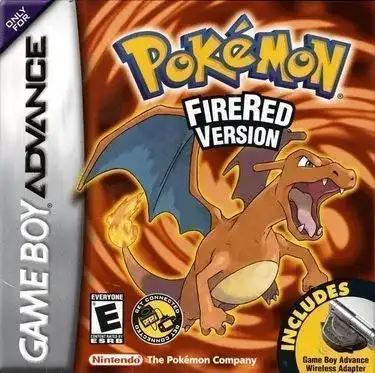
Pokémon Fire Red
As with almost all Pokémon role-playing games released for handheld consoles, FireRed and LeafGreen are in a third-person, overhead perspective. The main screen is an overworld, in which the player navigates the protagonist. Here, a menu interface may be accessed, in which the player may configure their Pokémon, items, and gameplay settings. When the player encounters a wild Pokémon or is challenged by a trainer, the screen switches to a turn-based battle screen that displays the player's Pokémon and the engaged Pokémon. During a battle, the player may select a move for their Pokémon to perform, use an item, switch their active Pokémon, or attempt to flee (in wild battles only). All Pokémon moves have power points (PP); when a Pokémon tries to perform a move while awake, the move's PP is reduced by 1. When the PP of a move hits zero, the Pokémon is not able to use that move.
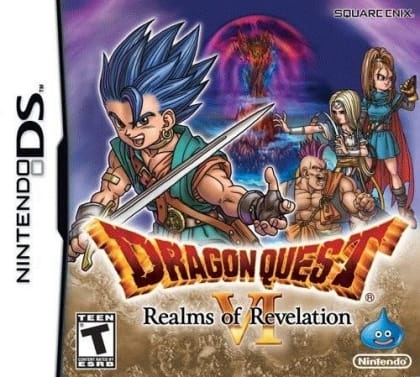
Dragon Quest VI: Realms of Revelation
Dragon Quest VI: Realms of Revelation, known in Europe & Australia as Dragon Quest VI: Realms of Reverie, is a 1995 role-playing video game developed by Heartbeat and published by Enix for the Super Famicom as a part of the Dragon Quest series and as the last Dragon Quest game in the Zenithian Trilogy. It was released in Japan in December 1995, developed by Heartbeat; whereas the previous Dragon Quest games were developed by Chunsoft. In 2011, a remake of the game, along with Dragon Quest IV and Dragon Quest V, was released worldwide for the Nintendo DS, making this the first time the game was released in English. Another version of the game for Android and iOS devices was released in Japan in June 2015. As the sixth installment to the Dragon Quest series, the graphics and gameplay remain close to the other games, with minor additions and upgrades.
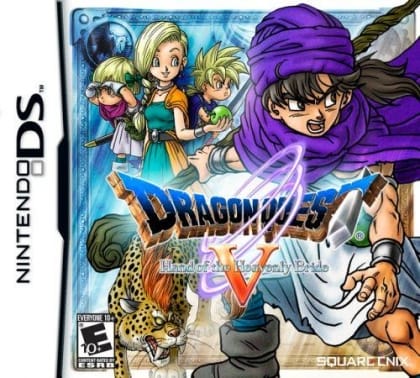
Dragon Quest V: Hand of the Heavenly Bride
Dragon Quest V: Hand of the Heavenly Bride, known in Europe as Dragon Quest: The Hand of the Heavenly Bride and in Japan as Dragon Quest V: Bride of Heaven, is a 1992 role-playing video game developed by Chunsoft and published by Enix for the Super Famicom. The fifth main installment in the Dragon Quest series, the game was the first title in the franchise to not be initially localized in North America due to programming issues. It later had an enhanced remake only in Japan for the PlayStation 2 in 2004. The remake was developed by ArtePiazza and Matrix Software. Another remake was made for the Nintendo DS, which was released in Japan in July 2008 and worldwide in February 2009; this marks the first time the game had officially released in English. In addition, ports for Android and iOS were released in Japan in December 2014, and worldwide the following month.
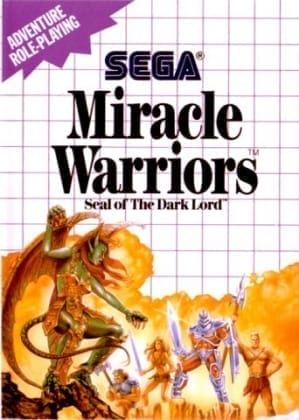
Miracle Warriors: Seal of the Dark Lord
The currency in the game is the guilder which can be used to buy items or heal the players. Defeated enemies also yield fangs, which are proof of valor in battle. Fangs can be used to buy some exclusive items or traded in villages for guilders. Defeating enemies can also increase or decrease the player's character points (fame). Killing monsters usually increases the player's fame while killing good characters (for example merchants) decreases the player's fame. A certain number of character points is required to enter certain villages. The game takes place in a world of five lands spread out over three continents and came with an elaborate grid-format map noting areas of interest in the game. There are four types of land: plain, forest, mountains and desert. Enemies become more dangerous in different types of land, with plains being the safest terrain to cross. The continents are separated by oceans and storming sea around the last continent. A ship is required to sail the oceans.
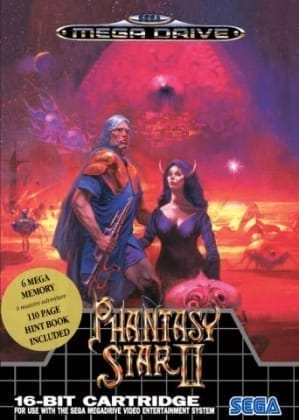
Phantasy Star II
Phantasy Star II is a science fantasy role-playing video game developed and published by Sega for the Sega Genesis. It was released in Japan in 1989 and North America and Europe in 1990. It was later ported to a variety of different platforms. An updated remake, Phantasy Star Generation 2, was released for the PlayStation 2 in 2005 in Japan. Phantasy Star II is the second installment in Sega's acclaimed Phantasy Star series and serves as a sequel to the original Phantasy Star for the Master System. Phantasy Star II takes place 1,000 years after the events of its predecessor and follows the journey of a government agent named Rolf and his friends, who are on a mission to discover why the protector of the planet Mota, Mother Brain, has started malfunctioning. Phantasy Star II was the first video game to use a 6 mega-bit cartridge, making it the biggest video game on a console at the time. Since its release Phantasy Star II has been the subject of critical acclaim.
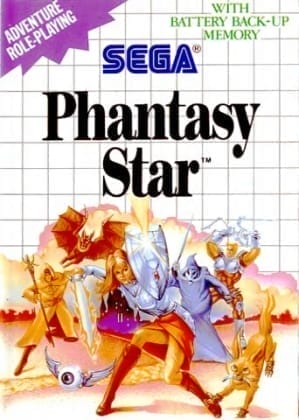
Phantasy Star
Phantasy Star#cite_note-8) is a 1987 role-playing video game (RPG) developed and published by Sega for the Master System. One of the earliest Japanese RPGs for consoles, it tells the story of Alis on her journey to defeat the evil ruler of her star system, King Lassic, after her brother dies at his hands. She traverses between planets, gathering a party of fighters and collecting the items she needs to avenge her brother's death and return peace to the star system. The gameplay features traditional Japanese RPG elements including random encounters and experience points. All the characters have predefined personalities and abilities, a unique element compared to the customizable characters of other RPGs of the era. Sega launched the development of Phantasy Star so their Master System could compete with the burgeoning popularity of console RPGs, particularly Dragon Quest "Dragon Quest (video game)") (1986) on the Famicom.
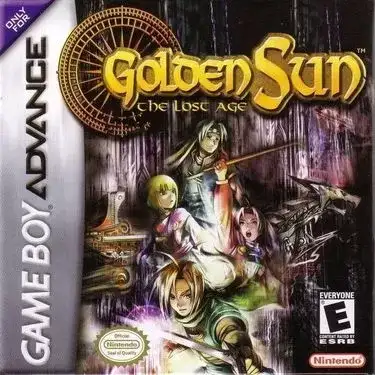
Golden Sun: The Lost Age
Golden Sun: The Lost Age is a 2002 role-playing video game for the Game Boy Advance, developed by Camelot Software Planning and published by Nintendo. It is the second installment in the Golden Sun series and was released on June 28, 2002, in Japan, and in 2003 in North America and Europe. Taking place after the events of the previous game "Golden Sun (video game)"), The Lost Age puts the player into the roles of the previous games' antagonists, primarily from the perspective of magic-attuned "adepts" Felix and his allies as they seek to restore the power of alchemy to the world of Weyard. Along the way, the player uses Psynergy to defeat enemies and discover new locations, help out local populations, and find elemental djinn which augment the characters' powers. Players can transfer their characters and items from Golden Sun to The Lost Age through a password system or Game Link Cable, and are rewarded for fully completing both games.
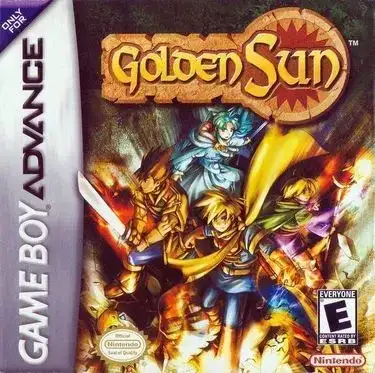
Golden Sun
Golden Sun#cite_note-2) is a 2001 role-playing video game developed by Camelot Software Planning and published by Nintendo for the Game Boy Advance. The game follows a band of magic-attuned teenagers called Adepts on a mission to protect the world of Weyard from alchemy, a potentially destructive power that was sealed away long ago. During their quest, the Adepts develop new magic abilities called Psynergy, assist others, and learn more about why alchemy was sealed away. Golden Sun is followed by a sequel, The Lost Age, which together form a complete story. Golden Sun was released in August 2001 in Japan, November 2001 in North America, and February 2002 in Europe. It began as a single planned game for the Nintendo 64, but production shifted to the Game Boy Advance over the course of development. After facing hardware constraints, the developers decided to split the game into two.
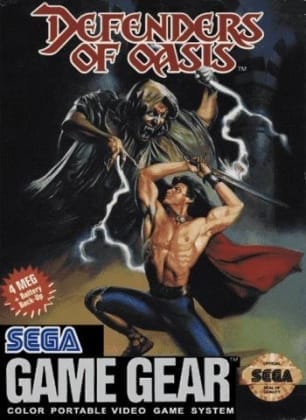
Defenders of Oasis
Defenders of Oasis is a role-playing video game developed and published by Sega for the Game Gear in 1992. The game's setting is based on One Thousand and One Nights, and the plot centers on a heroic prince and his companions, who set out to confront an empire attempting to revive the dark god Ahriman. The game was one of the few original RPGs made for the Game Gear, and features an overhead gameplay perspective, a command-based combat system, and an autosave feature. Defenders of Oasis was commercially successful and positively received by reviewers, who praised the game's visuals and level of detail.
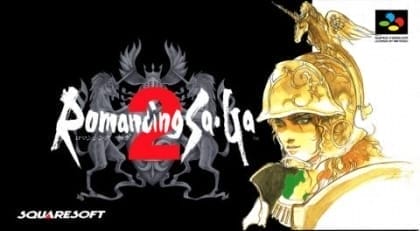
Romancing SaGa 2
Romancing SaGa 2 is a 1993 role-playing video game developed and published by Square for the Super Famicom. It is the fifth entry in the SaGa series. It received an expanded port for Japanese mobile devices from Square Enix in 2011. This version was remastered by ArtePiazza and released worldwide between 2016 and 2017 by Square Enix for Android, iOS, PlayStation Vita, Nintendo Switch, PlayStation 4, Windows and Xbox One. A 3D remake entitled Romancing SaGa 2: Revenge of the Seven was released on the Nintendo Switch, PlayStation 4, PlayStation 5 and Windows in 2024, and for Nintendo Switch 2 and Xbox Series X/S in 2025. Set during the history of the kingdom of Avalon, the player takes on the role of a dynasty of rulers as they fight the Seven Heroes, former saviors of the world corrupted into demons. Gameplay features nonlinear exploration and expansion of the game world and narrative, with the turn-based battles featuring group formations.
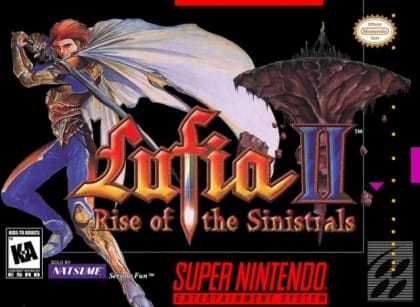
Lufia II: Rise of the Sinistrals
Lufia II: Rise of the Sinistrals, known as Estpolis Denki II (エストポリス伝記II, Esutoporisu Denki II; officially translated Biography of Estpolis II) in Japan, and as Lufia in Europe and Australia, is a role-playing video game with puzzle elements developed by Neverland and published in Japan in 1995 by Taito, and in North America and Europe in 1996 by Natsume and Nintendo respectively, for the Super Nintendo Entertainment System. It is the second game in the Lufia series. The game is a prequel to Lufia & the Fortress of Doom. It follows the story of the first main character's ancestor, Maxim, and explains the origins of the war between mankind and a group of gods called the Sinistrals. Lufia II made a number of changes from the first game. Dungeons no longer have random encounters and there are hundreds of puzzles throughout the game, ranging from simple to extremely challenging.
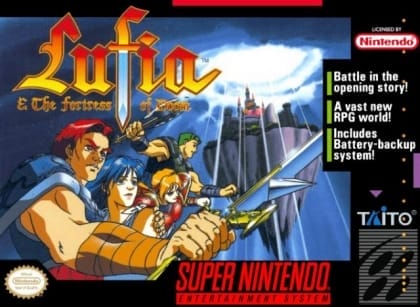
Lufia & The Fortress of Doom
Lufia & the Fortress of Doom, known as Estpolis Denki (エストポリス伝記, Esutoporisu Denki; officially translated Biography of Estpolis) in Japan, is a role-playing video game developed by Neverland and published by Taito in 1993, for the Super Nintendo Entertainment System. It is the first title in the Lufia series of video games and the only game from the series released under the Taito label in North America. The game's plot follows The Hero, Lufia, Aguro, and Jerin on a quest to prevent the resurrection of four superpowered beings called Sinistrals, and frequently delves into the political and personal lives of the subjects of kingdoms all around the world. Top-down exploration is mixed with traditional turn-based combat using 2D sprites. The game was generally well-received, and has spawned multiple sequels on the Super Nintendo as well as the Game Boy Color, Game Boy Advance and the Nintendo DS.
Final Fantasy Legend II
The music was co-composed by Nobuo Uematsu and Kenji Ito. While Uematsu had previously worked on the first SaGa, Ito had only just joined the company and this was his first title for Square. At the time, Uematsu was busy working on music for Final Fantasy IV, so Ito was brought in to create half the tracks. Composing for the game was a challenge for Ito as he had no experience with programming, needing to learn on the job. His first completed piece was the track "The Land of Peace"; as he had no experience with the short looping tracks common at the time, the theme was notably long. Kawazu asked for tracks based on particular scenes and moods, keeping the console's memory limitations in mind. Despite precautions, the number of planned parallel sounds was reduced, and several tracks needed to be cut. A compilation album featuring music from the three Game Boy SaGa titles, All Sounds of SaGa, was published in 1991 by NTT Publishing.
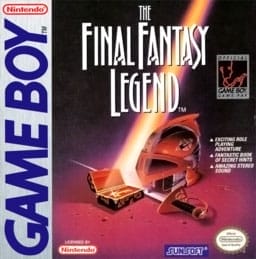
The Final Fantasy Legend
The Final Fantasy Legend, originally released in Japan as Makai Toushi Sa・Ga, is a 1989 role-playing video game developed and published by Square for the Game Boy. It was originally released in Japan in December 1989 and North America in September 1990. It is the first game in the SaGa series and the first role-playing game for the system. Square translated the game into English for worldwide release and renamed it, linking it with the Final Fantasy series to improve marketing. Sunsoft re-released it in North America during 1998; Square followed with a Japan-exclusive remake released for the WonderSwan Color and mobile phones in 2002 and 2007 respectively, it was also ported to the Nintendo Switch in 2020 and later ported to Android, iOS and Microsoft Windows in 2021. The Final Fantasy Legend operates on a turn-based system similar to that of Final Fantasy II.

Pokémon Sword and Shield
Pokémon Sword and Pokémon Shield are 2019 role-playing video games developed by Game Freak and published by The Pokémon Company and Nintendo for the Nintendo Switch console. They are the first instalments in the 8th generation of the Pokémon video game series "Pokémon (video game series)"). First teased at E3 2017 and announced in February 2019, the games were released on 15 November 2019. The games were accompanied by a downloadable content (DLC) expansion pass consisting of Part 1—The Isle of Armor (released in June 2020) and Part 2—The Crown Tundra (October 2020); its launch marked the first ever DLC released as part of the Pokémon video game series instead of an improved version.
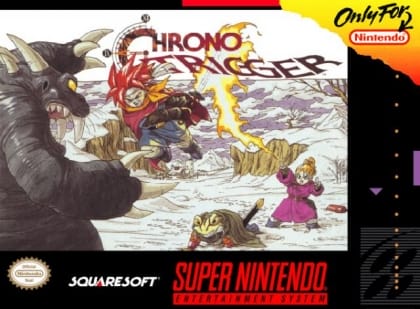
Chrono Trigger
Chrono Trigger is a 1995 role-playing video game developed and published by Square for the Super Nintendo Entertainment System. It is the first installment of the Chrono series "Chrono (series)"). The game's plot follows a group of adventurers who travel through time to prevent a global catastrophe. The game's development team included three designers that Square dubbed the "Dream Team": Hironobu Sakaguchi, creator of Square's Final Fantasy series; Yuji Horii, creator of Enix's Dragon Quest series; and Akira Toriyama, character designer of Dragon Quest and author of the _Dragon Ball "Dragon Ball (manga)")_manga series. In addition, Takashi Tokita co-directed the game and co-wrote the scenario, Kazuhiko Aoki "Kazuhiko Aoki (video game designer)") produced the game, while Masato Kato wrote most of the story.
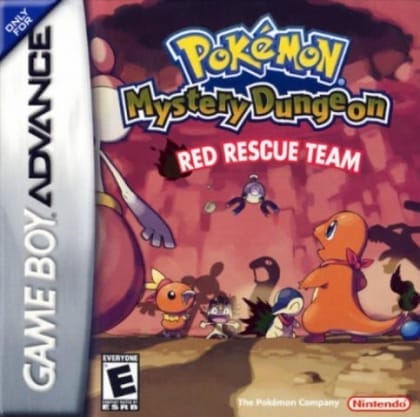
Pokémon Mystery Dungeon: Red Rescue Team
Pokémon Mystery Dungeon: Blue Rescue Team and Pokémon Mystery Dungeon: Red Rescue Team are a matched pair of Pokémon video games for the Nintendo DS and Game Boy Advance, respectively. The games were developed by Chunsoft and published by The Pokémon Company and Nintendo. Red Rescue Team was the last Pokémon game released for the Game Boy Advance. The two versions are mostly identical, with Blue Rescue Team taking advantage of the dual-screen features and increased graphical and sound capabilities of the Nintendo DS. The game has six Pokémon exclusive to each version. Mystery Dungeon differs from the mainline games in that the player character is a Pokémon rather than a trainer. Similar to the other Mystery Dungeon titles, the roguelike gameplay revolves around randomly changing dungeons which need to be explored by the player and their partner Pokémon using turn-based moves.
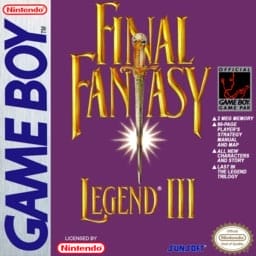
Final Fantasy Legend III
Final Fantasy Legend III, known in Japan as SaGa 3: Jikuu no Hasha, is a role-playing video game developed and published by Square for the Game Boy. The third entry in the SaGa series, it was released in Japan in 1991 and in North America in 1993. A remake for the Nintendo DS was released in 2011 by Square Enix, remaining exclusive to Japan. The Game Boy version was later ported to the Nintendo Switch and released worldwide by Square Enix in 2020, with later ports to Android, iOS and Microsoft Windows in 2021. The game's narrative follows a group of warriors as they fight a god-like being in the past, present, and future. During gameplay, players explore the different time periods, fighting in turn-based battles and raising character power through a combination of experience points, skill leveling, and material-based character classes. Production began in 1990 in parallel with the development of Romancing SaGa for the Super Famicom.
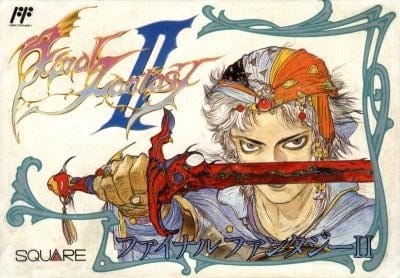
Final Fantasy II
Final Fantasy II is a 1988 role-playing video game developed and published by Square for the Family Computer as the second installment of the Final Fantasy series. It was ported to and remade for WonderSwan Color, PlayStation, Game Boy Advance, PlayStation Portable, and mobile phones. Originally exclusive to Japan, later versions were released internationally, including the 2021 Final Fantasy Pixel Remaster version. The story follows the warrior Firion and his allies as they join a rebellion against the expanding Palamecian Empire. The gameplay is similar to the original game with an overworld and dungeon exploration, but its combat design is changed to a usage-based growth system where characters' statistics increase according to how they are used or acquired. The game began development after the success of Final Fantasy, with the team using a new setting to make the game accessible to players.
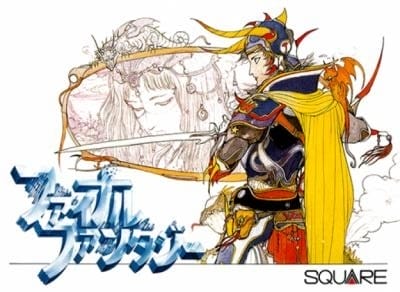
Final Fantasy
Final Fantasy#cite_note-16) is a 1987 role-playing video game developed and published by Square for the Nintendo Entertainment System. It is the first game in Square's Final Fantasy series, created by Hironobu Sakaguchi. The story follows four youths called the Warriors of Light, who each carry one of their world's four elemental crystals which have been darkened by the four Elemental Fiends. Together, they quest to defeat these evil forces, restore light to the crystals, and save their world. Final Fantasy was originally conceived under the working title Fighting Fantasy, but trademark issues and dire circumstances surrounding Square as well as Sakaguchi himself prompted the name to be changed. The game was a great commercial success, received generally positive reviews, and spawned many successful sequels and supplementary titles in the form of the Final Fantasy series.
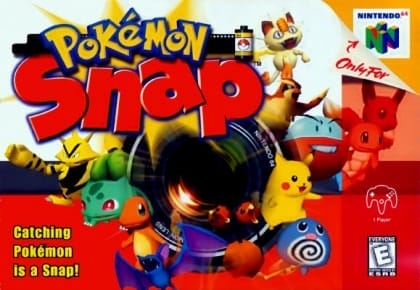
Pokémon Snap
Pokémon Snap is a 1999 photographyvideo game developed by HAL Laboratory and published by Nintendo for the Nintendo 64. It was first released in Japan in March 1999 and was later released in July 1999 in North America and in September 2000 for PAL regions. It is a spin-off "Spin-off (media)") game in the Pokémon "Pokémon (video game series)") series, being one of the first console-based games for it, and featuring many Pokémon rendered for the first time in real-time 3D. The game was re-released for the Wii's Virtual Console in December 2007, for the Wii U's Virtual Console in 2016, and for the Nintendo Classics service in June 2022. Originally announced as a Nintendo 64DD title, the development of Pokémon Snap was moved to the Nintendo 64 due to the 64DD's delays. The gameplay is similar to other first-person games, viewing from the perspective of protagonist Todd Snap as he moves automatically on a rail.
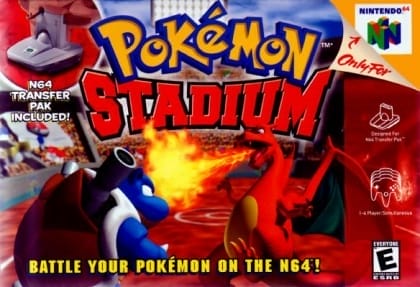
Pokémon Stadium
Pokémon Stadium is a 1999 strategy video game developed and published by Nintendo for the Nintendo 64. The gameplay revolves around a 3D turn-based battling system using the 151 Pokémon from the Game Boy games Pokémon Red, Blue, and Yellow, with several in-game challenges for players to overcome. The game includes four "Cups", each of which is a series of three-on-three Pokémon battles against an ordered lineup of opponents. The "Gym Leader Castle" mode involves battles against several boss opponents who appeared in the Game Boy games. Pokémon Stadium also features mini-games and numerous features available through its compatibility with Pokémon Red, Blue, and Yellow. Using the Transfer Pak accessory that was bundled with the game, players are able to view, organize, store, trade, and battle using Pokémon uploaded from Pokémon Red, Blue, and Yellow. It was the first Stadium title released in Western regions, succeeding the Japan-only 1998 Nintendo 64 release Pocket Monsters Stadium.
Browse our collection of 39 RPG retro games, all playable instantly in your browser. No download required. Play classic games online in your browser and save your progress anytime.