RPG
Role-playing games
39 games
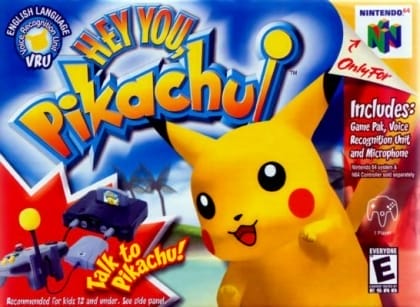
Hey You, Pikachu!
Text is available under the Creative Commons Attribution-ShareAlike 4.0 License; additional terms may apply. By using this site, you agree to the Terms of Use and Privacy Policy. Wikipedia® is a registered trademark of the Wikimedia Foundation, Inc., a non-profit organization. Privacy policy About Wikipedia Disclaimers Contact Wikipedia Legal & safety contacts Code of Conduct Developers Statistics Cookie statement Mobile view Search Search - Toggle the table of contents Hey You, Pikachu! [](http://en.wikipedia.org/wiki/Hey_You_Pikachu#)[](http://en.wikipedia.org/wiki/Hey_You_Pikachu#)[](http://en.wikipedia.org/wiki/Hey_You_Pikachu#)[](http://en.wikipedia.org/wiki/Hey_You_Pikachu#)[](http://en.wikipedia.org/wiki/Hey_You_Pikachu#)[](http://en.wikipedia.org/wiki/Hey_You_Pikachu#)[](http://en.wikipedia.
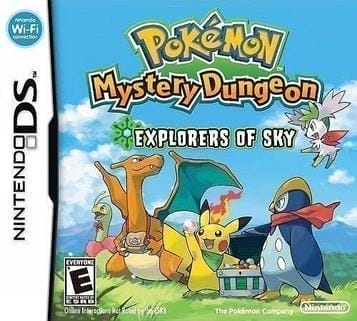
Pokemon Mystery Dungeon: Explorers of Sky
Pokémon Mystery Dungeon: Explorers of Sky is an enhanced version of Pokémon Mystery Dungeon: Explorers of Time and Explorers of Darkness released for the Nintendo DS in 2009, developed by Chunsoft and published by The Pokémon Company and Nintendo. Referred to as the definitive edition to the aforementioned games, additional features include the addition of the missing Generation IV Pokémon, further character development for a few side characters in content known as Special Episodes, and a few quality of life improvement for options, items, and other gameplay and system related features. In terms of gameplay and premise, Explorers of Sky is largely similar to its predecessors, where a human-turned-Pokémon joins an exploration team, explores shifting dungeons, and fights hostile Pokémon through turn-based combat. The three games had accumulated worldwide sales in excess of 5.9 million copies in 2010, then 6.37 million copies after 2010.
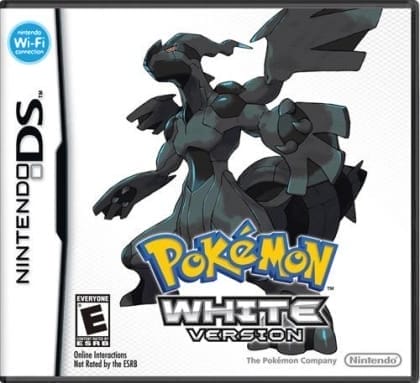
Pokémon White
Pokémon Black Version and Pokémon White Version are 2010 role-playing video games developed by Game Freak and published by The Pokémon Company and Nintendo for the Nintendo DS. They are the first installments in the fifth generation of the Pokémon video game series. First released in Japan on 18 September 2010, they were later released in Europe, North America and Australia in 2011. Sequels to Black and White, Pokémon Black 2 and Pokémon White 2, were released for the Nintendo DS in 2012. Similar to previous installments of the series, the two games follow the journey of a young Pokémon Trainer through the region of Unova, as they train Pokémon used to compete against other Trainers while thwarting the schemes of the criminal organization Team Plasma.
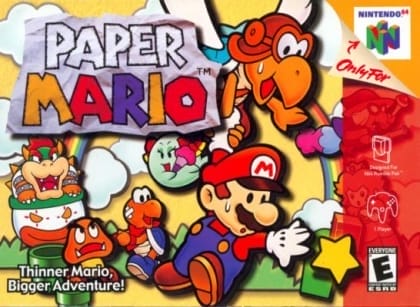
Paper Mario
Paper Mario#cite_note-1) is a 2000 role-playing video game developed by Intelligent Systems and published by Nintendo for the Nintendo 64 home video game console. Paper Mario is the first game in the Paper Mario series. First released in Japan in 2000 and then internationally in 2001, Paper Mario was later re-released for Nintendo's WiiVirtual Console in July 2007, the Wii U Virtual Console in April 2015, and the Nintendo Classics service on December 10, 2021. Paper Mario is set in the Mushroom Kingdom as the protagonist Mario tries to rescue Princess Peach from Bowser, who has imprisoned the seven "Star Spirits", lifted her castle into the sky and has defeated Mario after stealing the Star Rod from Star Haven and making himself invincible. To save the Mushroom Kingdom, rescue Peach, get the castle back, and defeat Bowser, Mario must locate the Star Spirits, who can negate the effects of the stolen Star Rod, by defeating Bowser's minions guarding the star spirits.
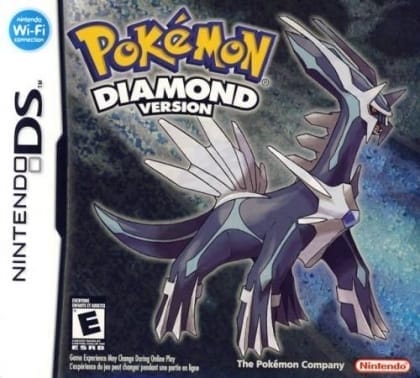
Pokémon Diamond
2006 video games "Diamond and Pearl" and "Pokémon Diamond" redirect here. For the bootleg Game Boy Color game sold as Pokémon Diamond, see Keitai Denjū Telefang § Piracy. For other uses, see Diamond and Pearl (disambiguation) "Diamond and Pearl (disambiguation)"). Pokémon Diamond Version and Pokémon Pearl Version are role-playing video games developed by Game Freak and published by The Pokémon Company and Nintendo for the Nintendo DS in 2006. They are the first installments in the fourth generation of the Pokémon video game series "Pokémon (video game series)"). They were first released in Japan on September 28, 2006, and released in North America, Australia, and Europe in 2007. Pokémon Platinum, a third version, was released two years later in each region. Remakes titled Pokémon Brilliant Diamond and Shining Pearl were released for the Nintendo Switch worldwide on November 19, 2021. A prequel, Pokémon Legends: Arceus, was released for the Nintendo Switch on January 28, 2022.
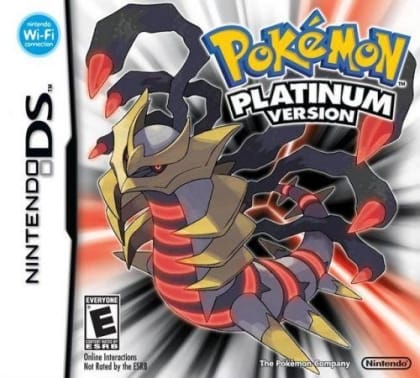
Pokémon Platinum
Pokémon Platinum Version is a 2008 role-playing video game developed by Game Freak and published by The Pokémon Company and Nintendo for the Nintendo DS. The game is an enhanced version of the 2006 titles Pokémon Diamond and Pearl and is part of the fourth generation of the Pokémon video game series "Pokémon (video game series)"). It was released in Japan in September 2008 and internationally throughout 2009. In Pokémon Platinum, players control either Lucas or Dawn and begin with one of three Pokémon provided by Professor Rowan. The mascot Pokémon is Giratina, which plays a central role in the story. While Giratina had only one form in Diamond and Pearl, it gains a new "Origin Form" in Platinum, introduced alongside the Distortion World, a new area featuring altered physics compared with the Sinnoh region where the game takes place.
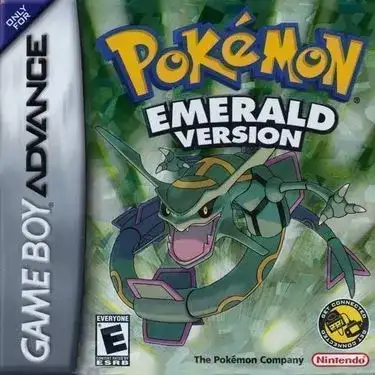
Pokémon Emerald
Pokémon Emerald Version is a 2004 role-playing video game developed by Game Freak and published by The Pokémon Company and Nintendo for the Game Boy Advance. It was first released in Japan in 2004, and was later released internationally in 2005. It is the fifth version, after both Pokémon Ruby and Sapphire and Pokémon FireRed and LeafGreen, and is the final game of the third generation of the Pokémon video game series "Pokémon (video game series)"). The gameplay and controls are largely the same as the previous games in the series; players control a Pokémon trainer from an overhead perspective. As with Ruby and Sapphire, the player's general goal is to explore the Hoenn Region and conquer a series of eight Pokémon Gyms in order to challenge the Elite Four and the Hoenn League Champion, while the main subplot is to defeat two criminal organizations attempting to harness a legendary Pokémon's power for their own goals.
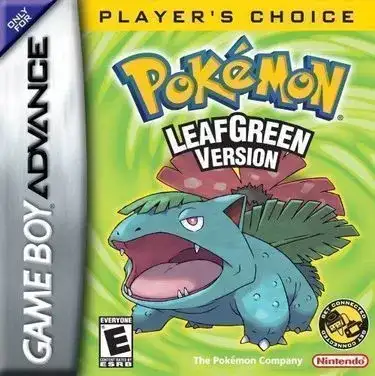
Pokémon LeafGreen
As with almost all Pokémon role-playing games released for handheld consoles, FireRed and LeafGreen are in a third-person, overhead perspective. The main screen is an overworld, in which the player navigates the protagonist. Here, a menu interface may be accessed, in which the player may configure their Pokémon, items, and gameplay settings. When the player encounters a wild Pokémon or is challenged by a trainer, the screen switches to a turn-based battle screen that displays the player's Pokémon and the engaged Pokémon. During a battle, the player may select a move for their Pokémon to perform, use an item, switch their active Pokémon, or attempt to flee (in wild battles only). All Pokémon moves have power points (PP); when a Pokémon tries to perform a move while awake, the move's PP is reduced by 1. When the PP of a move hits zero, the Pokémon is not able to use that move.
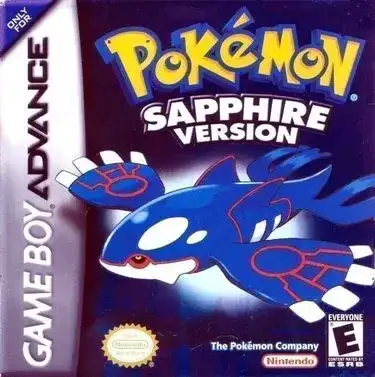
Pokémon Sapphire
Pokémon Ruby Version and Pokémon Sapphire Version are role-playing video games developed by Game Freak and published by The Pokémon Company and Nintendo for the Game Boy Advance. They are the first installments in the third generation of the Pokémon video game series, also known as the "advanced generation". After years of Nintendo being the sole publisher of the franchise in all regions, The Pokémon Company co-published the games for the first time since the establishment of the joint-owned company in 1998. They were first released in Japan in late 2002, and internationally in 2003. Pokémon Emerald, a third version, was released two years later in each region. Remakes of the two games, titled Pokémon Omega Ruby and Alpha Sapphire, were released for the Nintendo 3DS worldwide in November 2014, exactly twelve years to the date of the original Ruby and Sapphire release date, with the exception of Europe, where it released a week later.
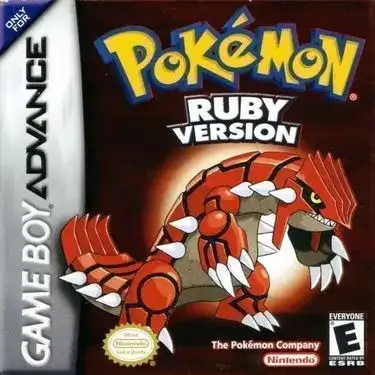
Pokémon Ruby
Pokémon Ruby Version and Pokémon Sapphire Version are role-playing video games developed by Game Freak and published by The Pokémon Company and Nintendo for the Game Boy Advance. They are the first installments in the third generation of the Pokémon video game series "Pokémon (video game series)"), also known as the "advanced generation". After years of Nintendo being the sole publisher of the franchise in all regions, The Pokémon Company co-published the games for the first time since the establishment of the joint-owned company in 1998. They were first released in Japan in late 2002, and internationally in 2003. Pokémon Emerald, a third version, was released two years later in each region. Remakes of the two games, titled Pokémon Omega Ruby and Alpha Sapphire, were released for the Nintendo 3DS worldwide in November 2014, exactly twelve years to the date of the original Ruby and Sapphire release date, with the exception of Europe, where it released a week later.
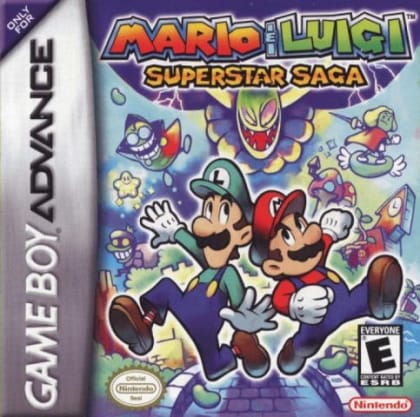
Mario & Luigi: Superstar Saga
Mario & Luigi: Superstar Saga is a 2003 role-playing video game developed by AlphaDream and published by Nintendo for the Game Boy Advance. It is the first game in the Mario & Luigi series. The story follows Mario and Luigi as they travel to the Beanbean Kingdom in order to combat Cackletta and Fawful, who stole Princess Peach's voice for the purpose of harnessing the power of a special artifact called the Beanstar. Superstar Saga is the third role-playing game in the Mario franchise, following Super Mario RPG (1996) and Paper Mario (2000), and features a lighthearted, whimsical script with a greater emphasis on comedy than earlier titles. The player controls Mario and Luigi simultaneously as they traverse the overworld, fight enemies, gain experience points, and find new items and gear. The battle system differs from traditional role-playing games, with more emphasis on timing and elaborate attacks called Action Commands.
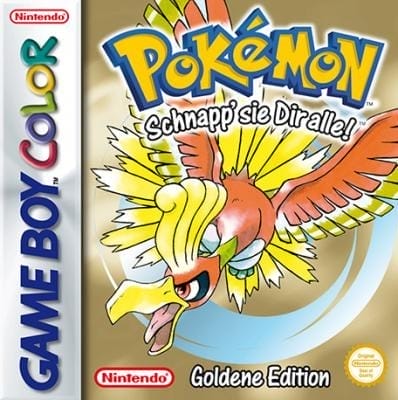
Pokémon Gold
1999 video games Pokémon Gold Version and Pokémon Silver Version are 1999 role-playing video games developed by Game Freak and published by Nintendo for the Game Boy Color. They are the first installments in the second generation of the Pokémon video game series "Pokémon (video game series)"). They were released in Japan in 1999, Australia and North America in 2000, and Europe in 2001. The games introduce 100 new species of Pokémon and follow the progress of the player character in their quest to master Pokémon battling. Both games are independent of each other but feature largely the same plot and, while both can be played separately, it is necessary to trade between these games and their predecessors in order to fully complete each games' Pokédex. The Johto Saga of the Pokémon anime "Pokémon (anime)") is based on the new region introduced in the games.
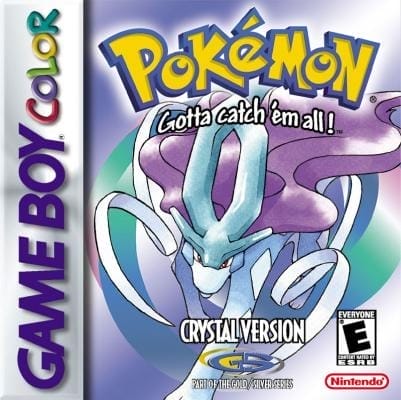
Pokémon Crystal
Although Pokémon Crystal is the lowest-selling main series Pokémon game to date, it still ranks among the top ten best-selling Game Boy titles. Critics praised Crystal for its additional features and improvements but noted that many of these features were less significant in the non-Japanese versions, which lacked Mobile Adapter GB support. Retrospective reviews have been highly positive, with many acknowledging Crystal's introduction of features that would become commonplace in later iterations of the Pokémon series, and its role in maintaining interest during a waning period for the franchise.
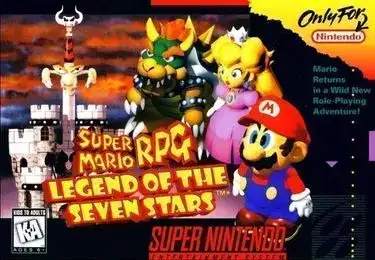
Super Mario RPG: Legend of the Seven Stars
Super Mario RPG: Legend of the Seven Stars is a 1996 role-playing video game developed by Square and published by Nintendo for the Super Nintendo Entertainment System (SNES). It was the final Mario game for the SNES, and was directed by Chihiro Fujioka and Yoshihiko Maekawa, produced by Shigeru Miyamoto, and scored by Yoko Shimomura. Super Mario RPG's story focuses on Mario and his friends as they seek to defeat the Smithy Gang, who have crashed into their world and scattered the seven star pieces of Star Road. It is the first RPG in the Mario franchise, drawing from major elements of Square's RPG franchises such as Final Fantasy. The main form of fighting enemies is turn-based combat with a party of up to three characters. It is also the first game in the Mario franchise to have gameplay within an isometric 3D environment, allowing for a new variety of the exploration and platforming elements reminiscent of the Super Mario series.
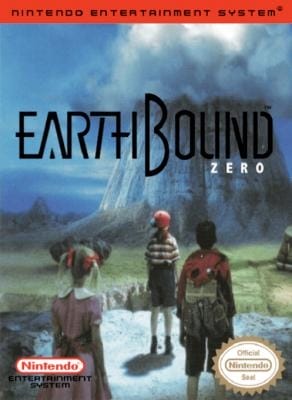
EarthBound
EarthBound, originally released in Japan as Mother 2: Gīgu no Gyakushū, is a 1994 role-playingvideo game developed by Ape Inc. (now Creatures Inc.) and HAL Laboratory and published by Nintendo for the Super Nintendo Entertainment System. The second entry in the Mother series, it follows a young boy named Ness and his party of Paula, Jeff and Poo, as they travel the world to collect melodies from eight Sanctuaries in order to defeat the universal cosmic destroyer Giygas. EarthBound had a lengthy development period that spanned five years. Its returning staff from EarthBound Beginnings (1989) included writer/director Shigesato Itoi and lead programmer Satoru Iwata, as well as composers Keiichi Suzuki and Hirokazu Tanaka, who incorporated a diverse range of styles into the soundtrack, including salsa, reggae, and dub. Most of the other staff members had not worked on the original EarthBound Beginnings, and the game came under repeated threats of cancellation until Iwata joined the team.
Browse our collection of 39 RPG retro games, all playable instantly in your browser. No download required. Play classic games online in your browser and save your progress anytime.