Action adventure
30 games
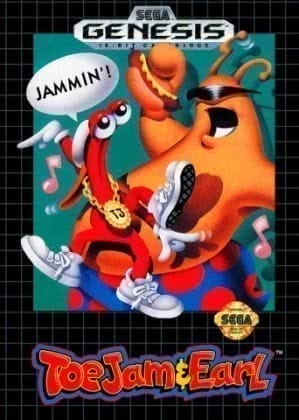
ToeJam & Earl
ToeJam & Earl is a 1991 action video game developed by Johnson Voorsanger Productions and published by Sega for the Genesis console. It centers on ToeJam and Earl—alienrappers who have crash-landed on Earth—as they attempt to escape the planet, players assume the role of either character and collect pieces of their wrecked spacecraft. It references and parodies 1980s and early-'90s urban culture and is set to a funk soundtrack. ToeJam & Earl's design was heavily influenced by the role-playing video game_Rogue "Rogue (video game)") (1980) and derived various features from the game, such as the random generation of levels and items. As such, ToeJam & Earl is often considered to be an early example of a roguelike game. The game was positively received by critics, who praised its originality, soundtrack, humor and two-player cooperative mode. It attained sleeper hit status despite low initial sales, and its protagonists were used as mascots by Sega.
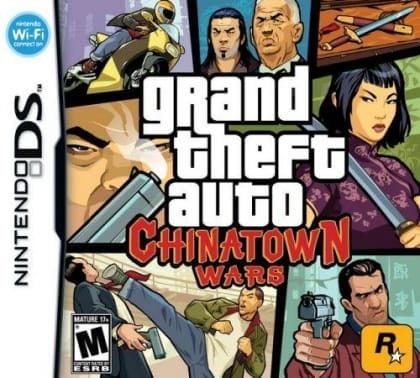
Grand Theft Auto: Chinatown Wars
Grand Theft Auto: Chinatown Wars is a 2009 action-adventure game developed by Rockstar Leeds in conjunction with Rockstar North and published by Rockstar Games. The game was released for the Nintendo DS in March 2009, PlayStation Portable in October 2009, iOS in January 2010, and Android and Fire OS devices in December 2014. It is the thirteenth game in the Grand Theft Auto series and a follow-up to Grand Theft Auto IV, and is the first entry to be released for handheld consoles since 2006's Vice City Stories. Set within modern-day Liberty City (a fictional satire of New York City), the single-player story follows young Triad member Huang Lee and his efforts to recover a sword gifted by his late father after it is stolen from him, while inadvertently becoming caught in a power struggle amongst Liberty City's Triads.
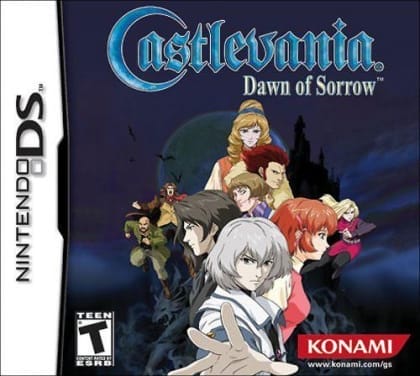
Castlevania: Dawn of Sorrow
Castlevania: Dawn of Sorrow is a 2005 action role-playing game developed and published by Konami. It is part of Konami's Castlevania video game series and the first Castlevania game released on the Nintendo DS. The game is the sequel to Castlevania: Aria of Sorrow and incorporates many elements from its predecessor. Dawn of Sorrow continues the story of Aria of Sorrow: Dracula has been defeated, with his powers assumed by his reincarnation, Soma Cruz. With the help of his allies, Soma avoids becoming the new dark lord. A cult forms to bring forth a new one by killing Soma. Soma and his allies move to ensure that does not happen. Dawn of Sorrow incorporates many features from earlier Castlevania games: the combination of elements from platform games and role-playing video games, the "Tactical Soul" system featured in Aria of Sorrow and a dark, gothic atmosphere.
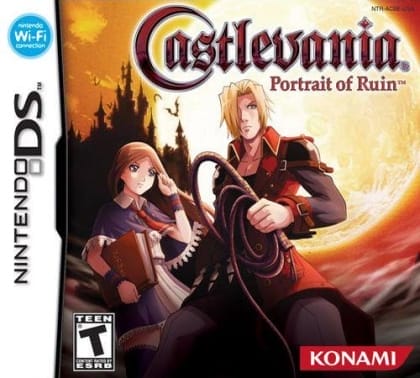
Castlevania: Portrait of Ruin
Castlevania: Portrait of Ruin is a 2006 action role-playing game developed and published by Konami for the Nintendo DS handheld system. The game is the first in the Castlevania series to feature a cooperative multiplayer gameplay mode and the first handheld entry to have English voice-overs, outside of its original Japanese release. The game is a continuation of the events from Castlevania: Bloodlines, a 1994 Sega Genesis title. Set in Europe during World War II, the story follows Jonathan Morris, the son of John Morris from Castlevania: Bloodlines, and Charlotte Aulin as they attempt to stop a vampire from resurrecting Dracula. The game expands on the two character gameplay found in Castlevania: Dawn of Sorrow and adds new cooperative online functionality while foregoing much of the mechanics involving the Nintendo DS touch screen. Portrait of Ruin received an overall positive critical response and several awards as one of the best Nintendo DS games.
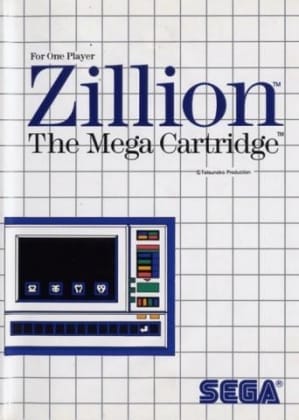
Zillion
Zillion, known as Akai Koudan Zillion (赤い光弾ジリオン; lit. Red Photon Zillion) in Japan, is a space adventure platform video game developed by Sega and designed for the Master System as a companion tie-in for Tatsunoko Production's Zillion anime series in 1987. The Zillion series prominently features Sega's egg-shaped mascot, Opa-Opa, who stars in the Fantasy Zone games, which are also available for the Master System. A sequel to the game, Zillion II was released in 1988.
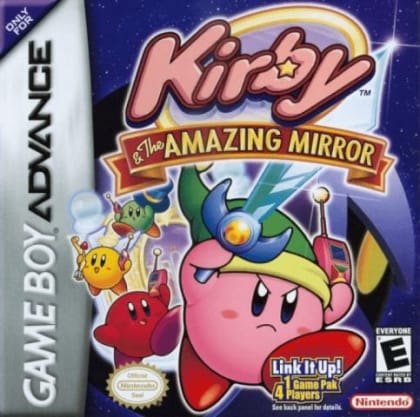
Kirby & the Amazing Mirror
Kirby & The Amazing Mirror is a 2004 platform game developed by HAL Laboratory, Flagship and Dimps and published by Nintendo for the Game Boy Advance. The seventh mainline Kirby entry, the game is notable for its unique Metroidvania playstyle and being the first in the series to support cooperative four-player multiplayer, and follows Kirby as he goes on a journey through the Mirror Dimension to reassemble a mirror after Dark Meta Knight traps Meta Knight inside it. Unlike the other Kirby games, Kirby & The Amazing Mirror features a nonlinear design, and is traversed in a Metroidvania style. The Mirror World is divided into nine themed areas. The player begins in an over-world with doors that connect to a few other areas. From there the game map branches out in several directions and, providing Kirby has the proper power at his disposal, he is able to go anywhere in almost any order, excluding the final sequence.
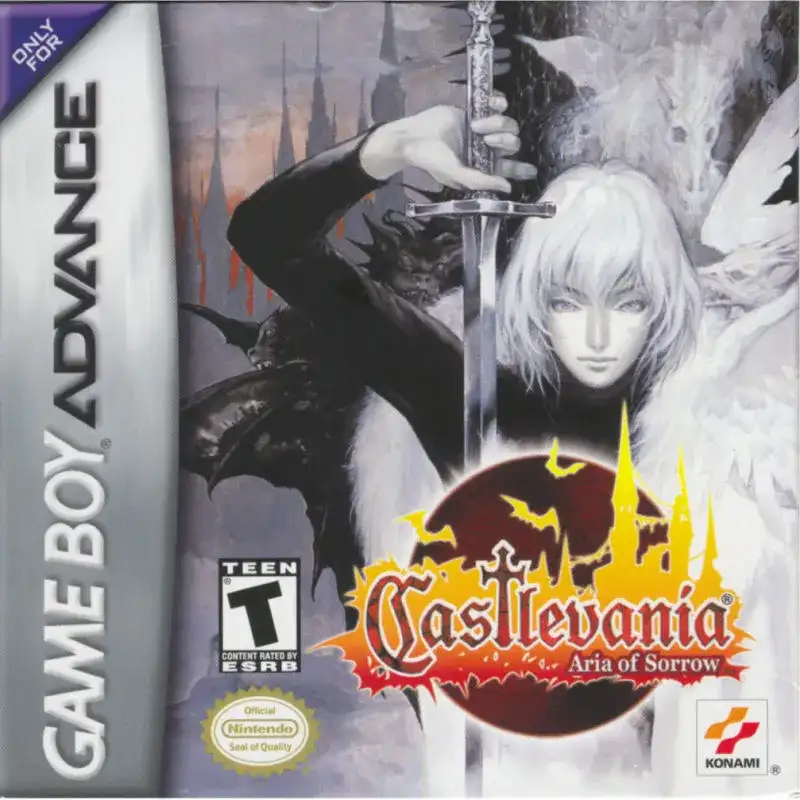
Castlevania: Aria of Sorrow
Castlevania: Aria of Sorrow is a 2003 action role-playing game developed by Konami Computer Entertainment Tokyo and published by Konami for the Game Boy Advance. It is the 20th main entry in the Castlevania series, as well as the third and final game produced for the system. Producer Koji Igarashi, who had led the production teams for previous Castlevania games, oversaw Aria of Sorrow's development in parallel with its predecessor Castlevania: Harmony of Dissonance (2002). Michiru Yamane returned to compose the music alongside Takashi Yoshida and Soshiro Hokkai. Director Junichi Murakami was new to the Castlevania series. In contrast with other Castlevania titles taking place in the late medieval period or the early 20th century, Aria of Sorrow is set in 2035, decades after a climactic war resulted in Dracula's permanent demise and his castle being sealed in a solar eclipse.
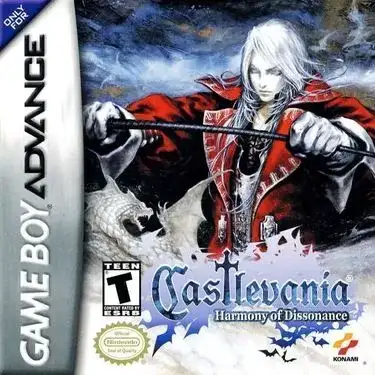
Castlevania: Harmony of Dissonance
Castlevania: Harmony of Dissonance is a 2002 action role-playing game developed and published by Konami for the Game Boy Advance. The second installment of the Castlevania series on the Game Boy Advance, the game was released in Japan in June 2002 and in North America and PAL regions later that same year. Harmony of Dissonance is set in the year 1748, fifty years after Simon Belmont vanquished Dracula's curse in Castlevania II: Simon's Quest. Harmony of Dissonance focuses on Simon's grandson, Juste Belmont, and his quest to rescue a kidnapped childhood friend. Similarly to previous Castlevania titles, the game employs role-playing game features alongside more traditional action adventure game elements. Progression is split between two versions of the titular castle, requiring Juste to traverse both maps in search of abilities, armor and weapons to combat an assortment of enemies, including various bosses.
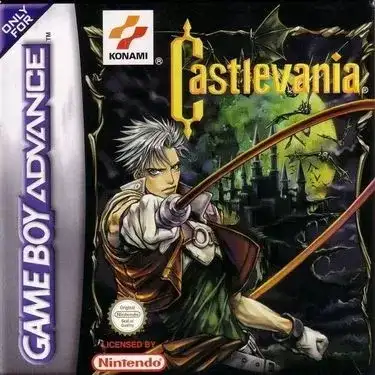
Castlevania: Circle of the Moon
Castlevania: Circle of the Moon, titled Castlevania in PAL regions, is a 2001 action role-playing game developed and published by Konami for the Game Boy Advancehandheld game console. The game was developed as a stand-alone title in the Castlevania series and as a launch title for the Game Boy Advance. The game's plot follows a vampire hunter named Nathan Graves as he attempts to rescue his mentor from the clutches of Dracula. Following the Metroidvania style of gameplay established by Castlevania: Symphony of the Night, Circle of the Moon expands on the magic attack mechanics of the former with the Dual Set-Up System, which allows for attacks to be mixed and matched by players as they see fit. The game sold 500,000 units worldwide and received critical acclaim, with praise for its level design, mechanics, music, and scope, while some criticized the dark visuals.
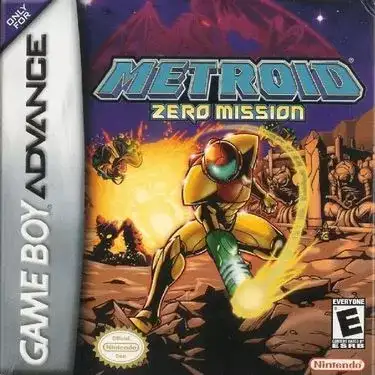
Metroid: Zero Mission
Metroid: Zero Mission is a 2004 action-adventure game developed and published by Nintendo for the Game Boy Advance. It is a remake of the original Metroid (1986), with updated visuals and gameplay. Like other Metroid games, the player controls the bounty hunter Samus Aran. Samus travels to the planet Zebes after learning that the Space Pirates are experimenting with Metroids, hostile parasitic creatures, which they plan to use to take over the universe. The gameplay focuses on exploration, with the player searching for power-ups to reach previously inaccessible areas. The remake adds items, additional areas, mini-bosses, difficulty levels "Balance (game design)") and a rewritten story that explores Samus's past. Zero Mission received praise for its new content, graphics, gameplay and improvements over the original, but criticism for its short length. Nintendo Power named it one of the best Nintendo games.
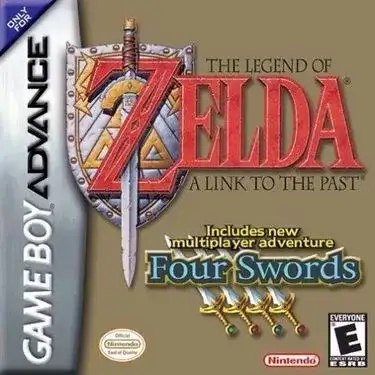
The Legend of Zelda: A Link to the Past & Four Swords
The Legend of Zelda: A Link to the Past and Four Swords is a 2002 action-adventure game compilation developed by Nintendo R&D2 and Flagship and published by Nintendo for the Game Boy Advance. The game was released in December 2002 in North America and in March 2003 in Japan and Europe. The cartridge contains a modified port of A Link to the Past, originally released for the Super Nintendo Entertainment System in 1991, and an original multiplayer-only game titled Four Swords, which serves as the ninth installment in The Legend of Zelda series. A stand-alone port of Four Swords was released for a limited time on Nintendo's DSiWare service as The Legend of Zelda: Four Swords Anniversary Edition on September 28, 2011; this version includes new content, such as a single-player mode and additional areas.
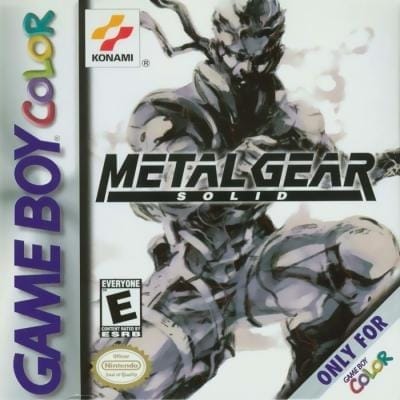
Metal Gear Solid
Metal Gear Solid#cite_note-8) is a 1998 action-adventurestealth game developed and published by Konami for the PlayStation. It was directed, produced, and written by Hideo Kojima, and follows the MSX2 games Metal Gear "Metal Gear (video game)") and Metal Gear 2: Solid Snake.#cite_note-techinfo-9) Players control Solid Snake, a soldier who infiltrates a nuclear weapons facility to neutralize the terrorist threat from FOXHOUND, a renegade special forces unit.#cite_note-10) Snake must liberate hostages and stop the terrorists from launching a nuclear strike.#cite_note-objectives-11) Cinematic cutscenes were rendered using the in-game engine and graphics, and voice acting is used throughout.#cite_note-12)Metal Gear Solid was unveiled at the 1996 Tokyo Game Show and demonstrated at trade shows including the 1997 Electronic Entertainment Expo. Metal Gear Solid received unanimous acclaim.
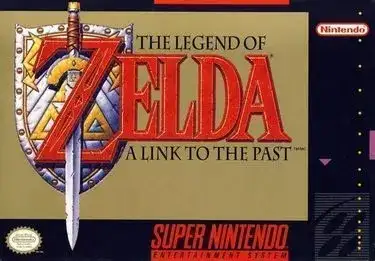
The Legend of Zelda: A Link to the Past
The Legend of Zelda: A Link to the Past is a 1991 action-adventure game developed and published by Nintendo for the Super Nintendo Entertainment System (SNES). It is the third game in The Legend of Zelda series, following 1987's Zelda II: The Adventure of Link, and is the first entry in the series to be released for the SNES. The story is set many years before the events of the first two Zelda games. The player assumes the role of Link as he journeys to save Hyrule, defeat the demon king Ganon, and rescue the descendants of the Seven Sages. It returns to a top-down perspective similar to the original The Legend of Zelda "The Legend of Zelda (video game)"), dropping the side-scrolling gameplay of The Adventure of Link. It also introduced series staples such as parallel worlds and items including the Master Sword. A Link to the Past is considered among the greatest video games ever made, with particular praise for its presentation and innovative gameplay.
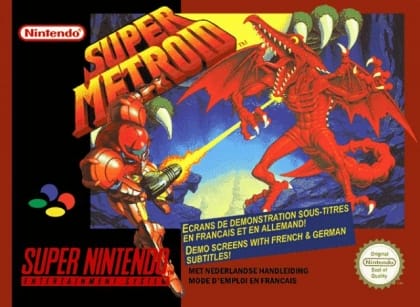
Super Metroid
Following the established gameplay model of its predecessors, Super Metroid focuses on exploration, with the player searching for power-ups used to reach previously inaccessible areas. It introduced elements such as the inventory screen, an automap, and the ability to fire in 8 directions. The development staff from previous Metroid games—including Yoshio Sakamoto, Makoto Kano "Makoto Kano (video game designer)") and Gunpei Yokoi—returned to develop Super Metroid over the course of two years. The developers wanted to make a true action game, and set the stage for Samus' reappearance. Super Metroid received acclaim, with praise for its atmosphere, gameplay, music and graphics. It is often cited as one of the greatest video games of all time. The game sold well and shipped 1.42 million copies worldwide by late 2003. Alongside Castlevania: Symphony of the Night, Super Metroid is credited for establishing the Metroidvania genre, inspiring numerous indie games and developers.
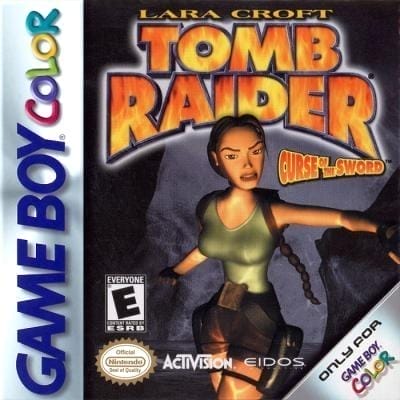
Tomb Raider: Curse of the Sword
Tomb Raider: Curse of the Sword is an action-adventurevideo game, part of the Tomb Raider series, developed by Core Design and published by Activision under license from Eidos Interactive. It was released for the Game Boy Color in 2001, and is a sequel to the first Tomb Raider "Tomb Raider (Game Boy Color)") for the same system. The next Tomb Raider game for a handheld system was Tomb Raider: The Prophecy for the Game Boy Advance. A long time ago, an evil magician named Madame Paveau rose to power in the underworld of New Orleans using her dark magic and sacrificing humans. The underworld became synonymous with fear, and only with the aid of a powerful, benevolent magician could people rise up against her murderous control. After a mob broke into her mansion and burnt it down, the evil magician was destroyed. Her body was shattered upon jagged precipices on the bottom of a nearby cliff.
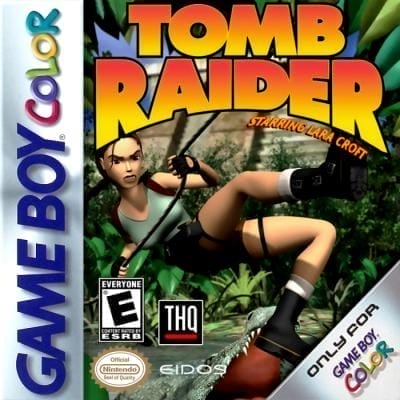
Tomb Raider
Tomb Raider (also known as Tomb Raider: The Nightmare Stone) is a 2000 action-adventure video game developed by Core Design and published by THQ for the Game Boy Color under license from series owner Eidos Interactive. Following series protagonist Lara Croft as she searches ruins in South America for a powerful artefact, the gameplay features platforming and puzzle-solving on a 2D side-scrolling environment. Tomb Raider was the debut entry for the series on Nintendo platforms, with it being described by developers and journalists as technically impressive for the platform. It sold well for THQ, and was praised by critics for its technical achievements and emulation of the main series gameplay in portable form. Two sequels were released: Curse of the Sword in 2001 and The Prophecy in 2002. In Tomb Raider, the player controls Lara Croft though 14 levels "Level (video gaming)") spread across five areas.
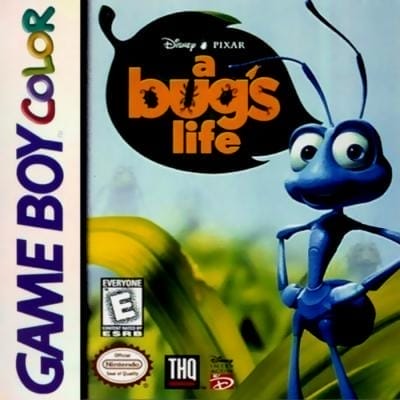
A Bug's Life
A Bug's Life is a platform game in which the player controls Flik throughout settings and a storyline based on the namesake film. The game is divided into five distinct "lands" consisting of three levels each.#cite_note-Manual2324-7) To complete a level, the player must either find an exit, complete a goal or defeat a boss character.#cite_note-Manual19-8) Flik's primary form of offense against enemy characters is throwing berries. By default, Flik throws red-colored berries, which are the weakest form of berry and cannot harm certain enemies. Stronger berries can either be found within a level or received from planting purple-colored seeds. Collecting purple seed tokens increases the range of berries a seed can produce. Aside from increased power, some berries travel faster and can home in on enemies. The strongest form of berry is gold-colored and is capable of permanently eliminating enemies and preventing them from respawning.
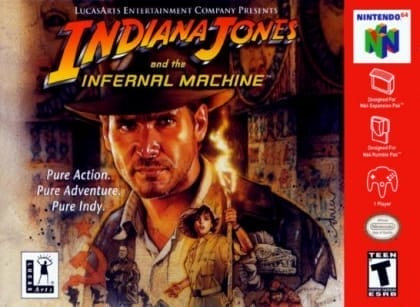
Indiana Jones and the Infernal Machine
Indiana Jones and the Infernal Machine is a 1999 action-adventurevideo game developed and published by LucasArts. The first 3D installment in the series, its gameplay focuses on solving puzzles, fighting enemies, and completing various platforming sections. The story is set in 1947, after the events of Indiana Jones and the Iron Phoenix, and puts the eponymous protagonist, the adventurer Indiana Jones "Indiana Jones (character)"), against the Soviet Union. In a race for a mythological Babylonian power source, he joins forces with the Central Intelligence Agency and collects four pieces of the Infernal Machine, an ancient device that allegedly opens a portal to another dimension. The title was designed, written, and directed by Hal Barwood, who considered the Indiana Jones franchise a perfect fit for the action-adventure genre.
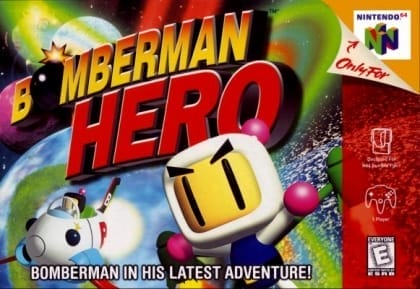
Bomberman Hero
Bomberman Hero is a platform video game developed by A.I Co., Ltd. and published by Hudson Soft for the Nintendo 64. It is the second Bomberman game to be released on the system, following Bomberman 64 (1997). It is notable for being a dramatic deviation from previous Bomberman titles, featuring predominant platforming gameplay as opposed to the series' traditional top-down strategy gameplay. Bomberman Hero received mixed reviews from critics, who criticized it for its graphics and absence of a multiplayer mode, though elements of its gameplay were praised. It was re-released through the Wii Virtual Console service in 2011.
Castlevania Legends
Castlevania Legends is a 1997 action-platform game developed and released by Konami for the Game Boy. The third Castlevania game released for the system, the story follows Sonia Belmont, a vampire hunter battling the first incarnation of Count Dracula. The game was conceived as a prequel to all other games in the Castlevania series; however, it later became recognized as non-canon. Castlevania Legends was released in Japan on November 27, 1997 and in Europe and North America on March 11, 1998. The game received mixed to negative reviews, with criticism directed towards its lack of difficulty, short length, technical issues, and unoriginality. The game received its first official re-release on the Nintendo Classics service on October 31, 2023. Castlevania Legends is a side-scrollingplatformer where the protagonist, Sonia Belmont, armed with a whip, charges through five stages of Count Dracula's castle, filled with various enemies and candles containing items.
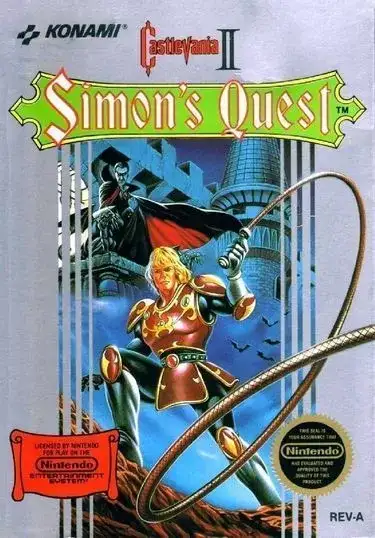
Castlevania II: Simon's Quest
Castlevania II: Simon's Quest is a 1987 action role-playing game developed and published by Konami. It was originally released in Japan in 1987 for the Famicom Disk System, and in North America in 1988 for the Nintendo Entertainment System. It is the second Castlevania game released for the NES, following the original Castlevania (1986). Set seven years after the events of the first installment, the player once again assumes the role of vampire hunter Simon Belmont, who is on a journey to undo a curse placed on him by Dracula at the end of their previous encounter. Dracula's body was split into five parts, which Simon must find and bring to the ruins of Castle Dracula in order to defeat him. The game deviates from the traditional platforming of its predecessor, incorporating role-playing and open world elements.
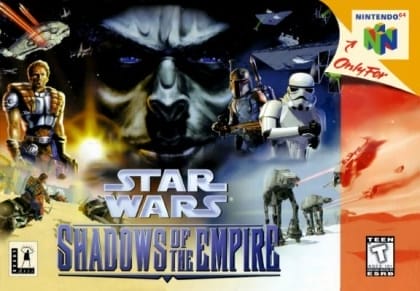
Star Wars: Shadows of the Empire
Star Wars: Shadows of the Empire is a 1996 video game developed by LucasArts and published by Nintendo for the Nintendo 64. It is primarily a third-person shooter, with multiple types of vehicular combat and third-person shooting sequences. A version for Windows was released by LucasArts in 1997. The player controls the mercenary Dash Rendar to help Luke Skywalker and rescue Princess Leia from Prince Xizor. It is part of the Star Wars: Shadows of the Empire multimedia project and takes place between The Empire Strikes Back and Return of the Jedi. Tracks from the multimedia project's soundtrack are in the musical score. The game received mixed reviews from critics. Shadows of the Empire was the third-best-selling Nintendo 64 game for 1997, with more than one million copies sold. Star Wars: Shadows of the Empire plays primarily as a third-person shooter. Players control the protagonist, Dash Rendar.
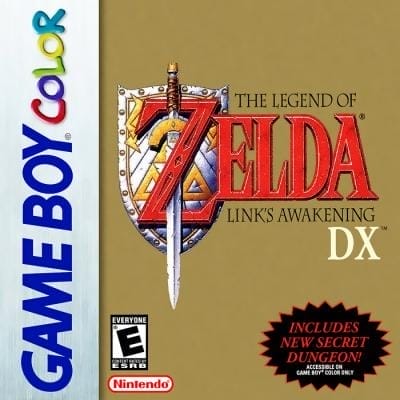
The Legend of Zelda: Link's Awakening DX
The Legend of Zelda: Link's Awakening DX is a 1998 action-adventure game developed and published by Nintendo for the Game Boy Color. The game is a colorized version of the 1993 Game Boy title The Legend of Zelda: Link's Awakening, in which protagonist Link must fight monsters, explore dungeons and solve puzzles to escape from Koholint Island. The DX version of Link's Awakening features gameplay additions including a color-themed dungeon and support for the Game Boy Printer. Upon release, Link's Awakening DX was critically acclaimed, with reviewers commending the game on the strengths of the original title and welcoming the addition of color graphics and new features, although noting the additions were largely insubstantial compared to the original game. The DX version of Link's Awakening has retrospectively been cited by critics as one of the best games for the Game Boy and Game Boy Color systems.
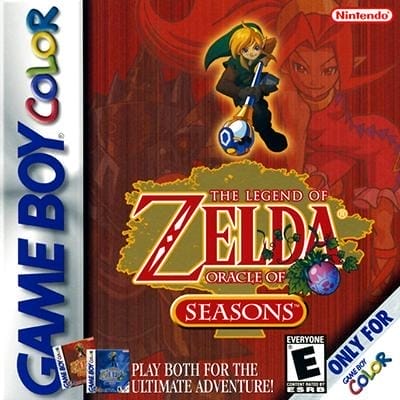
The Legend of Zelda: Oracle of Seasons
The Legend of Zelda: Oracle of Seasons and The Legend of Zelda: Oracle of Ages are 2001 action-adventure games developed by Flagship and published by Nintendo for the Game Boy Color. They are the seventh and eighth installments in the Legend of Zelda series. The player controls Link from an overhead perspective. In Seasons, the Triforce transports Link to the land of Holodrum, where he sees Onox kidnap Din, the Oracle of Seasons. In Ages, the Triforce transports Link to Labrynna, where Veran possesses Nayru. The main plot is revealed once the player finishes both games. Link is armed with a sword and shield as well as a variety of secondary weapons and items for battling enemies and solving puzzles. The central items are the Rod of Seasons, which controls the seasons in Holodrum, and the Harp of Ages, which lets Link travel through time in Labrynna.
Browse our collection of 30 Action adventure retro games, all playable instantly in your browser. No download required. Play classic games online in your browser and save your progress anytime.