Konami
43 games — Konami
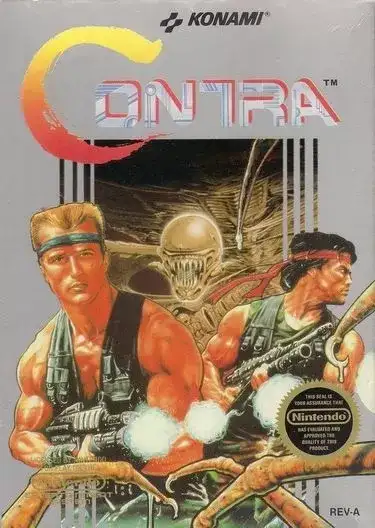
Contra
Contra is a 1987 run and gun game developed and published by Konami for arcades. A home version was released for the Nintendo Entertainment System in 1988, along with ports for various home computer formats, including the MSX2. The arcade and computer versions were localized as Gryzor in Europe, and the NES version as Probotector in the PAL region. The arcade game was a commercial success worldwide, becoming one of the top four highest-grossing dedicated arcade games of 1987 in the United States. The NES version was also a critical and commercial success, with Electronic Gaming Monthly awarding it for being the Best Action Game of 1988. Several Contra sequels were produced following the original game.
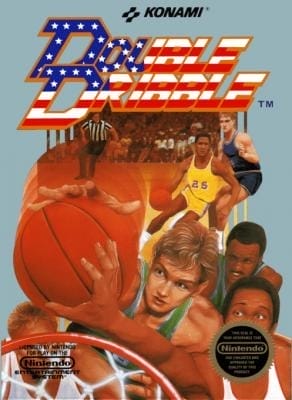
Double Dribble
Double Dribble (ダブルドリブル, Daburu Doriburu) is a 1986 basketball video game developed and published by Konami for arcades. It was the second basketball game by Konami, following Super Basketball. It was considered the most realistic basketball sports game upon release, with fast-paced action, detailed players, a large side-scrolling court, innovative cinematic slam dunks, and detailed sound effects, beginning a trend where presentation would play an increasingly important role in sports games.#cite_note-allgame-review-7) Much of the game's popularity came from its animation sequences showing basketball players performing slam dunks, as well as "The Star-Spangled Banner" theme during the attract mode. These were uncommon in video games at the time of Double Dribble's release. It was successful in the arcades, and the game became and remained popular and remembered when it was ported to the Nintendo Entertainment System in 1987.
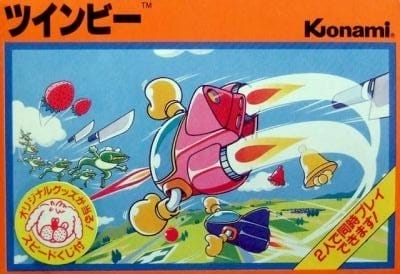
TwinBee
TwinBee is a 1985 vertically scrolling shooter video game developed and published by Konami for arcades. Along with Sega's Fantasy Zone (1986), it is credited as an early archetype of the "cute 'em up" subgenre. It was the first game to run on Konami's Bubble System hardware. TwinBee was ported to the Family Computer and MSX in 1986, and has been included in numerous compilations released in later years. The original arcade game was released outside Japan for the first time as part of the Nintendo DS compilation Konami Classics Series: Arcade Hits. A mobile phone version with edited graphics was released for Japanese i-mode mobile phones in 2003. Various TwinBee sequels were released for the arcade and home console markets following the original game, some of which spawned audio drama and anime adaptations in Japan.
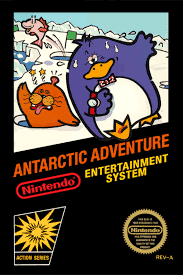
Antarctic Adventure
Antarctic Adventure (けっきょく南極大冒険, Kekkyoku Nankyoku Daibōken; lit. "Actually Antarctic Big Adventure") is a video game developed by Konami in 1983 for the MSX, and later for video game consoles, such as the Family Computer and ColecoVision. The player takes the role of an Antarctic penguin, racing to various research stations owned by different countries in Antarctica (excluding the USSR). The gameplay is similar to Sega's Turbo, but plays at a much slower pace, and features platform game elements. The penguin, later named Penta, must reach the next station before time runs out while avoiding sea lions and breaks in the ice. Throughout the levels, fish jump out of ice holes and can be caught for bonus points. The game, like many early video games, has no ending – when the player reaches the last station, the game starts from the first level again, but with increased difficulty.
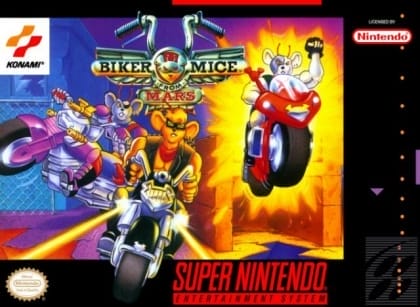
Biker Mice from Mars
Biker Mice From Mars is a racing video game released by Konami for the Super Nintendo Entertainment System. It is a tie-in to the animated series of the same title. The PAL version of the game features in-game product placement for Snickers candy bars.
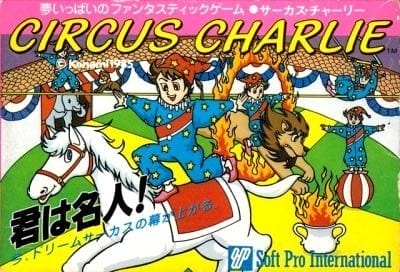
Circus Charlie
Circus Charlie is a 1984 actionvideo game developed and published by Konami for arcades. It was released in North America by Centuri in March 1984 and in Japan in April 1984. The player controls a circus clown named Charlie in six different circus-themed minigames. It was released for MSX in the same year, followed by ports to the Famicom in 1986 by Soft Pro and the Commodore 64 in 1987. In the game there are six regular stages "Level (video gaming)") (plus an extra stage) of differing tasks that are to be completed by Charlie. Grabbing money bags, performing dangerous tricks, avoiding enemies, completing stages, etc., earns Charlie points "Score (gaming)"). After the sixth stage is completed, the game starts over again but with a faster pace and more difficult (but exactly the same in terms of task to be completed) levels. Charlie also races against time. Bonus points are awarded according to the time remaining, but running out of time will cost the player a life.
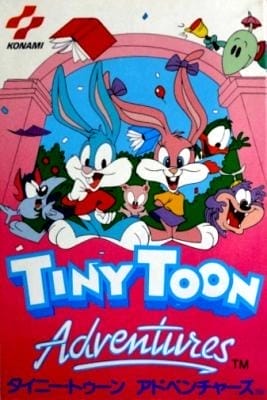
Tiny Toon Adventures
Tiny Toon Adventures is a platform video game for the NES. It was developed and published by Konami and released in 1991. It is the first Tiny Toon Adventures video game to be released for a video game console.
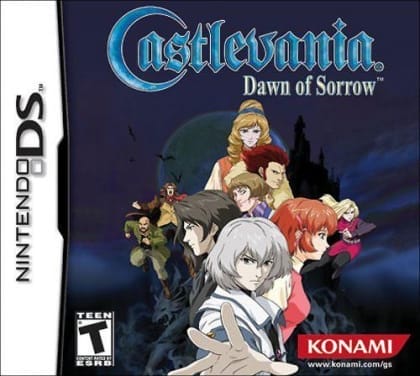
Castlevania: Dawn of Sorrow
Castlevania: Dawn of Sorrow is a 2005 action role-playing game developed and published by Konami. It is part of Konami's Castlevania video game series and the first Castlevania game released on the Nintendo DS. The game is the sequel to Castlevania: Aria of Sorrow and incorporates many elements from its predecessor. Dawn of Sorrow continues the story of Aria of Sorrow: Dracula has been defeated, with his powers assumed by his reincarnation, Soma Cruz. With the help of his allies, Soma avoids becoming the new dark lord. A cult forms to bring forth a new one by killing Soma. Soma and his allies move to ensure that does not happen. Dawn of Sorrow incorporates many features from earlier Castlevania games: the combination of elements from platform games and role-playing video games, the "Tactical Soul" system featured in Aria of Sorrow and a dark, gothic atmosphere.
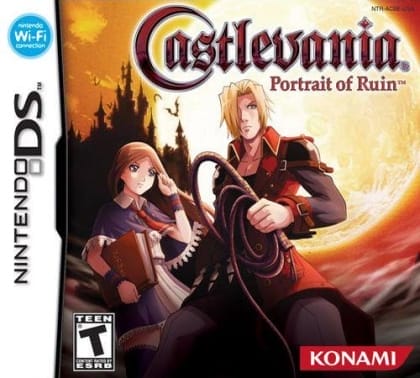
Castlevania: Portrait of Ruin
Castlevania: Portrait of Ruin is a 2006 action role-playing game developed and published by Konami for the Nintendo DS handheld system. The game is the first in the Castlevania series to feature a cooperative multiplayer gameplay mode and the first handheld entry to have English voice-overs, outside of its original Japanese release. The game is a continuation of the events from Castlevania: Bloodlines, a 1994 Sega Genesis title. Set in Europe during World War II, the story follows Jonathan Morris, the son of John Morris from Castlevania: Bloodlines, and Charlotte Aulin as they attempt to stop a vampire from resurrecting Dracula. The game expands on the two character gameplay found in Castlevania: Dawn of Sorrow and adds new cooperative online functionality while foregoing much of the mechanics involving the Nintendo DS touch screen. Portrait of Ruin received an overall positive critical response and several awards as one of the best Nintendo DS games.
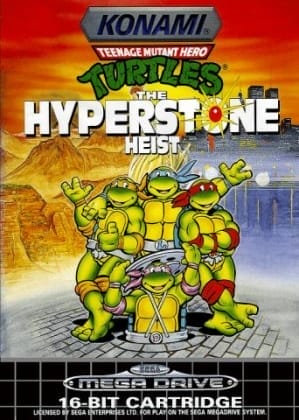
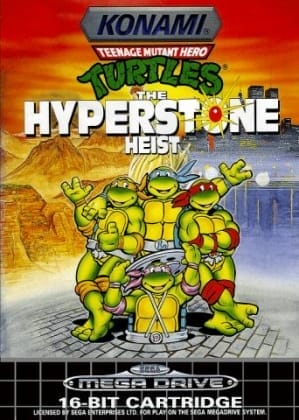
Teenage Mutant Ninja Turtles: The Hyperstone Heist
Teenage Mutant Ninja Turtles: The Hyperstone Heist, released in Europe as Teenage Mutant Hero Turtles: The Hyperstone Heist and in Japan as Teenage Mutant Ninja Turtles: Return of the Shredder, is a 1992 beat 'em up game developed and published by Konami for the Sega Genesis, based on the Teenage Mutant Ninja Turtles comic book characters. It was Konami's debut title for the Genesis. The game was re-released as part of Teenage Mutant Ninja Turtles: The Cowabunga Collection in 2022. April O'Neil is reporting from Liberty Island when, in a sudden flash of light, she and her audience witness Manhattan Island suddenly starting to shrink. Shredder then hijacks the airwaves and announces to the world that this was only a demonstration of the power of the Hyperstone, the treasure of Dimension X "Dimension X (Teenage Mutant Ninja Turtles)"). With the Hyperstone in his possession, he now has the power to take over the world. The Turtles have no choice but to go after Shredder and stop him.
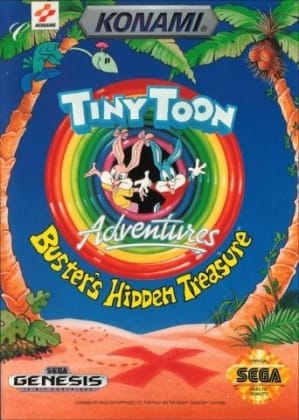
Tiny Toon Adventures: Buster's Hidden Treasure
Tiny Toon Adventures: Buster's Hidden Treasure is the first Tiny Toon Adventures-based game released on the Sega Genesis. It was released in 1993 and developed and published by Konami. The game was not released in Japan, but was released in South Korea, where it was simply called Tiny Toons Adventures.
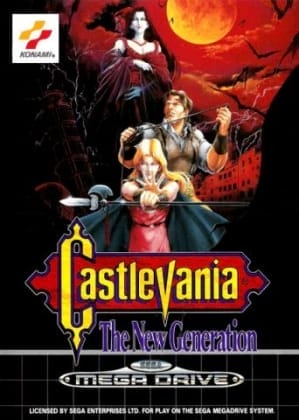
Castlevania: Bloodlines
Castlevania: Bloodlines, known in Japan as Vampire Killer and in PAL regions as Castlevania: The New Generation, is a 1994 platform game developed and published by Konami for the Sega Genesis as part of the Castlevania series. A vampire named Elizabeth Bartley is orchestrating the beginning of World War I to serve as the catalyst for the resurrection of her uncle, Dracula. Players take on the role of Quincey Morris' son, John, and his friend Eric Lecarde to take up the fight against evil. The development team approached Bloodlines as a unique Castlevania experience tailor-made for the Genesis. In this sense, the gameplay was made more fast and action-oriented. Writer Toshiki Yamamura also took creative liberties to craft what he viewed was a new chapter in the Castlevania saga. The game was the first Castlevania title for which Michiru Yamane composed music. She used her Bach influences to compose a renowned soundtrack, leading to her becoming a recurring series composer.
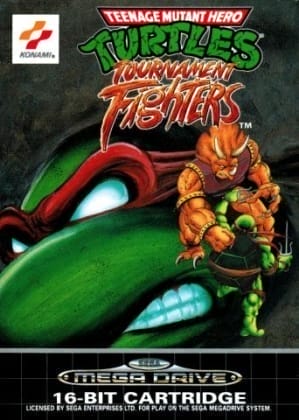
Teenage Mutant Hero Turtles: Tournament Fighters
Teenage Mutant Ninja Turtles: Tournament Fighters, or Teenage Mutant Hero Turtles: Tournament Fighters in Europe, is the title of three different fighting games based on the Teenage Mutant Ninja Turtles, produced by Konami for the Nintendo Entertainment System, Sega Genesis, and Super NES and released during a period between 1993 and 1994. Konami produced a different fighting game based on the franchise each featuring a differing cast of characters for the platforms. All three versions of the game were re-released as part of Teenage Mutant Ninja Turtles: The Cowabunga Collection in 2022, with online play using rollback netcode for the Super NES version of the game.
Teenage Mutant Ninja Turtles: Turtles in Time
Teenage Mutant Ninja Turtles: Turtles in Time, released as Teenage Mutant Hero Turtles: Turtles in Time in Europe, is a 1991 beat 'em up game developed and published by Konami for arcades. A sequel to the original Teenage Mutant Ninja Turtles "Teenage Mutant Ninja Turtles (arcade game)") arcade game, it is a side-scrolling game based mainly on the 1987 TMNT animated series "Teenage Mutant Ninja Turtles (1987 TV series)"). Originally an arcade game, Turtles in Time was ported to the Super Nintendo Entertainment System in 1992 under the title Teenage Mutant Ninja Turtles IV: Turtles in Time, continuing the numbering from the earlier Turtles games released on the original NES. That same year, a game that borrowed many elements, Teenage Mutant Ninja Turtles: The Hyperstone Heist, was released for the Sega Genesis. In 2005, the arcade version of Turtles in Time was rereleased on newer consoles.
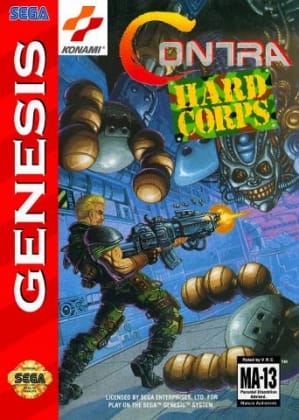
Contra: Hard Corps
Contra: Hard Corps, released as Contra: The Hard Corps in Japan and Probotector in Europe and Australia, is a 1994 run and gun game developed and published by Konami for the Sega Genesis, making it the first game in the Contra series released for a Sega platform. Set five years after the events of Contra III: The Alien Wars, a terrorist group led by the renegade Colonel Bahamut has stolen an alien cell recovered from the war and now intends to use it to produce weapons. A new task force, known as the titular "Hard Corps", are sent to deal with the situation. The game features a branching storyline with multiple possible endings. Hard Corps spawned its own series of follow-ups; including the Appaloosa-developed sequels, Contra: Legacy of War & C: The Contra Adventure; and the Arc System Works-developed prequel, Hard Corps: Uprising. Hard Corps has since been considered to be a spin-off from the mainline Contra entries.
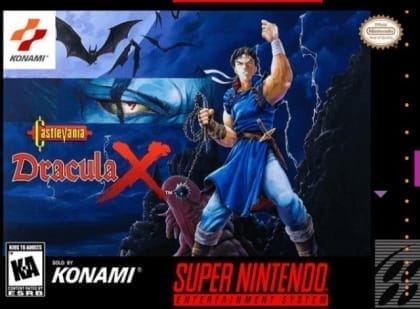
Castlevania: Dracula X
Castlevania: Dracula X, titled Castlevania: Vampire's Kiss in Europe and Akumajou Dracula XX in Japan, is a 1995 platform game developed and published by Konami for the Super Nintendo Entertainment System. It is the second Castlevania installment to be released for the Super NES. It is a remake of Castlevania: Rondo of Blood, which was previously released in Japan on the PC Engine Super CD-ROM2 in 1993. While the plot is similar to Rondo of Blood and it uses many of that game's graphics, it features new levels and altered gameplay elements, rather than being a direct port because of the limits of the Super NES cartridge format and exclusivity agreements with PC Engine maker NEC. It was released on July 21, 1995 in Japan, in September 1995 in North America, February 22, 1996 in Europe, and on June 22, 1996, in Australia. The game received mixed reviews, with journalists considering it inferior to Rondo of Blood and criticizing its high difficulty.
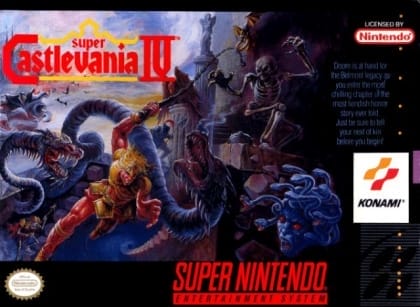
Super Castlevania IV
Super Castlevania IV is a 1991 platform game developed and published by Konami for the Super Nintendo Entertainment System. It has been re-released multiple times, including for the Super NES Classic Edition. Super Castlevania IV features expanded play control, 16-bit graphics featuring Super NES's Mode 7, and a soundtrack featuring new pieces and arrangements based on previous Castlevania music. Following the same setting as Castlevania on the NES, the game takes place in 1691 Transylvania, where the vampire hunter Simon Belmont must defeat the vampire Dracula. The game received critical acclaim and is considered one of the greatest video games ever made.
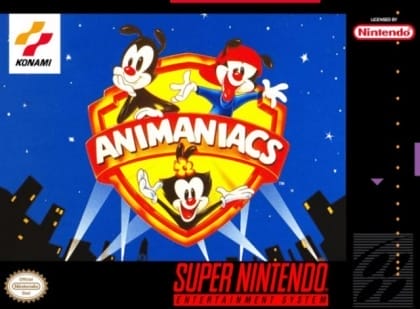
Animaniacs
In the SNES version, the Brain once again has another plan to conquer the world by deciding to steal the script of the new Warner Bros. film while it was under development. The CEO of Warner Bros. studio reluctantly asks the Warner Siblings for their assistance to retrieve all 24 pages of the script and foil the Brain's plan, which is the primary objective of the game. The ending of the game depends on how many script pages are collected, with the best ending leading to Warner Bros. being able to complete the film, pleasing the CEO, only to find out that the film was about the Warner Siblings, which pleases them.
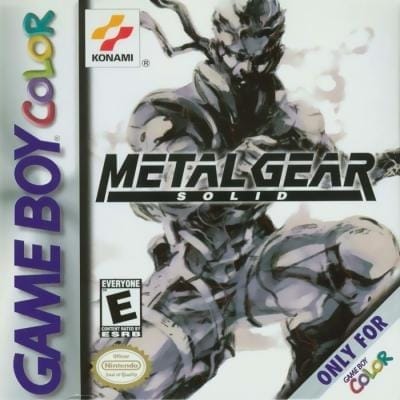
Metal Gear Solid
Metal Gear Solid#cite_note-8) is a 1998 action-adventurestealth game developed and published by Konami for the PlayStation. It was directed, produced, and written by Hideo Kojima, and follows the MSX2 games Metal Gear "Metal Gear (video game)") and Metal Gear 2: Solid Snake.#cite_note-techinfo-9) Players control Solid Snake, a soldier who infiltrates a nuclear weapons facility to neutralize the terrorist threat from FOXHOUND, a renegade special forces unit.#cite_note-10) Snake must liberate hostages and stop the terrorists from launching a nuclear strike.#cite_note-objectives-11) Cinematic cutscenes were rendered using the in-game engine and graphics, and voice acting is used throughout.#cite_note-12)Metal Gear Solid was unveiled at the 1996 Tokyo Game Show and demonstrated at trade shows including the 1997 Electronic Entertainment Expo. Metal Gear Solid received unanimous acclaim.
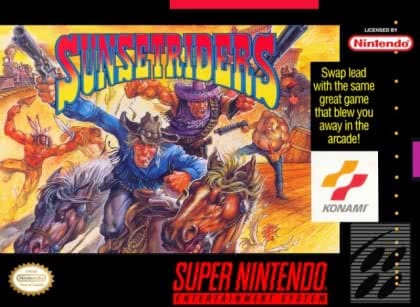
Sunset Riders
Sunset Riders is a 1991 run and gunvideo game developed and published by Konami for arcades. It was released in North America in October 1991 and Japan in November 1991. It is set in the American Old West, where the player(s) take control of bounty hunters who are seeking the rewards offered for various criminals. The arcade version was released in two variants: a two-player version and a four-player version. Home console versions of Sunset Riders were released for the Mega Drive/Genesis in 1992 and for the Super Nintendo Entertainment System in 1993 to a positive reception. Hamster Corporation released the game as part of their Arcade Archives series for the Nintendo Switch and PlayStation 4 in June 2020. The game, which is set in a fanciful version of the American Old West, revolves around four bounty hunters named Steve, Billy, Bob, and Cormano, who are out to claim rewards offered for eliminating the most wanted outlaws in the West. Each bounty hunter wields different guns.
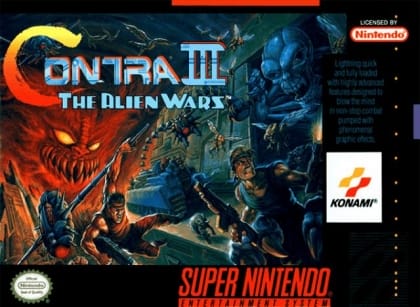
Contra III: The Alien Wars
Contra III: The Alien Wars is a 1992 run and gun video game developed and published by Konami for the Super Nintendo Entertainment System (SNES). It is the third home console entry in the Contra series after Contra (1988) and Super Contra (1990) for the Nintendo Entertainment System (NES). In PAL regions, it was known as Super Probotector: Alien Rebels, because due to Laws of Germany prohibiting the sale of violent games to minors, the main characters had to be replaced with Probotectors (robots) named "RD-008" and "RC-011", while the Japanese version is called Contra Spirits, with Bill and Lance being featured like the American version. The player is tasked with fighting off an alien invasion of Earth across six stages. Four stages feature side-scrolling action traditional to the series while two are presented from an overhead perspective. It is the first Contra title to have been directed by Nobuya Nakazato who later directed other games in the series.
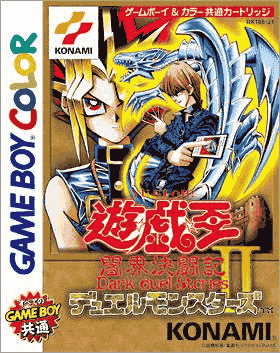
Yu-Gi-Oh! Duel Monsters II: Dark Duel Stories
Yu-Gi-Oh! Early Days Collection is a video game compilation developed by Digital Eclipse and published by Konami, released in commemoration of the Yu-Gi-Oh! Trading Card Game's 25th anniversary. It contains emulated versions of the first 14 handheld games based on the Yu-Gi-Oh franchise, originally released between 1998 and 2004. Several of the included games were localized and released outside of Japan for the first time as part of the collection. Early Days Collection was released worldwide on February 27, 2025 for Nintendo Switch and Windows. It received mixed reviews from critics, who praised the collection's preservational aspects and amount of content, but criticized the games themselves for their slow gameplay and lack of tutorials.
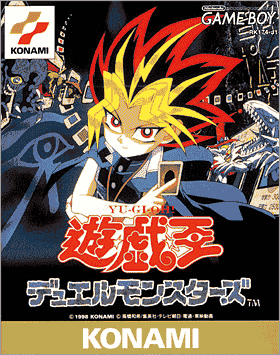
Yu-Gi-Oh! Duel Monsters
Yu-Gi-Oh!, known in Japan as Yu-Gi-Oh! Duel Monsters (Japanese: 遊☆戯☆王デュエルモンスターズ, Hepburn: Yū Gi Ō Dyueru Monsutāzu) and alternatively subtitled Rulers of the Duel in the United States and Canada, is a Japanese anime series animated by Studio Gallop based on the Yu-Gi-Oh! manga series written by Kazuki Takahashi. It is the second anime adaptation of the manga following the 1998 anime television series "Yu-Gi-Oh! (1998 TV series)") produced by Toei Animation. The series revolves around a young high school boy named Yugi Muto who battles opponents in the Duel Monsters card game. The series begins from chapter 60 in volume 7 before loosely adapting the remaining chapters of the original manga by making story changes that conflict with the events of the manga canon. Yu-Gi-Oh! Duel Monsters originally aired in Japan on TV Tokyo from April 2000 to September 2004, running for 224 episodes. A remastered version, highlighting certain duels, began airing in Japan in February 2015.
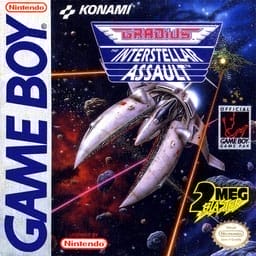
Gradius: The Interstellar Assault
Gradius: The Interstellar Assault, released as Nemesis II: The Return of the Hero in Europe, and Nemesis II in Japan, is a 1991 horizontally scrolling shooter video game developed and published by Konami for the Game Boy. It is the second game in the Gradius series released for the console. The game was re-released via the Konami GB Collection series of Super Game Boy and Game Boy Color compilations; it can be found in the Japanese Vol.3 and the European Vol.4. Like Gradius before it, these versions were renamed Gradius II for the Japanese Vol.3 and Gradius II: The Return of the Hero for the European Vol.4. It was re-released on the Nintendo Classics service for the Nintendo Switch in May 2025.
Browse our collection of 43 Konami retro games, all playable instantly in your browser. No download required. Play classic games online in your browser and save your progress anytime.