Capcom
26 games — Capcom
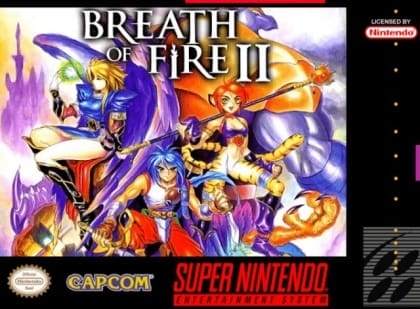
Breath of Fire II
Breath of Fire II is a role-playing video game developed and published by Capcom. First released in 1994, the game was licensed to Laguna for European release in 1996. It is the second entry in the Breath of Fire series. It was later ported to Game Boy Advance and re-released worldwide. The game was released on Wii's Virtual Console in North America on August 27, 2007. Nintendo of Europe's website mistakenly announced it for release on July 27, 2007, but it was in fact released two weeks later, on August 10, 2007. In 2013, it was released for the Wii U Virtual Console. In 2016, it was released for the New Nintendo 3DS Virtual Console. In 2019, it was released for the Nintendo Switch SNES games library. Unlike later installments in the series, Breath of Fire II is a direct sequel to Breath of Fire. Set 500 years after the original game, the story centers on an orphan named Ryu Bateson, whose family vanished mysteriously long ago.
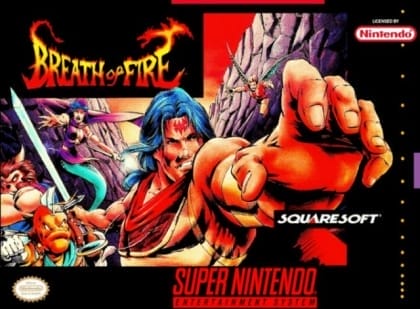
Breath of Fire
Breath of Fire[a] is a role-playing video game developed by Capcom originally for the Super Nintendo Entertainment System. Initially released in Japan in April 1993, the game was later made available in North America in August 1994 by Square Soft, who handled the title's English localization and promotion. It is the first entry in the Breath of Fire series. Recognized by Capcom as their first traditional role-playing video game, Breath of Fire would set the precedent for future entries in the series, and features character designs artist Keiji Inafune, as well as music by members of Capcom's in-house sound team Alph Lyla. In 2001, the game was re-released for the Game Boy Advance handheld system with new save features and minor graphical enhancements, with the English version being released in Europe for the first time. In 2016, it was released for the New Nintendo 3DS Virtual Console.[4] In 2019, it was released for the Nintendo Switch SNES games library.
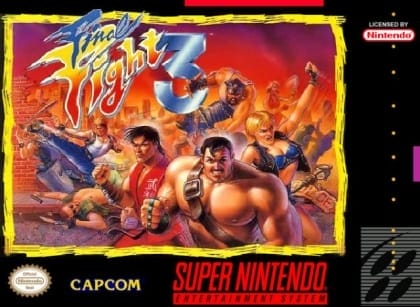
Final Fight 3
Final Fight 3, released in Japan as Final Fight Tough (Japanese: ファイナルファイト タフ, Hepburn: Fainaru Faito Tafu), is a 1995 beat 'em up video game developed and published by Capcom for the Super Nintendo Entertainment System. It is the second sequel to Final Fight released for the Super NES, following Final Fight 2. Like its predecessor, it was produced by Capcom's consumer division with no preceding arcade version released. The game features the return of the protagonist Guy along with Haggar and also introduces new characters Lucia and Dean. The game's plot takes them through their efforts to rid Metro City of the new Skull Cross gang. Final Fight 3 introduced new moves, as well as branching paths during gameplay and multiple endings. Also available is the option to fight alongside a CPU-controlled partner. However, most critics felt these changes did too little in the way of expanding and improving upon the original Final Fight, and the game was released to little fanfare.
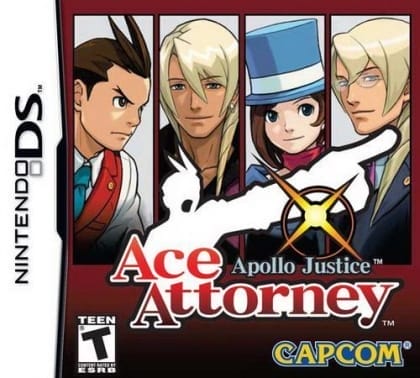
Apollo Justice: Ace Attorney
Apollo Justice: Ace Attorney is a visual novel adventure video game developed and published by Capcom. It is the fourth title in the Ace Attorney series, and was released for the Nintendo DS handheld game console in Japan in 2007 and in the West in 2008, for iOS and Android in 2016, and for the Nintendo 3DS in 2017. It was also released for Nintendo Switch, PlayStation 4, Windows and Xbox One in 2024, as part of the Apollo Justice: Ace Attorney Trilogy compilation. The game takes place seven years after the previous game, Phoenix Wright: Ace Attorney – Trials and Tribulations. Phoenix Wright, the main character of previous titles in the series, has been stripped of his attorney's badge, and Apollo Justice, an up-and-coming attorney, becomes his apprentice, working with Phoenix's adopted daughter Trucy on four cases. The player's goal is to get their clients declared not guilty; to do this, they investigate the cases and cross-examine witnesses.
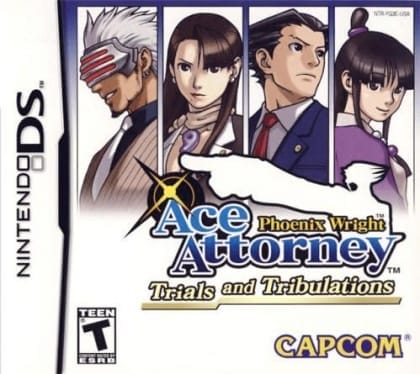
Phoenix Wright: Ace Attorney - Trials and Tribulations
Phoenix Wright: Ace Attorney – Trials and Tribulations is a visual noveladventure video game developed and published by Capcom. It was originally released for the Game Boy Advance in 2004 in Japan, and has since been released for several platforms, including a Nintendo DS version that was released in 2007 in Japan and North America and in 2008 in Europe. It is the third game in the Ace Attorney series, following Phoenix Wright: Ace Attorney (2001) and Justice for All (2002). The story follows defense attorneysPhoenix Wright and Mia Fey, who defend their clients in five episodes. Among other characters are Phoenix's assistant and Mia's sister Maya, her cousin Pearl, and prosecutorGodot "Godot (Ace Attorney)"). The gameplay is split into courtroom sections, where the player cross-examines witnesses and tries to discover contradictions in their testimonies, and investigations, where they gather evidence and talk to witnesses.
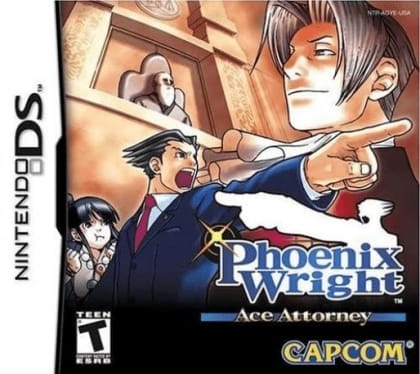
Phoenix Wright: Ace Attorney - Justice for All
Phoenix Wright: Ace Attorney – Justice for All is a visual novel adventure video game developed and published by Capcom. It was originally released for the Game Boy Advance in 2002 in Japan, and has since been released on multiple platforms. The Nintendo DS version, initially released in 2006 in Japan, was released in English in the West in 2007. The game is the second entry in the Ace Attorney series, following Phoenix Wright: Ace Attorney. The story follows Phoenix Wright, a defense attorney who defends his clients in four episodes. Among other characters are his investigative partner and spirit medium Maya Fey, her cousin Pearl, and the rival prosecutor Franziska von Karma. The game is divided into two types of sections: courtroom sessions, where the player cross-examines witnesses and tries to uncover contradictions in their testimonies; and investigations, where the player gathers evidence and talks to witnesses.
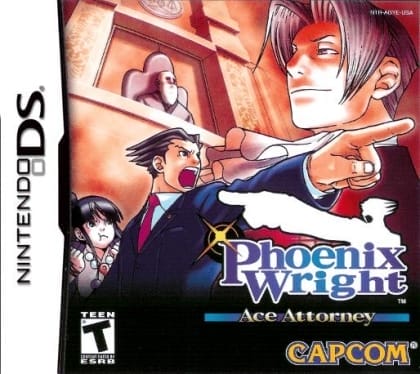
Phoenix Wright: Ace Attorney
Phoenix Wright: Ace Attorney is a visual noveladventure game developed and published by Capcom. It was released in 2001 for the Game Boy Advance in Japan and has been ported to multiple platforms. The 2005 Nintendo DS version, titled Gyakuten Saiban Yomigaeru Gyakuten in Japan, introduced an English language option, and was the first time the game was released in North America and Europe. It is the first entry in the Ace Attorney series; several sequels and spin-offs were produced, while this game has seen further ports and remasters for computers, game consoles, and mobile devices. The story follows Phoenix Wright, a rookiedefense attorney who attempts to have his clients declared "not guilty". Among other characters are Phoenix's boss, Mia Fey; his assistant and Mia's sister, Maya; and prosecutorMiles Edgeworth. The player controls Phoenix through two sets of sections: investigations and courtroom trials. During investigations they gather information and evidence.
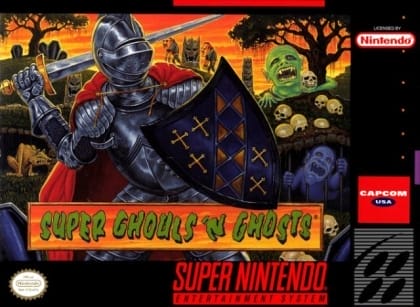
Super Ghouls 'n Ghosts
Super Ghouls 'n Ghosts, known as Chō Makaimura in Japan, is a 1991 platform video game developed and published by Capcom for the Super Nintendo Entertainment System. The third installment in the Ghosts 'n Goblins series and the first not to be released for arcades, it again depicts knight Arthur saving Princess Guinevere and the kingdom from Emperor Sardius, who has cast a spell that has revived the Ghoul Realm. The game has been included in multiple compilations of Capcom classics. A remake was released for the Game Boy Advance which features an additional game mode with new stages.
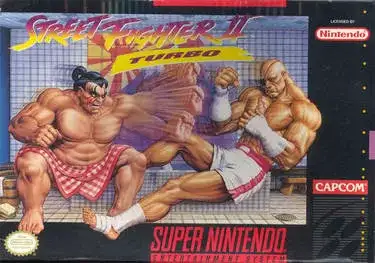
Street Fighter II Turbo: Hyper Fighting
Street Fighter II Turbo: Hyper Fighting, released as Street Fighter II Dash Turbo in Japan, is a 1992 fighting game developed and published by Capcom for arcades. It is the third arcade version of Street Fighter II, part of the Street Fighter franchise, following Street Fighter II: Champion Edition, and was initially released as an enhancement kit for that game. Released less than a year after the previous installment, Hyper Fighting introduced a faster playing speed and new special moves for certain characters, as well as further refinement to the character balance. Hyper Fighting is the final arcade game in the Street Fighter II series to use the original CP System hardware. It was distributed as an upgrade kit designed to be installed into Champion Edition printed circuit boards. The next game, Super Street Fighter II, uses the CP System's successor, the CP System II.
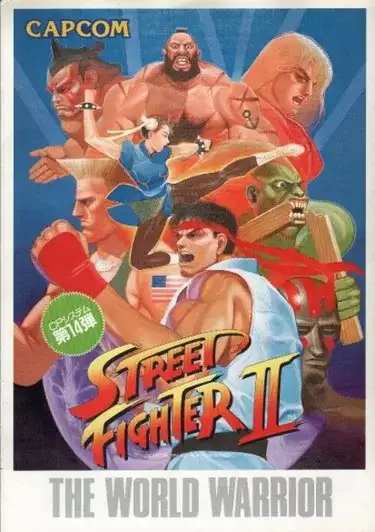
Street Fighter II: The World Warrior
Street Fighter II: The World Warrior is a 1991 fighting game developed and published by Capcom for arcades. It is the second installment in the Street Fighter series, and the sequel to 1987's Street Fighter. Designed by Yoshiki Okamoto and Akira Yasuda, who had previously worked on the game Final Fight, it is the fourteenth game to use Capcom's CP System arcade system board. Street Fighter II vastly improved many of the concepts introduced in the first game, including the use of special command-based moves, a combo system, a six-button configuration, and a wider selection of playable characters, each with a unique fighting style. Street Fighter II became the best-selling game since the golden age of arcade video games. By 1994, it had been played by an estimated 25 million people in the United States alone.
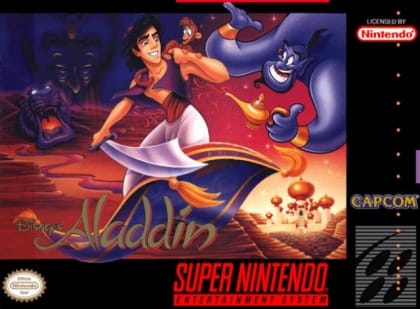
Aladdin
Aladdin is a 1993 platform game developed and published by Capcom for the Super Nintendo Entertainment System, based on the 1992 animated Disney film of the same name. Disney's Aladdin is a 2D side-scrolling video game in which the player controls Aladdin and his monkey Abu. It was designed by Shinji Mikami. The game was released in November 1993, the same month that another game with the same title was released by Virgin Games for the Sega Genesis. The two games vary in some respects; in the Genesis game, Aladdin wields a scimitar, which is not the case in the Capcom game. The Capcom game was ported to the Game Boy Advance (GBA) in Japan on August 1, 2003, in Europe on March 19, 2004, and in North America on September 28, 2004.
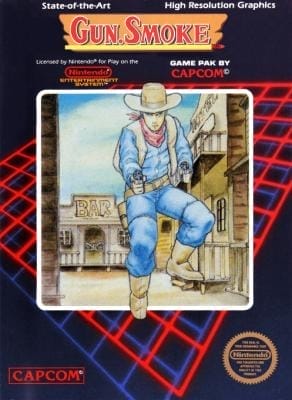
Gun.Smoke
Gun.Smoke is a 1985 vertically scrolling shooter video game developed and published by Capcom for arcades. Unique from other scrolling shooters games, Gun.Smoke features a human as the shooter instead of a spacecraft, in this case a character named Billie Bob, a bounty hunter going after the criminals of the Wild West. It was designed by Yoshiki Okamoto.
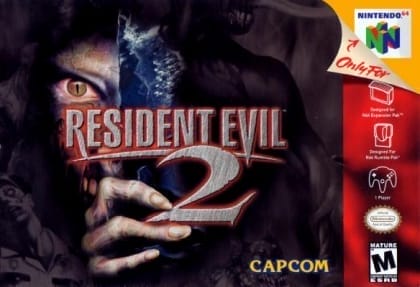
Resident Evil 2
Resident Evil 2 is a 1998 survival horror video game developed and published by Capcom for the PlayStation. The player controls rookie cop Leon S. Kennedy and college student Claire Redfield, who must escape Raccoon City after its citizens are transformed into zombies "Zombie (fictional)") by a biological weapon two months after the events of the original Resident Evil "Resident Evil (1996 video game)"). The gameplay focuses on exploration, puzzles, and combat; the main difference from its predecessor are the branching paths, with each player character having unique storylines, partners and obstacles. Resident Evil 2 was produced by Resident Evil director Shinji Mikami, directed by Hideki Kamiya, and developed by a team of approximately 50 across 21 months. The initial version, commonly referred to as Resident Evil 1.5, differs drastically; it was canceled at approximately two thirds completion because Mikami decided it was inadequate.
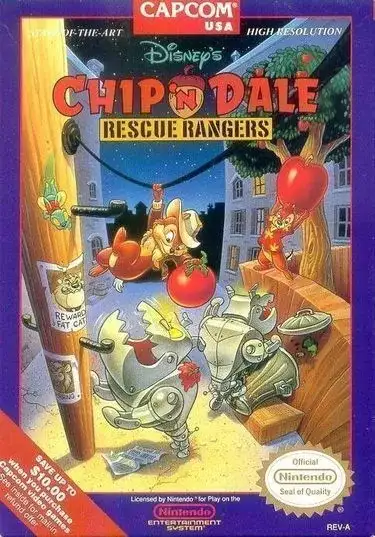
Chip 'n Dale: Rescue Rangers
Chip 'n Dale Rescue Rangers is a platform video game developed and published by Capcom for the Nintendo Entertainment System. It is based on the Disney animated series of the same name. It was released in North America and Japan in 1990, and Europe in 1991. An arcade version was released by Nintendo in 1990. It sold approximately 1.2 million copies worldwide. The game was included in The Disney Afternoon Collection compilation for PlayStation 4, Windows, and Xbox One released in April 2017.
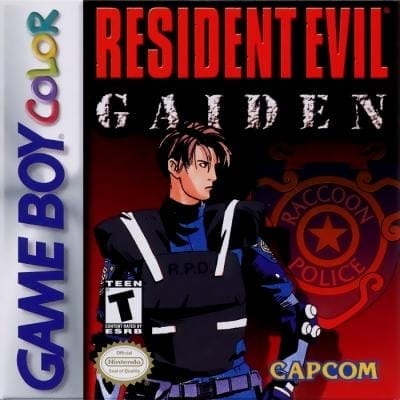
Resident Evil: Gaiden
Resident Evil Gaiden is a 2001 action-adventure game developed by M4 for the Game Boy Color. It was published by Capcom in Japan and North America, and by Virgin Interactive in Europe. Receiving generally mixed reviews by critics, the game marks a departure from other entries in the series, insofar as areas are explored with the playable character seen from a top-down perspective and with battles fought in first-person view. The story revolves around a viral outbreak on a passenger ship and has Leon S. Kennedy and Barry Burton return as protagonists. This game is non-canon, as its plot is contradicted by the main series in key parts, and its events are ignored. The game features three playable characters and consists of exploring areas, collecting items and combating enemies in the process.
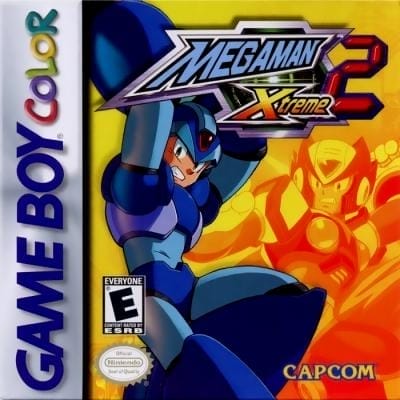
Mega Man Xtreme 2
Mega Man Xtreme 2 is a 2001 platform game developed and published by Capcom for the Game Boy Color. It is a spin-off title in the Mega Man X series and a follow-up to Mega Man Xtreme, which was released the previous year. Mega Man Xtreme 2 is set in the 22nd century between the events of Mega Man X3 and Mega Man X4. The DNA souls of robots known as "Reploids" are being stolen and used to create an army of undead "Mavericks". The "Maverick Hunters" X and Zero quickly spring into action with the help of their young ally Iris. Gameplay in Mega Man Xtreme 2 is similar to that of earlier Mega Man games, retaining most elements from the home-console versions of the series, but adding the ability to switch between characters, use unique abilities and obtain upgrades through "DNA Souls" collected from fallen enemies. Each character has a different set of stages and bosses; defeating the stage's boss will earn the character a special weapon.
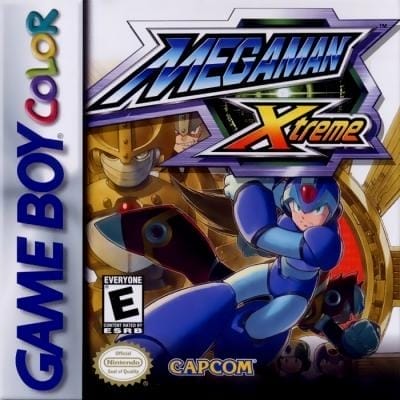
Mega Man Xtreme
Mega Man Xtreme is a 2000 platform game developed and published by Capcom for the Game Boy Color. It is a spin-off title in the Mega Man X series of video games that originated on the Super Nintendo Entertainment System. Mega Man Xtreme takes place within the series timeline during the 22nd century, in which a group of "Maverick" androids "Android (robot)") called the "Shadow Hunters" hack "Hacker (computer security)") into the world's "Mother Computer" system, destabilize all of the networks, and allow other Mavericks to cause rampant destruction all over the world. The heroic "Maverick Hunter" X is tasked with going into cyberspace to relive his past missions and put a stop to the group's plans. Mega Man Xtreme contains the same gameplay as its home console counterparts. An action-platform game, the player must attempt a series of stages, gain various power-ups such as armor parts, and defeat each stage's boss, assimilating its signature weapon.
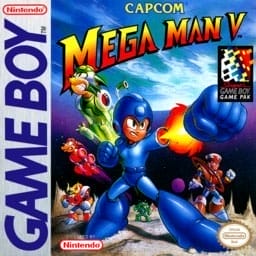
Mega Man V
Mega Man V is a video game developed by Minakuchi Engineering and published by Capcom for the Game Boy. It is the fifth game in the handheld series of the Mega Man "Mega Man (original series)") franchise. The game follows the adventures of the protagonist Mega Man "Mega Man (character)") as he must defend the Earth from a group of powerful robots from outer space called the Stardroids. Mega Man V is unique among the Game Boy Mega Man games as it features original bosses rather than recycling those from the Nintendo Entertainment System (NES) Mega Man games. Mega Man V is an action platformer in which the player selects stages in a non-linear fashion and acquires the weapon of each boss defeated to use as their own. Although it plays nearly identical to other games in the series, Mega Man V features a new default weapon (the powerful "Mega Arm") and introduces Tango, a new assistant character.
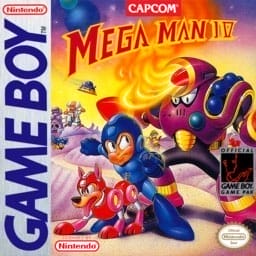
Mega Man IV
Mega Man IV is a 1993 platform game developed by Minakuchi Engineering and published by Capcom for the Game Boy. It is the fourth game in the handheld series of the Mega Man "Mega Man (original series)") franchise. The game continues the quest of the protagonist Mega Man "Mega Man (character)") in the struggle with his long-time nemesis Dr. Wily, who sends out a disruptive radio signal to cause a rampage, citywide destruction from dormant robots. Mega Man IV features the traditional action platforming gameplay of the prior games while introducing one new feature, the ability to purchase items with power-ups found throughout each stage. As with previous Game Boy releases, the game incorporates gameplay elements and bosses from two sequential Nintendo Entertainment System (NES) games: Mega Man 4 and Mega Man 5. The game received positive reviews from critics, with significant praise for its improvements from its predecessors, though its low level of innovation was criticized.
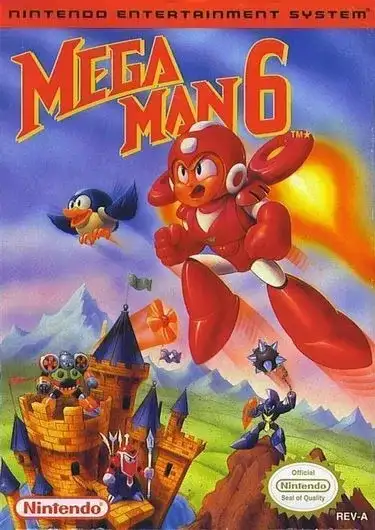
Mega Man 6
Mega Man 6 (stylized as MEGA MAN VI), known in Japan as Rockman 6: The Greatest Battle in History!!, is a 1993 platform game developed and published by Capcom for the Nintendo Entertainment System. It is the sixth installment in the original Mega Man series. It was originally released in Japan by Capcom in 1993, and in North America by Nintendo in 1994. It was included in the Mega Man Anniversary Collection released in 2004. Its first release in Europe and PAL region was June 11, 2013, for the Virtual Console on the Nintendo 3DS, nearly twenty years after the game's initial release. The story of Mega Man 6 opens during a competitive robot fighting tournament with entrants from all around the globe. A villainous figure known as "Mr. X" announces he has reprogrammed the eight powerful finalists with the intent to use them for taking over the world.
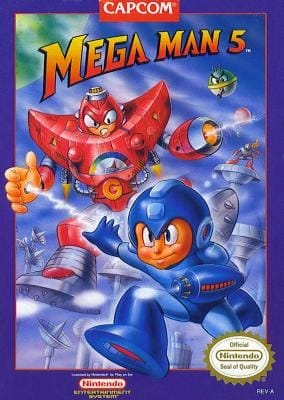
Mega Man 5
Mega Man 5 is a 1992 platform game developed and published by Capcom for the Nintendo Entertainment System. It is the fifth installment of the original Mega Man series and was released in Japan on December 4, 1992. It saw a release during the same month in North America and in 1993 in Europe by Nintendo. It takes place two months after the events of Mega Man 4. Mega Man's brother and ally Proto Man apparently leads a group of menacing robots in attacks on the world and kidnaps his creator Dr. Light, forcing Mega Man to fight against his brother. Assisted by Dr. Cossack, the scientist he met in the previous game, Mega Man has to figure out the truth about what happened and rescue Dr. Light. Mega Man 5 carries over the same graphical style and action-platforming gameplay as the four preceding chapters in the series. The game introduces a new character, Beat, a robotic bird that the player can use as a weapon once a series of eight collectible letters are found.
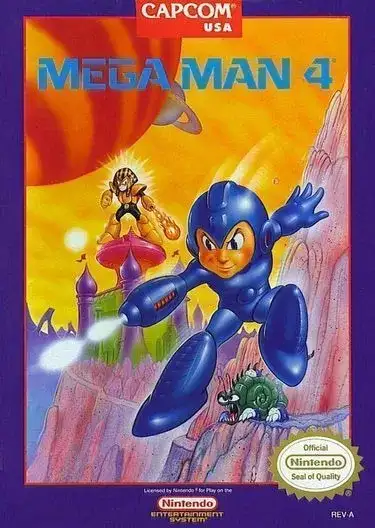
Mega Man 4
Mega Man 4 (stylized as Mega Man IV) is a 1991 platform game developed and published by Capcom for the Nintendo Entertainment System. It is the fourth installment of the original Mega Man series and was originally released in Japan on December 6, 1991. The game was released in North America the following January, and in Europe in August 1993 by Nintendo. The game's story takes place after the third defeat and supposed death of Dr. Wily in Mega Man 3, and features the Earth coming under threat from the mysterious Russian scientist Dr. Cossack and his eight "Robot Masters". Fearing the worst, Dr. Light sends Mega Man "Mega Man (character)") to save the world once again. Mega Man 4 carries on the same action and platforming gameplay as the first three games, in which the player completes a series of stages in any order and adds the weapon of each stage's boss to Mega Man's arsenal.
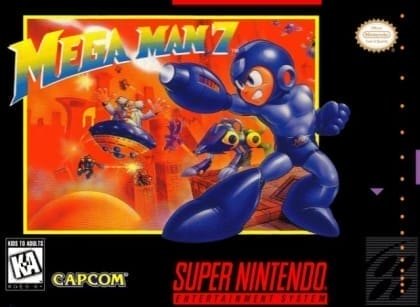
Mega Man 7
Mega Man 7, known in Japan as Rockman 7: Showdown of Destiny!, is a 1995 action game developed and published by Capcom for the Super Nintendo Entertainment System (SNES). It is the seventh game in the original Mega Man series. The game was released in Japan on March 24, 1995 and was localized later in the year in North America and Europe. Picking up 6 months after the events of Mega Man 6, the plot involves the protagonist Mega Man "Mega Man (character)") once again attempting to stop the evil Dr. Wily, who uses a new set of Robot Masters to free himself from captivity and begin wreaking havoc on the world. Along with some help from his old friends, Mega Man finds potential allies in the mysterious robot pair Bass and Treble, who are later revealed to be in league with Wily. In terms of gameplay, Mega Man 7 follows the same play style introduced in the 8-bitNES titles, but updates the graphics and sound of the series for the more powerful SNES.
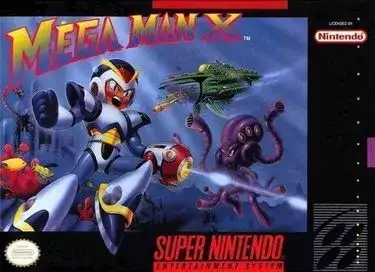
Mega Man X
Mega Man X#cite_note-10) is a 1993 platform game developed and published by Capcom for the Super Nintendo Entertainment System. It was the first Mega Man game for the 16-bit "History of video game consoles (fourth generation)") console and the first game in the Mega Man X series, a spin-off of the original Mega Man series "Mega Man (original series)") that began on the Super NES's predecessor, the Nintendo Entertainment System. The game takes place a century after the original Mega Man series, and is set in a futuristic world populated by both humans and "Reploids", robots capable of thinking, feeling, and growing like their human creators. Because of these complex attributes, many Reploids are prone to destructive, renegade activity and are thereafter referred to as "Mavericks". The plot of the game follows the protagonist X, the last creation of Dr. Light and an android member of a military task force called the "Maverick Hunters".
Browse our collection of 26 Capcom retro games, all playable instantly in your browser. No download required. Play classic games online in your browser and save your progress anytime.