Action
Action games featuring fast-paced gameplay, combat, and physical challenges.
63 games
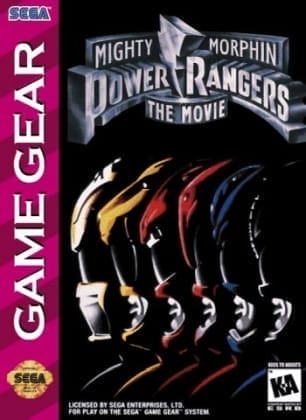
Mighty Morphin Power Rangers: The Movie
Mighty Morphin Power Rangers: The Movie is the title of four different video game adaptations of the film of the same name which were released for the Super NES, Genesis, Game Boy, and Game Gear. While the games are ostensibly based on the film, they also feature characters and plot elements from the second season of the original TV series. Like the previous game versions "Mighty Morphin Power Rangers (video game)") of the original Mighty Morphin Power Rangers, none of the four versions of the movie game are ports of each other. The Super NES version is a side-scrolling action game similar to the previous SNES game based on the series. The game can be played by one or two players with six available characters. Billy and Kimberly return from the previous game along with the introduction of Tommy, as the White Ranger (opposed to appearing as the Green Ranger), and three new rookie rangers, Rocky, Adam, and Aisha, who replace Jason, Zack, and Trini from the original.
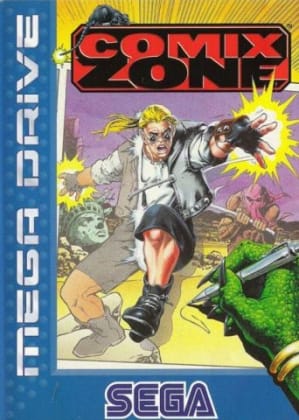
Comix Zone
Comix Zone is a 1995 beat 'em up game developed by Sega Technical Institute (STI) and published by Sega for the Sega Genesis. Set within the panels "Panel (comics)") of a comic book, it follows the comic writer/artist Sketch Turner who, after being transported into the comic by one of his creations, attempts to escape while contending with various threats. The game sees the player traversing six levels "Level (video games)"), where they interact with the comic world and must defeat enemies, or occasionally solve puzzles, to progress. Conceived by STI programmer Peter Morawiec, the concept for the game was originally shown off in 1992 via a demonstration video, entitled Joe Pencil Trapped In The Comix Zone. The concept was greenlit by Sega of America CEO Tom Kalinske and development began on the game in late 1993.
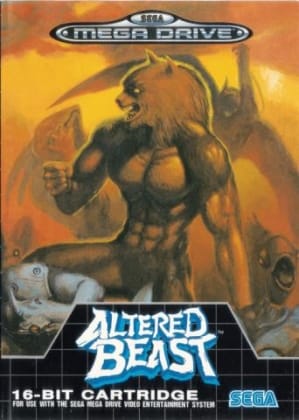
Altered Beast
Altered Beast is a 1988 beat 'em upvideo game developed by Team Shinobi and published by Sega for arcades. Set in Ancient Greece, the game follows a Roman centurion who is resurrected by the Olympian god Zeus to rescue his daughter Athena from Neff, the demonic ruler of the underworld. By collecting three power-ups in a level, the player character can transform into one of five mythical beasts. The game's development was led by Makoto Uchida "Makoto Uchida (game developer)"), and marked his first role as a project lead. Uchida and his team used the System 16arcade system board. Altered Beast was ported to several consoles and home computers, and was the original pack-in game for the Sega Genesis/Mega Drive when the console was launched in North America in 1989 and Europe in 1990. Altered Beast's arcade release and its ports received generally positive reviews, with mainly praising the gameplay and graphics.
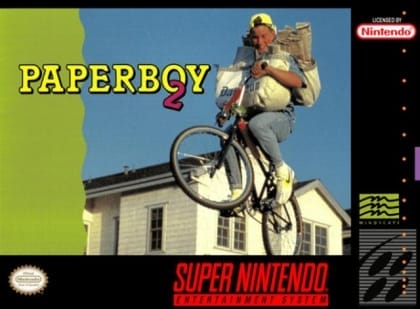
Paperboy 2
Among the four reviewers in Electronic Gaming Monthly, they described the Game Boy version of the game as suffering from the limitations of the size of the Game Boy's screen and the black and white graphics with two reviewers recommending it to fans of the original game.#cite_note-EGMRev-3) Ed Ricketts of Amiga Format gave the Amiga version a 44 percent rating.#cite_note-6)N-Force gave the NES version a 42 percent rating.#cite_note-7) Jonathan Gagnon of Game Players gave the Game Gear version a 5 out of 10.#cite_note-8) Jonathan Davies of Super Play gave the SNES version a 29 percent rating.#cite_note-9) Brett Alan Weiss of AllGame gave the SNES version one and a half stars out of five.#cite_note-10)Total! gave the NES version 50 out of 100, criticizing its poor camera and controls, as well as the music and gameplay.#cite_note-11)Sega Force reviewed the Mega Drive/Genesis version and rated it 55 out of 100.
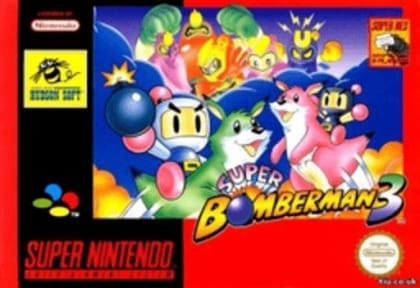
Super Bomberman 3
Super Bomberman 3 is a game released for the Super Nintendo Entertainment System in 1995. It is the third installment in the Super Bomberman series, and the third Bomberman game to be released for the system. Up to five players can play at the same time. The game was released in Japan and the PAL region, but not in North America due to the closure of Hudson Soft USA.
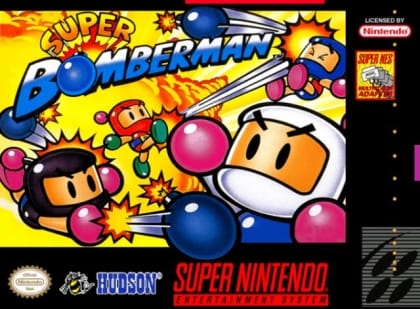
Super Bomberman
Super Bomberman is a 1993 action maze video game developed by Produce! and published by Hudson Soft for the Super Nintendo Entertainment System. Part of the Bomberman series, it is the first game in the series to retain the Bomberman title in Europe, instead of being renamed to Dynablaster or Eric and the Floaters. Super Bomberman spawned the Super Bomberman sub-series, of which seven more entries have been released: Super Bomberman 2 (1994), Super Bomberman 3 (1995), Super Bomberman 4 (1996), Super Bomberman 5 (1997), Super Bomberman R (2017), Super Bomberman R Online (2017), and Super Bomberman R 2 (2023). The game was re-released in 2026 as part of the Super Bomberman Collection compilation.
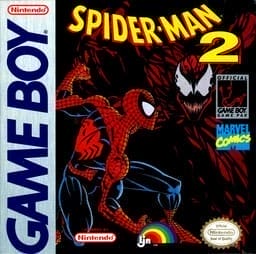
The Amazing Spider-Man 2
The Amazing Spider-Man 2 (internationally titled as The Amazing Spider-Man 2: Rise of Electro) is a 2014 American superhero film based on the Marvel Comics character Spider-Man. The sequel to The Amazing Spider-Man "The Amazing Spider-Man (film)") (2012), it was directed by Marc Webb and written by Alex Kurtzman, Roberto Orci, and Jeff Pinkner from a story by Kurtzman, Orci, Pinkner and James Vanderbilt. Andrew Garfield stars as Peter Parker / Spider-Man "Peter Parker (The Amazing Spider-Man film series)"), alongside Emma Stone, Jamie Foxx, Dane DeHaan, Campbell Scott, Embeth Davidtz, Colm Feore, Paul Giamatti and Sally Field. In the film, Peter tries to protect his girlfriend, Gwen Stacy "Gwen Stacy (The Amazing Spider-Man film series)"), as he investigates his parents' death while also encountering the supervillain Electro "Max Dillon (film character)") and his childhood friend Harry Osborn.
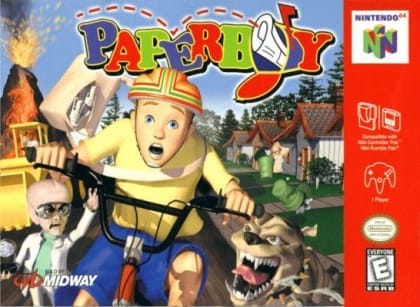
Paperboy
Paperboy is a 1985 action video game developed and published by Atari Games for arcades.#cite_note-history-18)#cite_note-atari_production99-1) The player takes the role of a paperboy who delivers a fictional newspaper called The Daily Sun to houses on a street while riding his bicycle.#cite_note-19) The arcade version featured bike handlebars as the controller.#cite_note-rgamer-20) The game was widely ported to home systems beginning in 1986, and was followed by the computer and console-exclusive sequel Paperboy 2 in 1991. The player assumes the role of a paperboy on a bicycle delivering newspapers along a suburban street in the United States,#cite_note-rgamer-20)#cite_note-retrogamer39-21) which is displayed in an oblique projection view. Controls consist of a set of handlebars that can be turned/tilted to steer and control speed, with mounted buttons that can be pressed to throw papers.
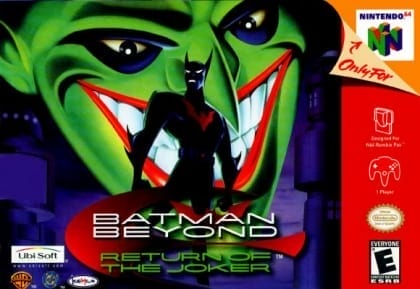
Batman Beyond: Return of the Joker
It is the middle of the 21st century, 20 years since Batman was publicly last seen in Gotham City.#cite_note-9) The metropolitan area's research and development lab, named Air & Space, is taken over by a gang of self-described "Jokerz", which Terry McGinnis, the new Batman replacing the retired Bruce Wayne, is alerted to via an emergency signal.#cite_note-10) Batman gets to the lab and finds Benjamin Knox and one of the Jokerz; Benjamin instructs the gang member to handle the console while he fights Batman.#cite_note-11) The member screws it up, and all of the gang members leave with only the memory board.#cite_note-12) Terry reveals this is the third time a stealing of high-tech equipment has occurred, making Bruce suspect a group named the Jokerz are responsible.#cite_note-13) It is then revealed the Joker has been revived and is leading the group.
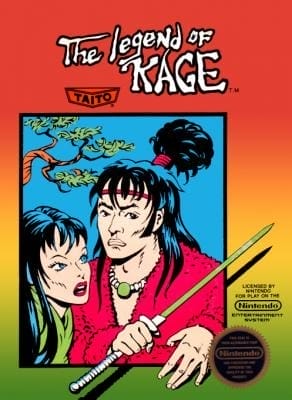
The Legend of Kage
The Legend of Kage is a 1985 hack and slash platform game developed and published by Taito for arcades. The player controls the ninja Kage, with the objective being to get through five stages in order to save the princess Kirihime. These stages are littered with enemies, but Kage has various skills and weapons on his hands in order to get through them. The arcade release was considered a success for Taito, and exceeded sales expectations at the time of its release. It has been ported to a variety of home systems, has had sequels and spinoffs, and has been featured on various Taito compilations.
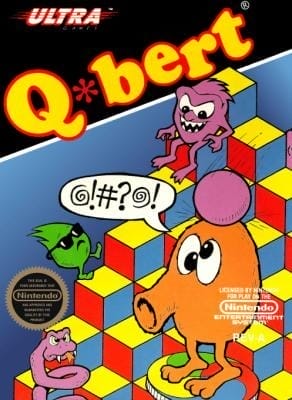
Q*bert
**Q*bert* () is a 1982 actionvideo game developed and published by Gottlieb for arcades. It is a 2Daction game with puzzle elements that uses isometric graphics to create a pseudo-3D effect. The objective of each level in the game is to change every cube in a pyramid to a target color by letting Q*bert, the on-screen character, hop on top of the cube while avoiding obstacles and enemies. Players use a joystick to control the character. The game was conceived by Warren Davis and Jeff Lee "Jeff Lee (video game artist)"), the latter of whom designed the titular protagonist and original concept, which was further developed and implemented by Davis. Q*bert was developed under the project name Cubes. Q*bert was well-received in arcades and among critics. The game was Gottlieb's most successful video game and is among the most recognized brands from the golden age of arcade games. It has been ported to numerous platforms.
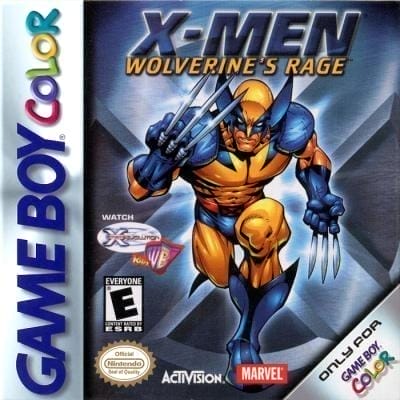
X-Men: Wolverine's Rage
Text is available under the Creative Commons Attribution-ShareAlike 4.0 License; additional terms may apply. By using this site, you agree to the Terms of Use and Privacy Policy. Wikipedia® is a registered trademark of the Wikimedia Foundation, Inc., a non-profit organization. Privacy policy About Wikipedia Disclaimers Contact Wikipedia Legal & safety contacts Code of Conduct Developers Statistics Cookie statement Mobile view Search Search - Toggle the table of contents X-Men: Wolverine's Rage [](http://en.wikipedia.org/wiki/X-Men:_Wolverine's_Rage#)[](http://en.wikipedia.org/wiki/X-Men:_Wolverine's_Rage#)[](http://en.wikipedia.org/wiki/X-Men:_Wolverine's_Rage#)[](http://en.wikipedia.org/wiki/X-Men:_Wolverine's_Rage#)[](http://en.wikipedia.org/wiki/X-Men:_Wolverine's_Rage#)[](http://en.wikipedia.org/wiki/X-Men:_Wolverine's_Rage#)[](http://en.wikipedia.
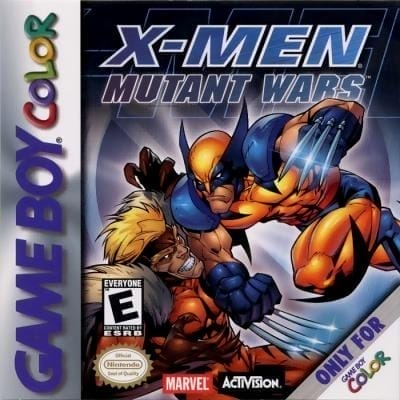
X-Men: Mutant Wars
X-Men: Mutant Wars is a side-scrolling beat 'em up game for Game Boy Color released in 2000. It is the second X-Men titled released for the system. It was released to coincide with the release of the X-Men film on DVD. X-Men: Mutant Wars was followed by a sequel in 2001 titled X-Men: Wolverine's Rage.
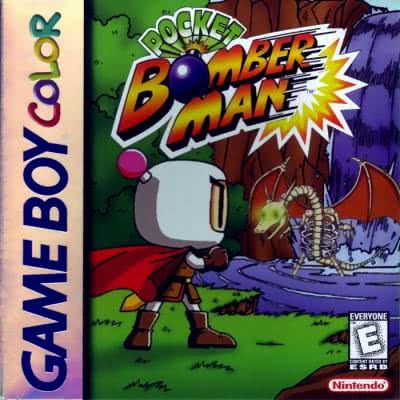
Pocket Bomberman
In contrast to the overhead view of other Bomberman titles, Pocket Bomberman features sidescrolling platformer gameplay. Like other Bomberman games, Bomberman must defeat all enemies in each stage to advance. The game features a total of 5 worlds spanning 25 levels. Each world follows a different theme, including forest, underwater, cloudtops and a dark underworld. At the end of each world is a boss fight. There is one mini game called Jump Mode in which players must guide Bomberman through an Easy, Medium, or Hard course. Bomberman will constantly jump and the player can only place bombs in this mode.
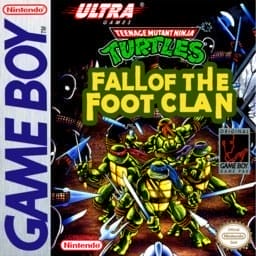
Teenage Mutant Ninja Turtles: Fall of the Foot Clan
Teenage Mutant Ninja Turtles: Fall of the Foot Clan is a 1990 action-platform game developed and published by Konami for the Game Boy. The game is based on the 1987 _Teenage Mutant Ninja Turtles_television series "Teenage Mutant Ninja Turtles (1987 TV series)"). The Turtles' first Game Boy game is a platforming-style game, where Leonardo, Michelangelo, Donatello, and Raphael must battle against Krang and Shredder and save their friend April O'Neil in the process. The game was re-released as part of Teenage Mutant Ninja Turtles: The Cowabunga Collection in 2022.
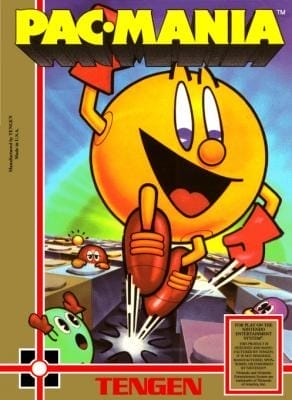
Pac-Mania
Pac-Mania#cite_note-8) is a 1987 mazevideo game developed and published by Namco for arcades. It was released by Atari Games in North America. In the game, the player controls Pac-Man "Pac-Man (character)") as he must eat all of the dots while avoiding the colored ghosts that chase him in the maze. Eating large flashing "Power Pellets" will allow Pac-Man to eat the ghosts for bonus points, which lasts for a short period of time. A new feature to this game allows Pac-Man to jump over the ghosts to evade capture. It is the ninth title in the Pac-Man video game series and was the last one developed for arcades up until the release of Pac-Man Arrangement in 1996. Development was directed by Pac-Man creator Tōru Iwatani. Pac-Mania gained a highly positive critical reception for its originality and gameplay. It was nominated for "Best Coin-Op Conversion of the Year" at the Golden Joystick Awards in 1987, although it lost to Taito's Operation Wolf.
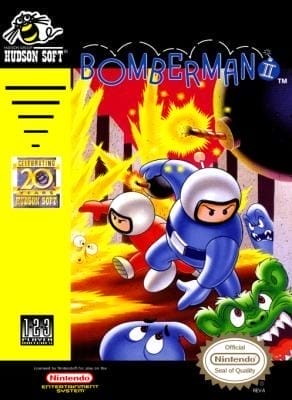
Bomberman II
Bomberman II, released in Europe and Australia as Dynablaster, is a maze video game developed and published by Hudson Soft for the Nintendo Entertainment System originally in Japan and Europe in 1991 and later in North America in February 1993. The Japanese version was re-released in 2026 as part of the Super Bomberman Collection compilation.
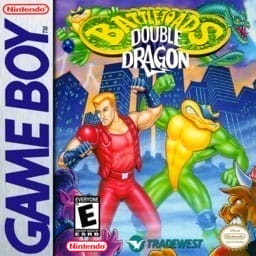
Battletoads & Double Dragon: The Ultimate Team
Battletoads/Double Dragon (fully titled Battletoads & Double Dragon - The Ultimate Team) is a 1993 beat 'em up developed by Rare and published by Tradewest. It was originally released for the Nintendo Entertainment System and later ported to the Mega Drive/Genesis, Super NES, and Game Boy. The SNES version was released on the Nintendo Classics service in September 2024; it was the game's first re-release as it was not released on the Rare Replay collection. The Ultimate Team is a crossover of Technos Japan's Double Dragon and Rare's Battletoads game franchises, although Technos had little or no credited involvement in production beyond providing the Double Dragon license. The game features the characters from the Double Dragon series, Billy and Jimmy Lee, two young martial arts experts; also included are the three humanoid toad protagonists from the Battletoads game. It is also the first Battletoads game to feature all three toads as playable characters.
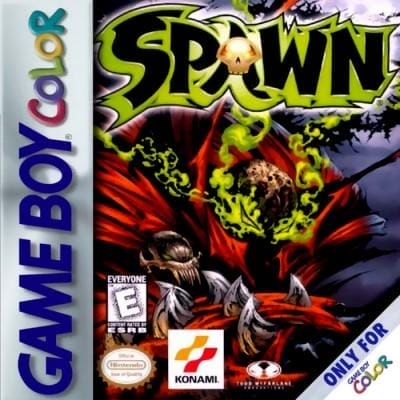
Spawn
Spawn is an action-adventure platformer with some shooter elements. The player controls Spawn and must guide him through four stages of combat, navigating various environmental obstacles while defeating enemies, various thugs and occasional bosses. In each of the stages, Spawn must eliminate the enemies by punching, kicking, and using his weapons; a chain, which unleashes a powerful attack, a gun, and a machine gun. The player can find and collect items along the way, such as a "Spawn" symbol that restores a small amount of Spawn's health, a "G" symbol for gun ammunition, and an "M" symbol for machine gun ammunition. The game contains both horizontal and vertical stages, as well as a motorcycle chase stage. There are three difficulty modes. In each mode, enemies can take more damage. One punch will knock out any minor enemy in easy mode and the player can start at any stage. It takes two punches in normal mode and the player must play through from stage one.
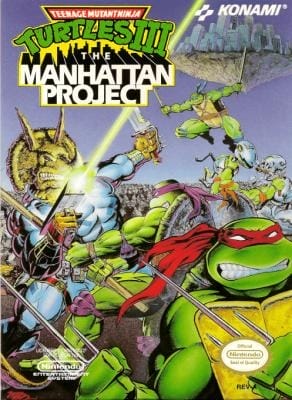
Teenage Mutant Ninja Turtles III: The Manhattan Project
Teenage Mutant Ninja Turtles III: The Manhattan Project is a 1991 beat 'em up game developed and published by Konami for the Family Computer (Famicom) in Japan and for the Nintendo Entertainment System in North America in 1992. It is the third video game iteration of the Teenage Mutant Ninja Turtles for the NES. The game features play mechanics similar to the previous game, _Teenage Mutant Ninja Turtles II: The Arcade Game#Nintendo\_Entertainment\System "Teenage Mutant Ninja Turtles (arcade game)"), but it is an original title for the NES without any preceding arcade version. It is based on the 1987 Teenage Mutant Ninja Turtles "Teenage Mutant Ninja Turtles (1987 TV series)") animated series, being released after the show's 5th season. The game was re-released as part of Teenage Mutant Ninja Turtles: The Cowabunga Collection in 2022. The game begins with the Turtles spending their vacation in Key West, Florida.
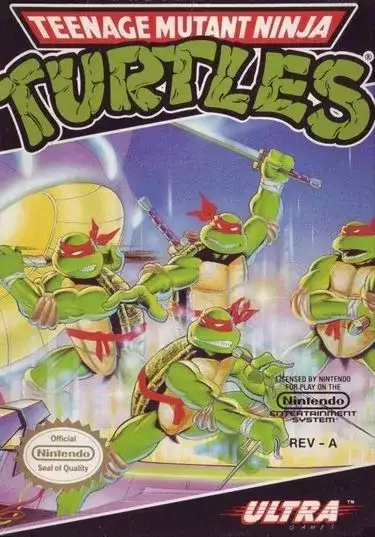
Teenage Mutant Ninja Turtles
Teenage Mutant Ninja Turtles is a 2003 beat 'em up game developed and published by Konami, based on the 2003 Teenage Mutant Ninja Turtles TV series "Teenage Mutant Ninja Turtles (2003 TV series)"). It loosely adapts the events of the show's first season. The game is the first Teenage Mutant Ninja Turtles video game to be developed by Konami in a roughly decade, following the release of Teenage Mutant Ninja Turtles: Tournament Fighters (1993). It was released for GameCube, PlayStation 2, Xbox and Windows in late 2003 in North America, followed by a European release the following April. A demo was also available via a special edition bonus disc packaged with Mario Kart: Double Dash (2003) in North America.#cite_note-2)#cite_note-3) The game received two sequels: Teenage Mutant Ninja Turtles 2: Battle Nexus in 2004, and Teenage Mutant Ninja Turtles 3: Mutant Nightmare in 2005. The player can play as either Leonardo, Donatello, Michelangelo or Raphael.
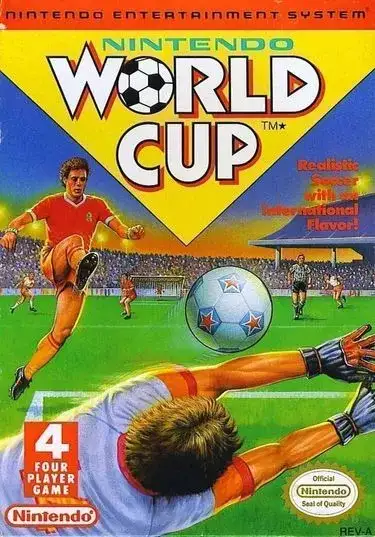
Nintendo World Cup
Nintendo World Cup, released in Japan as Nekketsu High School Dodgeball Club: Soccer Story, is a 1990 soccer video game developed by Technōs Japan for the Nintendo Entertainment System. It was localized and released outside Japan by Nintendo, with a Game Boy port also being released. It is the fourth installment of the Kunio-kun series. Ports for the PC Engine and Mega Drive were also released in Japan.
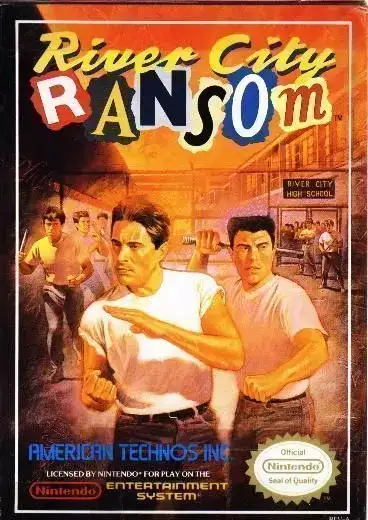
River City Ransom
Downtown Nekketsu Monogatari, released as River City Ransom in North America and Street Gangs in PAL regions, is a 1989 action-adventure beat 'em up video game developed and published by Technōs Japan for the Nintendo Entertainment System. It is the third installment of the Kunio-kun series released for the NES, preceded by Renegade and Super Dodge Ball, and the first to be developed specifically for the system. Gameplay is similar to that of Renegade, but set in a non-linear open world, a first for the series. It was the first console game published by the developer's North American subsidiary American Technos, without input from previous series publisher Taito. Outside Japan, River City Ransom was not highly successful when initially released. However, it received positive reviews from critics for its innovative gameplay and humor, retaining a dedicated cult following to this day, while also making the Kunio-kun series prominent in the beat 'em up space.
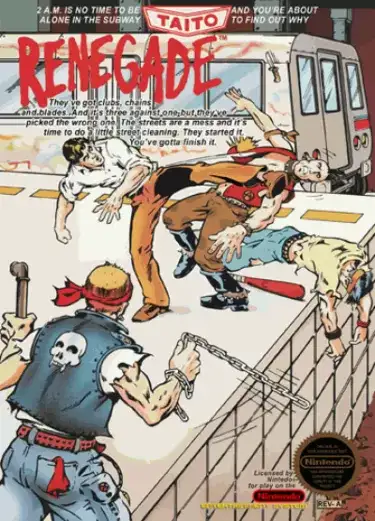
Renegade
Nekketsu Kōha Kunio-kun#cite_note-12), released as Renegade in the West, is a 1986 beat 'em up video game developed by Technōs Japan and published by Taito for arcades.#cite_note-GM-13) In the original Japanese version, the game revolves around Kunio, a high school delinquent who must stand up against a series of rival gangs that are targeting his classmate Hiroshi. In the Western version, the player controls a street brawler who must face four different gangs in order to rescue his girlfriend, who is being held captive by a mob boss. Conceptualized and designed by Yoshihisa Kishimoto, the game was semi-autobiographical, partly based on his own teenage high school years getting into daily fights, with Kunio partly based on himself. He also drew inspiration from the Bruce Lee martial arts film Enter the Dragon (1973), which inspired the game's "knock-down-drag-out" fights, along with his own altercations as a youth.
Browse our collection of 63 Action retro games, all playable instantly in your browser. No download required. Play classic games online in your browser and save your progress anytime.