Pokémon
22 games — Pokémon
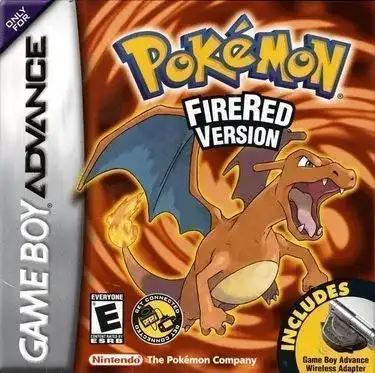
Pokémon Fire Red
As with almost all Pokémon role-playing games released for handheld consoles, FireRed and LeafGreen are in a third-person, overhead perspective. The main screen is an overworld, in which the player navigates the protagonist. Here, a menu interface may be accessed, in which the player may configure their Pokémon, items, and gameplay settings. When the player encounters a wild Pokémon or is challenged by a trainer, the screen switches to a turn-based battle screen that displays the player's Pokémon and the engaged Pokémon. During a battle, the player may select a move for their Pokémon to perform, use an item, switch their active Pokémon, or attempt to flee (in wild battles only). All Pokémon moves have power points (PP); when a Pokémon tries to perform a move while awake, the move's PP is reduced by 1. When the PP of a move hits zero, the Pokémon is not able to use that move.

Pokémon Sword and Shield
Pokémon Sword and Pokémon Shield are 2019 role-playing video games developed by Game Freak and published by The Pokémon Company and Nintendo for the Nintendo Switch console. They are the first instalments in the 8th generation of the Pokémon video game series "Pokémon (video game series)"). First teased at E3 2017 and announced in February 2019, the games were released on 15 November 2019. The games were accompanied by a downloadable content (DLC) expansion pass consisting of Part 1—The Isle of Armor (released in June 2020) and Part 2—The Crown Tundra (October 2020); its launch marked the first ever DLC released as part of the Pokémon video game series instead of an improved version.
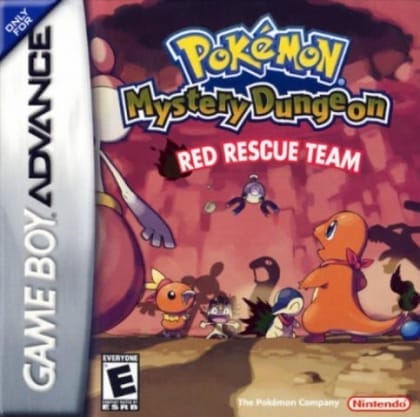
Pokémon Mystery Dungeon: Red Rescue Team
Pokémon Mystery Dungeon: Blue Rescue Team and Pokémon Mystery Dungeon: Red Rescue Team are a matched pair of Pokémon video games for the Nintendo DS and Game Boy Advance, respectively. The games were developed by Chunsoft and published by The Pokémon Company and Nintendo. Red Rescue Team was the last Pokémon game released for the Game Boy Advance. The two versions are mostly identical, with Blue Rescue Team taking advantage of the dual-screen features and increased graphical and sound capabilities of the Nintendo DS. The game has six Pokémon exclusive to each version. Mystery Dungeon differs from the mainline games in that the player character is a Pokémon rather than a trainer. Similar to the other Mystery Dungeon titles, the roguelike gameplay revolves around randomly changing dungeons which need to be explored by the player and their partner Pokémon using turn-based moves.
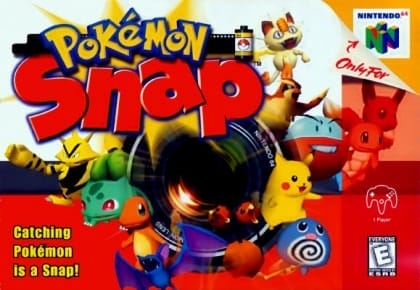
Pokémon Snap
Pokémon Snap is a 1999 photographyvideo game developed by HAL Laboratory and published by Nintendo for the Nintendo 64. It was first released in Japan in March 1999 and was later released in July 1999 in North America and in September 2000 for PAL regions. It is a spin-off "Spin-off (media)") game in the Pokémon "Pokémon (video game series)") series, being one of the first console-based games for it, and featuring many Pokémon rendered for the first time in real-time 3D. The game was re-released for the Wii's Virtual Console in December 2007, for the Wii U's Virtual Console in 2016, and for the Nintendo Classics service in June 2022. Originally announced as a Nintendo 64DD title, the development of Pokémon Snap was moved to the Nintendo 64 due to the 64DD's delays. The gameplay is similar to other first-person games, viewing from the perspective of protagonist Todd Snap as he moves automatically on a rail.
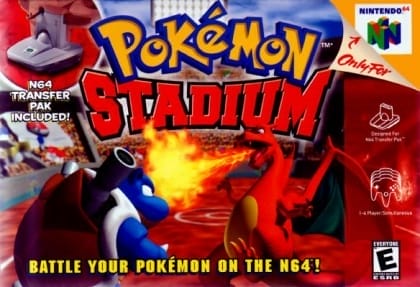
Pokémon Stadium
Pokémon Stadium is a 1999 strategy video game developed and published by Nintendo for the Nintendo 64. The gameplay revolves around a 3D turn-based battling system using the 151 Pokémon from the Game Boy games Pokémon Red, Blue, and Yellow, with several in-game challenges for players to overcome. The game includes four "Cups", each of which is a series of three-on-three Pokémon battles against an ordered lineup of opponents. The "Gym Leader Castle" mode involves battles against several boss opponents who appeared in the Game Boy games. Pokémon Stadium also features mini-games and numerous features available through its compatibility with Pokémon Red, Blue, and Yellow. Using the Transfer Pak accessory that was bundled with the game, players are able to view, organize, store, trade, and battle using Pokémon uploaded from Pokémon Red, Blue, and Yellow. It was the first Stadium title released in Western regions, succeeding the Japan-only 1998 Nintendo 64 release Pocket Monsters Stadium.
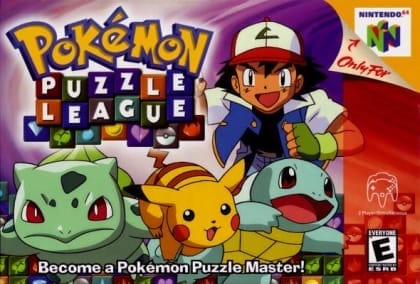
Pokémon Puzzle League
Pokémon Puzzle League is a puzzle video game in the Puzzle League series developed by Nintendo Software Technology and published by Nintendo for the Nintendo 64. Released in North America on September 25, 2000, and in Europe on March 2, 2001, its Puzzle League-based gameplay has a focus on puzzle-based strategy in the game's grid-based format. To advance to new levels, players are required to combat the game's trainers and gym leaders, similar to the ones featured in Pokémon Red, Blue, and Yellow. One of several games based on the Pokémon anime, it features lead protagonist Ash Ketchum, his Pikachu, his companions Brock and Misty, the Kanto Gym Leaders, and other characters from the series. Pokémon Puzzle League received mostly positive reviews from critics. Pokémon Puzzle Challenge, a companion puzzle game, was released for the Game Boy Color in 2000. Re-releases of the game followed in 2008 for the Wii via Virtual Console, and in 2022 on the Nintendo Classics service.
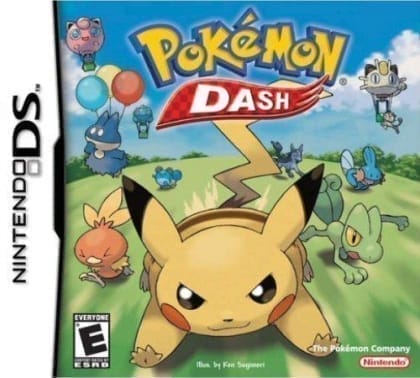
Pokémon Dash
Pokémon Dash is a racing video game developed by Ambrella and published by The Pokémon Company and Nintendo for the Nintendo DS. It was a launch title both in Japan and Europe. Dash was released in Japan on December 2, 2004; Europe on March 11, 2005; North America on March 14, 2005; and Australia on April 7, 2005. It was the first Pokémon game to be released for the Nintendo DS. The player uses a stylus to control a Pikachu and race through checkpoints. After players have passed each of the number of checkpoints in order, the course is completed. Dash has multiplayer support, and can connect with 6 different devices.
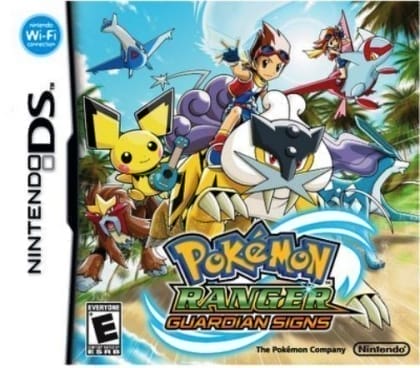
Pokémon Ranger: Guardian Signs
Pokémon Ranger: Guardian Signs (ポケモンレンジャー 光の軌跡, Pokemon Renjā Hikari no Kiseki; lit. "Pokémon Ranger: Tracks of Light") is an action role-playingvideo game developed by Creatures Inc. and published by The Pokémon Company in Japan and by Nintendo worldwide for the Nintendo DS. It is the sequel to Pokémon Ranger and Pokémon Ranger: Shadows of Almia, and the third installment in the Pokémon Ranger series. It was released in Japan on March 6, 2010, in North America on October 4, 2010, and in Europe on November 5, 2010, and was later released on the European Wii U Virtual Console on June 9, 2016. Gameplay revolves around capturing Pokémon with the Capture Styler by drawing circles around them. The game received mixed or average reviews, holding a score of 68 on Metacritic and 69% on GameRankings.
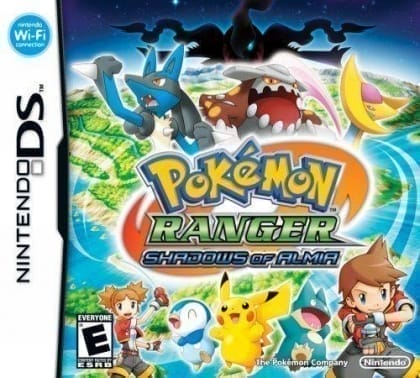
Pokémon Ranger: Shadows of Almia
Pokémon Ranger: Shadows of Almia (ポケモンレンジャー バトナージ, Pokemon Renjā Batonāji; lit. "Pokémon Ranger: Vatonage") is an action role-playing video game developed by Creatures Inc. and published by The Pokémon Company and Nintendo for the Nintendo DS video game console. It was announced in the January 2008 issue of CoroCoro and was released in Japan on March 20, 2008. It was announced at E3 2008 that the game would be released in the United States under the title Shadows of Almia on November 10, 2008. It was announced on September 25 that the game would be released in Europe under the title Shadows of Almia on November 21, 2008. It was released on the European Wii U Virtual Console on June 9, 2016, and was released on the North American Wii U Virtual Console on August 4, 2016. The game features 270 Pokémon, including new Pokémon which were not featured in the original Pokémon Ranger, from Pokémon Diamond and Pearl. The game utilized the Nintendo Wi-Fi Connection to download new missions.
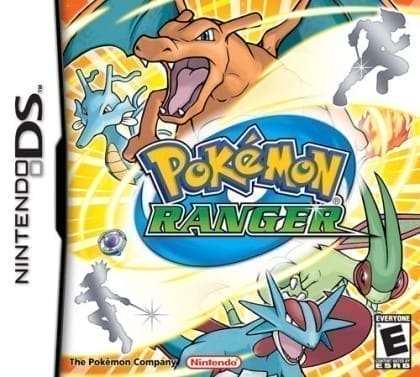
Pokémon Ranger
This game is a spin-off of the mainline series set in the Fiore region, featuring a new gameplay format and storyline. The battle system and capturing mechanics are different. Rather than conquering Pokémon Gyms, the Elite Four, and Champion, the player completes missions to advance the plot. It is compatible with Pokémon Diamond and Pearl, HeartGold and SoulSilver, and Platinum, allowing players to transfer the mythical PokémonManaphy’s egg to those games. Upon release, Pokémon Ranger received mixed reviews. It was praised for its lengthy mission-based plot but received various criticisms, such as for its use of player-produced sound as a game mechanic.
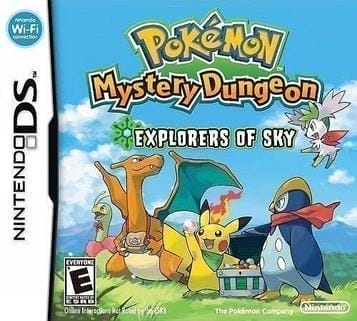
Pokemon Mystery Dungeon: Explorers of Sky
Pokémon Mystery Dungeon: Explorers of Sky is an enhanced version of Pokémon Mystery Dungeon: Explorers of Time and Explorers of Darkness released for the Nintendo DS in 2009, developed by Chunsoft and published by The Pokémon Company and Nintendo. Referred to as the definitive edition to the aforementioned games, additional features include the addition of the missing Generation IV Pokémon, further character development for a few side characters in content known as Special Episodes, and a few quality of life improvement for options, items, and other gameplay and system related features. In terms of gameplay and premise, Explorers of Sky is largely similar to its predecessors, where a human-turned-Pokémon joins an exploration team, explores shifting dungeons, and fights hostile Pokémon through turn-based combat. The three games had accumulated worldwide sales in excess of 5.9 million copies in 2010, then 6.37 million copies after 2010.
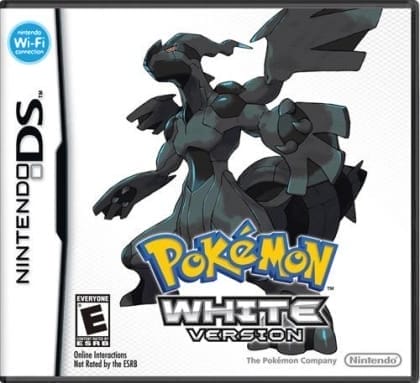
Pokémon White
Pokémon Black Version and Pokémon White Version are 2010 role-playing video games developed by Game Freak and published by The Pokémon Company and Nintendo for the Nintendo DS. They are the first installments in the fifth generation of the Pokémon video game series. First released in Japan on 18 September 2010, they were later released in Europe, North America and Australia in 2011. Sequels to Black and White, Pokémon Black 2 and Pokémon White 2, were released for the Nintendo DS in 2012. Similar to previous installments of the series, the two games follow the journey of a young Pokémon Trainer through the region of Unova, as they train Pokémon used to compete against other Trainers while thwarting the schemes of the criminal organization Team Plasma.
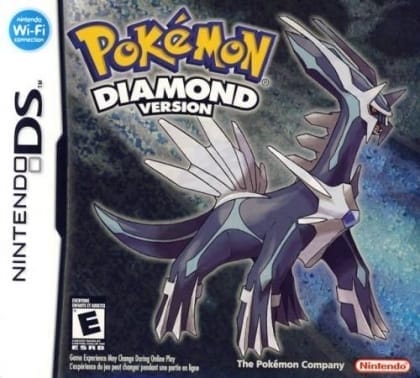
Pokémon Diamond
2006 video games "Diamond and Pearl" and "Pokémon Diamond" redirect here. For the bootleg Game Boy Color game sold as Pokémon Diamond, see Keitai Denjū Telefang § Piracy. For other uses, see Diamond and Pearl (disambiguation) "Diamond and Pearl (disambiguation)"). Pokémon Diamond Version and Pokémon Pearl Version are role-playing video games developed by Game Freak and published by The Pokémon Company and Nintendo for the Nintendo DS in 2006. They are the first installments in the fourth generation of the Pokémon video game series "Pokémon (video game series)"). They were first released in Japan on September 28, 2006, and released in North America, Australia, and Europe in 2007. Pokémon Platinum, a third version, was released two years later in each region. Remakes titled Pokémon Brilliant Diamond and Shining Pearl were released for the Nintendo Switch worldwide on November 19, 2021. A prequel, Pokémon Legends: Arceus, was released for the Nintendo Switch on January 28, 2022.
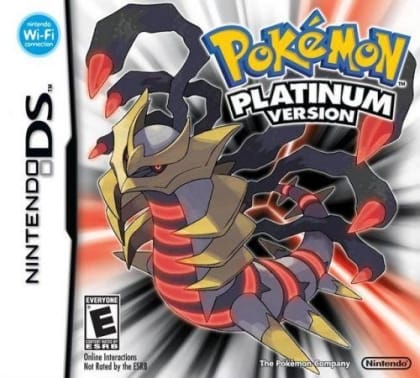
Pokémon Platinum
Pokémon Platinum Version is a 2008 role-playing video game developed by Game Freak and published by The Pokémon Company and Nintendo for the Nintendo DS. The game is an enhanced version of the 2006 titles Pokémon Diamond and Pearl and is part of the fourth generation of the Pokémon video game series "Pokémon (video game series)"). It was released in Japan in September 2008 and internationally throughout 2009. In Pokémon Platinum, players control either Lucas or Dawn and begin with one of three Pokémon provided by Professor Rowan. The mascot Pokémon is Giratina, which plays a central role in the story. While Giratina had only one form in Diamond and Pearl, it gains a new "Origin Form" in Platinum, introduced alongside the Distortion World, a new area featuring altered physics compared with the Sinnoh region where the game takes place.
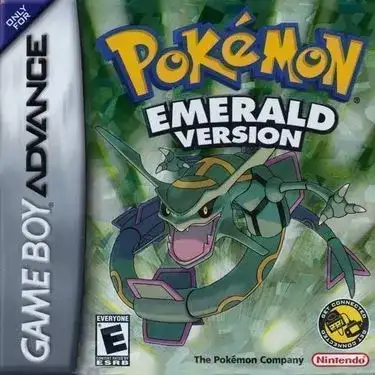
Pokémon Emerald
Pokémon Emerald Version is a 2004 role-playing video game developed by Game Freak and published by The Pokémon Company and Nintendo for the Game Boy Advance. It was first released in Japan in 2004, and was later released internationally in 2005. It is the fifth version, after both Pokémon Ruby and Sapphire and Pokémon FireRed and LeafGreen, and is the final game of the third generation of the Pokémon video game series "Pokémon (video game series)"). The gameplay and controls are largely the same as the previous games in the series; players control a Pokémon trainer from an overhead perspective. As with Ruby and Sapphire, the player's general goal is to explore the Hoenn Region and conquer a series of eight Pokémon Gyms in order to challenge the Elite Four and the Hoenn League Champion, while the main subplot is to defeat two criminal organizations attempting to harness a legendary Pokémon's power for their own goals.
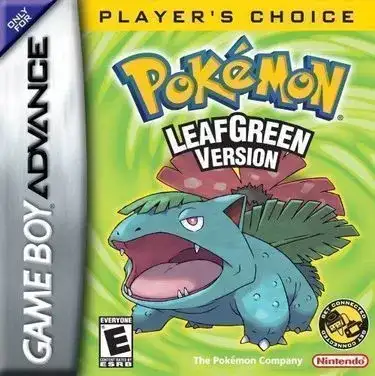
Pokémon LeafGreen
As with almost all Pokémon role-playing games released for handheld consoles, FireRed and LeafGreen are in a third-person, overhead perspective. The main screen is an overworld, in which the player navigates the protagonist. Here, a menu interface may be accessed, in which the player may configure their Pokémon, items, and gameplay settings. When the player encounters a wild Pokémon or is challenged by a trainer, the screen switches to a turn-based battle screen that displays the player's Pokémon and the engaged Pokémon. During a battle, the player may select a move for their Pokémon to perform, use an item, switch their active Pokémon, or attempt to flee (in wild battles only). All Pokémon moves have power points (PP); when a Pokémon tries to perform a move while awake, the move's PP is reduced by 1. When the PP of a move hits zero, the Pokémon is not able to use that move.
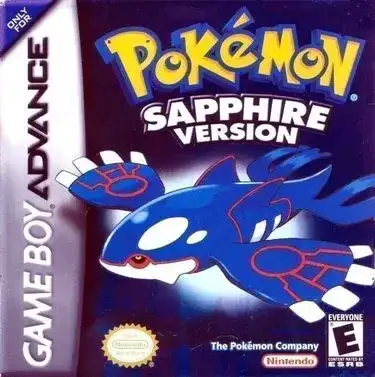
Pokémon Sapphire
Pokémon Ruby Version and Pokémon Sapphire Version are role-playing video games developed by Game Freak and published by The Pokémon Company and Nintendo for the Game Boy Advance. They are the first installments in the third generation of the Pokémon video game series, also known as the "advanced generation". After years of Nintendo being the sole publisher of the franchise in all regions, The Pokémon Company co-published the games for the first time since the establishment of the joint-owned company in 1998. They were first released in Japan in late 2002, and internationally in 2003. Pokémon Emerald, a third version, was released two years later in each region. Remakes of the two games, titled Pokémon Omega Ruby and Alpha Sapphire, were released for the Nintendo 3DS worldwide in November 2014, exactly twelve years to the date of the original Ruby and Sapphire release date, with the exception of Europe, where it released a week later.
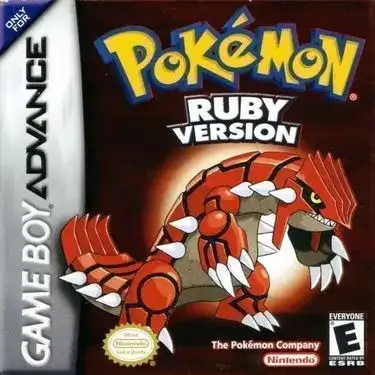
Pokémon Ruby
Pokémon Ruby Version and Pokémon Sapphire Version are role-playing video games developed by Game Freak and published by The Pokémon Company and Nintendo for the Game Boy Advance. They are the first installments in the third generation of the Pokémon video game series "Pokémon (video game series)"), also known as the "advanced generation". After years of Nintendo being the sole publisher of the franchise in all regions, The Pokémon Company co-published the games for the first time since the establishment of the joint-owned company in 1998. They were first released in Japan in late 2002, and internationally in 2003. Pokémon Emerald, a third version, was released two years later in each region. Remakes of the two games, titled Pokémon Omega Ruby and Alpha Sapphire, were released for the Nintendo 3DS worldwide in November 2014, exactly twelve years to the date of the original Ruby and Sapphire release date, with the exception of Europe, where it released a week later.
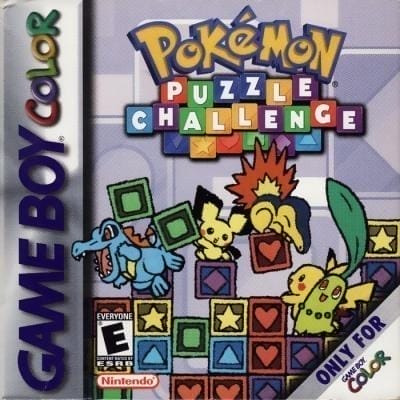
Pokémon Puzzle Challenge
Pokémon Puzzle Challenge is a puzzle video game developed by Intelligent Systems and published by Nintendo for the Game Boy Color. It was released in Japan on September 21, 2000; in North America on December 4, 2000; and in PAL regions on June 15, 2001, it is the second Pokémon-themed entry in the Puzzle League series. While its Nintendo 64 counterpart Pokémon Puzzle League is visually based on the Pokemon anime "Pokémon (TV series)"), Puzzle Challenge instead draws inspiration from the Pokémon Gold and Silver games. The game features multiple modes of play and support for competitive play between two players. Puzzle Challenge was later digitally re-released via the Nintendo 3DS's Virtual Console line on November 6, 2014.
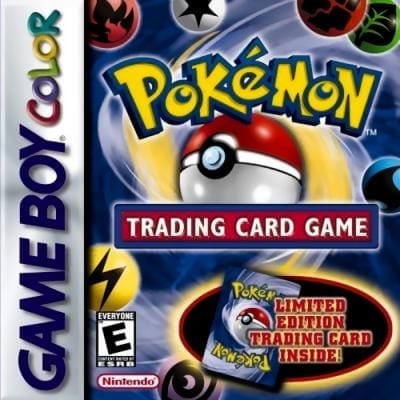
Pokémon Trading Card Game
The Pokémon Trading Card Game is a strategy-based card game that is usually played on a designated playmat or digitally on an official game client (usually Pokémon Trading Card Game Live) where two players (assuming the role of Pokémon Trainer) use their Pokémon to battle one another. Pokémon that have sustained enough damage from attacks–that reaches or exceeds its HP–is referred to as being "Knocked Out", granting the opponent a prize card; however, powerful card mechanics like Pokémon-V and Pokémon ex (which have higher HP and are harder to "Knock Out") grant extra prize cards when Knocked Out. Taking all six prize cards is the most common win condition. Other ways to win are by "Knocking Out" or by removing all opponent's Pokémon in play–the Active and those on the Bench (i.e.
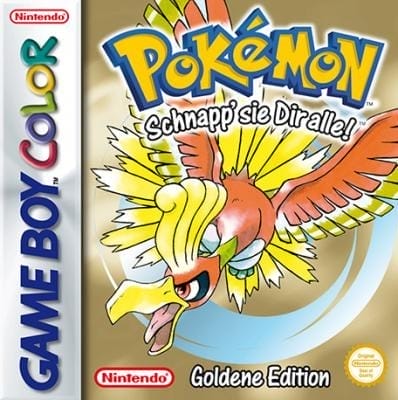
Pokémon Gold
1999 video games Pokémon Gold Version and Pokémon Silver Version are 1999 role-playing video games developed by Game Freak and published by Nintendo for the Game Boy Color. They are the first installments in the second generation of the Pokémon video game series "Pokémon (video game series)"). They were released in Japan in 1999, Australia and North America in 2000, and Europe in 2001. The games introduce 100 new species of Pokémon and follow the progress of the player character in their quest to master Pokémon battling. Both games are independent of each other but feature largely the same plot and, while both can be played separately, it is necessary to trade between these games and their predecessors in order to fully complete each games' Pokédex. The Johto Saga of the Pokémon anime "Pokémon (anime)") is based on the new region introduced in the games.
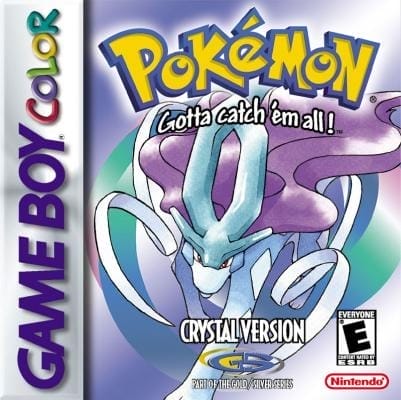
Pokémon Crystal
Although Pokémon Crystal is the lowest-selling main series Pokémon game to date, it still ranks among the top ten best-selling Game Boy titles. Critics praised Crystal for its additional features and improvements but noted that many of these features were less significant in the non-Japanese versions, which lacked Mobile Adapter GB support. Retrospective reviews have been highly positive, with many acknowledging Crystal's introduction of features that would become commonplace in later iterations of the Pokémon series, and its role in maintaining interest during a waning period for the franchise.
Browse our collection of 22 Pokémon retro games, all playable instantly in your browser. No download required. Play classic games online in your browser and save your progress anytime.