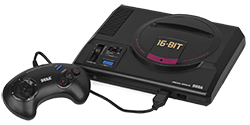
Sega Genesis
The Sega Genesis, known as the Mega Drive outside North America, is a 16-bit fourth generation home video game console developed and sold by Sega. It was Sega's third console and the successor to the Master System. Sega released it in October 1988 in Japan as the Mega Drive, and in August 1989 in North America as the Genesis. In 1990, it was distributed as the Mega Drive by Virgin Mastertronic in Europe, Ozisoft in Australasia, and Tectoy in Brazil. In South Korea, it was distributed by Samsung Electronics as the Super Gam*Boy and later the Super Aladdin Boy.
66 games
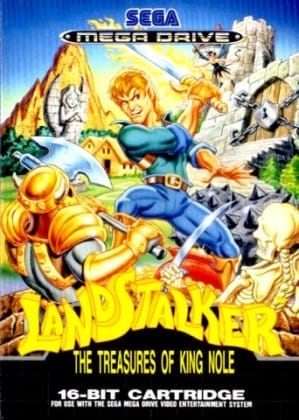
Landstalker: The Treasures of King Nole
Landstalker: The Treasures of King Nole is a 1992 action role-playing video game developed by Climax Entertainment and published by Sega for the Sega Genesis. The player takes on the role of the treasure hunter Nigel as they navigate a three-dimensional world through an isometric viewpoint, solving puzzles and fighting enemies. The game was a critical and commercial success. A spinoff called Lady Stalker: Challenge from the Past was released in Japan for the Super NES in 1995. A sequel was in the planning stages but was cancelled. Dark Savior and Alundra are considered spiritual successors. Nigel is a playable character in Time Stalkers. It has been re-released several times: on the Wii's Virtual Console in 2007, Steam in 2011, on the Sega Genesis Mini in 2019, and on the Nintendo Classics service in 2023.
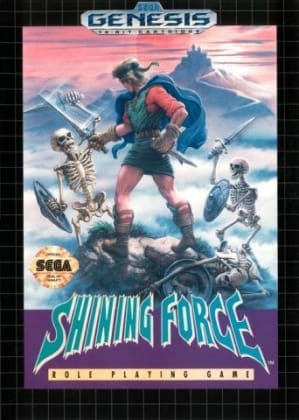
Shining Force: The Legacy of Great Intention
Shining Force: The Legacy of Great Intention, commonly referred to as Shining Force, is a 1992 turn-based tactical role-playing game developed by Climax Entertainment and Sonic! Software Planning and published by Sega for the Sega Genesis. It is the second entry of the Shining series, following 1991's Shining in the Darkness. While primarily a traditional fantasy-themed game, it contains some science fiction elements. The game has been re-released for various platforms: in Sega Smash Pack Volume 1 for the Dreamcast and Sega Smash Pack 2 for Microsoft Windows, in Sonic's Ultimate Genesis Collection for Xbox 360 and PlayStation 3, and as a standalone game for the Wii Virtual Console and Windows via Steam. Additionally, a remake was released for the Game Boy Advance in 2004 under the title Shining Force: Resurrection of the Dark Dragon. In 2010, the game was released for iOS but was discontinued in 2015. It was re-released again on the Nintendo Classics service in 2021.
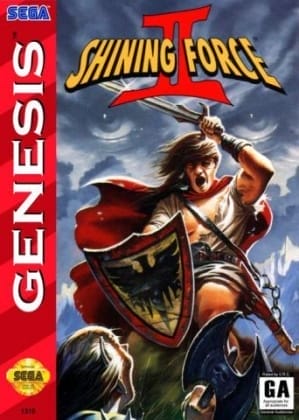
Shining Force II
Shining Force II (シャイニング・フォースII 古えの封印, Shainingu Fōsu Tsū: Inishie no Fūin; lit. "Shining Force II: The Ancient Seal") is a 1993 tactical role-playing game developed by Sonic! Software Planning and published by Sega for the Sega Genesis. Its storyline is not directly connected to the original Shining Force, although the Game Gear title Shining Force Gaiden: Final Conflict links the two games' plots. The game is much longer than Shining Force, and contains more free roaming. There is no chapter system, so the player can return to previously visited parts of the world. There are also two different ways of promoting certain characters. Shining Force II was met with positive reviews and acclaim during its initial release, with critics citing it as superior to its predecessor for its straightforward storyline and charming characters. Amongst critics, the game is often regarded as one of the best RPGs of all time, and a highlighted title for the Sega Genesis.
Teenage Mutant Ninja Turtles: Turtles in Time
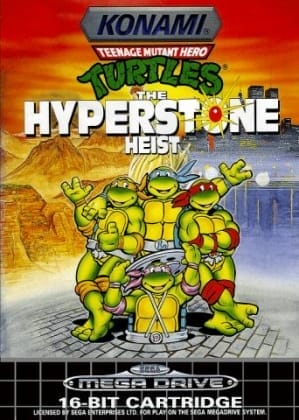
Teenage Mutant Ninja Turtles: Turtles in Time, released as Teenage Mutant Hero Turtles: Turtles in Time in Europe, is a 1991 beat 'em up game developed and published by Konami for arcades. A sequel to the original Teenage Mutant Ninja Turtles "Teenage Mutant Ninja Turtles (arcade game)") arcade game, it is a side-scrolling game based mainly on the 1987 TMNT animated series "Teenage Mutant Ninja Turtles (1987 TV series)"). Originally an arcade game, Turtles in Time was ported to the Super Nintendo Entertainment System in 1992 under the title Teenage Mutant Ninja Turtles IV: Turtles in Time, continuing the numbering from the earlier Turtles games released on the original NES. That same year, a game that borrowed many elements, Teenage Mutant Ninja Turtles: The Hyperstone Heist, was released for the Sega Genesis. In 2005, the arcade version of Turtles in Time was rereleased on newer consoles.
Teenage Mutant Hero Turtles: Tournament Fighters
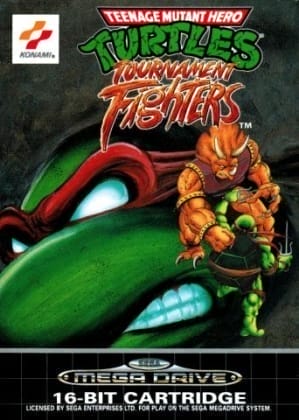
Teenage Mutant Ninja Turtles: Tournament Fighters, or Teenage Mutant Hero Turtles: Tournament Fighters in Europe, is the title of three different fighting games based on the Teenage Mutant Ninja Turtles, produced by Konami for the Nintendo Entertainment System, Sega Genesis, and Super NES and released during a period between 1993 and 1994. Konami produced a different fighting game based on the franchise each featuring a differing cast of characters for the platforms. All three versions of the game were re-released as part of Teenage Mutant Ninja Turtles: The Cowabunga Collection in 2022, with online play using rollback netcode for the Super NES version of the game.
Jurassic Park
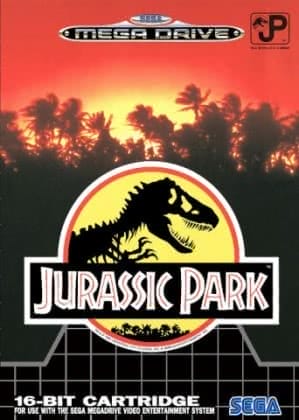
Jurassic Park is a 1993 action-adventure game developed by BlueSky Software and published by Sega for the Sega Genesis. It was released as a tie-in with the 1993 film of the same name, and features elements from Michael Crichton's 1990 novel "Jurassic Park (novel)") on which the film is based. In 1994, after the financial success of the film and its merchandise, Sega released a sequel video game titled Jurassic Park: Rampage Edition.#cite_note-3) Both games were re-released in 2023 as part of Jurassic Park: Classic Games Collection. Jurassic Park is a standard side-scrollingaction game with platform elements.#cite_note-AG-4) The end objective is to reach the end of each level, using items placed at fixed locations. However, the game features a then-uncommon variation in action games,[citation needed] giving players the option of using two characters that played independently to one another. The game is playable as either paleontologistDr.
Turbo Outrun
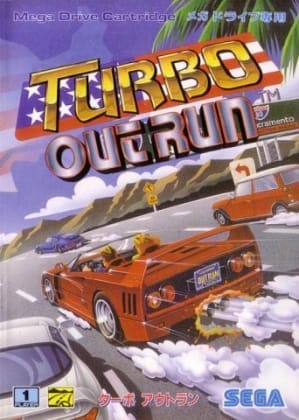
Turbo OutRun (ターボアウトラン) is a 1989 racing game developed and published by Sega for arcades. A follow-up to 1986's Out Run, it was released as a dedicated game, as well as an upgrade kit for the original Out Run board. Like its predecessor, Turbo OutRun has players driving a Ferrari, this time a Ferrari F40. Players traverse a set route across the continental United States from New York City to Los Angeles. In addition to a time limit, Turbo OutRun also adds a computer-controlled opponent driving a Porsche 959. The "Turbo" in the title plays a factor as players can press a button to receive a brief turbo boost of speed. Various power-ups which increase the vehicle's attributes can be chosen at various stages of the game. Ports of Turbo OutRun were released for home computers as well as Sega's own Mega Drive. Computer ports of the game were received with varying degrees of enthusiasm.
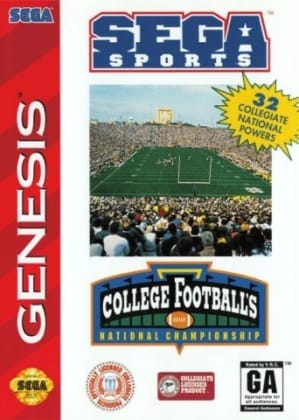
College Football's National Championship
College Football's National Championship is a 1994 American football video game that was released exclusively for the North American Sega Genesis video game system. A sequel, College Football's National Championship II, was released in 1995.
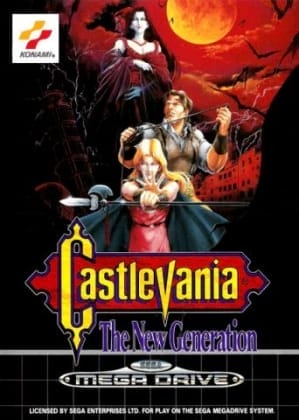
Castlevania: Bloodlines
Castlevania: Bloodlines, known in Japan as Vampire Killer and in PAL regions as Castlevania: The New Generation, is a 1994 platform game developed and published by Konami for the Sega Genesis as part of the Castlevania series. A vampire named Elizabeth Bartley is orchestrating the beginning of World War I to serve as the catalyst for the resurrection of her uncle, Dracula. Players take on the role of Quincey Morris' son, John, and his friend Eric Lecarde to take up the fight against evil. The development team approached Bloodlines as a unique Castlevania experience tailor-made for the Genesis. In this sense, the gameplay was made more fast and action-oriented. Writer Toshiki Yamamura also took creative liberties to craft what he viewed was a new chapter in the Castlevania saga. The game was the first Castlevania title for which Michiru Yamane composed music. She used her Bach influences to compose a renowned soundtrack, leading to her becoming a recurring series composer.
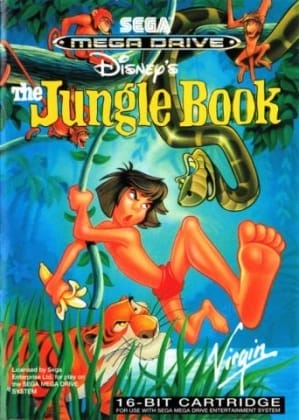
The Jungle Book
Disney's The Jungle Book is a series of platform video games based on the 1967 Disneyanimated film of the same name "The Jungle Book (1967 film)"). The game was released by Virgin Interactive Entertainment for the Game Boy, Nintendo Entertainment System, Master System, Genesis/Mega Drive, Game Gear, Super Nintendo Entertainment System, and MS-DOS. While gameplay is the same on all versions, technological differences between the systems forced changes – in some case drastic – in level design, resulting in six fairly different versions of the 'same' game. This article is largely based upon the Genesis/Mega Drive version. The player controls Mowgli, a young boy who has been raised by wolves. Mowgli must leave his home in the jungle and go back to the human village because Shere Khan, a tiger, is now hunting him. Mowgli must fight jungle wildlife and ultimately Shere Khan himself to reach his village.
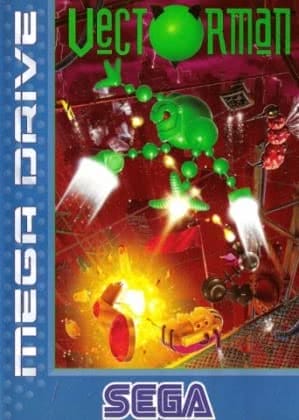
Vectorman
BlueSky Software's development relationship with Sega began in the early 1990s. After successfully developing and releasing Starflight and Joe Montana Football in 1991, BlueSky Software signed an exclusivity contract to develop video games for their Sega Genesis platform.#cite_note-Sega16Int-5) Sega won the bid for the rights to develop the official video game adaption of the film Jurassic Park, and chose BlueSky Software as the primary developer.#cite_note-6)#cite_note-VectoRetro-3) Sega published two of their Jurassic Park games; a video game adaption of the original Jurassic Park film "Jurassic Park (Sega video game)") released in 1993, and a sequel game, Jurassic Park: Rampage Edition, the following year, both for the Sega Genesis.#cite_note-VectoRetro-3) After completion of the two games, Sega turned to them to create a game centered around pre-rendered3D models in its levels and character designs, as an answer to Nintendo's popular 1994 release Donkey Kong Country.
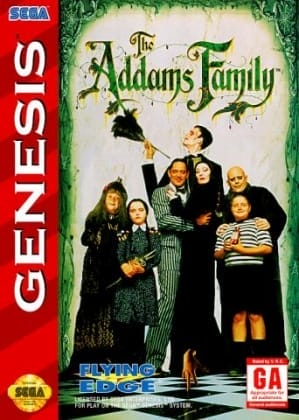
The Addams Family
The Addams Family is a 1992 action-adventure platform game based on the 1991 film of the same name. Developed and published by Ocean Software, it was released for home consoles such as the Super Nintendo Entertainment System, computers such as the Amiga, and handheld consoles such as the Game Boy. The player assumes the role of Gomez Addams. His mission is to rescue other members of the Addams family from the clutches of Abigail Craven, who, alongside The Judge and the family attorney Tully Alford, is attempting to seize the Addams' wealth. The game is non-linear, with the player moving throughout the mansion's many inside and outside areas, some of which are hidden. Enemies include bosses each holding a member of the Addams Family hostage, making them necessary to defeat. Power-ups, extra lives, and money are also obtainable.
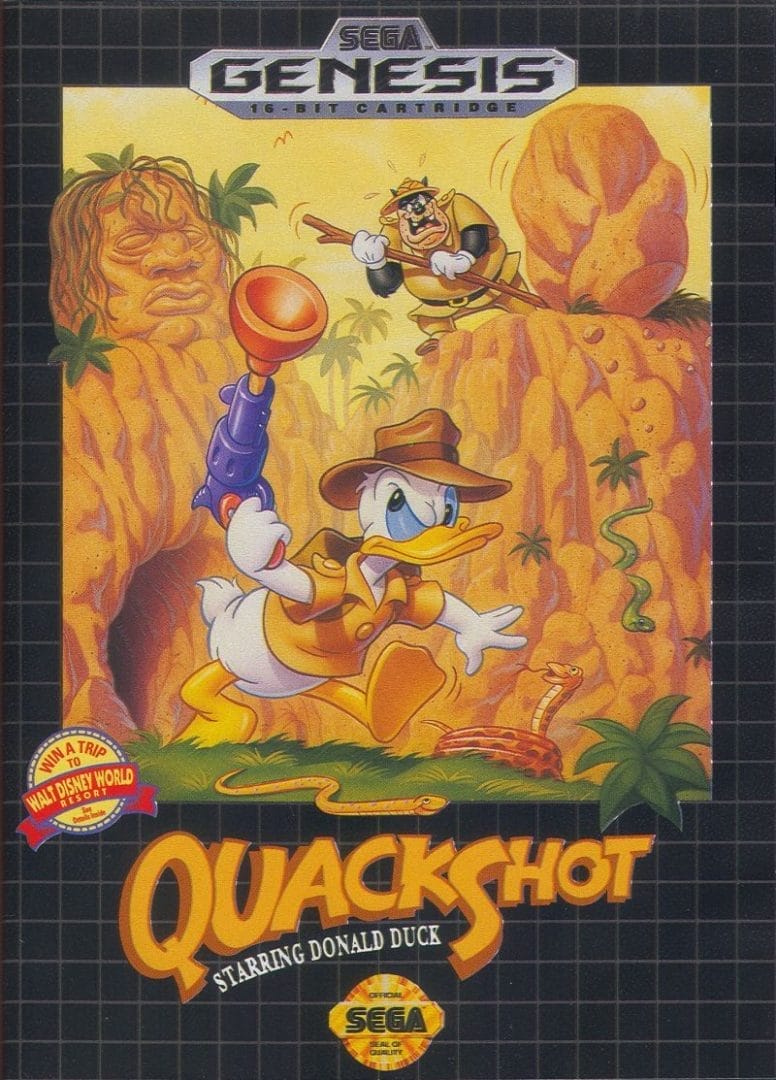
QuackShot Starring Donald Duck
QuackShot Starring Donald Duck, known in Japan as I Love Donald Duck: The Treasure of King Garuzia, is a 1991 platform game developed and published by Sega for the Sega Genesis. The player controls Donald Duck as he, alongside his three nephews Huey, Dewey and Louie, attempt to track down a lost artifact which was treasured by King Garuzia. The game was influenced by the Indiana Jones film series. QuackShot was released with a positive response from video game publications. The game was universally lauded for its graphics, with magazines like Sega Pro describing them as "some of the best graphics around", and the game was also praised for its music and puzzles. Adversely, the game was criticized for its overall difficulty and the controls in certain situations. Retrospectively, QuackShot was also criticized for its lack of speech samples by IGN.
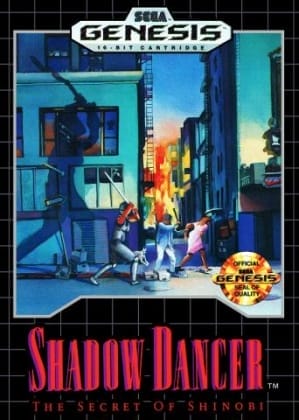
Shadow Dancer: The Secret of Shinobi
Shadow Dancer: The Secret of Shinobi (シャドー・ダンサー ザ・シークレット・オブ・シノビ), also known simply as Shadow Dancer, is a side-scrolling action game developed and published by Sega for the Sega Genesis in 1990. It is the second game in the Shinobi series released for the Mega Drive, following The Revenge of Shinobi "The Revenge of Shinobi (1989 video game)"). However, it is not a continuation of the previous game, but rather a loose adaptation of the 1989 arcade game Shadow Dancer "Shadow Dancer (1989 video game)"). Like in the original arcade game, the player controls a ninja followed by a canine companion. The Secret of Shinobi was well received by critics. The play mechanics are similar to the arcade version of Shadow Dancer "Shadow Dancer (1989 video game)"), with the main difference being the addition of a meter for the dog that accompanies the protagonist. In order for the dog to attack an enemy, the player must hold down the attack button until the meter is filled.
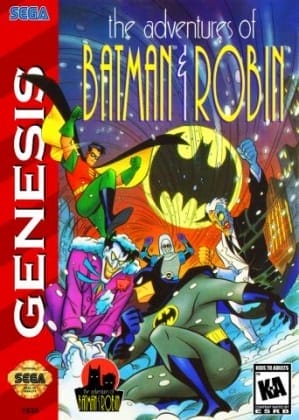
The Adventures of Batman & Robin
The Adventures of Batman & Robin is a series of video game adaptations released between 1994 and 1995 featuring the DC Comics characters Batman and Robin, based on Batman: The Animated Series (which had been retitled The Adventures of Batman and Robin for its second season). The games were released for numerous platforms, with the Genesis, Game Gear, and Sega CD versions published by Sega, while the Super NES version was published by Konami (who also produced an earlier Game Boy video game based on the show).
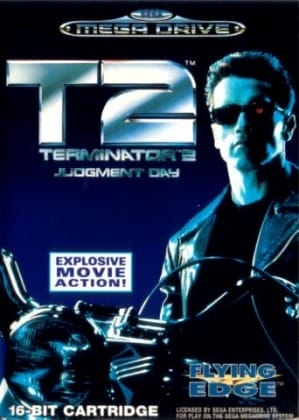
Terminator 2: Judgment Day
Terminator 2: Judgment Day is a 1991 American science fiction action film directed by James Cameron, who co-wrote the script with William Wisher. Starring Arnold Schwarzenegger, Linda Hamilton, and Robert Patrick, it is the sequel to The Terminator (1984) and is the second installment in the Terminator franchise. In the film, the malevolent artificial intelligence Skynet sends a Terminator—a highly advanced killing machine—back in time to 1995 to kill the future leader of the human resistance, John Connor, when he is a child. The resistance sends back a less advanced, reprogrammed Terminator to protect Connor and ensure the future of humanity. The Terminator was considered a significant success, enhancing Schwarzenegger's and Cameron's careers, but work on a sequel stalled because of animosity between the pair and Hemdale Film Corporation, which partially owned the film's rights.
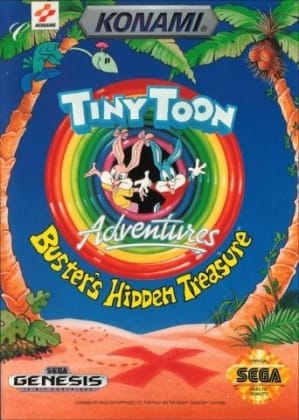
Tiny Toon Adventures: Buster's Hidden Treasure
Tiny Toon Adventures: Buster's Hidden Treasure is the first Tiny Toon Adventures-based game released on the Sega Genesis. It was released in 1993 and developed and published by Konami. The game was not released in Japan, but was released in South Korea, where it was simply called Tiny Toons Adventures.
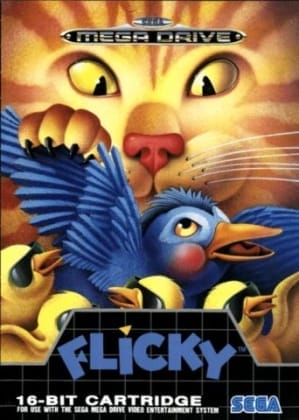
Flicky
Flicky is a platform game developed by Sega and released as an arcade video game in May 1984. It was licensed to Bally Midway for distribution in the United States. In Flicky, the player controls the eponymous blue bird and must gather all the small birds called Chirps in each round and bring them safely to the exit. There are cat and lizard enemies which can disperse the Chirps and kill the player, but Flicky can use items on the playing field to protect herself and the Chirps from danger. The idea for Flicky came from Sega senior leadership, who wanted to exceed the success of Namco's Mappy (1983). Yoji Ishii and Yoshiki Kawasaki developed Flicky at Sega over one year. Originally, the game simply had the player catch ambiguous dots in a maze. Taking inspiration from a popular song in a Japanese variety show, Kawasaki gave the game an urban theme and bird characters. The game was originally titled "Busty", then "Flippy", before finally settling on "Flicky".
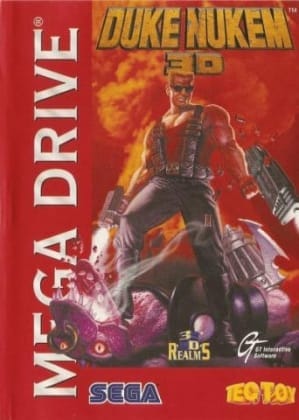
Duke Nukem 3D
Duke Nukem 3D is a 1996 first-person shooter game developed by 3D Realms and published by FormGen for MS-DOS. It is a sequel to the platform games Duke Nukem and Duke Nukem II, published by 3D Realms. Duke Nukem 3D features the adventures of the titular Duke Nukem, voiced by Jon St. John, who fights against an alien invasion on Earth. Along with Wolfenstein 3D, Doom and Quake, Duke Nukem 3D is considered to be responsible for popularizing first-person shooters, and was released to major critical acclaim. Reviewers praised the interactivity of the environments, gameplay, level design, and unique risqué humor, a mix of pop-culture satire and lampooning of over-the-top Hollywood action heroes. However, it also incited controversy due to its violence, erotic elements, and portrayal of women. Since its release, Duke Nukem 3D has been cited as one of the greatest video games ever made.
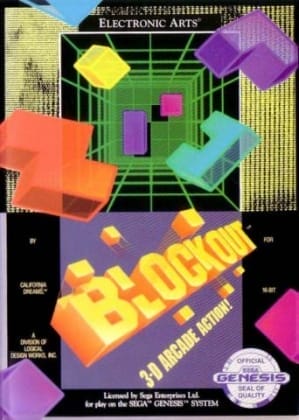
Blockout
Blockout is a puzzle video game published in 1989 by California Dreams. It was developed in Poland by Aleksander Ustaszewski and Mirosław Zabłocki. American Technos published an arcade version. Blockout is a 3D version of the Tetris concept.
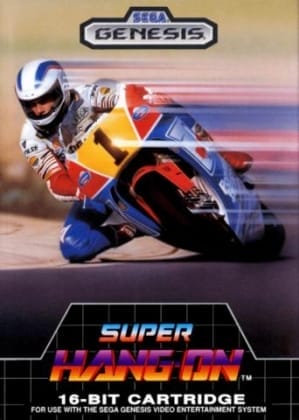
Super Hang-On
Super Hang-On is a 1987 racing video game developed and published by Sega for arcades. It is the sequel to 1985's Hang-On, and uses a simulated motorcycle arcade cabinet, like the original game. An updated version was released for arcades as Limited Edition Hang-On in 1991.
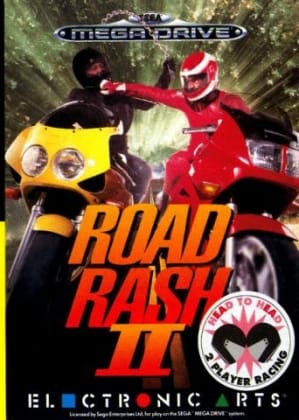
Road Rash II
Road Rash II is a 1992 racing and vehicular combat video game developed and published by Electronic Arts (EA) for the Sega Genesis. The game is centered around a series of motorcycle races throughout the United States that the player must win to advance to higher-difficulty races, while engaging in unarmed and armed combat to hinder the other racers. It is the second installment in the Road Rash series and introduces a split-screen two-player mode for competing human players, nitrous oxide charges on certain bikes, and chains as offensive weapons. EA began development of Road Rash II before the end of the 1991 Christmas season, and the game was released before the end of the 1992 Christmas season. Road Rash II met with critical acclaim and commercial success, with reviewers appreciating the visuals and addition of the multiplayer mode while pointing out the lack of innovation in the fundamental gameplay.
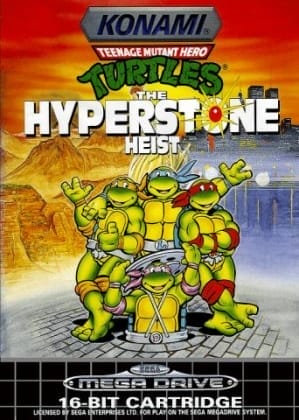
Teenage Mutant Ninja Turtles: The Hyperstone Heist
Teenage Mutant Ninja Turtles: The Hyperstone Heist, released in Europe as Teenage Mutant Hero Turtles: The Hyperstone Heist and in Japan as Teenage Mutant Ninja Turtles: Return of the Shredder, is a 1992 beat 'em up game developed and published by Konami for the Sega Genesis, based on the Teenage Mutant Ninja Turtles comic book characters. It was Konami's debut title for the Genesis. The game was re-released as part of Teenage Mutant Ninja Turtles: The Cowabunga Collection in 2022. April O'Neil is reporting from Liberty Island when, in a sudden flash of light, she and her audience witness Manhattan Island suddenly starting to shrink. Shredder then hijacks the airwaves and announces to the world that this was only a demonstration of the power of the Hyperstone, the treasure of Dimension X "Dimension X (Teenage Mutant Ninja Turtles)"). With the Hyperstone in his possession, he now has the power to take over the world. The Turtles have no choice but to go after Shredder and stop him.
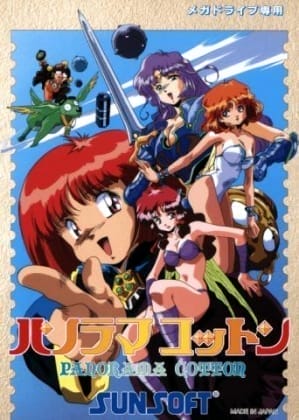
Panorama Cotton
Panorama Cotton is a 1994 rail shooter video game developed by Success and published by Sunsoft for the Mega Drive exclusively in Japan on August 12, 1994. Panorama Cotton is the third entry in the Cotton series and made a major departure from the original gameplay formula of prior Cotton entries; instead of being a side-scrolling shooter like the others, it is a pseudo-3D shooter in the style of Sega's Space Harrier. Panorama Cotton is a pseudo-3D scrolling shooter reminiscent of Space Harrier, set in an anime-style fantasy world. Various levels scroll "into the screen", vertically, horizontally, or diagonally. The player can move Cotton over the screen, shooting at oncoming enemies and avoiding obstacles in her way. Cotton can upgrade her weapon to higher levels as the player progresses, and can also cast magical spells by collecting special items. The most important plot elements in all of the Cotton games are magical candies called Willows.
Browse our collection of 66 Sega Genesis retro games, all playable instantly in your browser. No download required. Play classic games online in your browser and save your progress anytime.