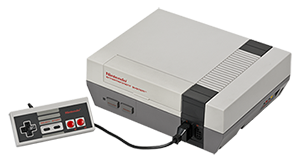
Nintendo Entertainment System
The Nintendo Entertainment System (NES) is a home video game console developed and marketed by Nintendo. It was released as the Family Computer (Famicom), in Japan on July 15, 1983, and as the NES in test markets in the United States on October 18, 1985, followed by a nationwide launch on September 27, 1986. The NES was distributed in Europe, Australia, and parts of Asia throughout the 1980s. It was Nintendo's first programmable home console, succeeding the Color TV-Game line of dedicated consoles, and primarily competed with Sega's Master System in the third generation of video game consoles. The engineer Masayuki Uemura designed the 8-bit Famicom after Nintendo's president Hiroshi Yamauchi called for a simple, cheap console that could run arcade games from cartridges. Its hardware was based on that of Nintendo's arcade game Donkey Kong (1981) and its controller design was reused from Nintendo's portable Game & Watch hardware. For Western markets, Lance Barr and Don James redesigned it as the NES to resemble a video cassette recorder. To aid its acceptance in stores, Nintendo released add-ons such as the Zapper, a light gun for shooting games, and R.O.B., a toy robot. Nintendo released the NES in the aftermath of the video game crash of 1983. In Japan and North America, it quickly dominated and gave Nintendo a near-monopoly on the home console market. Nintendo sold 61.91 million consoles. The NES is regarded as one of the most influential consoles, as it helped revitalize the American gaming industry following the 1983 crash and pioneered the now-standard business model of licensing third-party developers to produce and distribute games.
65 games
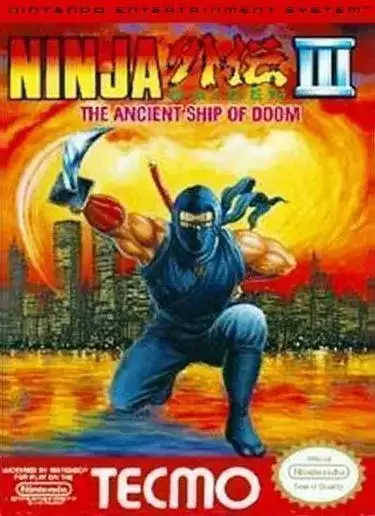
Ninja Gaiden III: The Ancient Ship of Doom
Ninja Gaiden III: The Ancient Ship of Doom is a 1991 platform game developed and published by Tecmo for the Nintendo Entertainment System (NES). It was later ported to the Atari Lynx by Atari Corporation in 1993, and was also re-released as part of Tecmo's Ninja Gaiden Trilogy Super NES compilation in 1995. Long after, it was released for the Virtual Console service in North America in 2008 for the Wii and in 2013 for the Nintendo 3DS. It was designed by Masato Kato, who took over for Hideo Yoshizawa, the designer of the first two games in the NES series. The game is the third installment of the Ninja Gaiden trilogy in terms of release, but is chronologically set between the first two games in the series, Ninja Gaiden and Ninja Gaiden II: The Dark Sword of Chaos.
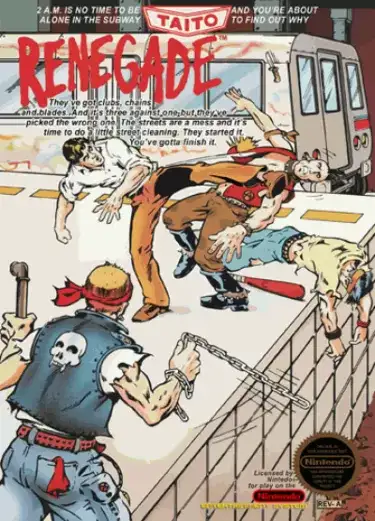
Renegade
Nekketsu Kōha Kunio-kun#cite_note-12), released as Renegade in the West, is a 1986 beat 'em up video game developed by Technōs Japan and published by Taito for arcades.#cite_note-GM-13) In the original Japanese version, the game revolves around Kunio, a high school delinquent who must stand up against a series of rival gangs that are targeting his classmate Hiroshi. In the Western version, the player controls a street brawler who must face four different gangs in order to rescue his girlfriend, who is being held captive by a mob boss. Conceptualized and designed by Yoshihisa Kishimoto, the game was semi-autobiographical, partly based on his own teenage high school years getting into daily fights, with Kunio partly based on himself. He also drew inspiration from the Bruce Lee martial arts film Enter the Dragon (1973), which inspired the game's "knock-down-drag-out" fights, along with his own altercations as a youth.
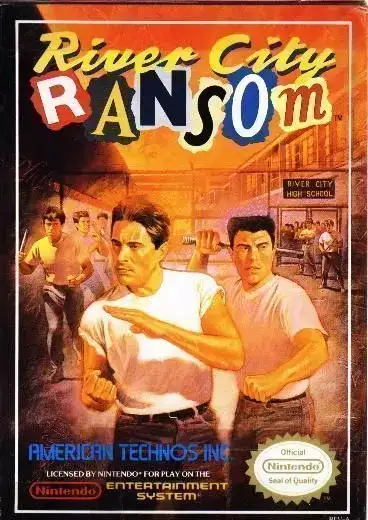
River City Ransom
Downtown Nekketsu Monogatari, released as River City Ransom in North America and Street Gangs in PAL regions, is a 1989 action-adventure beat 'em up video game developed and published by Technōs Japan for the Nintendo Entertainment System. It is the third installment of the Kunio-kun series released for the NES, preceded by Renegade and Super Dodge Ball, and the first to be developed specifically for the system. Gameplay is similar to that of Renegade, but set in a non-linear open world, a first for the series. It was the first console game published by the developer's North American subsidiary American Technos, without input from previous series publisher Taito. Outside Japan, River City Ransom was not highly successful when initially released. However, it received positive reviews from critics for its innovative gameplay and humor, retaining a dedicated cult following to this day, while also making the Kunio-kun series prominent in the beat 'em up space.
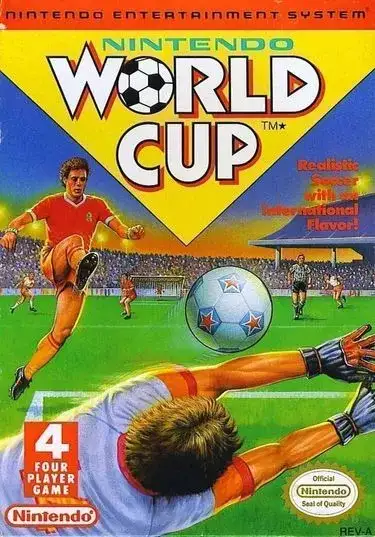
Nintendo World Cup
Nintendo World Cup, released in Japan as Nekketsu High School Dodgeball Club: Soccer Story, is a 1990 soccer video game developed by Technōs Japan for the Nintendo Entertainment System. It was localized and released outside Japan by Nintendo, with a Game Boy port also being released. It is the fourth installment of the Kunio-kun series. Ports for the PC Engine and Mega Drive were also released in Japan.
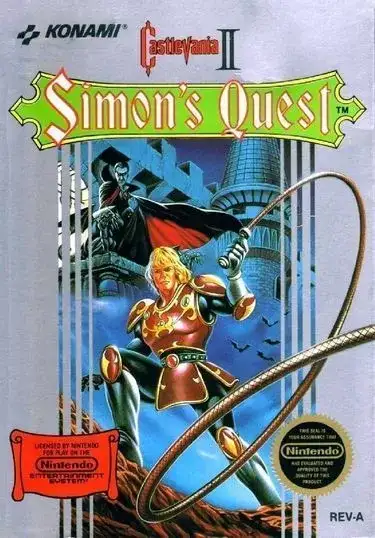
Castlevania II: Simon's Quest
Castlevania II: Simon's Quest is a 1987 action role-playing game developed and published by Konami. It was originally released in Japan in 1987 for the Famicom Disk System, and in North America in 1988 for the Nintendo Entertainment System. It is the second Castlevania game released for the NES, following the original Castlevania (1986). Set seven years after the events of the first installment, the player once again assumes the role of vampire hunter Simon Belmont, who is on a journey to undo a curse placed on him by Dracula at the end of their previous encounter. Dracula's body was split into five parts, which Simon must find and bring to the ruins of Castle Dracula in order to defeat him. The game deviates from the traditional platforming of its predecessor, incorporating role-playing and open world elements.
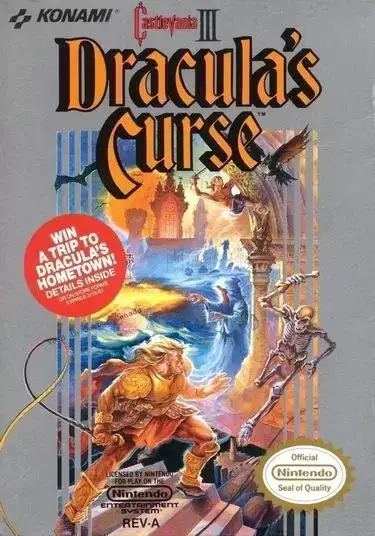
Castlevania III: Dracula's Curse
Castlevania III: Dracula's Curse is a 1989 platform game developed and published by Konami for the Nintendo Entertainment System. It was released on December 22, 1989, in Japan, September 19, 1990, in North America and in May 1992 in PAL regions by Konami's Palcom publishing label. Despite being the third numbered installment in the Castlevania series, Castlevania III: Dracula's Curse is a prequel to the original Castlevania (1986), being set a few centuries before its events. The game's protagonist is Trevor Belmont, an ancestor of Simon Belmont, who is called into action to vanquish the forces of Dracula. Relinquishing the role-playing and action-adventure elements from Castlevania II: Simon's Quest, the game returns to the action-platforming gameplay of the original Castlevania but also introduces new concepts to the formula such as branching level paths and multiple playable characters. Castlevania III received positive critical reception.
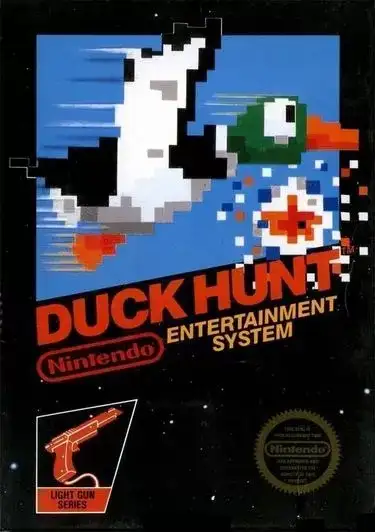
Duck Hunt
Duck Hunt#cite_note-7) is a 1984 light gun shootervideo game developed and published by Nintendo for the Nintendo Entertainment System (NES). The game was first released in April 1984 in Japan for the Family Computer (Famicom) console and in North America as an arcade game for the Nintendo VS. System. It became a launch game for the NES in North America in October 1985, and was re-released in Europe two years later. Players fire the NES Zapper at a CRT television,#cite_note-howtogeek.com-8) with three attempts per round "Level (video gaming)") to shoot ducks and clay pigeons. The game initially received a positive reception in the mid-1980s,#cite_note-Adlum-9) but was later given mild praise in retrospective reviews.#cite_note-Allgame_review-10)#cite_note-Gamespot_people-11) The game was inspired by Nintendo's previous electro-mechanical arcade game which was based on the Laser Clay Shooting System released in 1976.
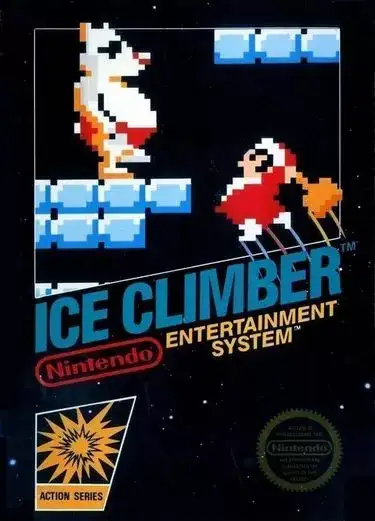
Ice Climber
Ice Climber is a 1985 platformvideo game developed and published by Nintendo. It was released for both the arcadeVS. System and the Famicom/Nintendo Entertainment System console. The main protagonists, Popo and Nana, collectively known as the Ice Climbers, scale 32 vertically scrolling, ice-covered mountains to recover stolen vegetables from a giant condor. In some European countries, Ice Climber was bundled with the Nintendo Entertainment System. The arcade expansion, VS. Ice Climber, features exclusive content from the traditional NES release; including an animated title screen "Title screen (gaming)"), a stage select menu at the start of the game and between levels, 16 more mountains, occasional blizzard and wind effects, more enemies and vegetables, and bonus multiplier items "Item (gaming)"). Popo and Nana are playable characters in the Super Smash Bros. series, starting with the 2001 game, Super Smash Bros. Melee for the GameCube.
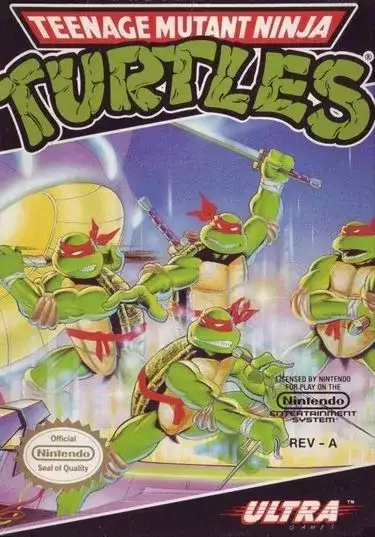
Teenage Mutant Ninja Turtles
Teenage Mutant Ninja Turtles is a 2003 beat 'em up game developed and published by Konami, based on the 2003 Teenage Mutant Ninja Turtles TV series "Teenage Mutant Ninja Turtles (2003 TV series)"). It loosely adapts the events of the show's first season. The game is the first Teenage Mutant Ninja Turtles video game to be developed by Konami in a roughly decade, following the release of Teenage Mutant Ninja Turtles: Tournament Fighters (1993). It was released for GameCube, PlayStation 2, Xbox and Windows in late 2003 in North America, followed by a European release the following April. A demo was also available via a special edition bonus disc packaged with Mario Kart: Double Dash (2003) in North America.#cite_note-2)#cite_note-3) The game received two sequels: Teenage Mutant Ninja Turtles 2: Battle Nexus in 2004, and Teenage Mutant Ninja Turtles 3: Mutant Nightmare in 2005. The player can play as either Leonardo, Donatello, Michelangelo or Raphael.
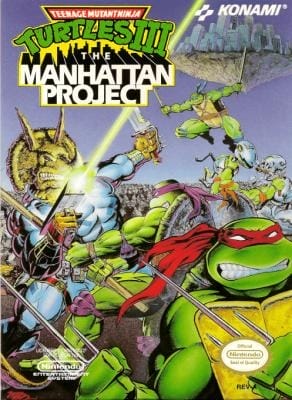
Teenage Mutant Ninja Turtles III: The Manhattan Project
Teenage Mutant Ninja Turtles III: The Manhattan Project is a 1991 beat 'em up game developed and published by Konami for the Family Computer (Famicom) in Japan and for the Nintendo Entertainment System in North America in 1992. It is the third video game iteration of the Teenage Mutant Ninja Turtles for the NES. The game features play mechanics similar to the previous game, _Teenage Mutant Ninja Turtles II: The Arcade Game#Nintendo\_Entertainment\System "Teenage Mutant Ninja Turtles (arcade game)"), but it is an original title for the NES without any preceding arcade version. It is based on the 1987 Teenage Mutant Ninja Turtles "Teenage Mutant Ninja Turtles (1987 TV series)") animated series, being released after the show's 5th season. The game was re-released as part of Teenage Mutant Ninja Turtles: The Cowabunga Collection in 2022. The game begins with the Turtles spending their vacation in Key West, Florida.
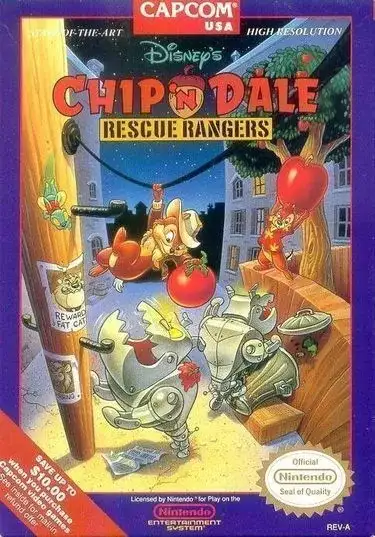
Chip 'n Dale: Rescue Rangers
Chip 'n Dale Rescue Rangers is a platform video game developed and published by Capcom for the Nintendo Entertainment System. It is based on the Disney animated series of the same name. It was released in North America and Japan in 1990, and Europe in 1991. An arcade version was released by Nintendo in 1990. It sold approximately 1.2 million copies worldwide. The game was included in The Disney Afternoon Collection compilation for PlayStation 4, Windows, and Xbox One released in April 2017.
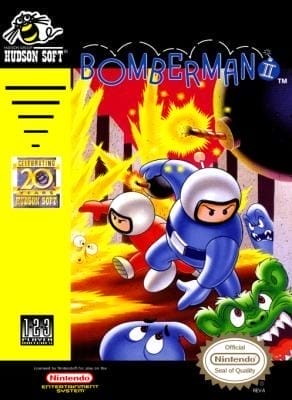
Bomberman II
Bomberman II, released in Europe and Australia as Dynablaster, is a maze video game developed and published by Hudson Soft for the Nintendo Entertainment System originally in Japan and Europe in 1991 and later in North America in February 1993. The Japanese version was re-released in 2026 as part of the Super Bomberman Collection compilation.
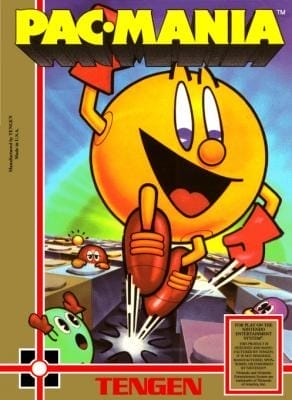
Pac-Mania
Pac-Mania#cite_note-8) is a 1987 mazevideo game developed and published by Namco for arcades. It was released by Atari Games in North America. In the game, the player controls Pac-Man "Pac-Man (character)") as he must eat all of the dots while avoiding the colored ghosts that chase him in the maze. Eating large flashing "Power Pellets" will allow Pac-Man to eat the ghosts for bonus points, which lasts for a short period of time. A new feature to this game allows Pac-Man to jump over the ghosts to evade capture. It is the ninth title in the Pac-Man video game series and was the last one developed for arcades up until the release of Pac-Man Arrangement in 1996. Development was directed by Pac-Man creator Tōru Iwatani. Pac-Mania gained a highly positive critical reception for its originality and gameplay. It was nominated for "Best Coin-Op Conversion of the Year" at the Golden Joystick Awards in 1987, although it lost to Taito's Operation Wolf.
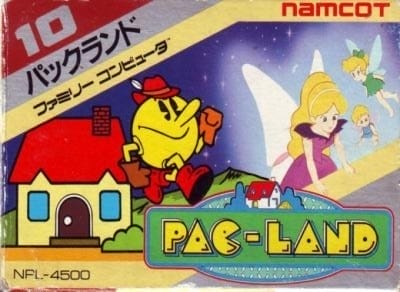
Pac-Land
Pac-Land is a 1984 platform game developed and published by Namco for arcades. It was released in North America by Bally Midway, and in Europe by Atari Games. Controlling Pac-Man "Pac-Man (character)"), the player must make it to the end of each stage to return a lost fairy back to its home in Fairyland. Pac-Man will need to avoid obstacles, such as falling logs and water-spewing fire hydrants, alongside his enemies, the Ghost Gang. Eating large flashing Power Pellets will cause the ghosts to turn blue, allowing Pac-Man to eat them for points. Pac-Land was conceptualized by Namco Research and Development 1 programmer Yoshihiro Kishimoto, who was tasked with creating an arcade game based on the American Pac-Man cartoon television series "Pac-Man (TV series)") by Hanna-Barbera. The backgrounds were made to be vibrant and colorful, and the characters to be detailed and move smoothly to match the show's animation style.
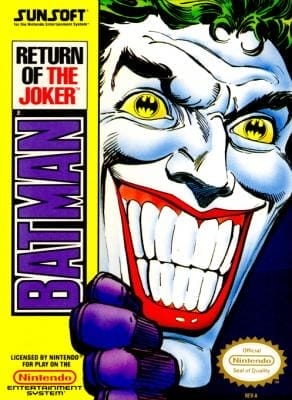
Batman: Return of the Joker
Batman: Return of the Joker is a 1991 run and gunvideo game, the follow-up to Sunsoft's first Batman game on the Nintendo Entertainment System. Unlike that game, which was based on the 1989 Batman film "Batman (1989 film)") directed by Tim Burton, Return of the Joker is entirely self-contained and based more on the modern comic book iteration of Batman, but the Batmobile and the Batwing are featured from the 1989 film. A remake of Return of the Joker, titled Batman: Revenge of the Joker, was released on the Sega Genesis by Ringler Studios in 1992. A Super NES version of Revenge of the Joker was completed but never officially released; a ROM image surfaced online in later years. A completely different version of the game was released on the Game Boy in 1992. In Batman: Return of the Joker, the titular hero is on journey to the Joker's secret hide-out after called by Gotham City to find metals stolen by the Joker, one of which is highly toxic and used to build explosives for missiles.
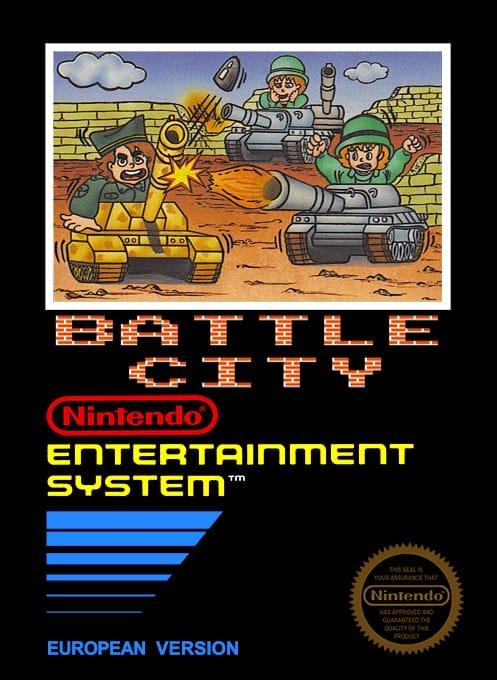
Battle City
Battle City#cite_note-1) is a 1985 multidirectional shootervideo game developed and published by Namco for the Family Computer. Released only in Japan, it is the sequel to the arcade game_Tank Battalion_. An arcade version for the Nintendo VS. System, titled VS. Battle City, would follow, along with a Game Boy version in 1991, which was developed and published by Nova Games. The Famicom version was later included as an unlockable in the Japanese release of Star Fox: Assault,#cite_note-2) and would eventually be digitally re-released via the Virtual Console for Wii and Wii U. The arcade version was released by Hamster Corporation as part of their Arcade Archives series for the Nintendo Switch and PlayStation 4 on September 12, 2024.#cite_note-3) Although the Famicom version was never officially released outside Japan, Battle City was one of the most common inclusions in unofficial famiclonemulticarts.
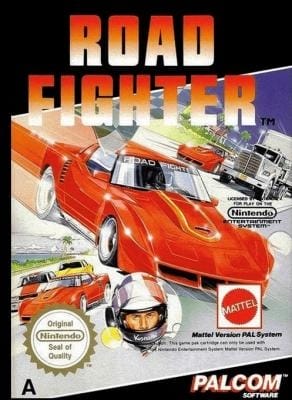
Road Fighter
Road Fighter is a 1984 racingvideo game developed and published by Konami for arcades. The goal is to reach the finish line within the stages without running out of time, hitting other cars or running out of fuel (which is refilled by hitting a special type of car). The game spawned a spiritual successor, Konami GT (1986), and two sequels, Midnight Run: Road Fighter 2 (1995) and Winding Heat (1996). A Japan-only sequel was also released 14 years later, Road Fighters (2010). The first two levels contain four courses, ranging from grassy plains to an over-water bridge to a seashore, mountains and finally a forest area. In the arcade version, six stages were contained. The player controls a red Chevrolet Corvette "Chevrolet Corvette (C4)") and pressing the B accelerates the car to around 224 km/h while the A button increases it to 400. The player has a limited amount of fuel points (equal to about 100 seconds) and can earn more by touching special multi-colored cars.
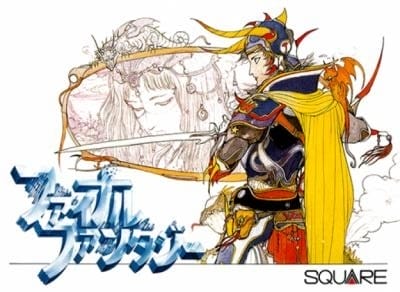
Final Fantasy
Final Fantasy#cite_note-16) is a 1987 role-playing video game developed and published by Square for the Nintendo Entertainment System. It is the first game in Square's Final Fantasy series, created by Hironobu Sakaguchi. The story follows four youths called the Warriors of Light, who each carry one of their world's four elemental crystals which have been darkened by the four Elemental Fiends. Together, they quest to defeat these evil forces, restore light to the crystals, and save their world. Final Fantasy was originally conceived under the working title Fighting Fantasy, but trademark issues and dire circumstances surrounding Square as well as Sakaguchi himself prompted the name to be changed. The game was a great commercial success, received generally positive reviews, and spawned many successful sequels and supplementary titles in the form of the Final Fantasy series.
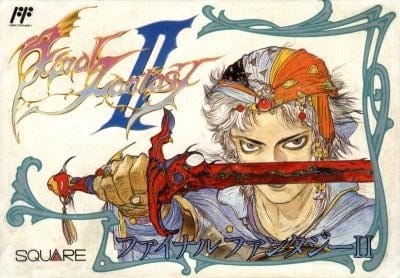
Final Fantasy II
Final Fantasy II is a 1988 role-playing video game developed and published by Square for the Family Computer as the second installment of the Final Fantasy series. It was ported to and remade for WonderSwan Color, PlayStation, Game Boy Advance, PlayStation Portable, and mobile phones. Originally exclusive to Japan, later versions were released internationally, including the 2021 Final Fantasy Pixel Remaster version. The story follows the warrior Firion and his allies as they join a rebellion against the expanding Palamecian Empire. The gameplay is similar to the original game with an overworld and dungeon exploration, but its combat design is changed to a usage-based growth system where characters' statistics increase according to how they are used or acquired. The game began development after the success of Final Fantasy, with the team using a new setting to make the game accessible to players.
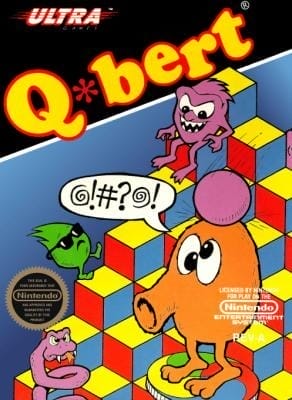
Q*bert
**Q*bert* () is a 1982 actionvideo game developed and published by Gottlieb for arcades. It is a 2Daction game with puzzle elements that uses isometric graphics to create a pseudo-3D effect. The objective of each level in the game is to change every cube in a pyramid to a target color by letting Q*bert, the on-screen character, hop on top of the cube while avoiding obstacles and enemies. Players use a joystick to control the character. The game was conceived by Warren Davis and Jeff Lee "Jeff Lee (video game artist)"), the latter of whom designed the titular protagonist and original concept, which was further developed and implemented by Davis. Q*bert was developed under the project name Cubes. Q*bert was well-received in arcades and among critics. The game was Gottlieb's most successful video game and is among the most recognized brands from the golden age of arcade games. It has been ported to numerous platforms.
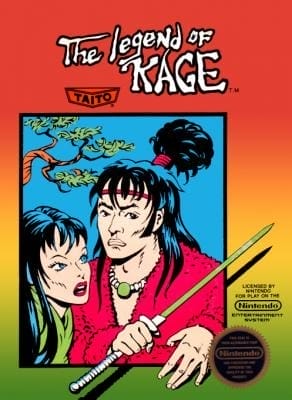
The Legend of Kage
The Legend of Kage is a 1985 hack and slash platform game developed and published by Taito for arcades. The player controls the ninja Kage, with the objective being to get through five stages in order to save the princess Kirihime. These stages are littered with enemies, but Kage has various skills and weapons on his hands in order to get through them. The arcade release was considered a success for Taito, and exceeded sales expectations at the time of its release. It has been ported to a variety of home systems, has had sequels and spinoffs, and has been featured on various Taito compilations.
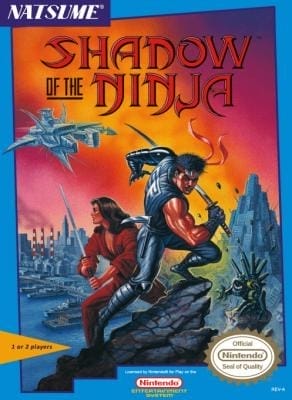
Shadow of the Ninja
Shadow of the Ninja, originally released in Japan as Yami no Shigotonin Kage (闇(やみ)の 仕事人(しごとにん) KAGE, The Dark Operative: Kage) and later released in Europe and Australia as Blue Shadow, is a 1990 hack and slashplatform game developed and published by Natsume for the Nintendo Entertainment System. The game revolves around a pair of ninja sent to assassinate a dictator in a futuristic version of New York City. A port was planned for the Game Boy, but was released in a rebranded form as Ninja Gaiden Shadow. A remake, Shadow of the Ninja: Reborn, was released in 2024. In 2029, the evil Emperor Garuda has taken over the United States of America, building a stronghold in the middle of the nation's "largest city". To stop Garuda and avenge the innocent lives that were lost in his reign, two ninja masters from the Iga clan, Lord Hayate and Lady Kaede, are sent to infiltrate the dictator's well-guarded stronghold and kill him.
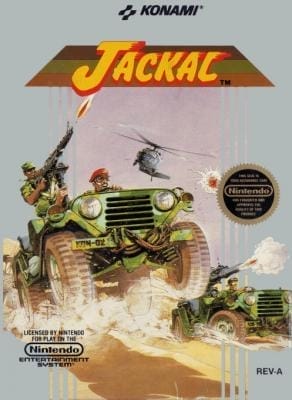
Jackal
Jackal,#cite_note-3) also distributed under the title of Top Gunner, is an overhead run and gun video game released for arcades by Konami in 1986. The player must maneuver an armed jeep in order to rescue prisoners of war (POWs) trapped in enemy territory. The Jackal unit is an elite group of four soldiers that have undergone a harsh training regimen to survive in any environment. The team is composed of Colonel Decker, Lieutenant Bob, Sergeant Quint and Corporal Grey. They have been given a mission to drive two armed jeeps into hostile territory in order to rescue and extract POWs.#cite_note-jackalchirashi-4) Jackal can be played by up to two players simultaneously. A second player can join in during play any time and the two jeeps are numbered on their hoods to indicate which player is in control.
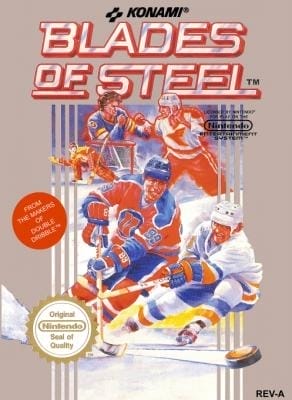
Blades of Steel
Blades of Steel, later released in Japan as Konamic Ice Hockey (コナミック アイスホッケー, Konamikku Aisu Hokkē), is an ice hockey video game released by Konami for North American arcades in 1987, and ported to the Family Computer Disk System and Nintendo Entertainment System in 1988. All teams are fictional but based out of real Canadian and American cities. The game is known for its fast-paced hockey action and especially for the fighting. It is a one or two player game. When playing against the computer, there are three difficulty levels to choose from: Junior, College, and Pro (with Pro being the most difficult and Junior being the easiest). Each team consists of three forwards, two defencemen, and a goaltender. Two sequels were released: NHL Blades of Steel '99 and NHL Blades of Steel 2000. The NES version was re-released on Nintendo's Virtual Console service on December 24, 2007. The arcade version was re-released on Microsoft's Game Room service on November 24, 2010.
Browse our collection of 65 Nintendo Entertainment System retro games, all playable instantly in your browser. No download required. Play classic games online in your browser and save your progress anytime.