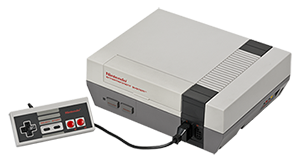
Nintendo Entertainment System
The Nintendo Entertainment System (NES) is a home video game console developed and marketed by Nintendo. It was released as the Family Computer (Famicom), in Japan on July 15, 1983, and as the NES in test markets in the United States on October 18, 1985, followed by a nationwide launch on September 27, 1986. The NES was distributed in Europe, Australia, and parts of Asia throughout the 1980s. It was Nintendo's first programmable home console, succeeding the Color TV-Game line of dedicated consoles, and primarily competed with Sega's Master System in the third generation of video game consoles. The engineer Masayuki Uemura designed the 8-bit Famicom after Nintendo's president Hiroshi Yamauchi called for a simple, cheap console that could run arcade games from cartridges. Its hardware was based on that of Nintendo's arcade game Donkey Kong (1981) and its controller design was reused from Nintendo's portable Game & Watch hardware. For Western markets, Lance Barr and Don James redesigned it as the NES to resemble a video cassette recorder. To aid its acceptance in stores, Nintendo released add-ons such as the Zapper, a light gun for shooting games, and R.O.B., a toy robot. Nintendo released the NES in the aftermath of the video game crash of 1983. In Japan and North America, it quickly dominated and gave Nintendo a near-monopoly on the home console market. Nintendo sold 61.91 million consoles. The NES is regarded as one of the most influential consoles, as it helped revitalize the American gaming industry following the 1983 crash and pioneered the now-standard business model of licensing third-party developers to produce and distribute games.
65 games
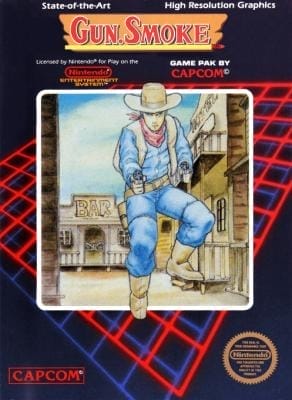
Gun.Smoke
Gun.Smoke is a 1985 vertically scrolling shooter video game developed and published by Capcom for arcades. Unique from other scrolling shooters games, Gun.Smoke features a human as the shooter instead of a spacecraft, in this case a character named Billie Bob, a bounty hunter going after the criminals of the Wild West. It was designed by Yoshiki Okamoto.
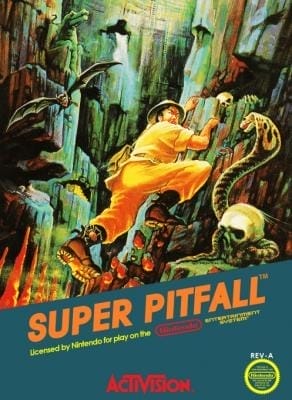
Super Pitfall!
Super Pitfall is a 1986 side-scrolling non-linear platform game for the Nintendo Entertainment System (NES). Despite the title screen stating that it was reprogrammed by Pony Inc., the development of the NES version was handled by Micronics, a Japanese developer who mostly ported arcade games to the NES. Super Pitfall was the first game that Activision published as a third-party developer for the NES. Following the original release of the game, ports were made in Japan by Makoto Ichinoseki for the PC-8800 series liner of computers and by Steve Bjork for the Color Computer 3. The game initially received positive reviews from VideoGames & Computer Entertainment and Computer Entertainer while Bill Kunkel wrote in Computer Gaming World that the game did not control well and did not stand out well in a market of Super Mario Bros. clones.
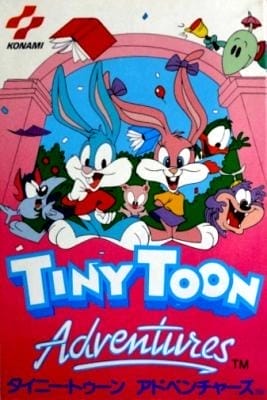
Tiny Toon Adventures
Tiny Toon Adventures is a platform video game for the NES. It was developed and published by Konami and released in 1991. It is the first Tiny Toon Adventures video game to be released for a video game console.
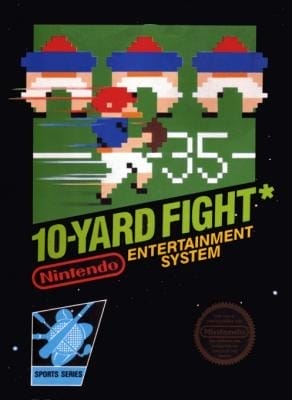
10-Yard Fight
10-Yard Fight is a 1983 American footballvideo game developed and published by Irem for arcades. It was released by Taito in North America, Electrocoin in Europe, and ADP Automaten in West Germany. A port developed by Tose for the Nintendo Entertainment System was released in 1985 by Irem in Japan and Nintendo internationally. 10-Yard Fight is viewed in a top-down perspective and is vertical scrolling. The player does not select plays for either offense or defense. On offense, the player simply receives the ball upon the snap and either attempts to run with the quarterback, toss the ball to a running back, or throw the ball to the long distance receiver, essentially the option offense. On defense, the player picks one of two players to control, and the computer manipulates the others. The ball can also be punted "Punt (gridiron football)") or a field goal "Field goal (football)") can be attempted.
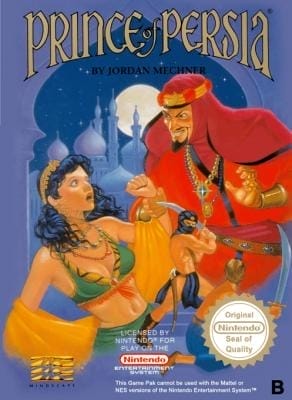
Prince of Persia
Mechner enrolled in New York University's film department, producing an award-winning short film during his time there, before returning to design and direct a sequel to the original game. The sequel, Prince of Persia 2: The Shadow and the Flame, was developed internally at Broderbund with Mechner's supervision. The game, like its predecessor, received critical acclaim and high sales. Broderbund was subsequently purchased by The Learning Company, which was later acquired by US game company Mattel Interactive. In 1999, Prince of Persia 3D was developed and released under Broderbund's Red Orb label. Released for PC and the Dreamcast only, it was criticized by many users as being buggy, and was a commercial disappointment. The Broderbund/Learning Company's games division, the assets of which included the Prince of Persia franchise, was subsequently sold to Ubisoft.
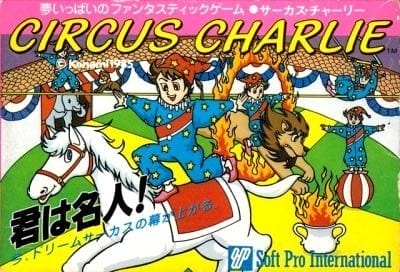
Circus Charlie
Circus Charlie is a 1984 actionvideo game developed and published by Konami for arcades. It was released in North America by Centuri in March 1984 and in Japan in April 1984. The player controls a circus clown named Charlie in six different circus-themed minigames. It was released for MSX in the same year, followed by ports to the Famicom in 1986 by Soft Pro and the Commodore 64 in 1987. In the game there are six regular stages "Level (video gaming)") (plus an extra stage) of differing tasks that are to be completed by Charlie. Grabbing money bags, performing dangerous tricks, avoiding enemies, completing stages, etc., earns Charlie points "Score (gaming)"). After the sixth stage is completed, the game starts over again but with a faster pace and more difficult (but exactly the same in terms of task to be completed) levels. Charlie also races against time. Bonus points are awarded according to the time remaining, but running out of time will cost the player a life.
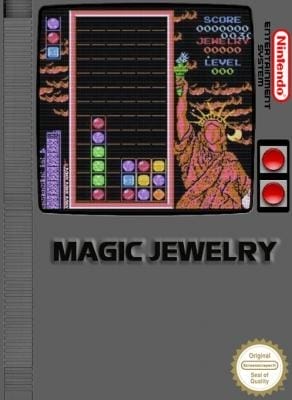
Magic Jewelry
Hwang Shinwei (Chinese: 黃信維; pinyin: Huángxìnwéi), sometimes romanized as Huang Hsin-Wei or Huang Xinwei, is a Taiwanese video game programmer. From 1988 to 1991, he developed video games for the NES without a license from Nintendo, which were mostly published by RCM Co., Ltd. (also known as RCM Group or simply RCM, standing for RamCo Man International (Chinese: 劍虹國際有限公司)). Though some of Hwang's titles are originals. most are clones of popular games, many of which were not originally ported to the NES (such as Rally-X). All of these games were released on various multicarts, but several, like Brush Roller and Magic Jewelry, were also released on standalone cartridge format. Though standalone games and multicarts produced by RCM and other companies with ties to Hwang often had copyright information listed, cartridges produced by unrelated companies usually had their copyright information removed, even on single release cartridges.
Dig Dug
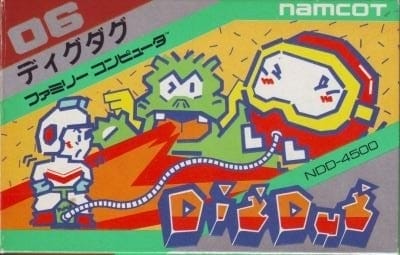
Dig Dug is a 1982 maze video game developed and published by Namco for arcades. It was released by Atari, Inc. in North America. The player digs underground tunnels to attack enemies in each level, by either inflating them to bursting or crushing them underneath rocks. Dig Dug was planned and designed by Masahisa Ikegami with help from Galaga creator Shigeru Yokoyama. It was programmed for the Namco Galaga arcade board by Shouichi Fukatani, who worked on many of Namco's earlier arcade games, along with Toshio Sakai. Music was composed by Yuriko Keino, including the character movement jingle at executives' request, as her first Namco game. Namco heavily marketed it as a "strategic digging game". Upon release, Dig Dug was well received by critics for its addictive gameplay and kawaii character design. During the golden age of arcade video games, it was globally successful, including as the second highest-grossing arcade game of 1982 in Japan.
Mappy
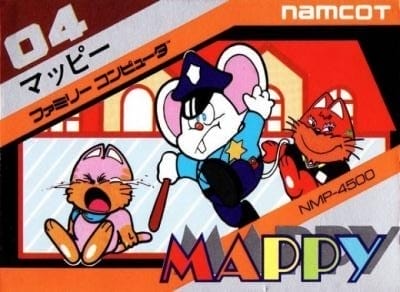
Mappy is a 1983 platformvideo game developed and published by Namco for arcades. It was released in Japan in March 1983 and in North America by Bally Midway in April 1983. It runs on Namco's Super Pac-Man hardware modified to support horizontal scrolling. The name "Mappy" is likely derived from mappo (マッポ), a slightly pejorative Japanese slang term for policeman. The game has been re-released in several Namco arcade compilations. It spawned a handful of sequels and a 2013 animated web series developed by cartoonists Scott Kurtz and Kris Straub. Controls consist of a two-position joystick and a button. The player assumes the role of Mappy, a police mouse tasked with recovering stolen items from a mansion that serves as a hideout for a gang of thieving cats. Goro (Nyamco in Japanese), large and red, is the leader, while the smaller blue Meowky cats (Mewky in Japanese) are his underlings.
Kung Fu
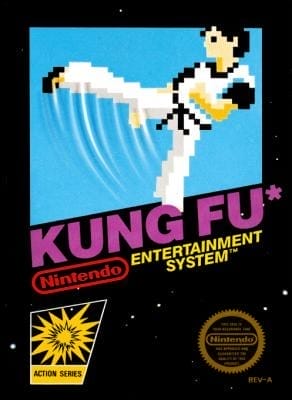
Kung-Fu Master, known as Spartan X#cite_note-18) in Japan, is a 1984 beat 'em up game developed and published by Irem for arcades. It was distributed by Data East in North America. Designed by Takashi Nishiyama, the game was based on Hong Kong martial arts films. It is a loose adaptation of the Jackie Chan, Sammo Hung and Yuen Biao film Wheels on Meals (1984), called Spartan X in Japan. The protagonist Thomas is named after Jackie Chan's character in the film. It is also heavily inspired by the Bruce Lee film Game of Death (1972), which was the basis for the game's concept. Nishiyama, who had previously designed the side-scrolling shooter_Moon Patrol_ (1982), combined fighting elements with a shoot 'em up gameplay rhythm. Irem and Data East exported the game to the West without the Spartan X license.
Antarctic Adventure
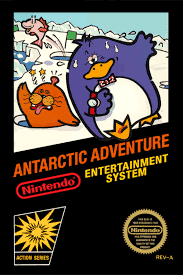
Antarctic Adventure (けっきょく南極大冒険, Kekkyoku Nankyoku Daibōken; lit. "Actually Antarctic Big Adventure") is a video game developed by Konami in 1983 for the MSX, and later for video game consoles, such as the Family Computer and ColecoVision. The player takes the role of an Antarctic penguin, racing to various research stations owned by different countries in Antarctica (excluding the USSR). The gameplay is similar to Sega's Turbo, but plays at a much slower pace, and features platform game elements. The penguin, later named Penta, must reach the next station before time runs out while avoiding sea lions and breaks in the ice. Throughout the levels, fish jump out of ice holes and can be caught for bonus points. The game, like many early video games, has no ending – when the player reaches the last station, the game starts from the first level again, but with increased difficulty.
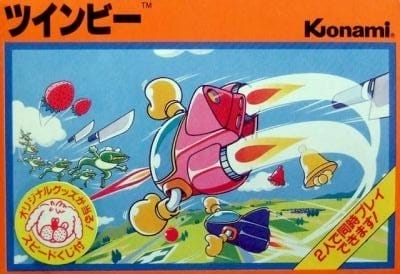
TwinBee
TwinBee is a 1985 vertically scrolling shooter video game developed and published by Konami for arcades. Along with Sega's Fantasy Zone (1986), it is credited as an early archetype of the "cute 'em up" subgenre. It was the first game to run on Konami's Bubble System hardware. TwinBee was ported to the Family Computer and MSX in 1986, and has been included in numerous compilations released in later years. The original arcade game was released outside Japan for the first time as part of the Nintendo DS compilation Konami Classics Series: Arcade Hits. A mobile phone version with edited graphics was released for Japanese i-mode mobile phones in 2003. Various TwinBee sequels were released for the arcade and home console markets following the original game, some of which spawned audio drama and anime adaptations in Japan.
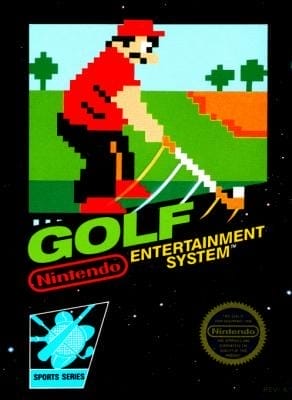
Golf
In 1983, the Famicom had only three launch games, and its library would soon total seven, including Golf. Shigeru Miyamoto said he was "directly in charge of the character design and the game design",#cite_note-Miyamoto_Spills-5) and Satoru Iwata said he was the only programmer.#cite_note-only_prog-6) Golf has been re-released on many other consoles after its release. Hudson Soft released a conversion of the game for the Japan-only PC-88 and Sharp X1 in 1985.[citation needed]Golf was released for the Japan-only Family Computer Disk System on February 21, 1986.#cite_note-13) It was re-released for the Nintendo e-Reader for the Game Boy Advance on April 21, 2003.#cite_note-14) Both the NES and Game Boy versions were released on the Virtual Console for Wii U and Nintendo 3DS.#cite_note-15)#cite_note-16) It was re-released on the Nintendo Switch via Nintendo eShop on October 25, 2019, by Hamster Corporation as part of its Arcade Archives series.
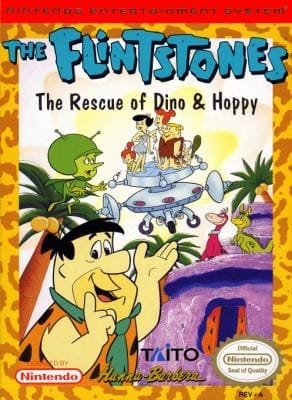
The Flintstones: The Rescue of Dino & Hoppy
The Flintstones: The Rescue of Dino & Hoppy (Japanese: フリントストーン The Rescue of Dino & Hoppy) is a 1991 platformvideo game by Taito for the Nintendo Entertainment System and based on the animated series The Flintstones. Taito would later release another Flintstones game for the NES titled The Flintstones: The Surprise at Dinosaur Peak in 1993.
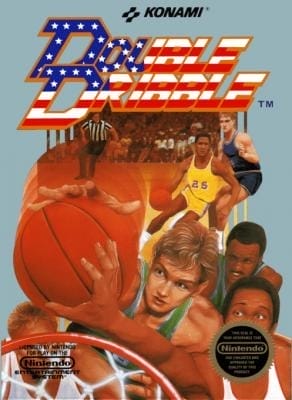
Double Dribble
Double Dribble (ダブルドリブル, Daburu Doriburu) is a 1986 basketball video game developed and published by Konami for arcades. It was the second basketball game by Konami, following Super Basketball. It was considered the most realistic basketball sports game upon release, with fast-paced action, detailed players, a large side-scrolling court, innovative cinematic slam dunks, and detailed sound effects, beginning a trend where presentation would play an increasingly important role in sports games.#cite_note-allgame-review-7) Much of the game's popularity came from its animation sequences showing basketball players performing slam dunks, as well as "The Star-Spangled Banner" theme during the attract mode. These were uncommon in video games at the time of Double Dribble's release. It was successful in the arcades, and the game became and remained popular and remembered when it was ported to the Nintendo Entertainment System in 1987.
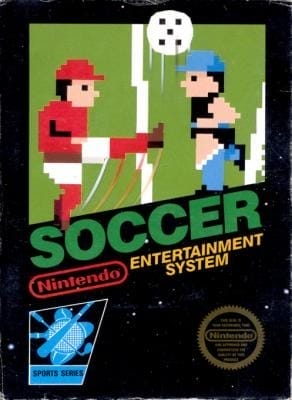
Soccer
Soccer is a soccer video game developed by Intelligent Systems and published by Nintendo for the Nintendo Entertainment System. It was released in Japan and North America in 1985, and in Europe in 1987. An arcade version for the Nintendo VS. System titled VS. Soccer was released the same year. It was released for the Famicom Disk System in 1986. The NES version was released on the Wii and Wii U Virtual Console on June 12, 2014 and on the Nintendo Classics service in 2018, while the arcade version was released by Hamster Corporation as part of their Arcade Archives series for the Nintendo Switch in 2020.
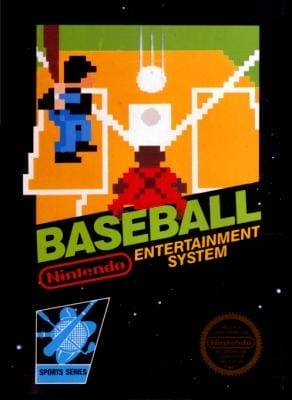
Baseball
This article is about the Nintendo-developed game. For other video games of the same name, see Baseball (disambiguation). Baseball North American NES box art Developers Nintendo R&D1 Intelligent Systems Publisher Nintendo Designer Shigeru Miyamoto[6] Composers Yukio Kaneoka Hirokazu Tanaka Platforms Nintendo Entertainment System, arcade, Famicom Disk System, Game Boy, Nintendo e-Reader Release December 7, 1983 Genre Sports (baseball) Modes Single-player, multiplayer Arcade system Nintendo VS. System, PlayChoice-10 Baseball[a] is a baseball video game developed and published by Nintendo for the Family Computer (Famicom). It was originally released in Japan on December 7, 1983, a few months after the July 15 launch of the Famicom.[7] An arcade version titled VS. Baseball released for the Nintendo VS. System in 1984, featuring enhanced graphics and speech, becoming a hit at Japanese and American arcades. The game was later released as launch title for the Nintendo Entertainment System in North America in 1985,[8] and in Europe in 1986.[9] It was also ported to the Game Boy in 1989 as one of the handheld's four launch titles.[
Browse our collection of 65 Nintendo Entertainment System retro games, all playable instantly in your browser. No download required. Play classic games online in your browser and save your progress anytime.