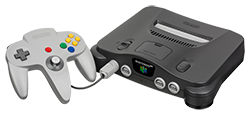
Nintendo 64
The Nintendo 64 (N64) is a home video game console developed and marketed by Nintendo. It was released in Japan on June 23, 1996, in North America on September 29, 1996, and in Europe and Australia on March 1, 1997. It was Nintendo's third major home console, following the Super Nintendo Entertainment System, and competed with Sony's PlayStation and the Sega Saturn in the fifth generation of consoles.
75 games
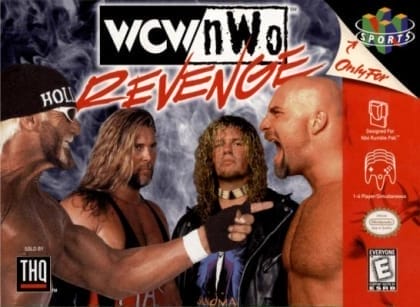
WCW/nWo Revenge
WCW/nWo Revenge is a professional wrestling video game developed by Asmik Ace Entertainment and AKI Corporation and released by THQ in 1998 for the Nintendo 64game console. It is the sequel to 1997's WCW vs. nWo: World Tour. Like its predecessor, Revenge features AKI's proprietary grappling system; as well as heavily improved graphics, a championship mode, and a large roster of wrestlers (real and fictional). Revenge gained critical praise and tremendous commercial success. According to a 1999 article by IGN, Revenge was the best-selling wrestling game for the N64 console, and at the time, was the top selling third-partyNintendo game ever. Revenge was the last AKI-developed WCW game for the Nintendo 64. The next AKI wrestling game released for the console, WWF WrestleMania 2000 "WWF WrestleMania 2000 (video game)"), sported THQ's newly acquired World Wrestling Federation (WWF) license.
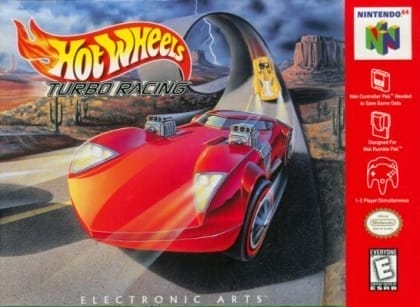
Hot Wheels: Turbo Racing
Hot Wheels Turbo Racing is a racing video game released for the Nintendo 64 and PlayStation in 1999. It features 40 cars based on the Hot Wheels series of toys. It also features Kyle Petty's 1999 NASCAR stock car, as it was sponsored by Hot Wheels. The game features music from artists like Primus, Metallica, The Reverend Horton Heat and Mix Master Mike.
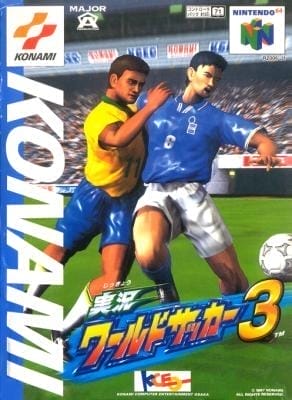
International Superstar Soccer 64
There are six game modes, including single match, league battle and penalty shoot-out "Penalty shoot-out (association football)"). The player can assign a team member to cover a specific member of the opposing team. The International Cup has the player competing against a range of teams from around the world in a round-robin tournament, while the World League is a series of 70 matches against every one of other teams in the game. The player can also contest a penalty shoot-out competition with up to 4 players or attempt to complete certain scenarios. These matches are set up with a specific goal—for example, scoring a goal within a given time limit or stopping the opposing team from scoring. The game was a commercial success, selling over 1 million units in Europe. The game met with critical acclaim in Japan. In an interview around the time of the game's release in the region, Shigeru Miyamoto said that "Konami's soccer game may be better than [Nintendo's N64] games.
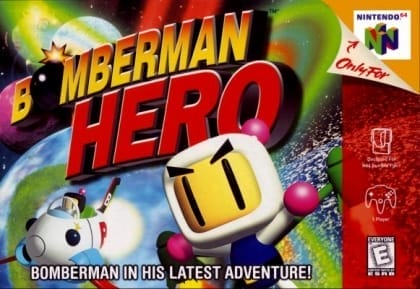
Bomberman Hero
Bomberman Hero is a platform video game developed by A.I Co., Ltd. and published by Hudson Soft for the Nintendo 64. It is the second Bomberman game to be released on the system, following Bomberman 64 (1997). It is notable for being a dramatic deviation from previous Bomberman titles, featuring predominant platforming gameplay as opposed to the series' traditional top-down strategy gameplay. Bomberman Hero received mixed reviews from critics, who criticized it for its graphics and absence of a multiplayer mode, though elements of its gameplay were praised. It was re-released through the Wii Virtual Console service in 2011.
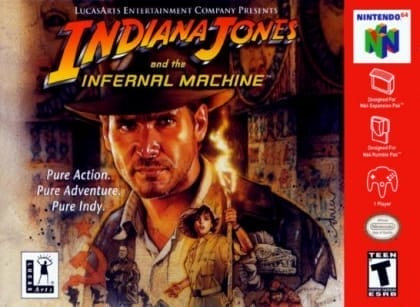
Indiana Jones and the Infernal Machine
Indiana Jones and the Infernal Machine is a 1999 action-adventurevideo game developed and published by LucasArts. The first 3D installment in the series, its gameplay focuses on solving puzzles, fighting enemies, and completing various platforming sections. The story is set in 1947, after the events of Indiana Jones and the Iron Phoenix, and puts the eponymous protagonist, the adventurer Indiana Jones "Indiana Jones (character)"), against the Soviet Union. In a race for a mythological Babylonian power source, he joins forces with the Central Intelligence Agency and collects four pieces of the Infernal Machine, an ancient device that allegedly opens a portal to another dimension. The title was designed, written, and directed by Hal Barwood, who considered the Indiana Jones franchise a perfect fit for the action-adventure genre.
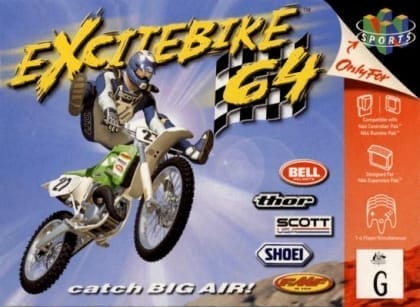
Excitebike 64
Excitebike 64 is a 2000 racing video game developed by Left Field Productions and published by Nintendo for the Nintendo 64. It is the second installment in the Excite series, acting as a sequel to the 1984 NES game Excitebike, and is the first 3D game in the series. Many real-life dirt bike gear brands are extensively featured throughout the game, such as Bell Helmets, Alpinestars and No Fear. The game received positive reviews from critics and was later re-released for Wii U via the Virtual Console in 2016 and on the Nintendo Classics service on August 30, 2023 but with the removal of every Fox Racing brand logo. A third game in the series, Excite Truck, was released in 2006 for the Wii.
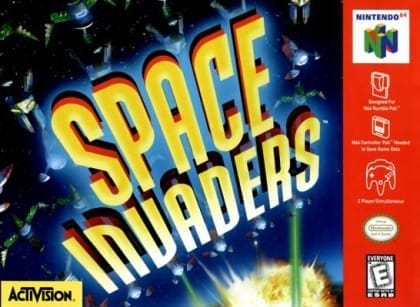
Space Invaders
Space Invaders is a 1978 shoot 'em upvideo game developed and published by Taito for arcades. Taito released it in Japan in July 1978 and overseas through a partnership with Midway Manufacturing later that year. Space Invaders was the first video game with endless gameplay and the first fixed shooter, setting the template for the genre. The goal is to defeat waves of descending aliens with a horizontally moving laser cannon to earn as many points as possible. Designer Tomohiro Nishikado drew inspiration from video games such as Gun Fight and Breakout, electro-mechanical target shooting games, and science fiction narratives such as the novel The War of the Worlds, the anime Space Battleship Yamato, and the film Star Wars "Star Wars (film)"). To complete development, he had to design custom hardware and development tools to use the features in microprocessor technology, which was new to him.
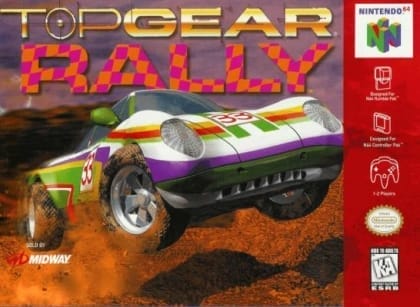
Top Gear Rally
Top Gear Rally is a 1997 racing video game developed by Boss Game Studios and released for the Nintendo 64. A follow-up to Kemco's original Top Gear game, it features a championship mode where a single player must complete six seasons of two to four races, as well as a multiplayer mode where two players may compete against each other via a split-screen display. The game's tracks combine both road and off-road surfaces and can be played in different weather conditions, including night, fog, rain, and snow. Players may customize their car with different tire grips and adjust its suspension stiffness and steering sensitivity. An option that allows players to custom paint their cars is also included. Top Gear Rally was conceived after Boss created a non-interactive demonstration running on Silicon Graphics workstations that featured two- and four-wheel drive vehicles racing through different driving conditions.
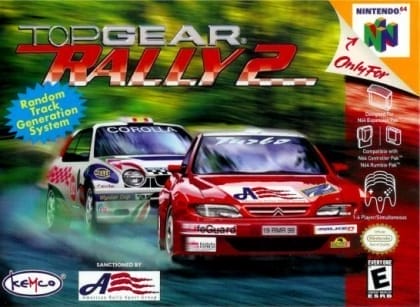
Top Gear Rally 2
Top Gear Rally 2 is a racing video game developed by Saffire and released for the Nintendo 64 in 1999. It is a sequel to Top Gear Rally. Top Gear Rally 2 is a racing game where players drive rally cars through a series of tracks. The game features a random and dynamic weather system. Unlike the original Top Gear Rally, which was developed by Boss Game Studios, Top Gear Rally 2 was developed by Saffire. The company conceived Top Gear Rally 2 as a more realistic game than its predecessor, with more simulation-like elements such as real-time car damage and weather effects. The physics engine was completely rewritten. All the vehicles in the game are licensed versions of real rally cars such as the Ford Focus and the Renault Alpine. During the final stages of the development cycle, developers had to work between 16 and 18 hours a day to complete the game. The game supports the Nintendo 64 Expansion Pak, which allows the game to be played at a resolution of 480x480 pixels.
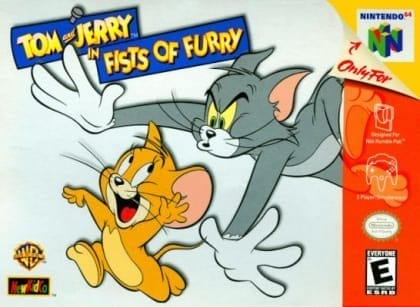
Tom and Jerry in Fists of Furry
IGN briefly played a pre-release demonstration of the Nintendo 64 version, calling it a clone of Power Stone "Power Stone (video game)") (1999), with a disappointing lack of four-player fighting.IGN later rated it 6.8/10, calling it "the next best fighter on the system" after Super Smash Bros. (1999), saying that it would have been better received if it had been released first. Ryan Davis of GameSpot rated it "fair" at 6.6/10, calling the game challenging but also accessible to younger players. He praised the controls but criticized the difficulty balance.N64 Magazine rated it 35%, and said the game is to be avoided because the high-quality Tom and Jerry franchise was "let down by lazy and cack-handed execution", especially because of a "brain-numbing punch-punch-kick-style combo" instead of any special attacks. They said that the characters were not drawn badly and that the locations from the cartoons were a plus.Nintendo Power gave an 8.
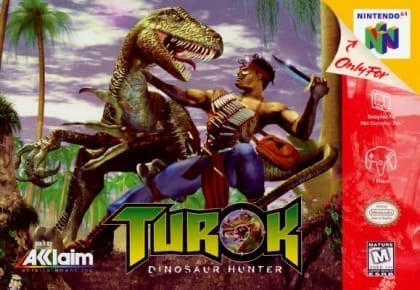
Turok: Dinosaur Hunter
Turok: Dinosaur Hunter is a first-person shooter video game developed by Iguana Entertainment and published by Acclaim Entertainment. It was released in 1997 in North America and Europe for the Nintendo 64 and Microsoft Windows, and is an adaptation of the comic book series of the same name from Valiant Comics. The player controls Turok, a Native American warrior who must stop the evil Campaigner from conquering the universe with an ancient and powerful weapon. As Acclaim's first title for the Nintendo 64, Turok was part of a strategy to develop games internally and license merchandise. Acclaim acquired the rights to Turok when it purchased Valiant Comics in 1994, renaming it Acclaim Comics. Suffering from cash flow problems and falling sales, Acclaim came to rely on Turok as its best hope for a financial turnaround. Iguana pushed the Nintendo 64's graphics capabilities to its limits, and were forced to compress or cut elements to fit the game on its 8 megabyte cartridge.
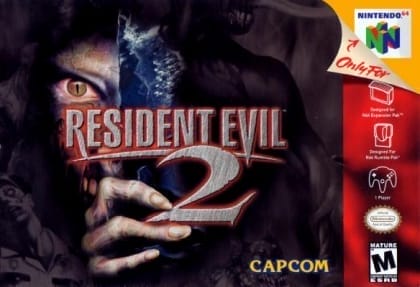
Resident Evil 2
Resident Evil 2 is a 1998 survival horror video game developed and published by Capcom for the PlayStation. The player controls rookie cop Leon S. Kennedy and college student Claire Redfield, who must escape Raccoon City after its citizens are transformed into zombies "Zombie (fictional)") by a biological weapon two months after the events of the original Resident Evil "Resident Evil (1996 video game)"). The gameplay focuses on exploration, puzzles, and combat; the main difference from its predecessor are the branching paths, with each player character having unique storylines, partners and obstacles. Resident Evil 2 was produced by Resident Evil director Shinji Mikami, directed by Hideki Kamiya, and developed by a team of approximately 50 across 21 months. The initial version, commonly referred to as Resident Evil 1.5, differs drastically; it was canceled at approximately two thirds completion because Mikami decided it was inadequate.
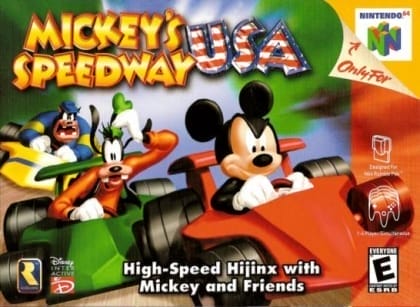
Mickey's Speedway USA
Mickey's Speedway USA is a kart racing game developed by Rare and published by Nintendo for the Nintendo 64 and Game Boy Color. It is Rare and Nintendo's second collaboration with Disney Interactive following Mickey's Racing Adventure (1999), and features characters from the Mickey Mouse universe racing across the United States. The Nintendo 64 game released in November 2000 to mixed reception, while the Game Boy Color version followed in March 2001.
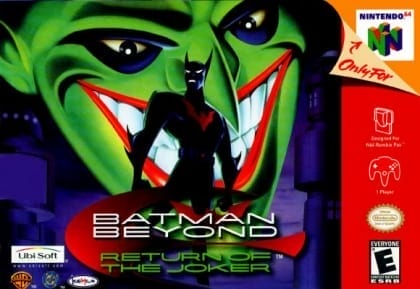
Batman Beyond: Return of the Joker
It is the middle of the 21st century, 20 years since Batman was publicly last seen in Gotham City.#cite_note-9) The metropolitan area's research and development lab, named Air & Space, is taken over by a gang of self-described "Jokerz", which Terry McGinnis, the new Batman replacing the retired Bruce Wayne, is alerted to via an emergency signal.#cite_note-10) Batman gets to the lab and finds Benjamin Knox and one of the Jokerz; Benjamin instructs the gang member to handle the console while he fights Batman.#cite_note-11) The member screws it up, and all of the gang members leave with only the memory board.#cite_note-12) Terry reveals this is the third time a stealing of high-tech equipment has occurred, making Bruce suspect a group named the Jokerz are responsible.#cite_note-13) It is then revealed the Joker has been revived and is leading the group.
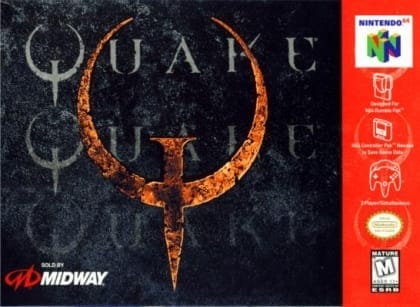
Quake
Quake is a 1996 first-person shooter video game developed by id Software and published by GT Interactive. The first game in the Quake series, it was originally released for MS-DOS and Windows, followed by Mac OS, Linux, and Saturn in 1997 and Nintendo 64 in 1998. The game's plot is centered around teleportation experiments, dubbed slipgates, which have resulted in an unforeseen invasion of Earth by a hostile force codenamed Quake, which commands a vast army of monsters. The player takes the role of a soldier (later dubbed Ranger), whose mission is to travel through the slipgates in order to find and destroy the source of the invasion. The game is split between futuristic military bases and medieval, gothic environments, featuring both science fiction and fantasy weaponry and enemies as the player battles possessed soldiers and demonic beasts such as ogres or armor-clad knights. Quake heavily takes inspiration from gothic fiction and in particular the works of H. P. Lovecraft.
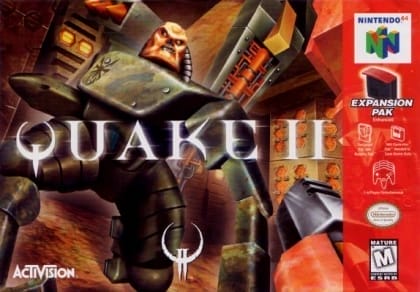
Quake II
Quake II is a 1997 first-person shooter game developed by id Software and published by Activision. It is the second installment of the Quake series "Quake (series)"), following Quake. Developed over the course of a year, Quake II was released on December 9, 1997. In contrast to the first game, which featured a combination of science fiction and fantasy elements, Quake II entirely drops the latter elements and is set during humankind's war against a rogue alien race known as the Strogg, half-mutant half-machine creatures whose homeplanet, Stroggos, is the target of the humans' invasion force. The player takes the role of a space marine (referred to as Bitterman) as he crash-lands on the planet and, being the last survivor of his squad, is tasked with completing a series of missions to cripple the Strogg and end their plans to conquer Earth. The game's storyline is continued in its expansions, including one tying in Quake II and the first game, and Quake 4.
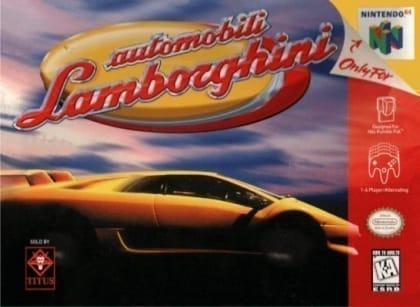
Automobili Lamborghini
Automobili Lamborghini is a 1997 racing video game developed and published by Titus France for the Nintendo 64. It is a successor to Lamborghini American Challenge.#cite_note-2) In 1998, an improved version subtitled Super Speed Race 64 (スーパースピードレース64) was released in Japan only. This version was distributed by Taito, presented as a successor to the company's Speed Race series from the late 1970s and early 1980s. Improvements include a new difficulty level, the ability to freely customize controls, the introduction of weather, and actual pictures of various models of Lamborghini with their names displayed before the demo screen. Automobili Lamborghini is an arcade-style racing game similar to the Ridge Racer or the early Need for Speed series. There are 4 modes of play: Arcade, Championship, Single Race, and Time Trials.
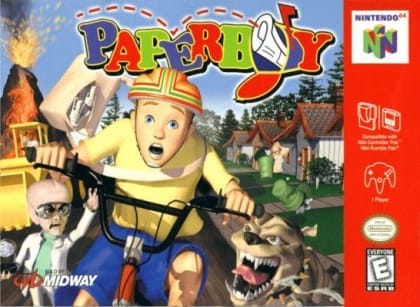
Paperboy
Paperboy is a 1985 action video game developed and published by Atari Games for arcades.#cite_note-history-18)#cite_note-atari_production99-1) The player takes the role of a paperboy who delivers a fictional newspaper called The Daily Sun to houses on a street while riding his bicycle.#cite_note-19) The arcade version featured bike handlebars as the controller.#cite_note-rgamer-20) The game was widely ported to home systems beginning in 1986, and was followed by the computer and console-exclusive sequel Paperboy 2 in 1991. The player assumes the role of a paperboy on a bicycle delivering newspapers along a suburban street in the United States,#cite_note-rgamer-20)#cite_note-retrogamer39-21) which is displayed in an oblique projection view. Controls consist of a set of handlebars that can be turned/tilted to steer and control speed, with mounted buttons that can be pressed to throw papers.
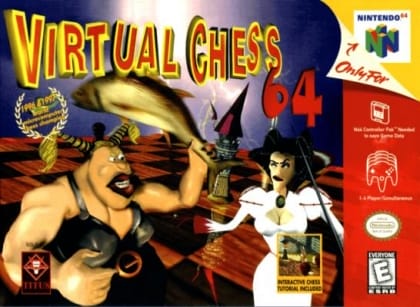
Virtual Chess 64
Virtual Chess 64 is a chess simulation game for the Nintendo 64. It was released in 1998. It is the third and final game in the Virtual Chess series. The game features no true "completion" in the form of a goal or a score, so one could theoretically play an endless number of matches. When a piece is captured, a short animated cutscene plays back depicting the battle, as in 1988's Battle Chess.
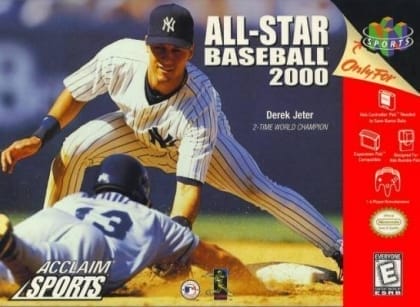
All-Star Baseball 2000
All-Star Baseball 2000 is a video game developed by Iguana Entertainment and Realtime Associates and published by Acclaim Entertainment for the Game Boy Color and the Nintendo 64 in 1999.
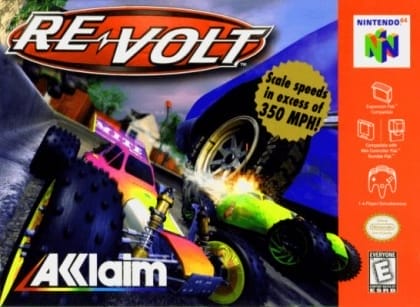
Re-Volt
Re-Volt is a 1999 racing video game designed by Paul Phippen and Simon Harrison. It was developed by Acclaim Studios London and published by Acclaim Entertainment for Microsoft Windows, Nintendo 64, PlayStation and Dreamcast. The premise of the game involves racing radio-controlled cars around environments like museums, steamships, construction sites and supermarkets. During a race the cars can collect random weapons to use to displace competitors. Cars and tracks were both unlocked through success in the game's tournament modes.
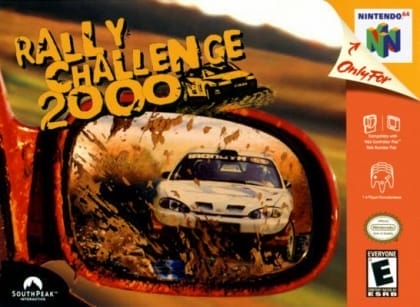
Rally Challenge 2000
Rally Challenge 2000, released in Japan as Rally '99, is a racing game for the Nintendo 64. It was released in the United States in 2000. Includes cars from the 1998 and 1999World Rally Championship.
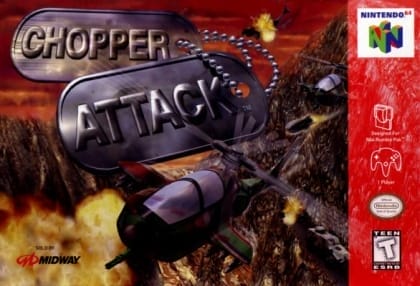
Chopper Attack
Chopper Attack, known as Wild Choppers (ワイルドチョッパーズ, Wairudo Choppāzu) in Japan, is a third-person helicopter-based shooting game developed by SETA Corporation for the Nintendo 64. It was released in 1997 in Japan and 1998 in other regions.
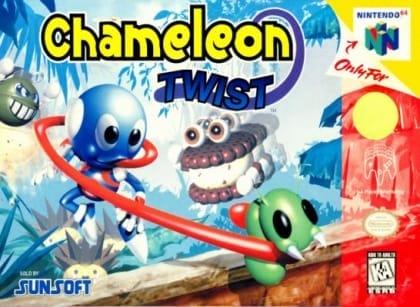
Chameleon Twist
Chameleon Twist is a 1997 video game developed by Japan System Supply, published by Japan System Supply in Japan, and published by Sunsoft in North America and Europe for the Nintendo 64. Though disliked by critics due to its easy gameplay, repetitive music, and awkward camera angles, Chameleon Twist was followed by a sequel titled Chameleon Twist 2. This 3D platform game has players take on the role of one of four anthropomorphic chameleons, and travel across six themed worlds. The chameleon's elongated tongue can be used as a weapon, a means to traverse gaps, or as a way to leap onto platforms. Once the tongue is unrolled, it can be guided in any direction using the analog stick. A five-room training area lets players practice the controls. The single-player game involves progressing through predominately indoor environments, each culminating in a boss battle, while collecting hearts to replenish health.
Browse our collection of 75 Nintendo 64 retro games, all playable instantly in your browser. No download required. Play classic games online in your browser and save your progress anytime.