Nintendo R&D1
18 games — Nintendo R&D1
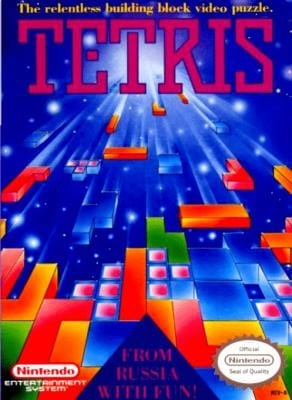
Tetris
Tetris is a 1989 puzzle video game developed and published by Nintendo for the Nintendo Entertainment System (NES). Based on Tetris (1985) by Alexey Pajitnov, it was released after a legal battle between Nintendo and Atari Games, who had previously released a console port outside of the terms of their Tetris license. Bullet-Proof Software had previously released Tetris for the Family Computer in December 1988, while Nintendo had released Tetris for the Game Boy earlier in 1989. Nintendo licensed exclusive home console rights for the Tetris intellectual property from Soviet authorities, leaving Atari Games unaware that they did not possess these rights from their own license. Being forced to quickly recall their version of Tetris for the NES was a major setback to Atari Games and their involved subsidiary Tengen. American reviewers held Nintendo's version to be an inferior product to the recalled Atari Games version.
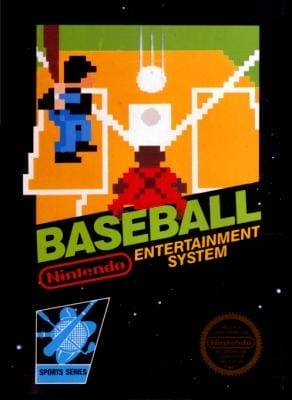
Baseball
This article is about the Nintendo-developed game. For other video games of the same name, see Baseball (disambiguation). Baseball North American NES box art Developers Nintendo R&D1 Intelligent Systems Publisher Nintendo Designer Shigeru Miyamoto[6] Composers Yukio Kaneoka Hirokazu Tanaka Platforms Nintendo Entertainment System, arcade, Famicom Disk System, Game Boy, Nintendo e-Reader Release December 7, 1983 Genre Sports (baseball) Modes Single-player, multiplayer Arcade system Nintendo VS. System, PlayChoice-10 Baseball[a] is a baseball video game developed and published by Nintendo for the Family Computer (Famicom). It was originally released in Japan on December 7, 1983, a few months after the July 15 launch of the Famicom.[7] An arcade version titled VS. Baseball released for the Nintendo VS. System in 1984, featuring enhanced graphics and speech, becoming a hit at Japanese and American arcades. The game was later released as launch title for the Nintendo Entertainment System in North America in 1985,[8] and in Europe in 1986.[9] It was also ported to the Game Boy in 1989 as one of the handheld's four launch titles.[
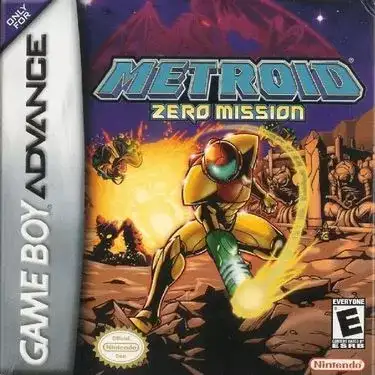
Metroid: Zero Mission
Metroid: Zero Mission is a 2004 action-adventure game developed and published by Nintendo for the Game Boy Advance. It is a remake of the original Metroid (1986), with updated visuals and gameplay. Like other Metroid games, the player controls the bounty hunter Samus Aran. Samus travels to the planet Zebes after learning that the Space Pirates are experimenting with Metroids, hostile parasitic creatures, which they plan to use to take over the universe. The gameplay focuses on exploration, with the player searching for power-ups to reach previously inaccessible areas. The remake adds items, additional areas, mini-bosses, difficulty levels "Balance (game design)") and a rewritten story that explores Samus's past. Zero Mission received praise for its new content, graphics, gameplay and improvements over the original, but criticism for its short length. Nintendo Power named it one of the best Nintendo games.
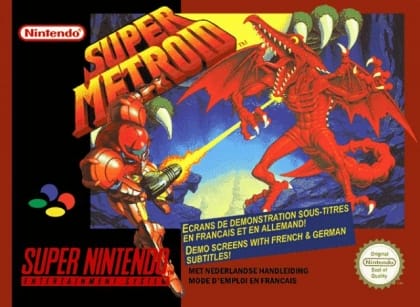
Super Metroid
Following the established gameplay model of its predecessors, Super Metroid focuses on exploration, with the player searching for power-ups used to reach previously inaccessible areas. It introduced elements such as the inventory screen, an automap, and the ability to fire in 8 directions. The development staff from previous Metroid games—including Yoshio Sakamoto, Makoto Kano "Makoto Kano (video game designer)") and Gunpei Yokoi—returned to develop Super Metroid over the course of two years. The developers wanted to make a true action game, and set the stage for Samus' reappearance. Super Metroid received acclaim, with praise for its atmosphere, gameplay, music and graphics. It is often cited as one of the greatest video games of all time. The game sold well and shipped 1.42 million copies worldwide by late 2003. Alongside Castlevania: Symphony of the Night, Super Metroid is credited for establishing the Metroidvania genre, inspiring numerous indie games and developers.
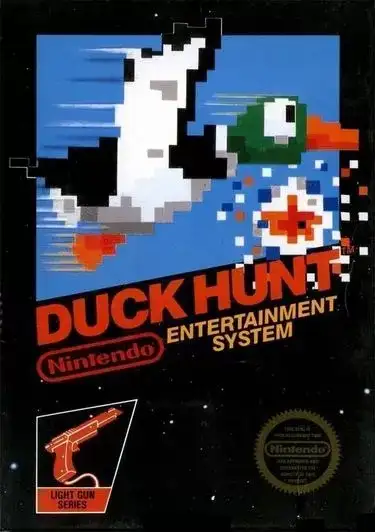
Duck Hunt
Duck Hunt#cite_note-7) is a 1984 light gun shootervideo game developed and published by Nintendo for the Nintendo Entertainment System (NES). The game was first released in April 1984 in Japan for the Family Computer (Famicom) console and in North America as an arcade game for the Nintendo VS. System. It became a launch game for the NES in North America in October 1985, and was re-released in Europe two years later. Players fire the NES Zapper at a CRT television,#cite_note-howtogeek.com-8) with three attempts per round "Level (video gaming)") to shoot ducks and clay pigeons. The game initially received a positive reception in the mid-1980s,#cite_note-Adlum-9) but was later given mild praise in retrospective reviews.#cite_note-Allgame_review-10)#cite_note-Gamespot_people-11) The game was inspired by Nintendo's previous electro-mechanical arcade game which was based on the Laser Clay Shooting System released in 1976.
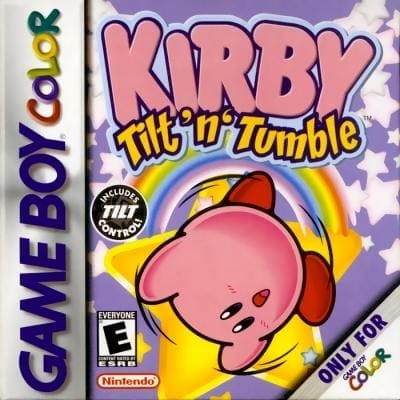
Kirby: Tilt 'n' Tumble
It was the sixth best selling Game Boy Color game in Japan, with 563,914 copies sold. A planned sequel to the original game, titled Kirby Tilt 'n' Tumble 2, was shown at Nintendo Space World 2001, which was being developed for the GameCube and was planned to require Game Boy Advance connectivity. Video game designer Shigeru Miyamoto demonstrated the gameplay, showing Kirby falling off a ledge on the television screen to the Game Boy Advance screen. He also mentioned that the player could write "programs", such as minigames, into the game cartridge. Originally planned for release in May 2002, the game was retitled as Roll-O-Rama, replacing Kirby with a marble ball. While shown at E3 2002, the title was never released. Koro Koro Puzzle Happy Panechu! WarioWare: Twisted! Yoshi's Universal Gravitation 1. ^Known in Japan as Korokoro Kirby (Japanese: コロコロカービィ, Hepburn: Korokoro Kābī; Roly-Poly Kirby) 1. ^Plant, Logan (2023-02-08).
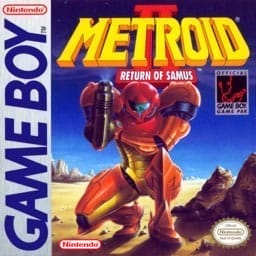
Metroid II: Return of Samus
Metroid II: Return of Samus is a 1991 action-adventure game developed and published by Nintendo for the Game Boy. The first Metroid game for a handheld game console, it was released in North America in November 1991 and in Japan and Europe in 1992. It follows the bounty hunter Samus Aran on her mission to eradicate the Metroids from their home planet, SR388, before the Space Pirates can obtain them. Players must find and exterminate the Metroids to progress. Like the original Metroid, released in 1986 for the Nintendo Entertainment System, Metroid II was developed by Nintendo Research & Development 1 and produced by Gunpei Yokoi. It introduced several features that became staples of the series, including Samus's Space Jump, Spazer Beam and the Spider Ball, and round-shouldered Varia Suit. Metroid II received positive reviews, with praise for its story, setting, and improved gameplay, but was criticized for its graphics and audio. By late 2003, it had sold 1.72 million copies worldwide.
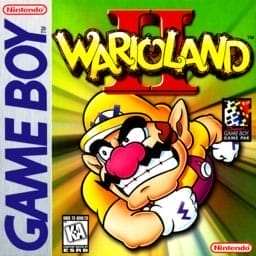
Wario Land 2
Wario Land II, known in Japan as Wario Land 2: The Stolen Treasure, is a 1998 platform game developed and published by Nintendo for the Game Boy. Players control Wario as he sets out to recover his stolen treasure from Captain Syrup. The gameplay retains the side-scrolling platforming of Wario Land: Super Mario Land 3, with the player guiding Wario through various levels with the goal of finishing with as many coins as possible. Wario Land II introduces an immortality game mechanic in which enemies cannot inflict damage, but instead cause Wario to lose coins or transform into forms with abilities that allow players to access new areas. The original version was released for the Game Boy in North America and Europe in March 1998. A colorized version, sometimes called Wario Land II DX, was released in Japan in October 1998 as a launch game for the Game Boy Color, and later in other regions. It received positive reviews.
Wario Land 4
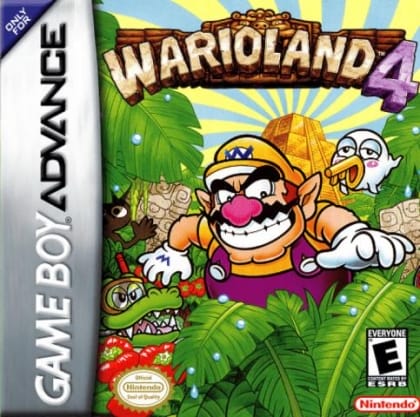
Wario Land 4 is a 2001 platform game developed by Nintendo R&D1 and published by Nintendo for the Game Boy Advance. It is the fourth installment in the Wario Land subseries of the Wario series. It was released in Japan in August 2001 and November 2001 internationally. In the game, Wario has to gather four treasures to unlock a pyramid and save Princess Shokora from the Golden Diva. The game received acclaim for its graphics and gameplay.
Wario Land 3
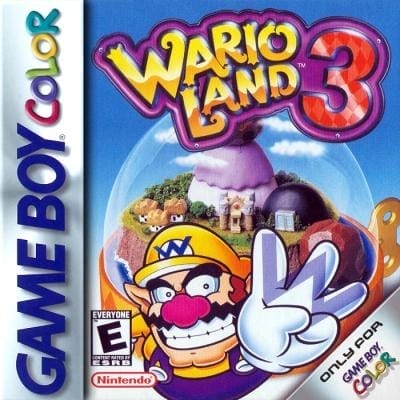
Wario Land 3, known in Japan as Wario Land 3: Mysterious Music Box, is a 2000 platform game developed by Nintendo R&D1 and published by Nintendo for the Game Boy Color. The game's plot centers around Wario who must free a mysterious figure who is trapped inside a music box. The game was released in Japan on March 21, 2000, Europe on April 14, 2000, and North America on May 30, 2000. The game was later re-released for the Nintendo 3DSVirtual Console in 2013, and as part of the Nintendo Classics service on February 8, 2023. The gameplay in Wario Land 3 is very similar to that of its predecessor, Wario Land II. Wario must take advantage of his enemies' attacks to physically change and access new areas. For example, if Wario eats a donut thrown by a certain enemy, he temporarily bulks up to twice his size, giving him extra protection against attacks and the ability to break certain blocks.
WarioWare, Inc.: Mega Microgames!
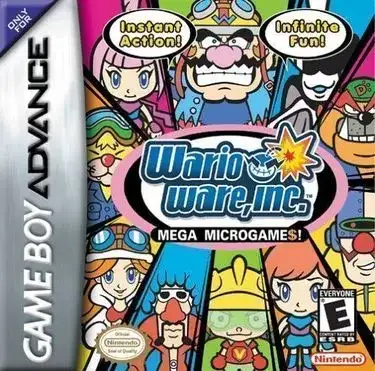
WarioWare, Inc.: Mega Microgames!, known as WarioWare, Inc.: Minigame Mania in PAL regions, is a 2003 action game developed and published by Nintendo for the Game Boy Advance. The debut title in the WarioWare series, the game is about rapid completion of "microgames", short minigames given to the player consecutively and with increasing speed per each game complete. The game's concept was inspired by the "Sound Bomber" mode of Mario Artist: Polygon Studio for the Nintendo 64DD. Many of the music tracks and sound effects (including Wario's voice clips) were recycled from Wario Land 4. The game was produced by Takehiro Izushi and directed by Hirofumi Matsuoka. Matsuoka was also the director of Polygon Studio. Mega Microgames! was released in 2003; in Japan in March, in North America and Europe in May and in Australia in June. Upon its release, WarioWare, Inc.
Wario Land: Super Mario Land 3
Wario Land: Super Mario Land 3, known in Japan as Super Mario Land 3: Wario Land, is a 1994 platform game developed and published by Nintendo for the Game Boy. A spin-off of the Mario series, it follows Wario, the antagonist of Super Mario Land 2: 6 Golden Coins (1992), as he travels around an island in an attempt to find the treasures necessary to purchase his own castle. The player traverses through side-scrolling levels, avoiding obstacles and jumping between platforms, while collecting coins and treasure in order to progress. Wario Land received positive reviews from critics, lauding its length and aesthetic quality, though it garnered mixed opinions on the game's difficulty. It sold more than five million copies and established the Wario series of spin-offs and sequels. The game was re-released for the Nintendo 3DS's Virtual Console.
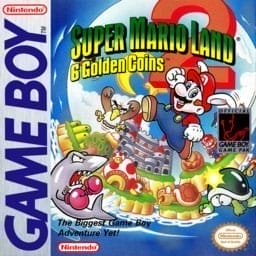
Super Mario Land 2: 6 Golden Coins
Super Mario Land 2: 6 Golden Coins is a 1992 platform game developed and published by Nintendo for the Game Boy. It is the sequel to Super Mario Land. In Super Mario Land 2, the player assumes the role of the protagonist Mario, whose main objective is to reclaim his personal island, Mario Land, from the clutches of his greedy rival Wario. The gameplay builds and expands on that of its precursor with innovations carried over from Super Mario World and Super Mario Bros. 3. Super Mario Land 2 received critical acclaim upon release and sold over 11 million copies, becoming one of the most successful and highest-rated titles on the Game Boy. Reviewers emphasized that the game surpassed its predecessor in all aspects. Super Mario Land 2 marks the debut appearance of Wario, who would become a prominent character in the Super Mario series as the antihero of several games "Wario (series)"), the first being this game's sequel Wario Land: Super Mario Land 3.
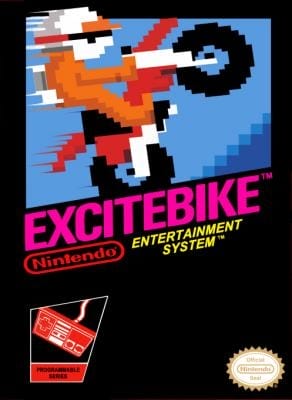
Excitebike
Excitebike is a 1984 racingvideo game developed and published by Nintendo for the Nintendo Entertainment System. It was ported to arcades for the Nintendo VS. System later that year and Famicom Disk System in 1988. In North America, it became one of the best-selling games on the console. It was the first game in the Excite series. Designed and directed by Shigeru Miyamoto, the smooth side-scrollinggame engine his team developed for Excitebike was later used to develop Super Mario Bros. (1985), which had the effect of Mario smoothly accelerating from a walk to a run, rather than move at a constant speed. Excitebike was a critical and commercial success. It spawned several sequels and has been re-released multiple times onto other Nintendo platforms, such the Wii and Wii UVirtual Console, and the Nintendo Classics service. Excitebike is a side-scrollingracing game in which the player takes control of a motocross racer.
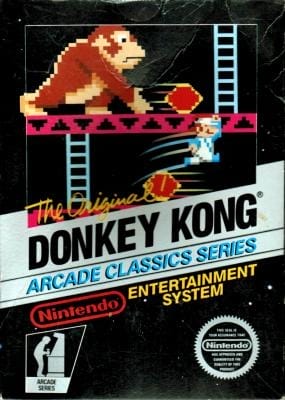
Donkey Kong
Donkey Kong#cite_note-22) is a 1981 platform game developed and published by Nintendo for arcades. As Mario (occasionally referred to as "Jumpman" at the time), the player runs and jumps on platforms and climbs ladders to ascend a construction site in New York City and rescue Pauline (occasionally referred to as "The Lady" at the time) from the giant gorilla Donkey Kong "Donkey Kong (character)"). It is the first game in the Donkey Kong series and Mario's first appearance in a video game. Donkey Kong was created to salvage unsold arcade cabinets following the failure of Nintendo's Radar Scope (1980), and was designed for Nintendo of America's audience. Hiroshi Yamauchi, Nintendo's president at the time, assigned the project to first-time video game designerShigeru Miyamoto.
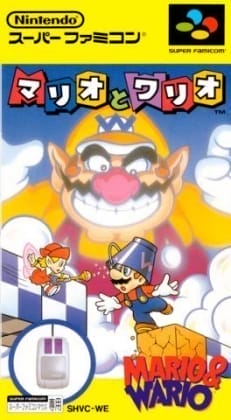
Mario & Wario
Mario & Wario is a 1993 puzzle-platform game developed by Game Freak and published by Nintendo for the Super Famicom. The game requires the Super Famicom Mouse accessory to play. Despite being a Japanese-only release, the game is entirely in English. The gameplay of Mario & Wario focuses on guiding Mario, who has various objects placed atop his head by his self-declared arch rival Wario, through a series of levels consisting of various obstacles and traps. Because Mario has been rendered sightless and is constantly in danger of walking into hazards, the player controls the fairy Wanda, who can protect Mario by changing the environment around him as he moves towards the levels' end. The game offers a total of 100 levels and offers three playable characters. The game received its first re-release and first western release on October 9, 2025, via the Nintendo Classics service.
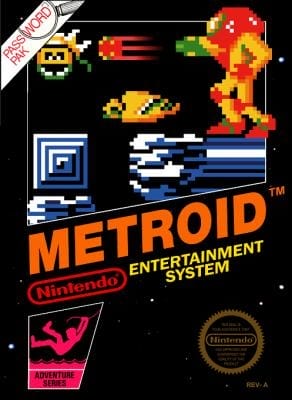
Metroid
The Metroid series contains elements from shooter, platformer, adventure, survival and first-person games. The series is notable for its non-linear progression and solitary exploration format where the player only controls Samus Aran, with few or no other characters to interact with. The player gains items and power-ups for Samus's cybernetic suit primarily through exploration, and occasionally by defeating alien creatures through real-time combat with the suit's arm cannon. Many such upgrades enable further avenues of exploration. A recurring upgrade is the Morph Ball, which allows Samus to curl into a ball, roll into tight places and plant bombs. Another well-known recurring ability is the Shinespark, which enables Samus to charge her Power Suit with energy, and run and dash at tremendous speeds from a running start. The Power Suit, thus empowered, can break through certain walls.
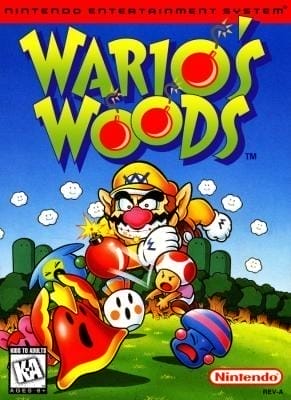
Wario's Woods
Wario's Woods, known in Japan as Wario's Forest, is a 1994 puzzle video game developed by Nintendo R&D1 and Intelligent Systems and published by Nintendo for the Nintendo Entertainment System (NES) and Super Nintendo Entertainment System (Super NES). A spin-off of the Mario series, players control Toad in his mission to defeat Wario, who has taken control of the Peaceful Woods. Gameplay revolves around clearing each level by using bombs to destroy groups of enemies. The game also features a multiplayer mode that allows two players to compete against each other. The NES version is noteworthy for being the last officially-licensed game as well as the final first-party game for the system in North America, due to its release at the end of the console's lifespan. It is also the only NES game to receive a rating from the Entertainment Software Rating Board (ESRB), which was inducted almost three months before the game's American release.
Browse our collection of 18 Nintendo R&D1 retro games, all playable instantly in your browser. No download required. Play classic games online in your browser and save your progress anytime.