Fighting
Fighting games
20 games
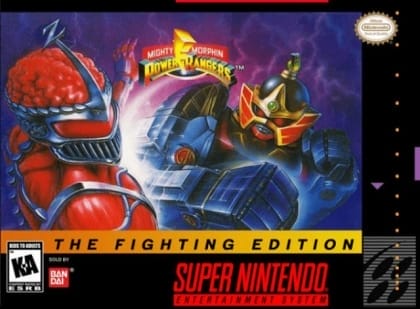
Mighty Morphin Power Rangers: The Fighting Edition
Mighty Morphin Power Rangers: The Fighting Edition is a 2D competitive fightingvideo game based on the Mighty Morphin Power Rangers television series that was released exclusively for the Super Nintendo Entertainment System developed by Natsume Co., Ltd. and published by Bandai in 1995. Unlike previous Power Rangers video games, which had the player controlling the titular heroes, the player controls their giant robots (known as Zords) in this title. A bootleg Genesis port is known to exist, though who actually made it is currently unknown.
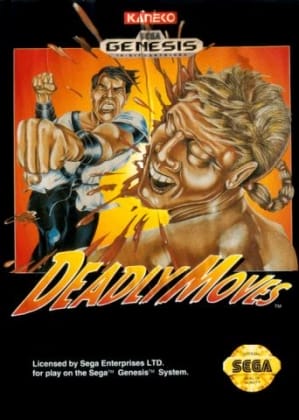
Deadly Moves
Power Athlete (パワーアスリート), known outside Japan for the Sega Genesis as Deadly Moves and for the Super Nintendo Entertainment System as Power Moves, is a 1992 fighting video game developed by System Vision and published by Kaneko.
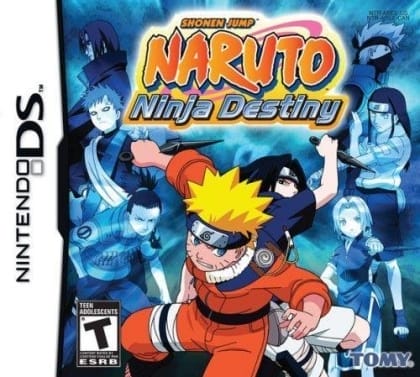
Naruto: Ninja Destiny
Naruto: Ninja Destiny, known in Japan as Naruto: Shinobi Retsuden (NARUTO(ナルト) 忍列伝; lit. "Naruto: Shinobi Legend"), is a fighting game developed by DreamFactory for Nintendo DS in 2006–2008. It is the first game in the Naruto: Ninja Destiny series. The North American and European versions have a different story. The original story from the Japanese version (with a new storyline added) was published in Europe as its own version of Ninja Destiny 2. The game features 16 playable characters (including 3 extra characters for North American and European versions).
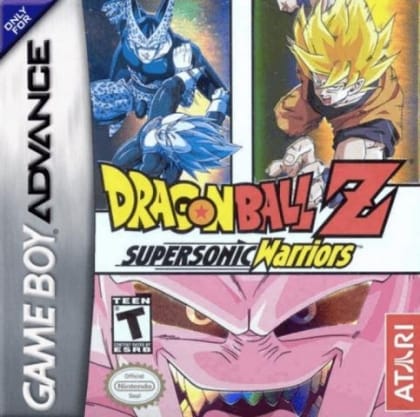
Dragon Ball Z: Supersonic Warriors
Dragon Ball Z: Supersonic Warriors (ドラゴンボールZ 舞空闘劇, Doragon Bōru Z Bukū Tôgeki) is a series of fighting games based on the Dragon Ball franchise. The first game was developed by Arc System Works and Cavia and was released for the Game Boy Advance on June 22, 2004. A sequel, Supersonic Warriors 2, was released in 2005 for the Nintendo DS.
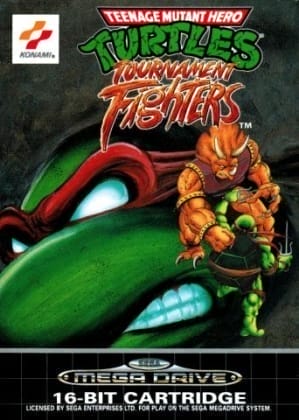
Teenage Mutant Hero Turtles: Tournament Fighters
Teenage Mutant Ninja Turtles: Tournament Fighters, or Teenage Mutant Hero Turtles: Tournament Fighters in Europe, is the title of three different fighting games based on the Teenage Mutant Ninja Turtles, produced by Konami for the Nintendo Entertainment System, Sega Genesis, and Super NES and released during a period between 1993 and 1994. Konami produced a different fighting game based on the franchise each featuring a differing cast of characters for the platforms. All three versions of the game were re-released as part of Teenage Mutant Ninja Turtles: The Cowabunga Collection in 2022, with online play using rollback netcode for the Super NES version of the game.
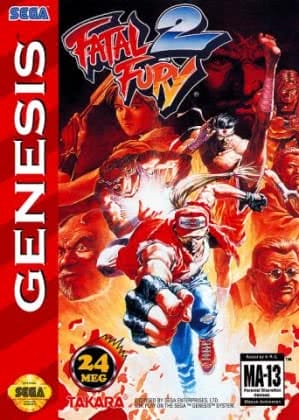
Fatal Fury 2
Fatal Fury 2, known as Garō Densetsu 2: Aratanaru Tatakai in Japan, is a 1992 fighting game developed and published by SNK for arcades. It is the second installment in the Fatal Fury franchise and the sequel to Fatal Fury: King of Fighters (1991). It was later ported to several home systems, including the Super Nintendo Entertainment System and Sega Genesis by Takara. Its updated version, Fatal Fury Special, was released in 1993. The game introduced Kim Kaphwan, the first Taekwondo and the first Korean character in fighting games, and Mai Shiranui, one of SNK's mascots, their primary sex symbol, and one of the most well-known female video game characters. Both of them went on to become mainstays in both Fatal Fury games as well as The King of Fighters series. Fatal Fury 2 was the second game in SNK's 100-Mega Shock series, offering improved graphics and gameplay over the original Fatal Fury: King of Fighters.
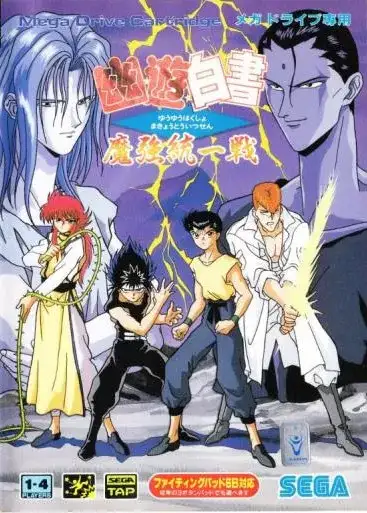
Yu Yu Hakusho
Yu Yu Hakusho Makyō Tōitsusen is a 1994 fighting game developed by Treasure and published by Sega for the Mega Drive. It is based on the manga series Yu Yu Hakusho by Yoshihiro Togashi. The plot follows the protagonist Yusuke Urameshi, who is tasked by the ruler of the afterlife with solving detective-style cases involving both humans and demons threatening the living world. The story begins to focus heavily on martial arts battles as it progresses. The game features 11 playable characters from the manga and traditional 2D fighting gameplay. Opponents compete in rounds, attempting to deplete each other's health by utilizing short and long-range attacks and special combos "Combo (video gaming)"). It also integrates other mechanics, such as allowing up to four players to compete simultaneously and letting fighters alternate between horizontal planes in the foreground and background.
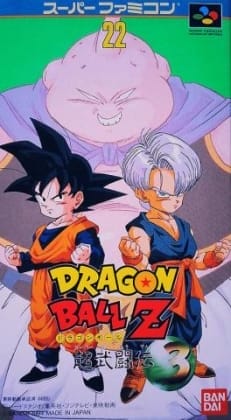
Dragon Ball Z: Super Butouden 3
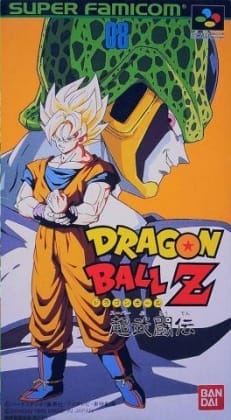
Dragon Ball Z: Super Butōden 3 is a 1994 fighting video game developed by Tose and published by Bandai for the Super Nintendo Entertainment System. Based upon Akira Toriyama's Dragon Ball franchise, it is the sequel to Dragon Ball Z: Super Butōden 2, which was released earlier in 1993 for SNES. Following the Majin Buu arc, its gameplay remains relatively the same as the previous two Super Butōden entries, consisting of one-on-one fights using a main six-button configuration, featuring special moves as well as two playable modes. Dragon Ball Z: Super Butōden 3 was created by most of the same team who previously worked on the first two Super Butōden entries on Super Nintendo, with producer Toshihiro Suzuki returning to lead its production, with additional support from staff of both Toei Animation and V Jump magazine. Like its predecessors, Super Butōden 3 garnered positive reception from critics, however the lack of a story mode was heavily criticized by reviewers.
Dragon Ball Z: Super Butōden
Dragon Ball Z: Super Butōden, known as Dragon Ball Z in Europe, is a 1993 fighting video game developed by Tose and published by Bandai for the Super Nintendo Entertainment System. It is based upon Akira Toriyama's Dragon Ball franchise, and was its first fighting game. Due to the popularity of Street Fighter II: The World Warrior at the time, producer Toshihiro Suzuki chose to work on a fighting game when assigned to a new project due to it being his preferred genre. Its gameplay consists of one-on-one fights, with a main six-button configuration, featuring special moves, as well as three playable modes. Dragon Ball Z: Super Butōden garnered mostly positive reception from critics; most reviewers praised the presentation and gameplay but others felt divided in regards to several design aspects. The game sold approximately 1.3 million units in its first two months of release in Japan.
Ultimate Mortal Kombat 3
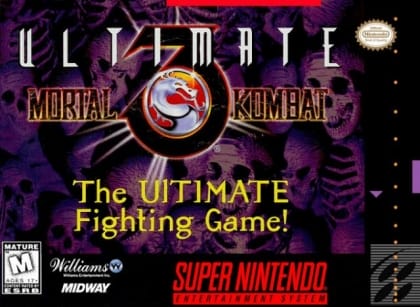
Ultimate Mortal Kombat 3 is a 1995 fighting game developed and published by Midway for arcades. Part of the Mortal Kombat series, it is a standalone update of 1995's earlier Mortal Kombat 3 with an altered gameplay system and some new features, as well as additional characters like the returning favorites Reptile, Kitana, Jade and Scorpion, who were missing from Mortal Kombat 3. Several home port versions of the game were soon released after the arcade original. Although none were completely identical to the arcade version, the Nintendo DS port came closest. Other versions followed, with some released under different titles, such as Mortal Kombat Advance (2001) for the Game Boy Advance. An iOS version recreating the game using a 3D graphics engine was released by Electronic Arts in 2010. Ultimate Mortal Kombat 3 was mostly well-received and has been considered a high point for the Mortal Kombat series. However, the iOS remake and some other home versions were received poorly.
Street Fighter II Turbo: Hyper Fighting
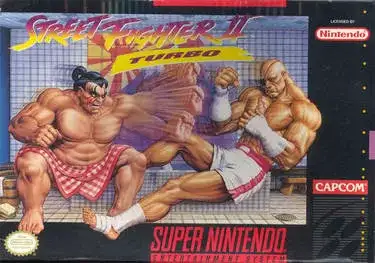
Street Fighter II Turbo: Hyper Fighting, released as Street Fighter II Dash Turbo in Japan, is a 1992 fighting game developed and published by Capcom for arcades. It is the third arcade version of Street Fighter II, part of the Street Fighter franchise, following Street Fighter II: Champion Edition, and was initially released as an enhancement kit for that game. Released less than a year after the previous installment, Hyper Fighting introduced a faster playing speed and new special moves for certain characters, as well as further refinement to the character balance. Hyper Fighting is the final arcade game in the Street Fighter II series to use the original CP System hardware. It was distributed as an upgrade kit designed to be installed into Champion Edition printed circuit boards. The next game, Super Street Fighter II, uses the CP System's successor, the CP System II.
Street Fighter II: The World Warrior
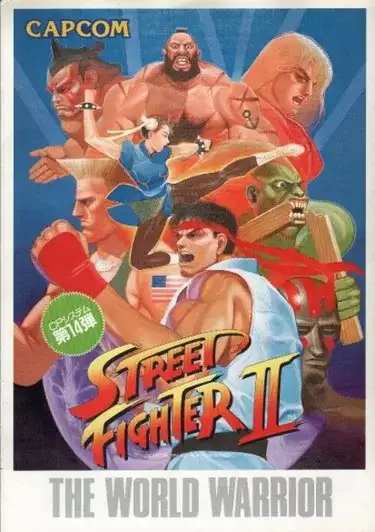
Street Fighter II: The World Warrior is a 1991 fighting game developed and published by Capcom for arcades. It is the second installment in the Street Fighter series, and the sequel to 1987's Street Fighter. Designed by Yoshiki Okamoto and Akira Yasuda, who had previously worked on the game Final Fight, it is the fourteenth game to use Capcom's CP System arcade system board. Street Fighter II vastly improved many of the concepts introduced in the first game, including the use of special command-based moves, a combo system, a six-button configuration, and a wider selection of playable characters, each with a unique fighting style. Street Fighter II became the best-selling game since the golden age of arcade video games. By 1994, it had been played by an estimated 25 million people in the United States alone.
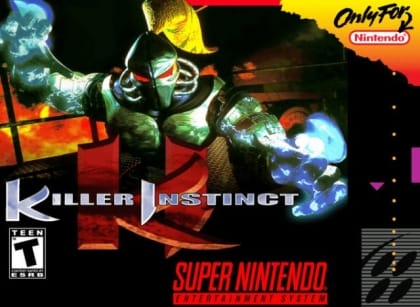
Killer Instinct
Killer Instinct is a series of fighting video games originally created by Rare and published by Midway, Nintendo, and later Xbox Game Studios since the remake. The original Killer Instinct "Killer Instinct (1994 video game)") was released for arcades in 1994; the game was then released for the Super NES and Game Boy in 1995. Its sequel, Killer Instinct 2, was released for arcades in 1996; the game was then released as Killer Instinct Gold for the Nintendo 64. The series was rebooted with the release of Killer Instinct "Killer Instinct (2013 video game)") (2013) for the Xbox One.
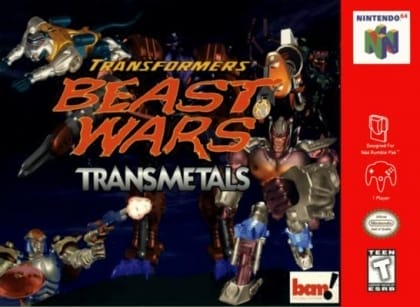
Transformers: Beast Wars Transmetals
Transformers: Beast Wars Transmetals is a 1999 3D fighting game for the Nintendo 64 and PlayStation, based on the Transformers: Beast Wars cartoon series and toy-line, It was published in Japan by Takara in 1999, and in North America by Bay Area Multimedia in 2000. Each version features different game mechanics and playable characters. The Nintendo 64 version of the game, known as Transformers: Beast Wars Metals 64 in Japan, was developed by Locomotive Corporation. It contains arcade mode endings for all characters and several mini-games. In North America, this version was a Blockbuster Video exclusive that was initially only available for rental. The PlayStation version of the game, known as Transformers Beast Wars Metals: Gekitotsu! Gangan Battle in Japan, was developed by WAVEDGE. It features alternate story campaigns for the Maximal and Predacon factions.

Tom and Jerry in Fists of Furry
IGN briefly played a pre-release demonstration of the Nintendo 64 version, calling it a clone of Power Stone "Power Stone (video game)") (1999), with a disappointing lack of four-player fighting.IGN later rated it 6.8/10, calling it "the next best fighter on the system" after Super Smash Bros. (1999), saying that it would have been better received if it had been released first. Ryan Davis of GameSpot rated it "fair" at 6.6/10, calling the game challenging but also accessible to younger players. He praised the controls but criticized the difficulty balance.N64 Magazine rated it 35%, and said the game is to be avoided because the high-quality Tom and Jerry franchise was "let down by lazy and cack-handed execution", especially because of a "brain-numbing punch-punch-kick-style combo" instead of any special attacks. They said that the characters were not drawn badly and that the locations from the cartoons were a plus.Nintendo Power gave an 8.
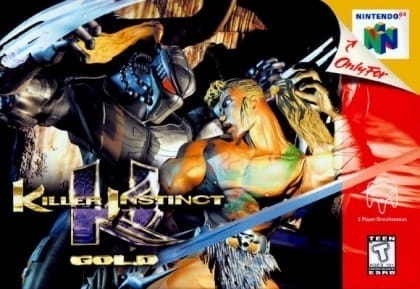
Killer Instinct Gold
Killer Instinct Gold is a 1996 fighting game developed by Rare and published by Nintendo for the Nintendo 64. It is based on the arcade game_Killer Instinct 2. Players control characters who fight on a 2D plane set against a 3D background. Players press buttons to punch and kick their opponent in chains of successive hits, known as combos "Combo (video games)"). Large combo successions lead to stronger attacks and brutal, stylistic finisher moves "Fatality (Mortal Kombat)") underscored by an announcer. Characters—including a gargoyle, a ninja, and a femme fatale—fight in settings such as a jungle and a spaceship. Killer Instinct Gold includes the arcade release's characters, combos, and 3D, pre-rendered environments, but excludes its full-motion video sequences and some voice-overs due to restrictions of the cartridge media format. The Gold release adds a training mode, camera views, and improved audiovisuals.
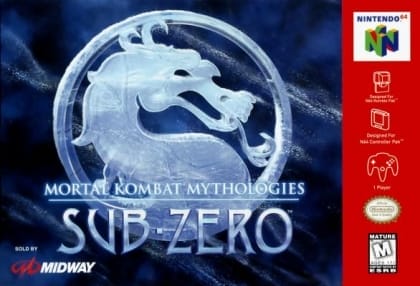
Mortal Kombat Mythologies: Sub-Zero
Mortal Kombat Mythologies: Sub-Zero is a 1997 action-adventure game developed and published by Midway for the PlayStation and Nintendo 64. A spin-off of the Mortal Kombat franchise, it is the first installment not to be a fighting game. Set before the Mortal Kombat, it follows Bi-Han, the elder Sub-Zero, in his quest to find Shinnok's amulet. It also serves as a prequel to Mortal Kombat 4, which was released the same year, introducing characters and story elements that would be used by the fourth main installment. Mythologies is the final game in the series to use digitized actors. The game drew a divisive response from critics, with the PlayStation version considered the superior of the two releases. Praise was directed at the transition from the fighting game genre to action-adventure and the PlayStation version's live-action cutscenes, but the controls and punishing level design received criticism.
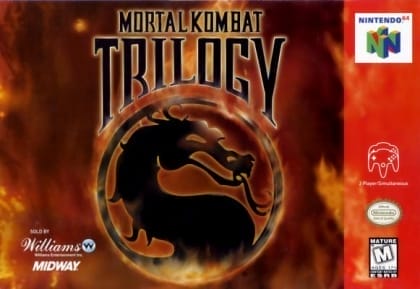
Mortal Kombat Trilogy
Mortal Kombat Trilogy is a 1996 fighting game released by Midway as the second and final update to Mortal Kombat 3 (the first being Ultimate Mortal Kombat 3) for the PlayStation, Nintendo 64, Sega Saturn and PCs. Further versions were also released for the Game.com and R-Zone. It features a similar basic gameplay system and the same story as Ultimate Mortal Kombat 3, but adds characters and stages restored from Mortal Kombat and Mortal Kombat II. New additions to the game included the "Aggressor" bar and the Brutality mechanic. The game was met with mixed to positive reviews upon release.
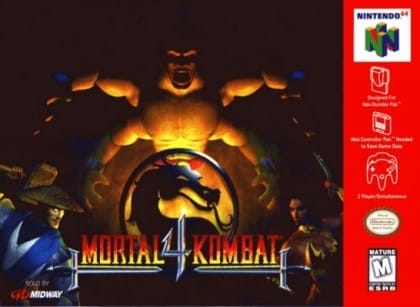
Mortal Kombat 4
Mortal Kombat 4 is a 1997 fighting game developed and published by Midway for arcades. It is the fourth main installment in the Mortal Kombat franchise, and a sequel to 1995's Mortal Kombat 3. It is also the first title in the series to use 3D computer graphics, as well as the last in the series to have an arcade release. The game was ported to the PlayStation, Nintendo 64, Microsoft Windows, and Game Boy Color in 1998, followed by an updated version, titled Mortal Kombat Gold, for the Dreamcast in 1999. The gameplay system in Mortal Kombat 4 is similar to that of the previous games; one of the most notable additions is the use of weapons and objects during fights. The storyline chronicles the attack from the corrupted Elder God Shinnok against his former comrades who trapped him in the Netherealm many years prior to the beginning of the series.
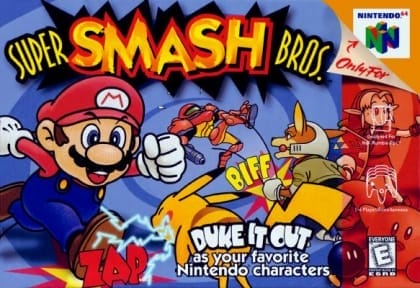
Super Smash Bros
Super Smash Bros.#cite_note-3) is a 1999 crossoverfighting game developed by HAL Laboratory and published by Nintendo for the Nintendo 64. It is the first game in the Super Smash Bros. series and was released in Japan on January 21, 1999; in North America on April 26, 1999;#cite_note-IGNrels-1)#cite_note-GSrel-2) and in Europe on November 19, 1999. It was later released for the iQue Player in China on November 15, 2005. The game is a crossover between different Nintendo franchises, including Mario, The Legend of Zelda, Star Fox, Yoshi, Donkey Kong, Metroid, F-Zero, Mother, Kirby and Pokémon "Pokémon (video game series)"). It presents a cast of characters and locations from these franchises and allows players to use each character's unique skills and the stage's hazards to inflict damage, recover health, and ultimately knock opponents off the stage. Super Smash Bros. received generally positive reviews upon its release.
Browse our collection of 20 Fighting retro games, all playable instantly in your browser. No download required. Play classic games online in your browser and save your progress anytime.