Racing
Racing games
29 games
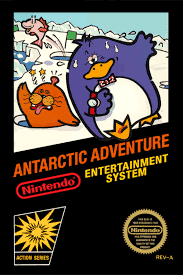
Antarctic Adventure
Antarctic Adventure (けっきょく南極大冒険, Kekkyoku Nankyoku Daibōken; lit. "Actually Antarctic Big Adventure") is a video game developed by Konami in 1983 for the MSX, and later for video game consoles, such as the Family Computer and ColecoVision. The player takes the role of an Antarctic penguin, racing to various research stations owned by different countries in Antarctica (excluding the USSR). The gameplay is similar to Sega's Turbo, but plays at a much slower pace, and features platform game elements. The penguin, later named Penta, must reach the next station before time runs out while avoiding sea lions and breaks in the ice. Throughout the levels, fish jump out of ice holes and can be caught for bonus points. The game, like many early video games, has no ending – when the player reaches the last station, the game starts from the first level again, but with increased difficulty.
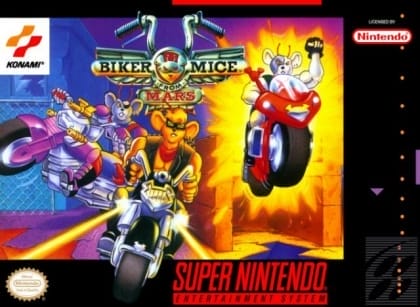
Biker Mice from Mars
Biker Mice From Mars is a racing video game released by Konami for the Super Nintendo Entertainment System. It is a tie-in to the animated series of the same title. The PAL version of the game features in-game product placement for Snickers candy bars.
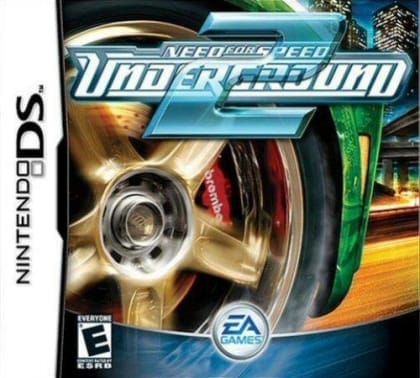
Need for Speed: Underground 2
Need for Speed: Underground 2 is a 2004 racing video game developed by EA Black Box and published by Electronic Arts. It is the eighth installment in the Need for Speed series and the direct sequel to Need for Speed: Underground. It was developed for Windows, GameCube, PlayStation 2, and Xbox. Game Boy Advance and Nintendo DS versions were developed by Pocketeers. Another version for mobile phones was also developed by Ideaworks Game Studio. Like its predecessor, it was also commercially successful, selling around 11 million copies worldwide and breaking sales records in the United Kingdom. The game entails tuning cars for street races, resuming the Need for Speed: Underground storyline. Need for Speed: Underground 2 provides several new features, such as broader customization, new methods of selecting races, set in a city known as Bayview.
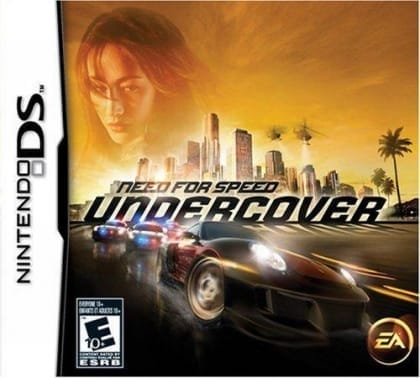
Need for Speed: Undercover
Need for Speed: Undercover is a 2008 racing video game, and is the twelfth installment in the Need for Speed series following Need for Speed: ProStreet (2007). Developed by EA Black Box and published by Electronic Arts, it was released on November 18, 2008, for the PlayStation 2, PlayStation 3, Xbox 360, Wii, Microsoft Windows, PlayStation Portable, Nintendo DS, and then on a number of mobile phone platforms in 2009. The game sees players conducting illegal street races within the fictional Tri-City Area, with the main mode's story focused on the player operating as an undercover police officer to investigate links between a criminal syndicate, stolen cars, and street racers. Gameplay operates on the same manner as previous entries such as Need for Speed: Most Wanted and Need for Speed: Carbon, now including a larger selection of licensed real-world cars, and RPG-styled system in the game's main story mode.
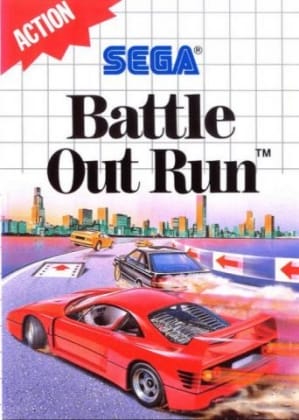
Battle Out Run
Battle Out Run is a 1989 video game released by Sega on the Master System. Despite being part of the Out Run series, this game plays little like its namesake and more like Chase H.Q., where the objective is to ram the cars of specified criminals. A notable feature is to enhance the car's attributes by buying upgrades that are inside of a truck that passes at certain moments and must be entered from the rear.
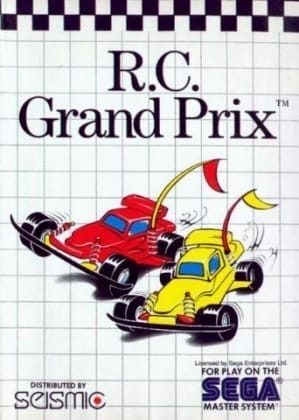
R.C. Grand Prix
R.C. Grand Prix is an isometric racing game. Depicting 1:10 off-road racing, the player controls a radio-controlled buggy and races against three other cars to become the grand champion. The player has to play through 10 increasingly difficult stages and buy new parts for the controlled car from the prize money awarded from each stage. If the player is placed last in a stage or does not complete the stage within the time-limit, the game is over. It is possible to play this game in multi-player mode with up to four players. The players play through each stage, one at a time, and the order of play is based on the current standings in the game. The game also features a drag race bonus stage which is only available in multi-player mode. Here, two players race each other for some bonus prize money.
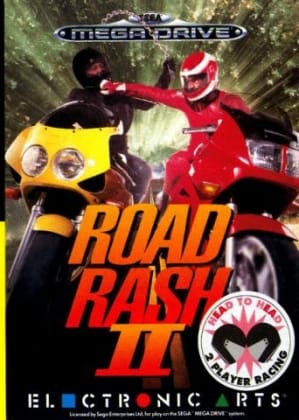
Road Rash II
Road Rash II is a 1992 racing and vehicular combat video game developed and published by Electronic Arts (EA) for the Sega Genesis. The game is centered around a series of motorcycle races throughout the United States that the player must win to advance to higher-difficulty races, while engaging in unarmed and armed combat to hinder the other racers. It is the second installment in the Road Rash series and introduces a split-screen two-player mode for competing human players, nitrous oxide charges on certain bikes, and chains as offensive weapons. EA began development of Road Rash II before the end of the 1991 Christmas season, and the game was released before the end of the 1992 Christmas season. Road Rash II met with critical acclaim and commercial success, with reviewers appreciating the visuals and addition of the multiplayer mode while pointing out the lack of innovation in the fundamental gameplay.
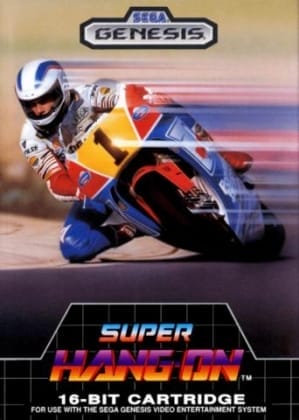
Super Hang-On
Super Hang-On is a 1987 racing video game developed and published by Sega for arcades. It is the sequel to 1985's Hang-On, and uses a simulated motorcycle arcade cabinet, like the original game. An updated version was released for arcades as Limited Edition Hang-On in 1991.
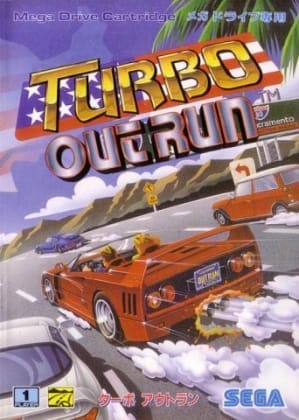
Turbo Outrun
Turbo OutRun (ターボアウトラン) is a 1989 racing game developed and published by Sega for arcades. A follow-up to 1986's Out Run, it was released as a dedicated game, as well as an upgrade kit for the original Out Run board. Like its predecessor, Turbo OutRun has players driving a Ferrari, this time a Ferrari F40. Players traverse a set route across the continental United States from New York City to Los Angeles. In addition to a time limit, Turbo OutRun also adds a computer-controlled opponent driving a Porsche 959. The "Turbo" in the title plays a factor as players can press a button to receive a brief turbo boost of speed. Various power-ups which increase the vehicle's attributes can be chosen at various stages of the game. Ports of Turbo OutRun were released for home computers as well as Sega's own Mega Drive. Computer ports of the game were received with varying degrees of enthusiasm.
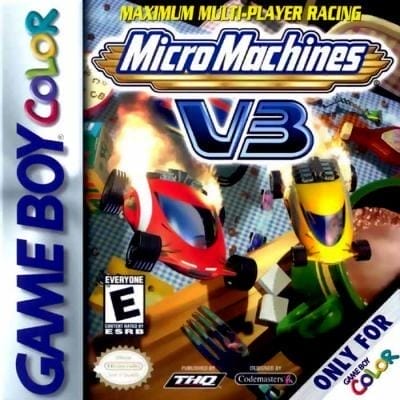
Micro Machines V3
Micro Machines V3 is a racing video game developed by Codemasters, the third title of the Micro Machines series following Micro Machines 2: Turbo Tournament (1994) and the first set in a 3D game environment. It was originally released for PlayStation in 1997 followed by ports to Microsoft Windows, Nintendo 64 (as Micro Machines 64 Turbo) in 1999, and a 2D version for Game Boy Color in 2000.
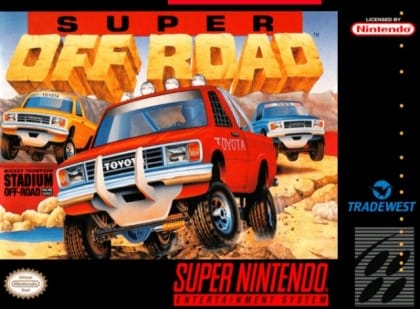
Super Off Road
Ivan 'Ironman' Stewart's Super Off Road is a 1989 racing video game developed and published by Leland Corporation for arcades. It was designed and managed by John Morgan, who was also lead programmer, and endorsed by professional off-road racer Ivan Stewart. Virgin Games produced several home computer versions in 1990, with a version for the Nintendo Entertainment System released by Leland's Tradewest subsidiary the same year. It was followed by versions for most major home consoles, including the Master System, Sega Genesis, and Super Nintendo Entertainment System. A port for the Atari Jaguar was announced but never released. Some ports lack the Ivan Stewart branding because of licensing issues, and are known simply as Super Off Road.
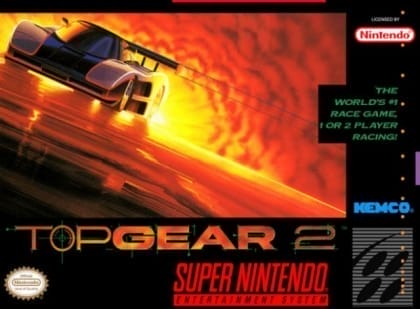
Top Gear 2
Top Gear 2 (released as Top Racer 2 in Japan) is a racing video game developed and published by Gremlin Interactive. A direct sequel to the 1992 game Top Gear, it was first released by Kemco for the SNES in North America in September 1993, and then the Super Famicom in Japan on December 22. It was later ported to the Amiga and Amiga CD32 in September 1994 by Gremlin Interactive, and to the Sega Genesis in September by Vic Tokai. While more realistic than its predecessor, Top Gear 2 maintained the arcade-style gameplay the series is known for.
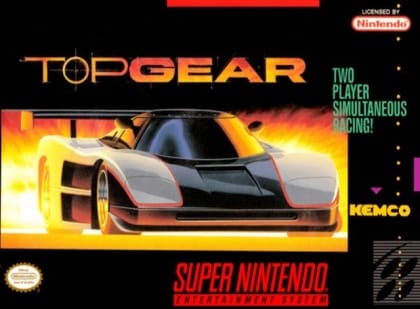
Top Gear
Top Gear is a 1992 racing video game developed by Gremlin Graphics and published by Kemco for the Super Nintendo Entertainment System. The objective of the game is to become the fastest driver in the world by racing other drivers across several nations. It marks the first game in the Top Gear racing game franchise, and it is one of the first racing games to be released on the SNES. This game and its next two sequels were created by the same developers as the similar Lotus series of games was released earlier on the Amiga and Mega Drive.
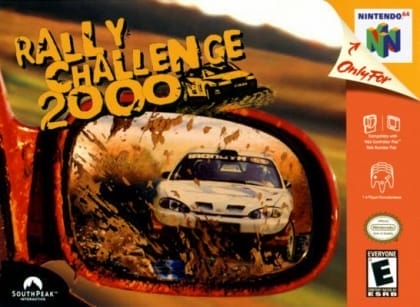
Rally Challenge 2000
Rally Challenge 2000, released in Japan as Rally '99, is a racing game for the Nintendo 64. It was released in the United States in 2000. Includes cars from the 1998 and 1999World Rally Championship.
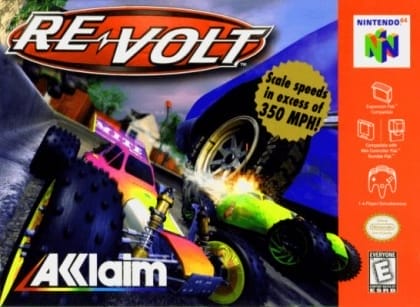
Re-Volt
Re-Volt is a 1999 racing video game designed by Paul Phippen and Simon Harrison. It was developed by Acclaim Studios London and published by Acclaim Entertainment for Microsoft Windows, Nintendo 64, PlayStation and Dreamcast. The premise of the game involves racing radio-controlled cars around environments like museums, steamships, construction sites and supermarkets. During a race the cars can collect random weapons to use to displace competitors. Cars and tracks were both unlocked through success in the game's tournament modes.
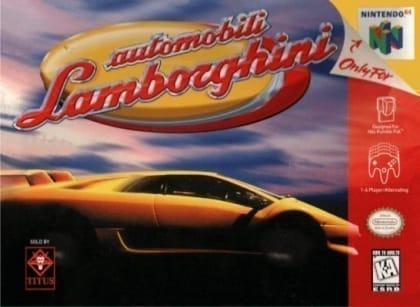
Automobili Lamborghini
Automobili Lamborghini is a 1997 racing video game developed and published by Titus France for the Nintendo 64. It is a successor to Lamborghini American Challenge.#cite_note-2) In 1998, an improved version subtitled Super Speed Race 64 (スーパースピードレース64) was released in Japan only. This version was distributed by Taito, presented as a successor to the company's Speed Race series from the late 1970s and early 1980s. Improvements include a new difficulty level, the ability to freely customize controls, the introduction of weather, and actual pictures of various models of Lamborghini with their names displayed before the demo screen. Automobili Lamborghini is an arcade-style racing game similar to the Ridge Racer or the early Need for Speed series. There are 4 modes of play: Arcade, Championship, Single Race, and Time Trials.
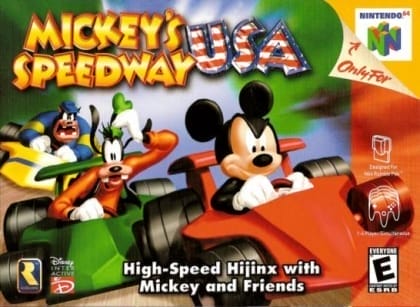
Mickey's Speedway USA
Mickey's Speedway USA is a kart racing game developed by Rare and published by Nintendo for the Nintendo 64 and Game Boy Color. It is Rare and Nintendo's second collaboration with Disney Interactive following Mickey's Racing Adventure (1999), and features characters from the Mickey Mouse universe racing across the United States. The Nintendo 64 game released in November 2000 to mixed reception, while the Game Boy Color version followed in March 2001.
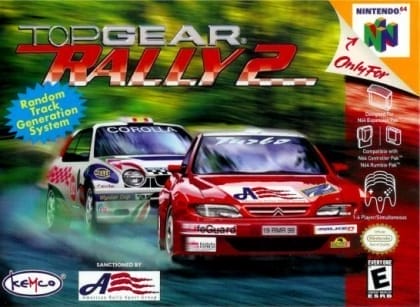
Top Gear Rally 2
Top Gear Rally 2 is a racing video game developed by Saffire and released for the Nintendo 64 in 1999. It is a sequel to Top Gear Rally. Top Gear Rally 2 is a racing game where players drive rally cars through a series of tracks. The game features a random and dynamic weather system. Unlike the original Top Gear Rally, which was developed by Boss Game Studios, Top Gear Rally 2 was developed by Saffire. The company conceived Top Gear Rally 2 as a more realistic game than its predecessor, with more simulation-like elements such as real-time car damage and weather effects. The physics engine was completely rewritten. All the vehicles in the game are licensed versions of real rally cars such as the Ford Focus and the Renault Alpine. During the final stages of the development cycle, developers had to work between 16 and 18 hours a day to complete the game. The game supports the Nintendo 64 Expansion Pak, which allows the game to be played at a resolution of 480x480 pixels.
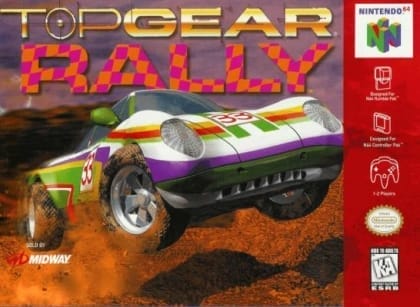
Top Gear Rally
Top Gear Rally is a 1997 racing video game developed by Boss Game Studios and released for the Nintendo 64. A follow-up to Kemco's original Top Gear game, it features a championship mode where a single player must complete six seasons of two to four races, as well as a multiplayer mode where two players may compete against each other via a split-screen display. The game's tracks combine both road and off-road surfaces and can be played in different weather conditions, including night, fog, rain, and snow. Players may customize their car with different tire grips and adjust its suspension stiffness and steering sensitivity. An option that allows players to custom paint their cars is also included. Top Gear Rally was conceived after Boss created a non-interactive demonstration running on Silicon Graphics workstations that featured two- and four-wheel drive vehicles racing through different driving conditions.
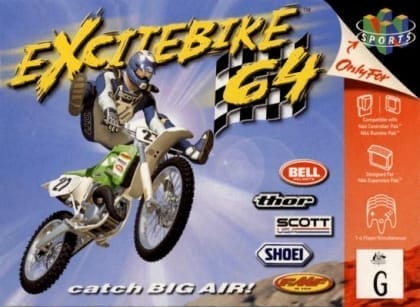
Excitebike 64
Excitebike 64 is a 2000 racing video game developed by Left Field Productions and published by Nintendo for the Nintendo 64. It is the second installment in the Excite series, acting as a sequel to the 1984 NES game Excitebike, and is the first 3D game in the series. Many real-life dirt bike gear brands are extensively featured throughout the game, such as Bell Helmets, Alpinestars and No Fear. The game received positive reviews from critics and was later re-released for Wii U via the Virtual Console in 2016 and on the Nintendo Classics service on August 30, 2023 but with the removal of every Fox Racing brand logo. A third game in the series, Excite Truck, was released in 2006 for the Wii.
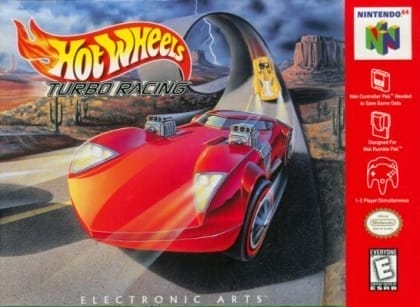
Hot Wheels: Turbo Racing
Hot Wheels Turbo Racing is a racing video game released for the Nintendo 64 and PlayStation in 1999. It features 40 cars based on the Hot Wheels series of toys. It also features Kyle Petty's 1999 NASCAR stock car, as it was sponsored by Hot Wheels. The game features music from artists like Primus, Metallica, The Reverend Horton Heat and Mix Master Mike.
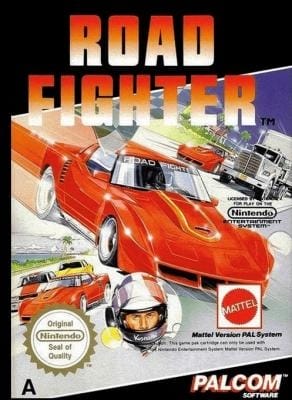
Road Fighter
Road Fighter is a 1984 racingvideo game developed and published by Konami for arcades. The goal is to reach the finish line within the stages without running out of time, hitting other cars or running out of fuel (which is refilled by hitting a special type of car). The game spawned a spiritual successor, Konami GT (1986), and two sequels, Midnight Run: Road Fighter 2 (1995) and Winding Heat (1996). A Japan-only sequel was also released 14 years later, Road Fighters (2010). The first two levels contain four courses, ranging from grassy plains to an over-water bridge to a seashore, mountains and finally a forest area. In the arcade version, six stages were contained. The player controls a red Chevrolet Corvette "Chevrolet Corvette (C4)") and pressing the B accelerates the car to around 224 km/h while the A button increases it to 400. The player has a limited amount of fuel points (equal to about 100 seconds) and can earn more by touching special multi-colored cars.
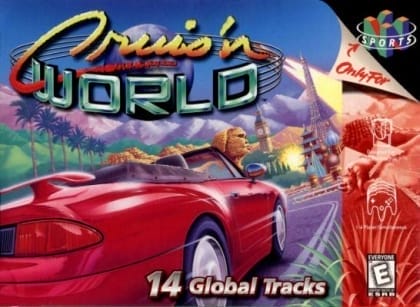
Cruis'n World
Cruis'n World is a 1996 racing game developed by Midway Games and published by Nintendo. It is the sequel to the 1994 arcade racer Cruis'n USA. A port for the Nintendo 64 developed by Eurocom was released in 1998, and was the best received of the Cruis'n ports. Cruis'n World allows players to race on various tracks around the world. The game also features more cars than Cruis'n USA. This game introduced stunts to the Cruis'n series. They served to dodge obstacles, take close curves, and gain extra seconds of time.
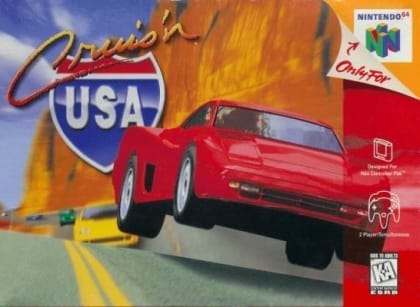
Cruis'n USA
Cruis'n USA is a racingvideo game developed by TV Games Inc. and published by Nintendo. It was first released in arcades in 1994 by Midway Games, with a port to the Nintendo 64 developed by Leland Interactive Media released in 1996. It is the first game in the Cruis'n series, and features races set in locations across the Continental United States. Cruis'n USA is branded as the first release of the "Ultra 64" platform collaboration between Midway and Nintendo, although it was based on the Midway V-unit arcade hardware; again, the unit was different from the Killer Instinct "Killer Instinct (1994 video game)") arcade hardware, which also shared no lineage with the Nintendo 64. The home port was published by Nintendo as part of the deal. The arcade version was critically and commercially successful, drawing favorable comparisons to Sega's Daytona USA. The Nintendo 64 version received poor reviews but was also commercially successful.
Browse our collection of 29 Racing retro games, all playable instantly in your browser. No download required. Play classic games online in your browser and save your progress anytime.