Puzzle
Puzzle games
20 games
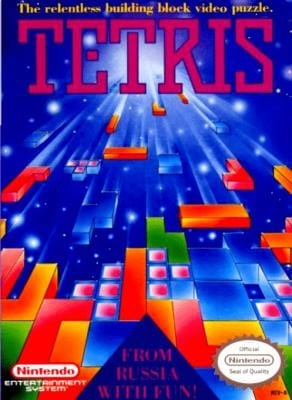
Tetris
Tetris is a 1989 puzzle video game developed and published by Nintendo for the Nintendo Entertainment System (NES). Based on Tetris (1985) by Alexey Pajitnov, it was released after a legal battle between Nintendo and Atari Games, who had previously released a console port outside of the terms of their Tetris license. Bullet-Proof Software had previously released Tetris for the Family Computer in December 1988, while Nintendo had released Tetris for the Game Boy earlier in 1989. Nintendo licensed exclusive home console rights for the Tetris intellectual property from Soviet authorities, leaving Atari Games unaware that they did not possess these rights from their own license. Being forced to quickly recall their version of Tetris for the NES was a major setback to Atari Games and their involved subsidiary Tengen. American reviewers held Nintendo's version to be an inferior product to the recalled Atari Games version.
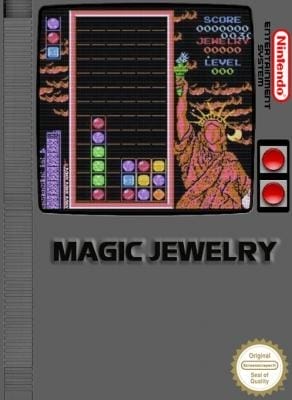
Magic Jewelry
Hwang Shinwei (Chinese: 黃信維; pinyin: Huángxìnwéi), sometimes romanized as Huang Hsin-Wei or Huang Xinwei, is a Taiwanese video game programmer. From 1988 to 1991, he developed video games for the NES without a license from Nintendo, which were mostly published by RCM Co., Ltd. (also known as RCM Group or simply RCM, standing for RamCo Man International (Chinese: 劍虹國際有限公司)). Though some of Hwang's titles are originals. most are clones of popular games, many of which were not originally ported to the NES (such as Rally-X). All of these games were released on various multicarts, but several, like Brush Roller and Magic Jewelry, were also released on standalone cartridge format. Though standalone games and multicarts produced by RCM and other companies with ties to Hwang often had copyright information listed, cartridges produced by unrelated companies usually had their copyright information removed, even on single release cartridges.
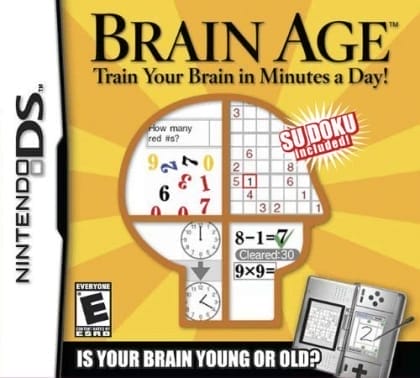
Brain Age: Train Your Brain in Minutes a Day!
Brain Age: Train Your Brain in Minutes a Day!, known as Dr Kawashima's Brain Training: How Old Is Your Brain? in the PAL regions, is a 2005 edutainment puzzle video game by Nintendo for the Nintendo DS. It is inspired by the work of Japanese neuroscientist Ryuta Kawashima, who appears as a caricature of himself guiding the player. Brain Age features a variety of puzzles, including Stroop tests, mathematical questions, and Sudoku puzzles, all designed to help keep certain parts of the brain active. It was released as part of the Touch! Generations series of video games, a series which features some games for a more casual gaming audience. Brain Age uses the touch screen and microphone for many of its puzzles. It has received both commercial and critical success, selling 19.01 million copies worldwide (as of September 30, 2015) and has received multiple awards for its quality and innovation.
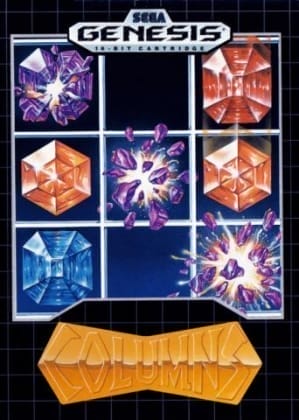
Columns
Columns was the first pack-in game for the Game Gear. This version was slightly different from the Genesis version, and its soundtrack was transposed and rearranged due to limitations of the handheld's sound chip. While the columns themselves were updated for the Genesis version, the overall decoration was less like a cartoon in the Game Gear version and instead more artistically designed. Lastly, the Game Gear version had a feature that let the player change the jewels to fruit, squares, dice, or playing card suits (clubs, diamonds, spades, and hearts). In 1990, Compile and Telenet Japan developed and published an MSX2 version. In November 2006, Columns was released as part of the game Sega Genesis Collection for the PlayStation 2, and later for PlayStation Portable. The same year on December 4, it was released on Nintendo's Virtual Console for Wii. It is also included on Sonic's Ultimate Genesis Collection for the PlayStation 3 and Xbox 360.
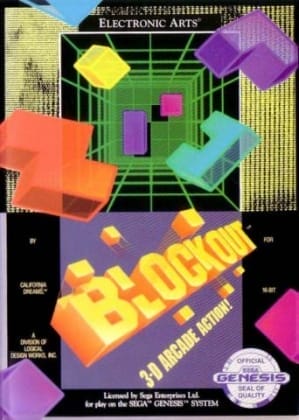
Blockout
Blockout is a puzzle video game published in 1989 by California Dreams. It was developed in Poland by Aleksander Ustaszewski and Mirosław Zabłocki. American Technos published an arcade version. Blockout is a 3D version of the Tetris concept.
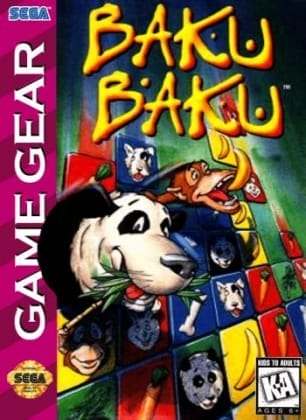
Baku Baku Animal
Baku Baku, released in Japan as Baku Baku Animal, is a 1995 puzzle video game developed and published by Sega for Japanese arcades. It was later ported to the Sega Saturn, Game Gear, and Microsoft Windows, with the latter version being Sega's first network-compatible PC game. A Sega NetLink-compatible version of the game was also announced, but never released. The Japanese onomatopoeia "Baku Baku" roughly translates to "Chomp chomp". The King is hosting a competition to hire a royal zoo keeper for his daughter's numerous pets. The main character, Polly, must fight her way through other applicants to earn the position. Each opponent has an intro dialogue with different responses based on if the player wins or loses. > Bug: "How lucky, my opponent is only a little girl!" Polly: "Hmph! How rude! I'll show you who's the weak one!" — Sega, Baku Baku Animal Baku Baku Animal is a falling block puzzle game in which the player lines up falling animal and food tiles.
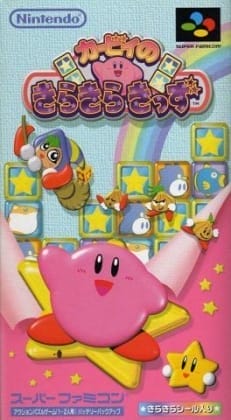
Kirby no Kirakira Kids
Kirby's Star Stacker is a 1997 puzzle video game developed by HAL Laboratory and published by Nintendo for the Game Boy. It is a spin-off of the Kirby series with Tile-matching gameplay. It was released for the Nintendo Classics service for the Nintendo Switch in May 2025. It received a remake for the Super Famicom in Japan.
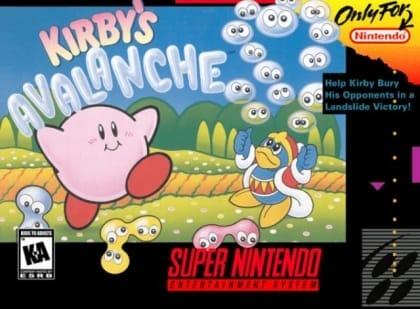
Kirby's Avalanche
Kirby's Avalanche, known in Europe as Kirby's Ghost Trap, is a puzzle video game developed by Compile and HAL Laboratory and published by Nintendo for the Super Nintendo Entertainment System. It was released in North America and Europe in February 1995. It is a Western release of the Japanese Super Puyo Puyo featuring characters from the Kirby series. There was not a Japanese release, and the game remains the only Kirby title not released there. In Europe and Australia, the game was re-released on the Wii's Virtual Console service on July 27, 2007, and in North America on September 24, 2007. The game was re-released for the Nintendo Classics service on July 21, 2022. The gameplay is the same as in Super Puyo Puyo, with groups of two colored blobs fall from the top of the screen. The player must rotate and move the groups before they touch the bottom of the screen or the pile, so that matching-colored blobs touch from above, below, the left or the right.
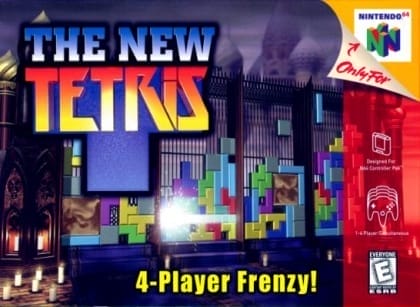
The New Tetris
The New Tetris is a 1999 puzzle video game developed by H2O Entertainment and Blue Planet Software and published by Nintendo for the Nintendo 64. An entry in the Tetris series, it showcases scenic fly-bys of structures, such as the Sphinx, the Pantheon, Saint Basil's Cathedral, a Mayan temple, and others, rendered in real-time. Achieving this level of quality was relatively challenging for the Nintendo 64 hardware.[citation needed]The New Tetris features a multiplayer mode with up to four players and an electronic dance music soundtrack by Neil Voss, who also composed the music for Tetrisphere. There are several key differences in gameplay from the original Tetris. First, in addition to clearing lines, players can also form 4x4 large squares of four pieces to create "blocks.
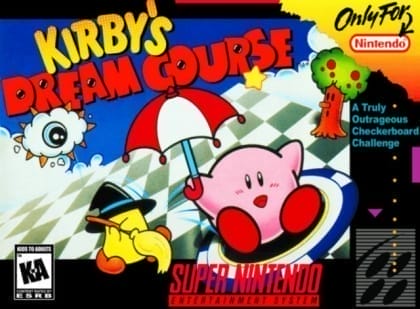
Kirby's Dream Course
Kirby's Dream Course is a 1994 miniature golf video game developed by HAL Laboratory and Nintendo EAD and published by Nintendo for the Super Nintendo Entertainment System (SNES). A spin-off of the Kirby series and the first released for the SNES, players control the pink spherical character Kirby through a series of courses by launching him towards the goal hole at the end. Kirby can hit enemies to collect power-ups that grant him unique abilities, such as those that allow him to destroy certain obstacles or fly around the level. HAL Laboratory originally designed Dream Course as a standalone game called Special Tee Shot. Though it was previewed in several magazines and displayed on the packaging for the console, HAL replaced the game's original characters with those from the Kirby series following its popularity on the Game Boy. Special Tee Shot was later released for the Satellaview peripheral in Japan.
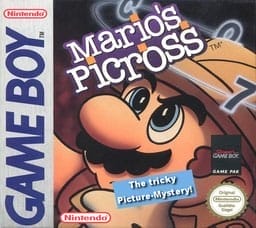
Mario's Picross
Mario's Picross is a 1995 puzzle video game developed by Jupiter and Ape Inc. and published by Nintendo for the Game Boy. It is a compilation of nonogram logic puzzles, and is a part of Nintendo's Picross video game franchise. The game stars Mario who chisels away at puzzle grids to form pictures. The game initially received positive reviews, with reviewers citing its length and addictive nature as a positive, but its grid sizes and absence of typical Mario elements as a negative. Although the game sold well in Japan, it sold poorly in English-speaking regions. As a result of this, the game was followed by two sequels, Mario's Super Picross and Picross 2, released only in Japan. The next game in the Picross franchise published by Nintendo to be released in English-speaking regions would be Picross DS in 2007, twelve years later. Due to its limited sales, the game is somewhat of a cult classic. The game was also available on the Nintendo 3DS through its Virtual Console service.
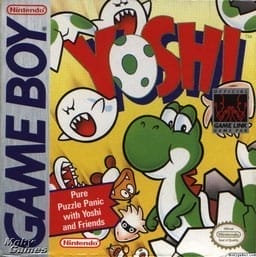
Yoshi
Yoshi,#cite_note-4) known as Mario & Yoshi in PAL regions, is a 1991 puzzle video game developed by Game Freak and published by Nintendo for the Nintendo Entertainment System and Game Boy. Both versions were first released simultaneously in Japan on December 14, 1991, and released in all other regions the following year. In Yoshi, the player is tasked with clearing monsters from the on-screen playing field. The monsters fall in from the top of the screen to build vertical stacks; the player must prevent a stack from growing too high such that it exits the play field. In order to do so, the player swaps and moves the stacks about such that falling monsters collide with identical monsters stationed atop the stacks, causing them to be removed from play. Yoshi offers both a scoring "Score (game)")-focused single-player mode and a competitive two-player mode.
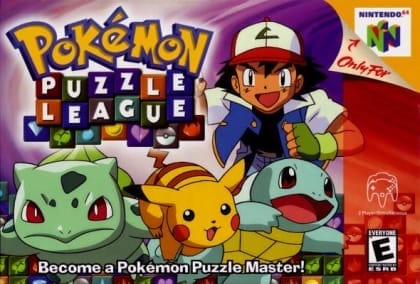
Pokémon Puzzle League
Pokémon Puzzle League is a puzzle video game in the Puzzle League series developed by Nintendo Software Technology and published by Nintendo for the Nintendo 64. Released in North America on September 25, 2000, and in Europe on March 2, 2001, its Puzzle League-based gameplay has a focus on puzzle-based strategy in the game's grid-based format. To advance to new levels, players are required to combat the game's trainers and gym leaders, similar to the ones featured in Pokémon Red, Blue, and Yellow. One of several games based on the Pokémon anime, it features lead protagonist Ash Ketchum, his Pikachu, his companions Brock and Misty, the Kanto Gym Leaders, and other characters from the series. Pokémon Puzzle League received mostly positive reviews from critics. Pokémon Puzzle Challenge, a companion puzzle game, was released for the Game Boy Color in 2000. Re-releases of the game followed in 2008 for the Wii via Virtual Console, and in 2022 on the Nintendo Classics service.
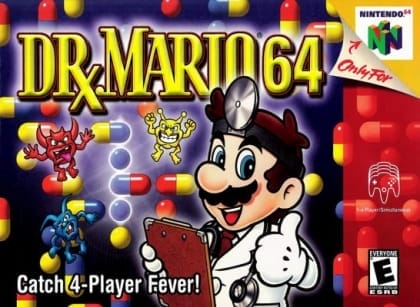
Dr. Mario 64
Dr. Mario 64 is a 2001 tile-matching action puzzle game developed and published by Nintendo for the Nintendo 64. The game is an enhanced remake of Dr. Mario, which was originally released for the NES and Game Boy consoles in 1990, and is based around characters from the 2000 Game Boy Color game Wario Land 3. The game's soundtrack was composed by Seiichi Tokunaga, featuring arrangements of classic Dr. Mario tunes and new compositions. The game was released in North America on April 9, 2001. The game received a Japanese release as part of the Nintendo Puzzle Collection compilation, released for the GameCube in 2003. The game was re-released on the Nintendo Classics service in October 2021, marking its first release in PAL territories. The game received average reviews.
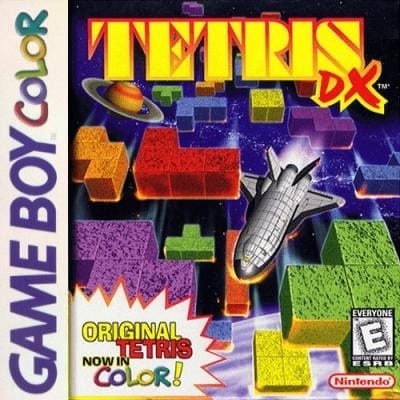
Tetris DX
Tetris DX is a 1998 video game developed and published by Nintendo for the Game Boy Color. It is a version of the game Tetris and unlike the 1989 port of the game "Tetris (Game Boy video game)"), it introduces color, new gameplay modes, save games, and multiplayer using the Game Link Cable. DX was released as a launch title for the Game Boy Color in October 1998. Upon release, the game received a positive reception, with praise directed towards its gameplay additions. Following release, critics praised the game as one of the best titles for the Game Boy Color. As in Tetris, DX is a puzzle video game in which players must fit a vertically descending series of blocks to form complete rows, making the blocks disappear; with the game ending if the blocks fill the screen beyond the top row of the play space.DX introduces additional gameplay modes.
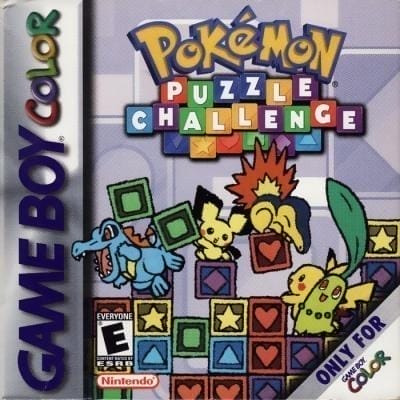
Pokémon Puzzle Challenge
Pokémon Puzzle Challenge is a puzzle video game developed by Intelligent Systems and published by Nintendo for the Game Boy Color. It was released in Japan on September 21, 2000; in North America on December 4, 2000; and in PAL regions on June 15, 2001, it is the second Pokémon-themed entry in the Puzzle League series. While its Nintendo 64 counterpart Pokémon Puzzle League is visually based on the Pokemon anime "Pokémon (TV series)"), Puzzle Challenge instead draws inspiration from the Pokémon Gold and Silver games. The game features multiple modes of play and support for competitive play between two players. Puzzle Challenge was later digitally re-released via the Nintendo 3DS's Virtual Console line on November 6, 2014.
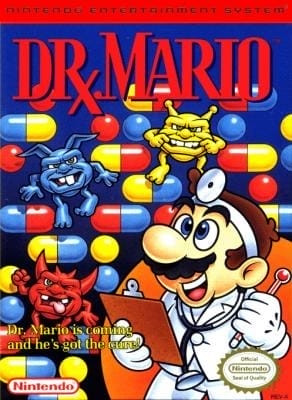
Dr. Mario
Dr. Mario is a 1990 puzzle video game developed and published by Nintendo for the Nintendo Entertainment System and Game Boy. A spin-off of the Mario series, it is a falling block puzzle game in which the player's objective is to destroy the viruses populating the on-screen playing field by using colored capsules "Capsule (pharmacy)") that are automatically tossed into the field by Dr. Mario. The player manipulates the falling capsules, to align the same colors, which destroys viruses. The player progresses through the game by eliminating all the viruses on the screen in each level. The game was produced by Gunpei Yokoi and programmed by Takahiro Harada, with the soundtrack composed by Hirokazu Tanaka. Dr. Mario was a commercial success, with more than 10 million copies sold worldwide across all platforms. It received generally positive reviews, appearing on several lists of "Best Nintendo Games of All Time".
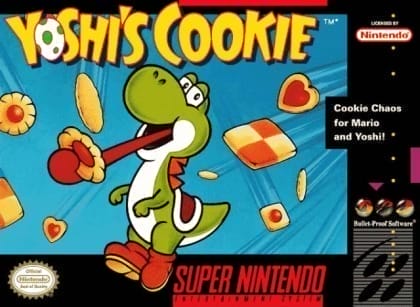
Yoshi's Cookie
Yoshi's Cookie is a 1992 tile-matching puzzle video game developed by Tose and published by Nintendo for the NES and Game Boy platforms in 1992. A Super NES version was released the following year, developed and published by Bullet-Proof Software.
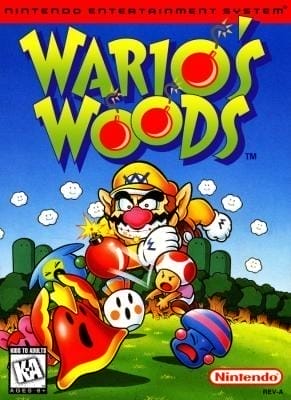
Wario's Woods
Wario's Woods, known in Japan as Wario's Forest, is a 1994 puzzle video game developed by Nintendo R&D1 and Intelligent Systems and published by Nintendo for the Nintendo Entertainment System (NES) and Super Nintendo Entertainment System (Super NES). A spin-off of the Mario series, players control Toad in his mission to defeat Wario, who has taken control of the Peaceful Woods. Gameplay revolves around clearing each level by using bombs to destroy groups of enemies. The game also features a multiplayer mode that allows two players to compete against each other. The NES version is noteworthy for being the last officially-licensed game as well as the final first-party game for the system in North America, due to its release at the end of the console's lifespan. It is also the only NES game to receive a rating from the Entertainment Software Rating Board (ESRB), which was inducted almost three months before the game's American release.
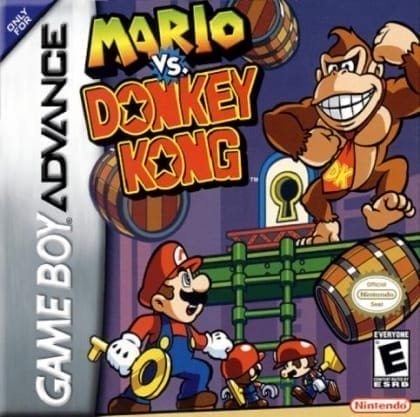
Mario vs. Donkey Kong
Mario vs. Donkey Kong#cite_note-1) is a 2004 puzzle-platform game developed by Nintendo Software Technology and published by Nintendo for the Game Boy Advance. The game is the spiritual successor to Donkey Kong "Donkey Kong (1994 video game)"), which was released in 1994 for the Game Boy. The gameplay revolves around a combination of platform and puzzle elements. Players control Mario through small sets of challenges to find a key and rescue Mini-Marios from Donkey Kong "Donkey Kong (character)"). Mario vs. Donkey Kong received positive reviews, particularly for its gameplay and graphics. It spawned a franchise "Mario vs. Donkey Kong (sub-series)") of the same name with the first sequel, Mario vs. Donkey Kong 2: March of the Minis, was released on Nintendo DS in September 2006. A remake for the Nintendo Switch was released in February 2024.
Browse our collection of 20 Puzzle retro games, all playable instantly in your browser. No download required. Play classic games online in your browser and save your progress anytime.