Nintendo
18 games — Nintendo
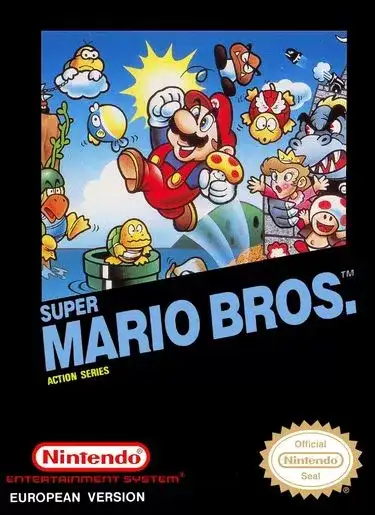
Super Mario Bros
Super Mario Bros. is a 1985 platform game developed and published by Nintendo for the Nintendo Entertainment System (NES). Directed and produced by Shigeru Miyamoto, it is the successor to the 1983 arcade game Mario Bros. and the first game in the Super Mario series. Players control Mario, or his brother Luigi in the multiplayer mode, to traverse the Mushroom Kingdom to rescue Princess Toadstool from King Koopa (later named Bowser). They traverse side-scrolling stages while avoiding hazards such as enemies and pits and collecting power-ups such as the Super Mushroom, Fire Flower, and Starman. Miyamoto and Takashi Tezuka designed Super Mario Bros. as a culmination of the team's experience working on Devil World and the side-scrollers Excitebike and Kung Fu "Kung-Fu Master (video game)"). Miyamoto wanted to create a more colorful platform game with a scrolling screen and larger characters. The team designed the first level, World 1-1, as a tutorial for platform gameplay.
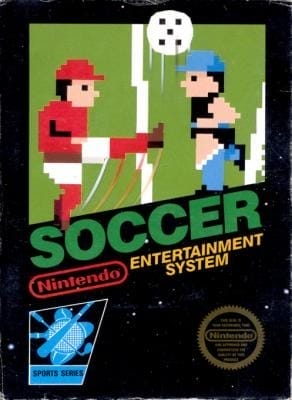
Soccer
Soccer is a soccer video game developed by Intelligent Systems and published by Nintendo for the Nintendo Entertainment System. It was released in Japan and North America in 1985, and in Europe in 1987. An arcade version for the Nintendo VS. System titled VS. Soccer was released the same year. It was released for the Famicom Disk System in 1986. The NES version was released on the Wii and Wii U Virtual Console on June 12, 2014 and on the Nintendo Classics service in 2018, while the arcade version was released by Hamster Corporation as part of their Arcade Archives series for the Nintendo Switch in 2020.
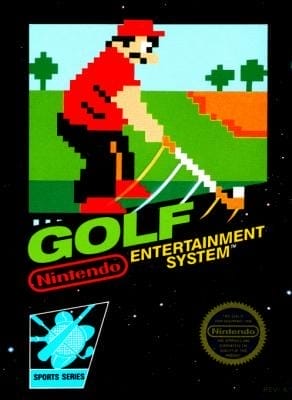
Golf
In 1983, the Famicom had only three launch games, and its library would soon total seven, including Golf. Shigeru Miyamoto said he was "directly in charge of the character design and the game design",#cite_note-Miyamoto_Spills-5) and Satoru Iwata said he was the only programmer.#cite_note-only_prog-6) Golf has been re-released on many other consoles after its release. Hudson Soft released a conversion of the game for the Japan-only PC-88 and Sharp X1 in 1985.[citation needed]Golf was released for the Japan-only Family Computer Disk System on February 21, 1986.#cite_note-13) It was re-released for the Nintendo e-Reader for the Game Boy Advance on April 21, 2003.#cite_note-14) Both the NES and Game Boy versions were released on the Virtual Console for Wii U and Nintendo 3DS.#cite_note-15)#cite_note-16) It was re-released on the Nintendo Switch via Nintendo eShop on October 25, 2019, by Hamster Corporation as part of its Arcade Archives series.
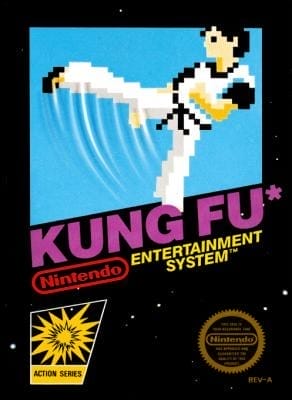
Kung Fu
Kung-Fu Master, known as Spartan X#cite_note-18) in Japan, is a 1984 beat 'em up game developed and published by Irem for arcades. It was distributed by Data East in North America. Designed by Takashi Nishiyama, the game was based on Hong Kong martial arts films. It is a loose adaptation of the Jackie Chan, Sammo Hung and Yuen Biao film Wheels on Meals (1984), called Spartan X in Japan. The protagonist Thomas is named after Jackie Chan's character in the film. It is also heavily inspired by the Bruce Lee film Game of Death (1972), which was the basis for the game's concept. Nishiyama, who had previously designed the side-scrolling shooter_Moon Patrol_ (1982), combined fighting elements with a shoot 'em up gameplay rhythm. Irem and Data East exported the game to the West without the Spartan X license.
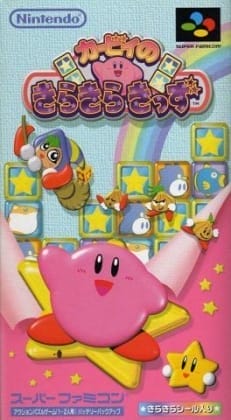
Kirby no Kirakira Kids
Kirby's Star Stacker is a 1997 puzzle video game developed by HAL Laboratory and published by Nintendo for the Game Boy. It is a spin-off of the Kirby series with Tile-matching gameplay. It was released for the Nintendo Classics service for the Nintendo Switch in May 2025. It received a remake for the Super Famicom in Japan.
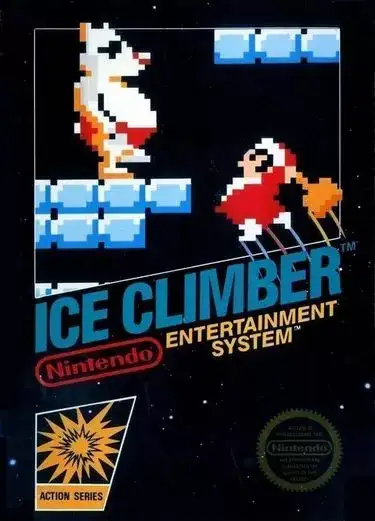
Ice Climber
Ice Climber is a 1985 platformvideo game developed and published by Nintendo. It was released for both the arcadeVS. System and the Famicom/Nintendo Entertainment System console. The main protagonists, Popo and Nana, collectively known as the Ice Climbers, scale 32 vertically scrolling, ice-covered mountains to recover stolen vegetables from a giant condor. In some European countries, Ice Climber was bundled with the Nintendo Entertainment System. The arcade expansion, VS. Ice Climber, features exclusive content from the traditional NES release; including an animated title screen "Title screen (gaming)"), a stage select menu at the start of the game and between levels, 16 more mountains, occasional blizzard and wind effects, more enemies and vegetables, and bonus multiplier items "Item (gaming)"). Popo and Nana are playable characters in the Super Smash Bros. series, starting with the 2001 game, Super Smash Bros. Melee for the GameCube.
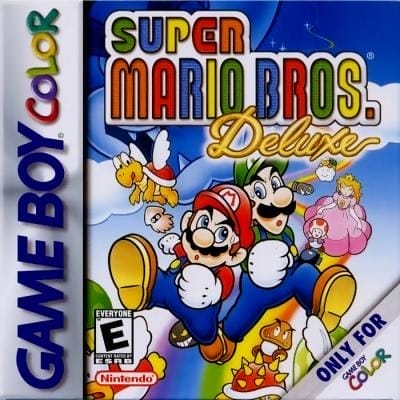
Super Mario Bros. Deluxe
Super Mario Bros. Deluxe (also known as Super Mario Bros. DX) is a 1999 platform game developed and published by Nintendo for the Game Boy Color. It is a largely unaltered port of the 1985 Super Mario Bros., originally released for the Nintendo Entertainment System (NES), with an unlockable version of its 1986 Japanese sequel, Super Mario Bros.: The Lost Levels. The game also introduces several new features, including a single-player and two-player race mode, a challenge mode for individual levels, and various toys and collectibles, some of which utilize the functionality of the Game Boy Printer. Upon release, Super Mario Bros. Deluxe received widespread acclaim. Critics praised its faithful adaptation of Super Mario Bros. on the Game Boy Color, as well as the additional gameplay modes and features, with minor criticism directed at the gameplay effects of the smaller screen size compared to the NES.
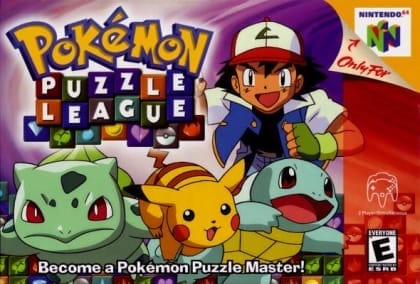
Pokémon Puzzle League
Pokémon Puzzle League is a puzzle video game in the Puzzle League series developed by Nintendo Software Technology and published by Nintendo for the Nintendo 64. Released in North America on September 25, 2000, and in Europe on March 2, 2001, its Puzzle League-based gameplay has a focus on puzzle-based strategy in the game's grid-based format. To advance to new levels, players are required to combat the game's trainers and gym leaders, similar to the ones featured in Pokémon Red, Blue, and Yellow. One of several games based on the Pokémon anime, it features lead protagonist Ash Ketchum, his Pikachu, his companions Brock and Misty, the Kanto Gym Leaders, and other characters from the series. Pokémon Puzzle League received mostly positive reviews from critics. Pokémon Puzzle Challenge, a companion puzzle game, was released for the Game Boy Color in 2000. Re-releases of the game followed in 2008 for the Wii via Virtual Console, and in 2022 on the Nintendo Classics service.
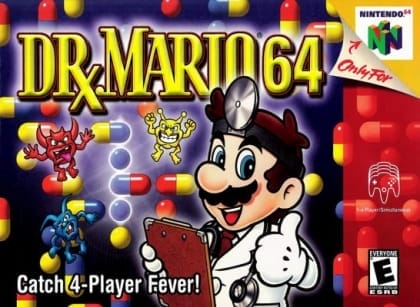
Dr. Mario 64
Dr. Mario 64 is a 2001 tile-matching action puzzle game developed and published by Nintendo for the Nintendo 64. The game is an enhanced remake of Dr. Mario, which was originally released for the NES and Game Boy consoles in 1990, and is based around characters from the 2000 Game Boy Color game Wario Land 3. The game's soundtrack was composed by Seiichi Tokunaga, featuring arrangements of classic Dr. Mario tunes and new compositions. The game was released in North America on April 9, 2001. The game received a Japanese release as part of the Nintendo Puzzle Collection compilation, released for the GameCube in 2003. The game was re-released on the Nintendo Classics service in October 2021, marking its first release in PAL territories. The game received average reviews.
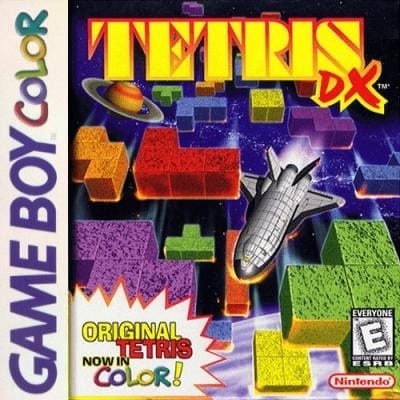
Tetris DX
Tetris DX is a 1998 video game developed and published by Nintendo for the Game Boy Color. It is a version of the game Tetris and unlike the 1989 port of the game "Tetris (Game Boy video game)"), it introduces color, new gameplay modes, save games, and multiplayer using the Game Link Cable. DX was released as a launch title for the Game Boy Color in October 1998. Upon release, the game received a positive reception, with praise directed towards its gameplay additions. Following release, critics praised the game as one of the best titles for the Game Boy Color. As in Tetris, DX is a puzzle video game in which players must fit a vertically descending series of blocks to form complete rows, making the blocks disappear; with the game ending if the blocks fill the screen beyond the top row of the play space.DX introduces additional gameplay modes.
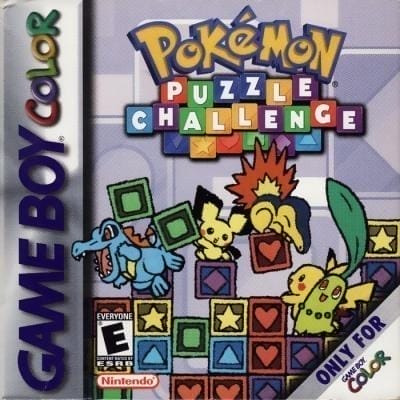
Pokémon Puzzle Challenge
Pokémon Puzzle Challenge is a puzzle video game developed by Intelligent Systems and published by Nintendo for the Game Boy Color. It was released in Japan on September 21, 2000; in North America on December 4, 2000; and in PAL regions on June 15, 2001, it is the second Pokémon-themed entry in the Puzzle League series. While its Nintendo 64 counterpart Pokémon Puzzle League is visually based on the Pokemon anime "Pokémon (TV series)"), Puzzle Challenge instead draws inspiration from the Pokémon Gold and Silver games. The game features multiple modes of play and support for competitive play between two players. Puzzle Challenge was later digitally re-released via the Nintendo 3DS's Virtual Console line on November 6, 2014.
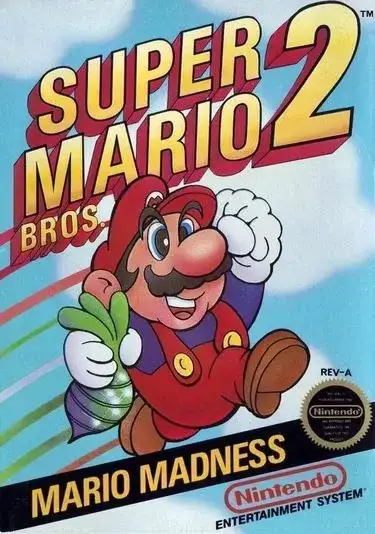
Super Mario Bros 2
Super Mario Bros. 2 is a 1988 platform game developed and published by Nintendo for the Nintendo Entertainment System. After the smash hit Super Mario Bros. in 1985, Nintendo quickly released an adaptation of the original with advanced difficulty titled Super Mario Bros. 2 for its market in Japan in 1986. However, Nintendo of America found this sequel too similar to its predecessor, and its difficulty too frustrating, for the nascent American market. This prompted a second Super Mario Bros. sequel based on Yume Kōjō: Doki Doki Panic, Nintendo's 1987 Family Computer Disk System game that had been based on a prototype platforming game and released as an advergame for Fuji Television's Yume Kōjō '87 media technology expo. The characters, enemies, and themes in Doki Doki Panic have the mascots and theme of the festival, and were adapted into the Super Mario theme to make a Western Super Mario Bros. sequel. Super Mario Bros.
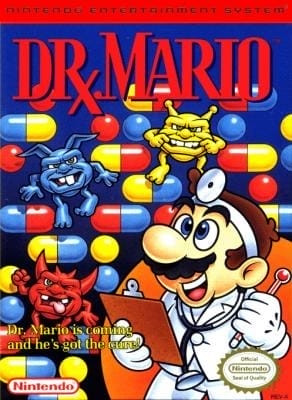
Dr. Mario
Dr. Mario is a 1990 puzzle video game developed and published by Nintendo for the Nintendo Entertainment System and Game Boy. A spin-off of the Mario series, it is a falling block puzzle game in which the player's objective is to destroy the viruses populating the on-screen playing field by using colored capsules "Capsule (pharmacy)") that are automatically tossed into the field by Dr. Mario. The player manipulates the falling capsules, to align the same colors, which destroys viruses. The player progresses through the game by eliminating all the viruses on the screen in each level. The game was produced by Gunpei Yokoi and programmed by Takahiro Harada, with the soundtrack composed by Hirokazu Tanaka. Dr. Mario was a commercial success, with more than 10 million copies sold worldwide across all platforms. It received generally positive reviews, appearing on several lists of "Best Nintendo Games of All Time".
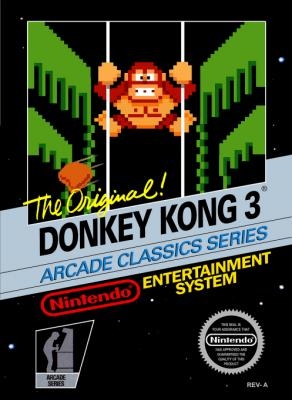
Donkey Kong 3
Donkey Kong 3 is a 1983 shoot 'em up video game developed and published by Nintendo for arcades. It is the third installment in the Donkey Kong series, following 1982's Donkey Kong Jr. It was ported to the Family Computer in 1984, then in North America for the Nintendo Entertainment System in 1986. The gameplay departs from previous Donkey Kong games, and it stars an exterminator named Stanley instead of Mario. The game was a modest financial success in Japan, but its commercial failure in the United States was later cited by commentators as contributing to a period of reduced activity for the series until the release of Donkey Kong (1994) and Donkey Kong Country. It was re-released on the Wii Virtual Console in North America on July 14, 2008, and in Europe on January 9, 2009. It was re-released on Nintendo Switch through the Nintendo Classics service.
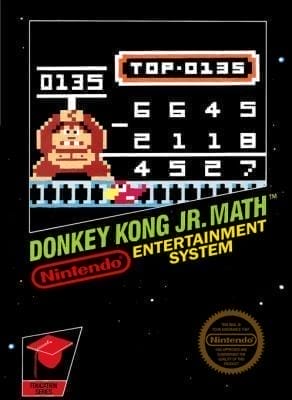
Donkey Kong Jr. Math
Donkey Kong Jr. Math is a 1983 edutainment platform video game developed and published by Nintendo for the Nintendo Entertainment System. It is a spin-off of the 1982 arcade game Donkey Kong Jr. In the game, players control Donkey Kong Jr. as he solves math problems set up by his father Donkey Kong. It is the only game in the Education Series of NES games in North America, owing to the game's lack of success. It was made available in various forms, including in the 2002 GameCube video game Animal Crossing and on the Virtual Console services for Wii and Wii U in 2007 and 2014 respectively, and in 2024 for the Nintendo Classics service. Donkey Kong Jr. Math was a critical and commercial failure. It has received criticism from several publications including IGN staff, who called it one of the worst Virtual Console games. Bruce Lowry, Nintendo of America’s vice president of sales from 1981 to 1986, referred to it as “the worst game we ever sold.
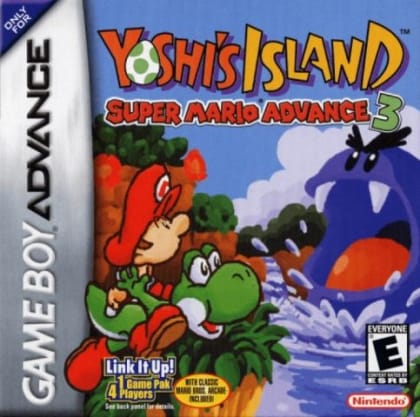
Super Mario Advance 3: Yoshi's Island
Super Mario World 2: Yoshi's Island is a 1995 platform game developed and published by Nintendo for the Super Nintendo Entertainment System (SNES). The player controls Yoshi dinosaurs on their quest to reunite baby Mario with his brother Luigi, who has been kidnapped by the wizard Kamek. Yoshi runs and jumps to reach the end of each level while solving puzzles and collecting items with Mario's help. Having introduced the character in the previous Super Mario game, Super Mario World (1990), Nintendo decided to develop a game starring Yoshi, with the aim of making it more accessible. Yoshi's Island introduced his signature flutter jump and egg-spawning abilities. The marker-drawn art style was created by scanning hand-drawn pictures and approximating them pixel-by-pixel. Some special effects were powered by a new Super FX2 microchip. After four years of development, Yoshi's Island was released in Japan in August 1995 and worldwide two months later. It sold more than four million copies.
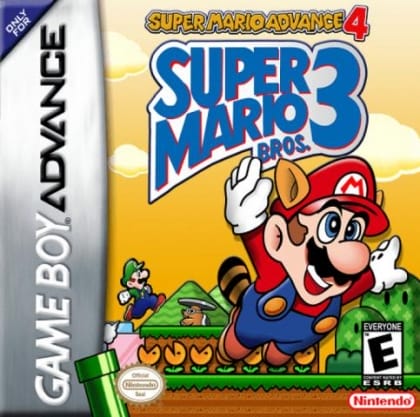
Super Mario Advance 4: Super Mario Bros. 3
Super Mario Advance 4: Super Mario Bros. 3 is a 2003 platform game developed and published by Nintendo for the Game Boy Advance. It was released in Japan, and later released in Europe, North America, and Australia. It is an enhanced remake of the NES video game Super Mario Bros. 3, and is based on the remake found in Super Mario All-Stars for the Super Nintendo Entertainment System. Players control either Mario or Luigi as they travel through the eight kingdoms of the Mushroom World to rescue Princess Peach from Bowser. The game was revealed at Nintendo's conference at the E3 2003 convention. It contains several enhancements, including the addition of Mario and Luigi's voices by Charles Martinet, the ability to scan e-Cards into Nintendo's e-Reader to add certain content, and a multiplayer mode based on the original arcade game Mario Bros.. The game also allows players to save replays of their gameplay.
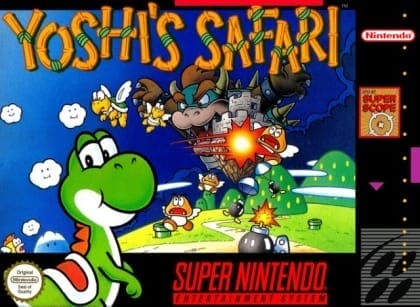
Yoshi's Safari
Yoshi's Safari is a 1993 light gun shooter developed and published by Nintendo for its Super Nintendo Entertainment System (SNES). It is the only Mario franchise game to feature first-person shooter gameplay and requires the SNES's Super Scope light gun. As Mario and his pet dinosaur Yoshi, the player embarks on a quest to save the kingdom of Jewelry Land from Bowser and his Koopalings, who have kidnapped its rulers and stolen 12 gems. The game features 12 levels in which the player shoots enemies like Goombas and Koopas, and collects power-ups and coins. At the end of each level, the player engages in a boss fight with an enemy, a Koopaling, or Bowser. Nintendo commissioned its R&D1 department to develop Yoshi's Safari in response to the waning popularity of the Super Scope. Yoshi's Safari was the first Super Scope title to use the SNES's Mode 7 graphics mode, and the future of the peripheral depended on the game's performance.
Browse our collection of 18 Nintendo retro games, all playable instantly in your browser. No download required. Play classic games online in your browser and save your progress anytime.