Sports
Sports games
18 games
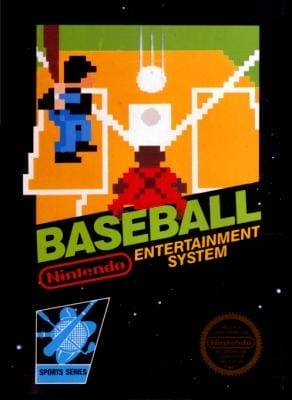
Baseball
This article is about the Nintendo-developed game. For other video games of the same name, see Baseball (disambiguation). Baseball North American NES box art Developers Nintendo R&D1 Intelligent Systems Publisher Nintendo Designer Shigeru Miyamoto[6] Composers Yukio Kaneoka Hirokazu Tanaka Platforms Nintendo Entertainment System, arcade, Famicom Disk System, Game Boy, Nintendo e-Reader Release December 7, 1983 Genre Sports (baseball) Modes Single-player, multiplayer Arcade system Nintendo VS. System, PlayChoice-10 Baseball[a] is a baseball video game developed and published by Nintendo for the Family Computer (Famicom). It was originally released in Japan on December 7, 1983, a few months after the July 15 launch of the Famicom.[7] An arcade version titled VS. Baseball released for the Nintendo VS. System in 1984, featuring enhanced graphics and speech, becoming a hit at Japanese and American arcades. The game was later released as launch title for the Nintendo Entertainment System in North America in 1985,[8] and in Europe in 1986.[9] It was also ported to the Game Boy in 1989 as one of the handheld's four launch titles.[
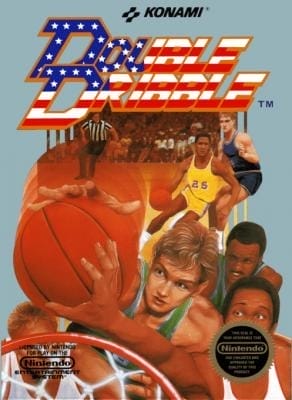
Double Dribble
Double Dribble (ダブルドリブル, Daburu Doriburu) is a 1986 basketball video game developed and published by Konami for arcades. It was the second basketball game by Konami, following Super Basketball. It was considered the most realistic basketball sports game upon release, with fast-paced action, detailed players, a large side-scrolling court, innovative cinematic slam dunks, and detailed sound effects, beginning a trend where presentation would play an increasingly important role in sports games.#cite_note-allgame-review-7) Much of the game's popularity came from its animation sequences showing basketball players performing slam dunks, as well as "The Star-Spangled Banner" theme during the attract mode. These were uncommon in video games at the time of Double Dribble's release. It was successful in the arcades, and the game became and remained popular and remembered when it was ported to the Nintendo Entertainment System in 1987.
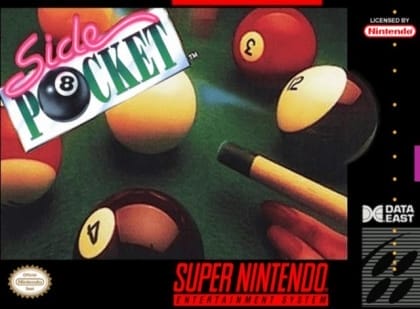
Side Pocket
The Game Boy version of Side Pocket is a slight modification from the NES version, featuring a smaller playing field (to compensate with Game Boy's screen), new set of soundtrack and a different screen layout. Like in NES version, the Pocket Game mode features 4 levels and the player starts with 5 lives. One unique addition to the Game Boy version is the ability to play single-player nine-ball mode, while in other versions this mode is limited only to two players. Enhanced remakes of the game were later released for the Sega Genesis, Super Nintendo Entertainment System, and Game Gear. This version features updated contents compared to the original NES and Game Boy versions, including revamped graphics, new soundtrack, and photo-realistic background sceneries during gameplay. The main game modes remain identical to the original, with several alteration on the Pocket Game mode.
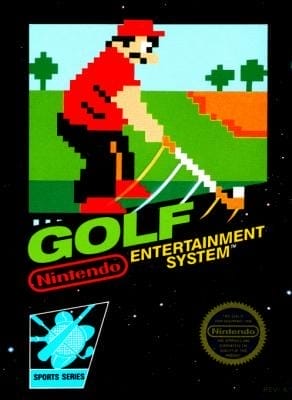
Golf
In 1983, the Famicom had only three launch games, and its library would soon total seven, including Golf. Shigeru Miyamoto said he was "directly in charge of the character design and the game design",#cite_note-Miyamoto_Spills-5) and Satoru Iwata said he was the only programmer.#cite_note-only_prog-6) Golf has been re-released on many other consoles after its release. Hudson Soft released a conversion of the game for the Japan-only PC-88 and Sharp X1 in 1985.[citation needed]Golf was released for the Japan-only Family Computer Disk System on February 21, 1986.#cite_note-13) It was re-released for the Nintendo e-Reader for the Game Boy Advance on April 21, 2003.#cite_note-14) Both the NES and Game Boy versions were released on the Virtual Console for Wii U and Nintendo 3DS.#cite_note-15)#cite_note-16) It was re-released on the Nintendo Switch via Nintendo eShop on October 25, 2019, by Hamster Corporation as part of its Arcade Archives series.
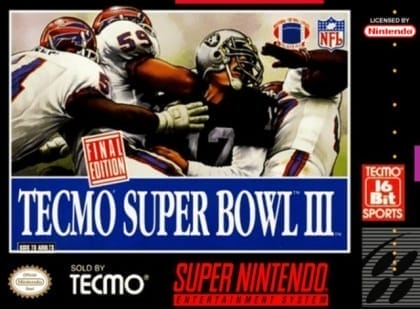
Tecmo Super Bowl III: Final Edition
Tecmo Super Bowl III: Final Edition is a 1995 American football video game released on the Super Nintendo Entertainment System and the Sega Genesis. According to a spokesperson for the game's developer/publisher, Tecmo, the subtitle "Final Edition" refers to it being the last football game Tecmo would make for 16-bit systems. The game features the full NFL and NFLPA licenses. The game is closer to the real-life sport in comparison to the NES and the previous two SNES/Sega Genesis_Tecmo Super Bowl_ games in several ways. Each team has a playbook of eight passing plays and eight running plays, any one of which can be switched out and another put in its place in the middle of a game. It also includes some of the more nuanced strategies of football, such as attempting two-point conversions. Also setting itself apart from the NES-era games was the in-game presentation, which is more akin to the realistic "TV style" presentation of modern football games like the Madden series.
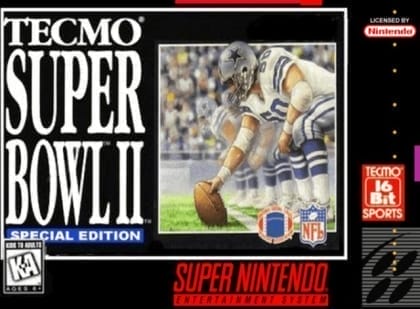
Tecmo Super Bowl II - Special Edition
Tecmo Super Bowl II (テクモスーパーボウルII スペシャルエディション) is an update of the previous Tecmo Super Bowl released for Super NES and Genesis.
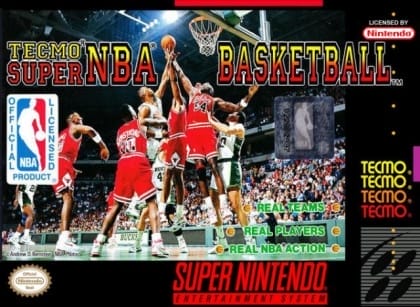
Tecmo Super NBA Basketball
Tecmo Super NBA Basketball (テクモスーパーNBAバスケットボール) is a basketball video game developed by Sculptured Software for the Super NES. The game is the SNES equivalent of the original Tecmo NBA Basketball. It also came out a year later (with updated rosters) for the Sega Genesis.
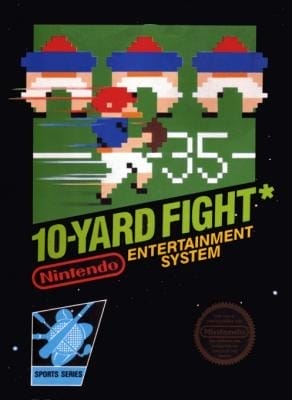
10-Yard Fight
10-Yard Fight is a 1983 American footballvideo game developed and published by Irem for arcades. It was released by Taito in North America, Electrocoin in Europe, and ADP Automaten in West Germany. A port developed by Tose for the Nintendo Entertainment System was released in 1985 by Irem in Japan and Nintendo internationally. 10-Yard Fight is viewed in a top-down perspective and is vertical scrolling. The player does not select plays for either offense or defense. On offense, the player simply receives the ball upon the snap and either attempts to run with the quarterback, toss the ball to a running back, or throw the ball to the long distance receiver, essentially the option offense. On defense, the player picks one of two players to control, and the computer manipulates the others. The ball can also be punted "Punt (gridiron football)") or a field goal "Field goal (football)") can be attempted.
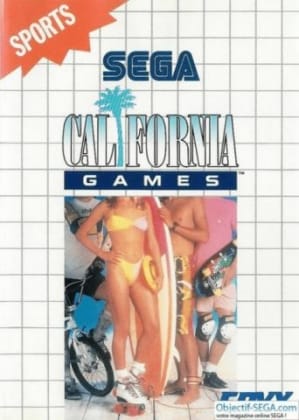
California Games
California Games is a 1987 sports video game developed and published by Epyx for the Apple II and Commodore 64. Branching from their Summer Games "Summer Games (video game)") and Winter Games series, it is a collection of outdoor sports purportedly popular in California. The game was successful and was soon ported to other home computers and video game consoles, and was the pack-in game for the Atari Lynx when that system launched in September 1989. It was followed by the sequel California Games II in 1990. The events vary slightly per platform, but include half-pipe, footbag, surfing (starring Rippin' Rick),#cite_note-12)roller skating, BMX, and flying disc. Epyx reportedly used more than three man-years to develop California Games, including a surfer who wrote the surfing game.#cite_note-trivette19880628-13) Several members of the development team moved on to other projects.
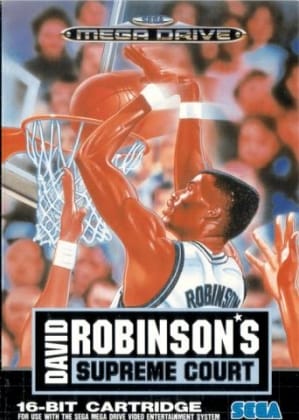
David Robinson's Supreme Court
David Robinson Supreme Court (known in Japan as David Robinson Basketball (デビッド・ロビンソン バスケットボール)) is a basketball video game released by Sega exclusively for the Sega Genesis in 1992. The game was endorsed by NBA player David Robinson but does not feature an NBA license and instead features four different fictional American teams. Robinson would later be featured in Sega's NBA Action games.
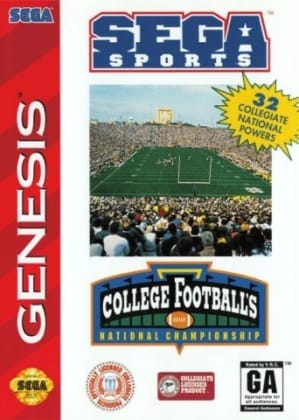
College Football's National Championship
College Football's National Championship is a 1994 American football video game that was released exclusively for the North American Sega Genesis video game system. A sequel, College Football's National Championship II, was released in 1995.
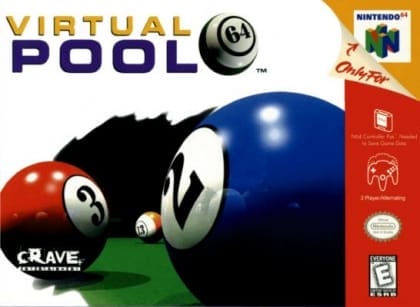
Virtual Pool 64
Virtual Pool 64 is a 3Dfirst-person "First person (video games)")sportssimulationvideo game that was developed by American studio Celeris and released for the Nintendo 64 by Crave Entertainment on December 17, 1998, in North America, and in Europe on February 26, 1999. The game features simulations of 11 forms of pool (pocket billiards). It is part of the "Virtual Pool" game franchise, which also includes the PC games Virtual Pool "Virtual Pool (video game)"), Virtual Pool 2, Virtual Pool Hall and Virtual Pool 3. The game has been simultaneously lauded as "a top-notch simulation" and criticized as dull, lacking both player incentive and engaging characters. Virtual Pool 64 as the follow-up to the main series title Virtual Pool 2 retains the same different pool games, and adds new games, such as Rotation pool "Rotation (pool)").
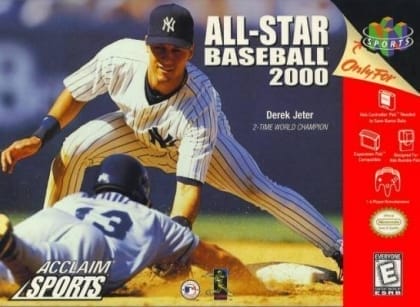
All-Star Baseball 2000
All-Star Baseball 2000 is a video game developed by Iguana Entertainment and Realtime Associates and published by Acclaim Entertainment for the Game Boy Color and the Nintendo 64 in 1999.
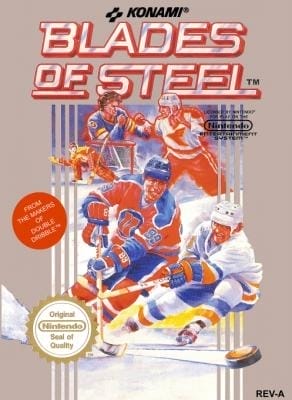
Blades of Steel
Blades of Steel, later released in Japan as Konamic Ice Hockey (コナミック アイスホッケー, Konamikku Aisu Hokkē), is an ice hockey video game released by Konami for North American arcades in 1987, and ported to the Family Computer Disk System and Nintendo Entertainment System in 1988. All teams are fictional but based out of real Canadian and American cities. The game is known for its fast-paced hockey action and especially for the fighting. It is a one or two player game. When playing against the computer, there are three difficulty levels to choose from: Junior, College, and Pro (with Pro being the most difficult and Junior being the easiest). Each team consists of three forwards, two defencemen, and a goaltender. Two sequels were released: NHL Blades of Steel '99 and NHL Blades of Steel 2000. The NES version was re-released on Nintendo's Virtual Console service on December 24, 2007. The arcade version was re-released on Microsoft's Game Room service on November 24, 2010.
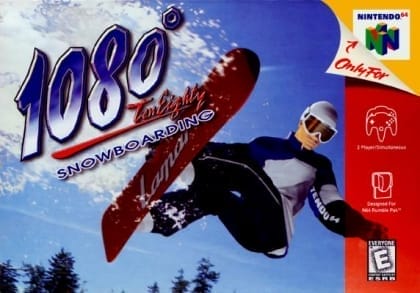
1080° Snowboarding
Commercially, 1080° Snowboarding was a significant success in the United States. According to PC Data, the game sold 817,529 units and generated $40.9 million in revenue by the end of 1998, making it the seventh-best-selling Nintendo 64 game of the year. Over its lifetime, the game sold 1,230,000 units in the U.S. and over 23,000 in Japan. However, it did not surpass the commercial success of the developers' previous game, Wave Race 64, which sold 1,950,000 units in the U.S. and 154,000 in Japan. 1080° Snowboarding was later re-released on the Wii's Virtual Console service in 2008 and on the Wii U in 2016. It was also made available on the Nintendo Classics service on December 7, 2023. 1080° Avalanche, the sequel to 1080° Snowboarding, was released for the GameCube in 2003. Unlike its predecessor, the sequel received mixed reviews.
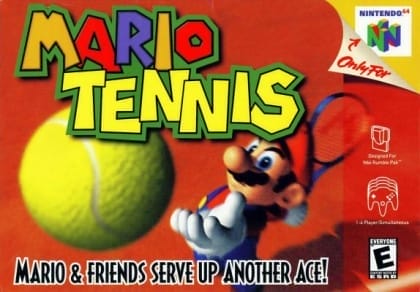
Mario Tennis
Mario Tennis is a sports video game developed by Camelot Software Planning and published in 2000 by Nintendo for the Nintendo 64. Following Mario's Tennis, it is the second game in the Mario Tennis series. The game is known for being the debut game of Luigi's arch-rival, Waluigi, and the re-introduction of Princess Daisy and Birdo. A companion Game Boy Color version of the game featuring an story mode with role-playing elements also developed by Camelot was published under the same title worldwide and as Mario Tennis GB in Japan. The Nintendo 64 version was re-released on the Wii and Wii U Virtual Console, and on the Nintendo Classics service, in 2010, 2015, and 2021 respectively; the Game Boy Color version was re-released on the Nintendo 3DS Virtual Console in 2014, and on the Nintendo Classics service in 2024. The game received critical acclaim, with praise for its gameplay, depth, and amount of content.
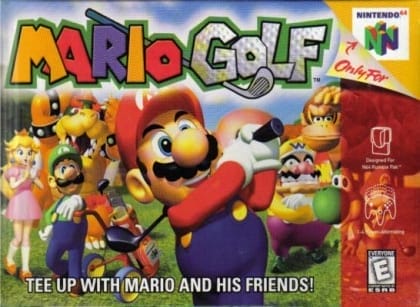
Mario Golf
Mario Golf#cite_note-1) is a 1999 sportsvideo game developed by Camelot Software Planning and published by Nintendo for the Nintendo 64. It is the successor to NES Open Tournament Golf and, although the first to bear the name, is the second game in the Mario Golf series. Players control Mario series characters participating in the sport of golf on themed courses. Unlike previous golf titles, the gameplay is simplified to provide an easier experience while retaining common elements such as character statistics and variables affecting ball shots. In addition to traditional stroke play, there are other modes such as mini golf and a skins match. A companion Game Boy Color version of the game featuring an story mode with role-playing elements also developed by Camelot was published under the same title worldwide and as Mario Golf GB#cite_note-2) in Japan.
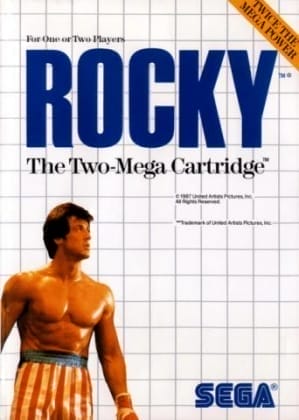
Rocky
Rocky is the second video game based on the popular Rocky franchise, developed and published by Sega and released for the Master System in 1987. The player must train Rocky Balboa before each fight to improve his skills. Rocky possesses a straight punch "Cross (boxing)"), a hook, an uppercut, and body punch as well as various combos.
Browse our collection of 18 Sports retro games, all playable instantly in your browser. No download required. Play classic games online in your browser and save your progress anytime.