Shoot em up
8 games
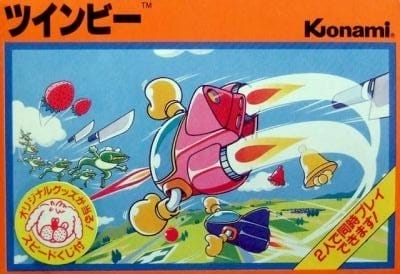
TwinBee
TwinBee is a 1985 vertically scrolling shooter video game developed and published by Konami for arcades. Along with Sega's Fantasy Zone (1986), it is credited as an early archetype of the "cute 'em up" subgenre. It was the first game to run on Konami's Bubble System hardware. TwinBee was ported to the Family Computer and MSX in 1986, and has been included in numerous compilations released in later years. The original arcade game was released outside Japan for the first time as part of the Nintendo DS compilation Konami Classics Series: Arcade Hits. A mobile phone version with edited graphics was released for Japanese i-mode mobile phones in 2003. Various TwinBee sequels were released for the arcade and home console markets following the original game, some of which spawned audio drama and anime adaptations in Japan.
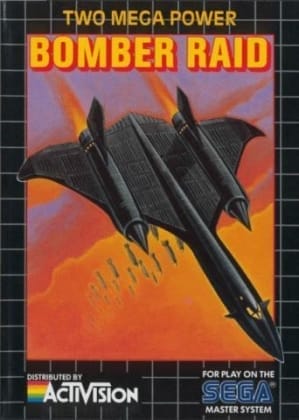
Bomber Raid
Text is available under the Creative Commons Attribution-ShareAlike 4.0 License; additional terms may apply. By using this site, you agree to the Terms of Use and Privacy Policy. Wikipedia® is a registered trademark of the Wikimedia Foundation, Inc., a non-profit organization. Privacy policy About Wikipedia Disclaimers Contact Wikipedia Legal & safety contacts Code of Conduct Developers Statistics Cookie statement Mobile view Edit preview settings Search Search - Toggle the table of contents Bomber Raid [](http://en.wikipedia.org/wiki/Bomber_Raid#)[](http://en.wikipedia.org/wiki/Bomber_Raid#)[](http://en.wikipedia.org/wiki/Bomber_Raid#)[](http://en.wikipedia.org/wiki/Bomber_Raid#)[](http://en.wikipedia.org/wiki/Bomber_Raid#)[](http://en.wikipedia.org/wiki/Bomber_Raid#)[](http://en.wikipedia.
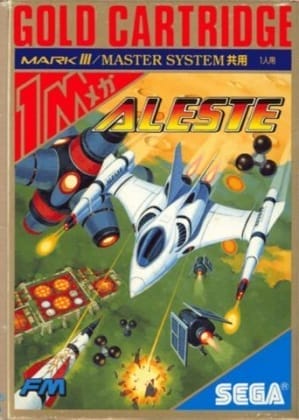
Aleste
Aleste (アレスタ) is a vertically scrolling shooter developed by Compile, originally published by Sega in 1988 for the Master System and then by CP Communications "Compile (company)") for the MSX2. The Master System version was released outside Japan as Power Strike. The game spawned the Aleste and Power Strike franchises. The story of Aleste concerns the manmade supercomputer DIA 51, which has been infected by a hybrid virus that is spreading like wildfire, eventually leading DIA 51 to eliminate the human race. When Yuri, Ray's girlfriend, gets injured in DIA's assault, Raymond Waizen has all the reason in the world to get rid of DIA 51 once and for all in his Aleste fighter. The game was originally released for the Master System in February 1988. This version was released outside Japan, as Power Strike. The US release was initially a mail-only limited edition, however it did later see some retail distribution at Toys R' Us and other chains in North America.
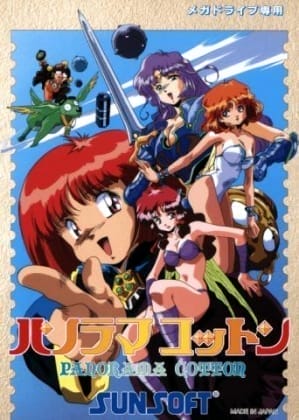
Panorama Cotton
Panorama Cotton is a 1994 rail shooter video game developed by Success and published by Sunsoft for the Mega Drive exclusively in Japan on August 12, 1994. Panorama Cotton is the third entry in the Cotton series and made a major departure from the original gameplay formula of prior Cotton entries; instead of being a side-scrolling shooter like the others, it is a pseudo-3D shooter in the style of Sega's Space Harrier. Panorama Cotton is a pseudo-3D scrolling shooter reminiscent of Space Harrier, set in an anime-style fantasy world. Various levels scroll "into the screen", vertically, horizontally, or diagonally. The player can move Cotton over the screen, shooting at oncoming enemies and avoiding obstacles in her way. Cotton can upgrade her weapon to higher levels as the player progresses, and can also cast magical spells by collecting special items. The most important plot elements in all of the Cotton games are magical candies called Willows.
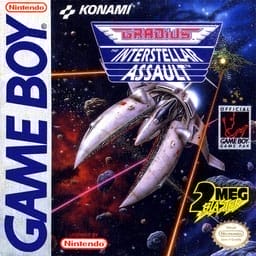
Gradius: The Interstellar Assault
Gradius: The Interstellar Assault, released as Nemesis II: The Return of the Hero in Europe, and Nemesis II in Japan, is a 1991 horizontally scrolling shooter video game developed and published by Konami for the Game Boy. It is the second game in the Gradius series released for the console. The game was re-released via the Konami GB Collection series of Super Game Boy and Game Boy Color compilations; it can be found in the Japanese Vol.3 and the European Vol.4. Like Gradius before it, these versions were renamed Gradius II for the Japanese Vol.3 and Gradius II: The Return of the Hero for the European Vol.4. It was re-released on the Nintendo Classics service for the Nintendo Switch in May 2025.
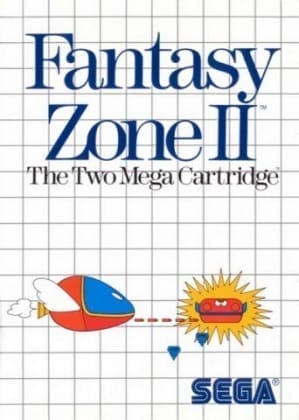
Fantasy Zone II
Fantasy Zone II: The Tears of Opa-Opa is a 1987 horizontally scrolling shooter video game developed and published by Sega for the Master System. It was ported to the arcade, Famicom, and MSX2, and was remade for the System 16 hardware on a PlayStation 2 compilation in 2008. It was re-released on the WiiVirtual Console in North America on June 29, 2009. The player controls a sentient spaceship named Opa-opa who fights surreal invader enemies. Like the first Fantasy Zone, Fantasy Zone II departs from scrolling shooter themes with its bright colors and whimsical designs. For this reason, it is occasionally dubbed a "cute 'em up". In the past, the courageous hero Opa-Opa saved the Fantasy Zone from the invading Menon forces, but his victory came at a price as he was forced to fight his own father who led the invasion. It is now Space Year 1432, 10 years after that battle, and the Nenon forces are spreading chaos through the Fantasy Zone.
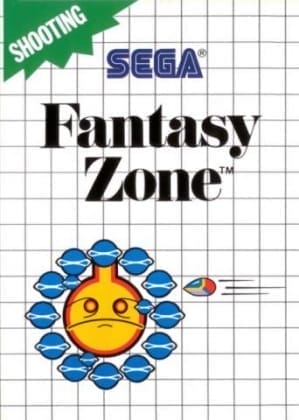
Fantasy Zone
Fantasy Zone is a 1986 horizontally scrolling shootervideo game developed and published by Sega for arcades. It is the first game in the Fantasy Zone series, and was later ported to several home consoles, including Sega's Master System. The player controls a sentient spaceship named Opa-Opa who fights an enemy invasion in the titular group of planets. The game contains a number of features atypical of the traditional scrolling shooter. The main character, Opa-Opa, is sometimes referred to as Sega's first mascot character. The game's design and main character have similarities to Konami's TwinBee, and both games are credited with establishing the cute 'em up subgenre.Fantasy Zone also popularized the concept of a boss rush, a stage "Level (video games)") where the player faces multiple previous bosses "Boss (video games)") again in succession. The game was followed by several sequels, beginning with Fantasy Zone II: The Tears of Opa-Opa in 1987.
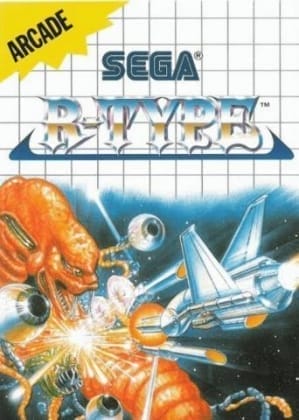
R-Type
R-Type is a 1987 horizontally scrolling shooter video game developed and published by Irem for arcades. The player controls the R-9 "Arrowhead" starship in its efforts to destroy the Bydo, a powerful alien race bent on wiping out all of mankind. The R-9 can acquire a glowing orb called a "Force", giving limited protection from enemy fire and providing additional firepower. R-Type was the first game to run on Irem's 16-bit M72 arcade system. The development team drew inspiration from Gradius, Aliens and works by H.R. Giger. The music was composed by Masato Ishizaki, while character designs were by Akio Oyabu. The arcade version was distributed in North America by Nintendo, and was the last arcade title to be released by the company. R-Type was commercially successful and praised by critics for its graphics and addictive gameplay, but was criticized for its difficulty. It is commonly cited as one of the best shoot 'em up games, and one of the greatest video games of all time.
Browse our collection of 8 Shoot em up retro games, all playable instantly in your browser. No download required. Play classic games online in your browser and save your progress anytime.