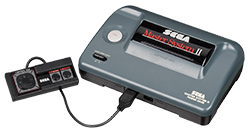
Sega Master System
The Master System is an 8-bit home video game console manufactured and developed by Sega. It was originally a remodeled export version of the Sega Mark III, the third iteration of the SG-1000 series of consoles, released in Japan on October 20, 1985. The Master System launched in North America in September 1986, followed by Europe in August 1987, South Korea in April 1989, and Brazil in September 1989. A Japanese version was launched on October 23, 1987, with additions including a built-in FM audio chip, a rapid-fire switch, and a dedicated port for the 3D glasses. The Master System II, a cheaper model, was released in 1990 in North America, Australasia, and Europe.
35 games
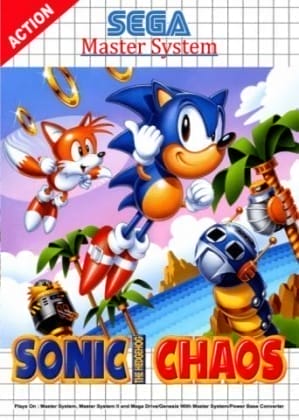
Sonic Chaos
Sonic the Hedgehog Chaos is a 1993 platform game developed by Aspect and published by Sega for the Master System and Game Gear. Players control Sonic the Hedgehog and his sidekick Miles "Tails" Prower in their quest to retrieve the Chaos Emeralds from Doctor Robotnik, who has stolen them to construct nuclear weapons. Gameplay involves running through stages, collecting rings, and defeating enemies. It is largely based on the Master System version of Sonic the Hedgehog 2, and is thus considered a follow-up to that game. Chaos is the first Sonic game for the Master System and Game Gear to feature Tails as a separate playable character with his own unique abilities. Developed by Japanese studio Aspect, Chaos is the first original Sonic game made for a handheld, instead of a port or remake of an existing game. Aspect used the knowledge gained from its work on previous Sonic games while designing Chaos to make it more expansive and faster than its predecessors.
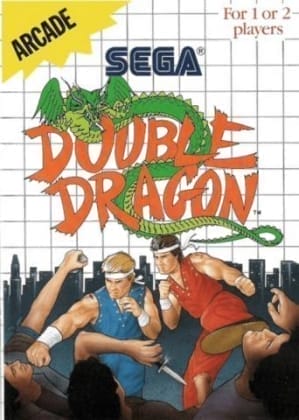
Double Dragon
Double Dragon#cite_note-17)#cite_note-18) is a 1987 beat 'em up video game developed by Technōs Japan and published by Taito for arcades. The game's development was led by Yoshihisa Kishimoto, and it is a spiritual and technological successor to Technos' earlier beat 'em up, Nekketsu Kōha Kunio-kun (1986), released outside of Japan by Taito as Renegade; Kishimoto originally envisioned it as a direct sequel and part of the Kunio-kun series, before making it a new game with a different cast and setting. Double Dragon introduced several additions to the _Kunio-kun_belt scroll beat 'em up formula, such as a continuous side-scrolling world adding a sense of progression, two-player cooperative gameplay, the ability to arm oneself with an enemy's weapon after disarming them, and the use of cutscenes to give it a cinematic look and feel.
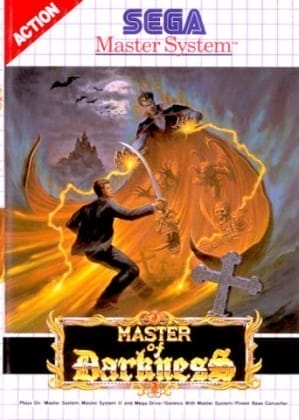
Master of Darkness
Master of Darkness is a platform game, very similar to Castlevania. The plot has the player entering the role of a Ouija board-playing psychologist named Dr. Ferdinand Social. He is looking to defeat Count Dracula, who is behind a series of killings in London that have been attributed to Jack the Ripper. However, Jack the Ripper is indeed responsible, for he is using the victim's bodies and fresh blood forsacrificial offerings – as part of a darkritual being performed by Count Massen to resurrect Dracula. Also taking some part in the murders and the dark ritual is a mysterious Psychic Girl, who is possessed by an evil Skull Spirit. The game requires the player to battle their way through five rounds, which are divided into three lengthy stages.
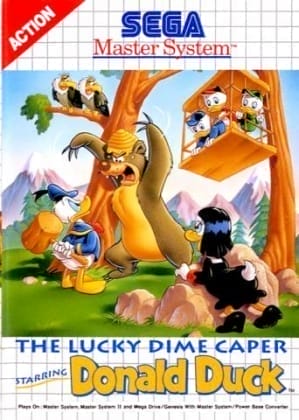
The Lucky Dime Caper Starring Donald Duck
The Lucky Dime Caper Starring Donald Duck is a 1991 platform game developed and published by Sega for the Game Gear and Master System. The player controls Donald Duck as he attempts to retrieve the Number One Dime from Magica De Spell. Another game featuring Donald Duck for the Game Gear and Master System, Deep Duck Trouble, was released in December 1993.
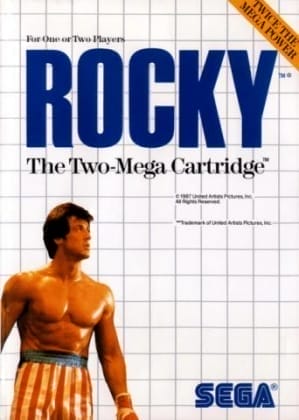
Rocky
Rocky is the second video game based on the popular Rocky franchise, developed and published by Sega and released for the Master System in 1987. The player must train Rocky Balboa before each fight to improve his skills. Rocky possesses a straight punch "Cross (boxing)"), a hook, an uppercut, and body punch as well as various combos.
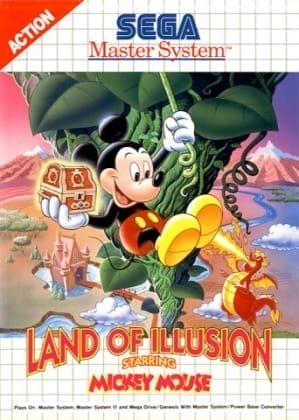
Land of Illusion Starring Mickey Mouse
Land of Illusion Starring Mickey Mouse, known in Japan as Mickey Mouse no Mahō no Crystal (ミッキーマウスの魔法のクリスタル), is a 1993 platform game developed and published by Sega for the Game Gear and Master System.
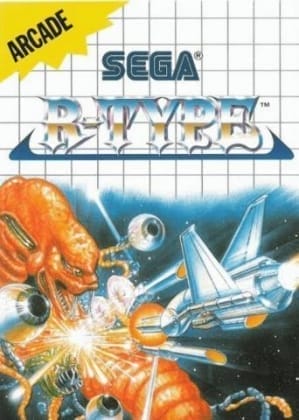
R-Type
R-Type is a 1987 horizontally scrolling shooter video game developed and published by Irem for arcades. The player controls the R-9 "Arrowhead" starship in its efforts to destroy the Bydo, a powerful alien race bent on wiping out all of mankind. The R-9 can acquire a glowing orb called a "Force", giving limited protection from enemy fire and providing additional firepower. R-Type was the first game to run on Irem's 16-bit M72 arcade system. The development team drew inspiration from Gradius, Aliens and works by H.R. Giger. The music was composed by Masato Ishizaki, while character designs were by Akio Oyabu. The arcade version was distributed in North America by Nintendo, and was the last arcade title to be released by the company. R-Type was commercially successful and praised by critics for its graphics and addictive gameplay, but was criticized for its difficulty. It is commonly cited as one of the best shoot 'em up games, and one of the greatest video games of all time.
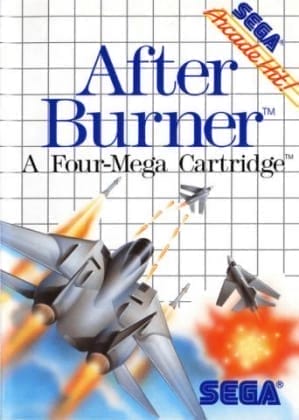
After Burner
After Burner is a 1987 rail shooter video game developed by Studio 128 and published by Sega for arcades. The player controls an American F-14 Tomcat fighter jet and must clear each of the game's 18 stages by destroying enemies. The plane is equipped with a machine gun and a limited supply of heat-seeking missiles. The game uses a third-person perspective, as in Sega's earlier Space Harrier (1985) and Out Run (1986). It runs on the Sega X Board arcade system which is capable of surface and sprite rotation. It is the fourth Sega game to use a hydraulic "taikan" motion simulator arcade cabinet, one that is more elaborate than their earlier "taikan" simulator games. The cabinet simulates an aircraft cockpit, with flight stick controls, a chair with seatbelt, and hydraulic motion technology that moves, tilts, rolls and rotates the cockpit in sync with the on-screen action. Designed by Sega veteran Yu Suzuki, After Burner was intended to be Sega's first "true blockbuster" video game.
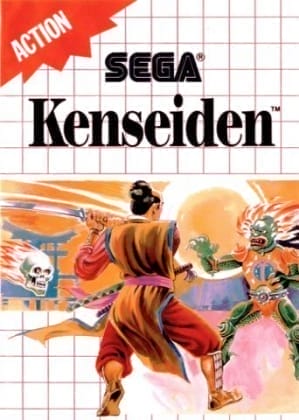
Kenseiden
Kenseiden is a 1988 action-platformvideo game developed and published by Sega for the Master System. The player controls the samurai Hayato in 16th century Japan as they attempt to retrieve five scrolls and a sacred sword from evil warlocks and spirits led by Oda Nobunaga. The game was released as Sword of the Hwarang in South Korea with multiple visual differences. Hayato is altered to look like a Hwarang warrior and the levels are changed to be set in Korea. Kenseiden received positive reviews from critics. Kenseidan is a side-scrollingaction-adventure game set in Japan. Each level is set in an ancient Japanese province where the player is tasked. After A certain point, the player can play levels in whatever order they choose, and can go back to previous levels at anytime except for the final level.
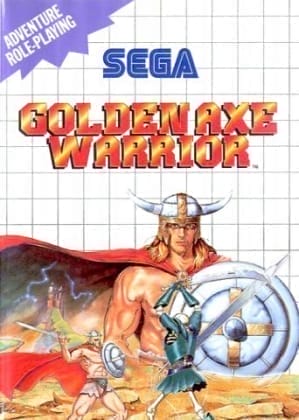
Golden Axe Warrior
Golden Axe Warrior is a 1991 action-adventurevideo game developed and published by Sega for the Master System. A spin-off "Spinoff (media)") of the Golden Axe series, the player controls a male human warrior in the fictional country of Firewood as they try to avenge the death of their parents by defeating the tyrant Death Adder and recovering nine missing crystals. In a deviation from previous Golden Axe titles, the game incorporates gameplay similar to The Legend of Zelda "The Legend of Zelda (video game)"). The player navigates an overworld and dungeons from a top-down perspective, defeating enemies, collecting items and discovering secrets. Traditional role-playing game elements, such as exploring towns, are also implemented. Golden Axe Warrior is often subject to mixed critical reception, due to its similarities to The Legend of Zelda and Zelda II: The Adventure of Link.
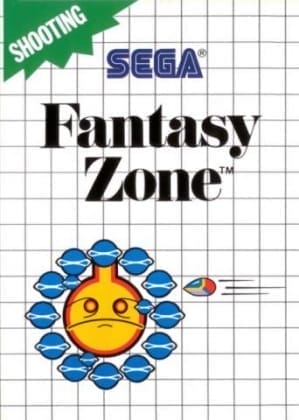
Fantasy Zone
Fantasy Zone is a 1986 horizontally scrolling shootervideo game developed and published by Sega for arcades. It is the first game in the Fantasy Zone series, and was later ported to several home consoles, including Sega's Master System. The player controls a sentient spaceship named Opa-Opa who fights an enemy invasion in the titular group of planets. The game contains a number of features atypical of the traditional scrolling shooter. The main character, Opa-Opa, is sometimes referred to as Sega's first mascot character. The game's design and main character have similarities to Konami's TwinBee, and both games are credited with establishing the cute 'em up subgenre.Fantasy Zone also popularized the concept of a boss rush, a stage "Level (video games)") where the player faces multiple previous bosses "Boss (video games)") again in succession. The game was followed by several sequels, beginning with Fantasy Zone II: The Tears of Opa-Opa in 1987.
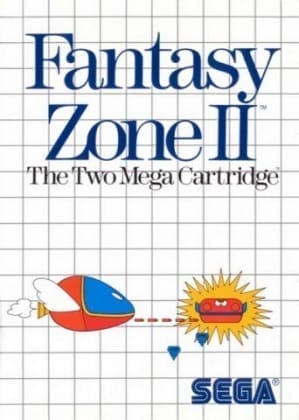
Fantasy Zone II
Fantasy Zone II: The Tears of Opa-Opa is a 1987 horizontally scrolling shooter video game developed and published by Sega for the Master System. It was ported to the arcade, Famicom, and MSX2, and was remade for the System 16 hardware on a PlayStation 2 compilation in 2008. It was re-released on the WiiVirtual Console in North America on June 29, 2009. The player controls a sentient spaceship named Opa-opa who fights surreal invader enemies. Like the first Fantasy Zone, Fantasy Zone II departs from scrolling shooter themes with its bright colors and whimsical designs. For this reason, it is occasionally dubbed a "cute 'em up". In the past, the courageous hero Opa-Opa saved the Fantasy Zone from the invading Menon forces, but his victory came at a price as he was forced to fight his own father who led the invasion. It is now Space Year 1432, 10 years after that battle, and the Nenon forces are spreading chaos through the Fantasy Zone.
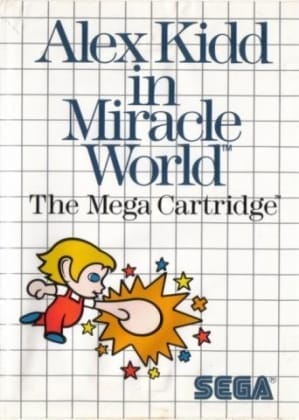
Alex Kidd in Miracle World
Alex Kidd in Miracle World is a 2D platform game. The player must finish levels and overcome obstacles and puzzles in both scrolling and single-screen environments. Throughout the 17 stages, Alex faces many monsters and the three henchmen of Janken the Great, before facing Janken himself. Alex's punching ability is used to destroy enemies and to break rocks in order to access new paths and to collect items such as money which can then be used to purchase other items including vehicles such as motorbikes and helicopters. At the end of many stages, Alex plays jan-ken-pon (rock-paper-scissors) with one of Janken's henchmen. Alex dies with one hit, or by losing a game of rock, paper, scissors. The game has no save system, but by holding the directional pad up and pressing the 2 button eight times at the Game Over screen, the player will restart the level with three new lives, at a cost of 400 Baums (the in-game currency).
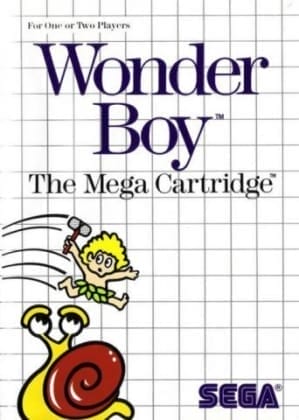
Wonder Boy
Wonder Boy is a 1986 platform game developed by Escape and published by Sega for arcades. It was later ported to the SG-1000, Master System and Game Gear video game consoles by Sega, and to the ZX Spectrum, Commodore 64 and Amstrad CPC home computers by Activision. The game is also known as Super Wonder Boy (スーパーワンダーボーイ, Sūpā Wandā Bōi) for its Sega Mark III release in Japan and Revenge of Drancon for its Game Gear release in North America. A high definition remake of the game, titled Wonder Boy Returns, was developed by CFK and released on Steam on October 12, 2016. It was the first in the long-running Wonder Boy series of games and was followed up by five sequels, Wonder Boy in Monster Land, Wonder Boy III: Monster Lair, Wonder Boy III: The Dragon's Trap, Wonder Boy in Monster World and Monster World IV. The game was also adapted by Hudson Soft as Adventure Island, which spawned its own series of games.
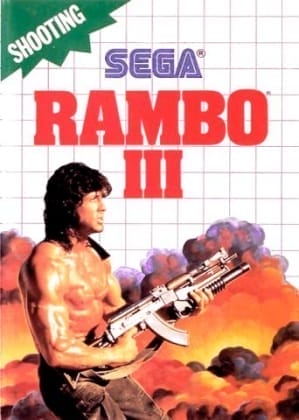
Rambo III
Rambo III is a series of video games based on the film Rambo III (1988). Like in the film, their main plots center on former Vietnam-eraGreen Beret "Special Forces (United States Army)")John Rambo being recalled up to duty one last time to rescue his former commander, Colonel Sam Trautman, who was captured during a covert operation mission in Soviet-controlledAfghanistan. Taito released an arcade video game based on the film. The console versions were developed and published by Sega, the IBM PC compatible version was developed by Ocean and published by Taito, and Ocean developed and published the other home computer versions: Atari ST, Amiga, Spectrum, C64, Amstrad CPC.
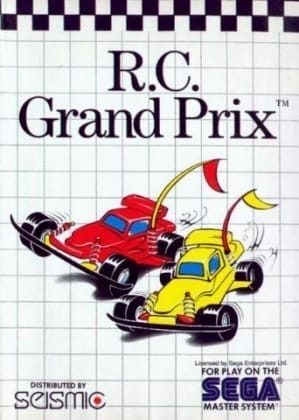
R.C. Grand Prix
R.C. Grand Prix is an isometric racing game. Depicting 1:10 off-road racing, the player controls a radio-controlled buggy and races against three other cars to become the grand champion. The player has to play through 10 increasingly difficult stages and buy new parts for the controlled car from the prize money awarded from each stage. If the player is placed last in a stage or does not complete the stage within the time-limit, the game is over. It is possible to play this game in multi-player mode with up to four players. The players play through each stage, one at a time, and the order of play is based on the current standings in the game. The game also features a drag race bonus stage which is only available in multi-player mode. Here, two players race each other for some bonus prize money.
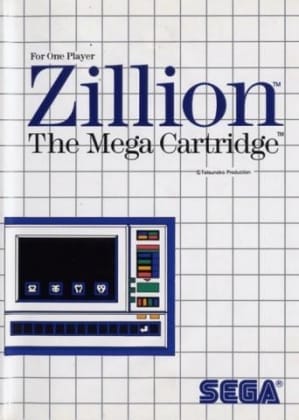
Zillion
Zillion, known as Akai Koudan Zillion (赤い光弾ジリオン; lit. Red Photon Zillion) in Japan, is a space adventure platform video game developed by Sega and designed for the Master System as a companion tie-in for Tatsunoko Production's Zillion anime series in 1987. The Zillion series prominently features Sega's egg-shaped mascot, Opa-Opa, who stars in the Fantasy Zone games, which are also available for the Master System. A sequel to the game, Zillion II was released in 1988.
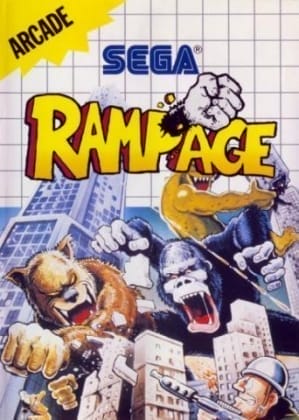
Rampage
Rampage is a 1986 actionvideo game developed and published by Bally Midway for arcades.#cite_note-13) Inspired by monster films, players control a trio of monsters: George, Lizzie, and Ralph, humans transformed into creatures due to various experimental mishaps. The goal is to destroy cities and combat military forces while staying alive. The game is set across 128 days in cities throughout North America, with each cycle repeating five times. Gameplay includes destroying buildings, eating humans, and avoiding damage. Rampage spawned ports to various home consoles and computers, as well as five sequels "Rampage (franchise)") and a 2018 film adaptation "Rampage (2018 film)").#cite_note-14)Warner Bros. owns all rights to the property via their purchase of Midway Games.
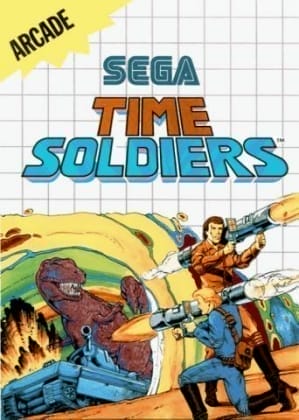
Time Soldiers
Time Soldiers, known in Japan as Battle Field (バトル フィールド), is a 1987 run and gun video game developed by Alpha Denshi "ADK (company)") for arcades and published by SNK. It was distributed in North America by Romstar. A Master System version was also produced, as well as versions titled Time Soldier for the Amiga, Commodore 64, and Atari ST. Time Soldiers can be played by either a single-player, or by two players simultaneously. Players move their characters with an eight-way rotary joystick, shooting enemies along a scrolling backdrop. The rotary joystick allows players to walk in one of eight directions while shooting in any of twelve directions. These controls are similar to the SNK-developed Ikari Warriors (1986) which allowed the player to walk and rotate in eight directions. The plot involves the protagonists traveling through time to rescue their comrades from the villainous Gylend.
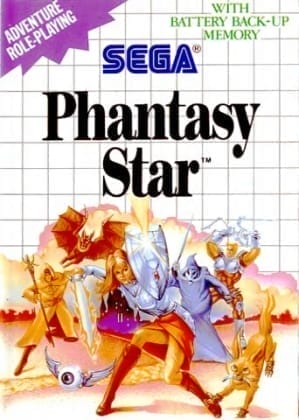
Phantasy Star
Phantasy Star#cite_note-8) is a 1987 role-playing video game (RPG) developed and published by Sega for the Master System. One of the earliest Japanese RPGs for consoles, it tells the story of Alis on her journey to defeat the evil ruler of her star system, King Lassic, after her brother dies at his hands. She traverses between planets, gathering a party of fighters and collecting the items she needs to avenge her brother's death and return peace to the star system. The gameplay features traditional Japanese RPG elements including random encounters and experience points. All the characters have predefined personalities and abilities, a unique element compared to the customizable characters of other RPGs of the era. Sega launched the development of Phantasy Star so their Master System could compete with the burgeoning popularity of console RPGs, particularly Dragon Quest "Dragon Quest (video game)") (1986) on the Famicom.
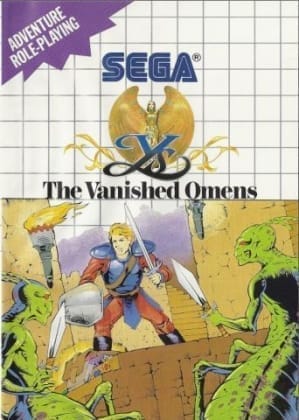
Ys: The Vanished Omens
Ys I: Ancient Ys Vanished, also known as Ys: Ancient Ys Vanished - Omen, Ys: The Vanished Omens, Ancient Land of Ys or simply Ys (Japanese title: イース), is a 1987 action role-playing game developed by Nihon Falcom. It is the first installment in the Ys series. Initially developed for the PC-88 by Masaya Hashimoto (director, programmer, designer) and Tomoyoshi Miyazaki (scenario writer), the game was soon ported to the Sharp X1, PC-98, FM-7, and MSX2 Japanese computer systems. Set in a land called Esteria, the story centers around the titular civilization called Ys, which had mysteriously vanished 700 years ago with only traces of its existence being kept within the game's six books. When it is prophesied that an impeding darkness would come to threaten Esteria, a young and adventurous warrior named Adol Christin is called forward to collect these six books to aid him in vanquishing the darkness.
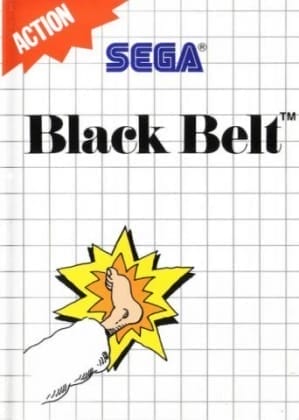
Black Belt
Black Belt in the American South, a region of highly fertile black soil in the American South that was the center of slavery, and continues to have a large black population into the 21st century Black Belt (geological formation) "Black Belt (geological formation)"), geological formation of dark fertile soil in the Southern United States Black Belt (region of Alabama) "Black Belt (region of Alabama)"), a geographic and socio-political region of Alabama Black Belt (region of Chicago) "Black Belt (region of Chicago)"), a historical region in Chicago, Illinois, in the South Side area
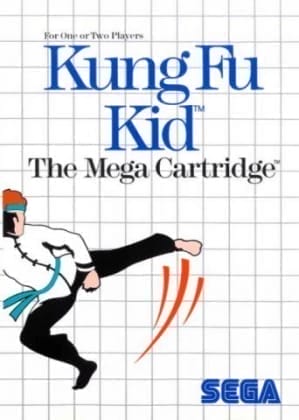
Kung Fu Kid
Kung Fu Kid, known in Japan as Makai Retsuden (魔界列伝), is a 1987 beat 'em upvideo game developed and published by Sega for the Master System. It is the follow-up to Dragon Wang for the SG-1000.
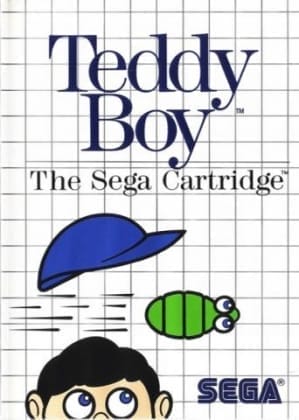
Teddy Boy
Teddy Boy Blues – Yohko Ishino (テディボーイ・ブルース / 石野陽子, Tedibōi Burūzu / Ishino Yōko) is a 1985 arcade video game made by Sega. It stars a young boy who is armed with a gun. Each level is an infinitely-repeating maze with several dice. Each die is filled with monsters which hatch out and the player must shoot to shrink, then collect them. If the player does not collect each shrunken monster quickly, it turns into a time-eating bug which flies to the time limit bar and consumes a chunk of it. If you touch one monster or run out of time then you lose a life. The game ends if all lives are lost. There are 50 distinct levels, called "rounds" in the game, even though the counter goes to 99 (the 100th level does not show). The player can play through the levels loops infinitely, with no apparent end. There are also "bonus rounds" every so often; in the Master System version, the player can shoot colored dice to reveal prizes and increase their score.
Browse our collection of 35 Sega Master System retro games, all playable instantly in your browser. No download required. Play classic games online in your browser and save your progress anytime.