Sega
50 games — Sega
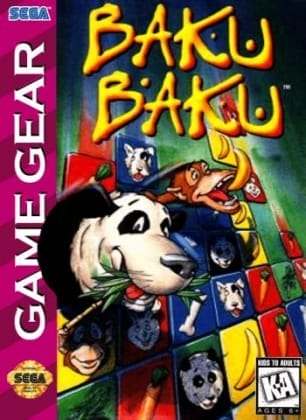
Baku Baku Animal
Baku Baku, released in Japan as Baku Baku Animal, is a 1995 puzzle video game developed and published by Sega for Japanese arcades. It was later ported to the Sega Saturn, Game Gear, and Microsoft Windows, with the latter version being Sega's first network-compatible PC game. A Sega NetLink-compatible version of the game was also announced, but never released. The Japanese onomatopoeia "Baku Baku" roughly translates to "Chomp chomp". The King is hosting a competition to hire a royal zoo keeper for his daughter's numerous pets. The main character, Polly, must fight her way through other applicants to earn the position. Each opponent has an intro dialogue with different responses based on if the player wins or loses. > Bug: "How lucky, my opponent is only a little girl!" Polly: "Hmph! How rude! I'll show you who's the weak one!" — Sega, Baku Baku Animal Baku Baku Animal is a falling block puzzle game in which the player lines up falling animal and food tiles.
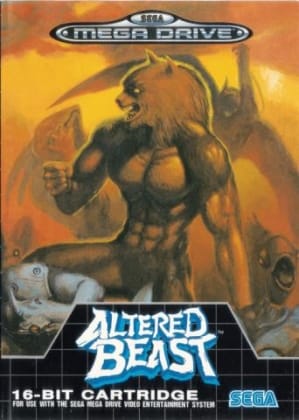
Altered Beast
Altered Beast is a 1988 beat 'em upvideo game developed by Team Shinobi and published by Sega for arcades. Set in Ancient Greece, the game follows a Roman centurion who is resurrected by the Olympian god Zeus to rescue his daughter Athena from Neff, the demonic ruler of the underworld. By collecting three power-ups in a level, the player character can transform into one of five mythical beasts. The game's development was led by Makoto Uchida "Makoto Uchida (game developer)"), and marked his first role as a project lead. Uchida and his team used the System 16arcade system board. Altered Beast was ported to several consoles and home computers, and was the original pack-in game for the Sega Genesis/Mega Drive when the console was launched in North America in 1989 and Europe in 1990. Altered Beast's arcade release and its ports received generally positive reviews, with mainly praising the gameplay and graphics.
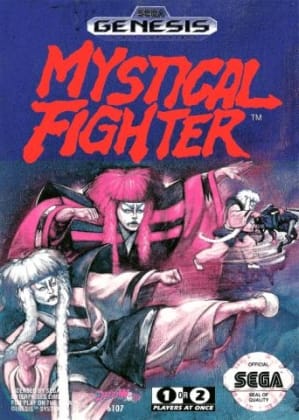
Mystical Fighter
Mystical Fighter, originally released in Japan as Maō Renjishi (魔王連獅子, Demon King Renjishi) is a beat 'em up game for the Sega Genesis. The story, designs and characters are based on Japanese mythology.
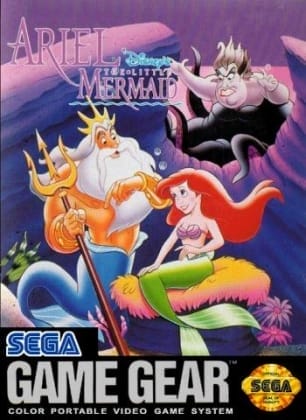
The Little Mermaid
The game begins underwater, where Ariel can shoot bubbles to trap her foes and throw them. She can also dig through sand to find treasure and pick up sea shells to break open treasure chests. Treasure chests contain power-ups to increase her bubbles' power and range. Ariel can collect icons scattered throughout the levels to restore health, gain extra lives, or increase the range/power of her bubbles. There are six stages that Ariel must traverse to find Ursula. The stages are The Coral Sea, Sunken Ship, Sea of Ice, Undersea Volcano, and finally two battles at Ursula's Castle.
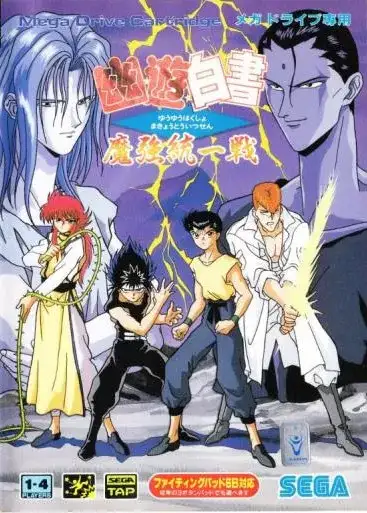
Yu Yu Hakusho
Yu Yu Hakusho Makyō Tōitsusen is a 1994 fighting game developed by Treasure and published by Sega for the Mega Drive. It is based on the manga series Yu Yu Hakusho by Yoshihiro Togashi. The plot follows the protagonist Yusuke Urameshi, who is tasked by the ruler of the afterlife with solving detective-style cases involving both humans and demons threatening the living world. The story begins to focus heavily on martial arts battles as it progresses. The game features 11 playable characters from the manga and traditional 2D fighting gameplay. Opponents compete in rounds, attempting to deplete each other's health by utilizing short and long-range attacks and special combos "Combo (video gaming)"). It also integrates other mechanics, such as allowing up to four players to compete simultaneously and letting fighters alternate between horizontal planes in the foreground and background.
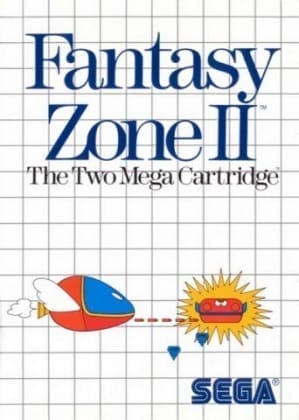
Fantasy Zone II
Fantasy Zone II: The Tears of Opa-Opa is a 1987 horizontally scrolling shooter video game developed and published by Sega for the Master System. It was ported to the arcade, Famicom, and MSX2, and was remade for the System 16 hardware on a PlayStation 2 compilation in 2008. It was re-released on the WiiVirtual Console in North America on June 29, 2009. The player controls a sentient spaceship named Opa-opa who fights surreal invader enemies. Like the first Fantasy Zone, Fantasy Zone II departs from scrolling shooter themes with its bright colors and whimsical designs. For this reason, it is occasionally dubbed a "cute 'em up". In the past, the courageous hero Opa-Opa saved the Fantasy Zone from the invading Menon forces, but his victory came at a price as he was forced to fight his own father who led the invasion. It is now Space Year 1432, 10 years after that battle, and the Nenon forces are spreading chaos through the Fantasy Zone.
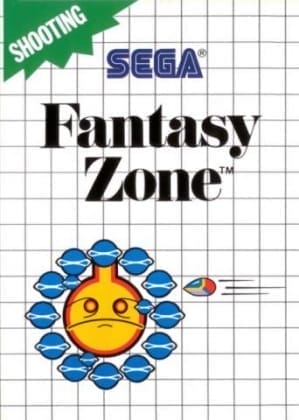
Fantasy Zone
Fantasy Zone is a 1986 horizontally scrolling shootervideo game developed and published by Sega for arcades. It is the first game in the Fantasy Zone series, and was later ported to several home consoles, including Sega's Master System. The player controls a sentient spaceship named Opa-Opa who fights an enemy invasion in the titular group of planets. The game contains a number of features atypical of the traditional scrolling shooter. The main character, Opa-Opa, is sometimes referred to as Sega's first mascot character. The game's design and main character have similarities to Konami's TwinBee, and both games are credited with establishing the cute 'em up subgenre.Fantasy Zone also popularized the concept of a boss rush, a stage "Level (video games)") where the player faces multiple previous bosses "Boss (video games)") again in succession. The game was followed by several sequels, beginning with Fantasy Zone II: The Tears of Opa-Opa in 1987.
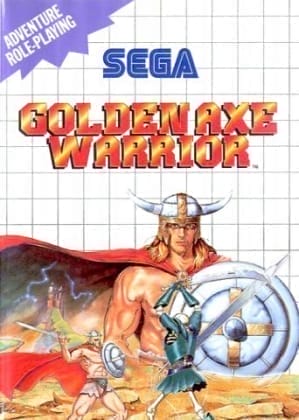
Golden Axe Warrior
Golden Axe Warrior is a 1991 action-adventurevideo game developed and published by Sega for the Master System. A spin-off "Spinoff (media)") of the Golden Axe series, the player controls a male human warrior in the fictional country of Firewood as they try to avenge the death of their parents by defeating the tyrant Death Adder and recovering nine missing crystals. In a deviation from previous Golden Axe titles, the game incorporates gameplay similar to The Legend of Zelda "The Legend of Zelda (video game)"). The player navigates an overworld and dungeons from a top-down perspective, defeating enemies, collecting items and discovering secrets. Traditional role-playing game elements, such as exploring towns, are also implemented. Golden Axe Warrior is often subject to mixed critical reception, due to its similarities to The Legend of Zelda and Zelda II: The Adventure of Link.
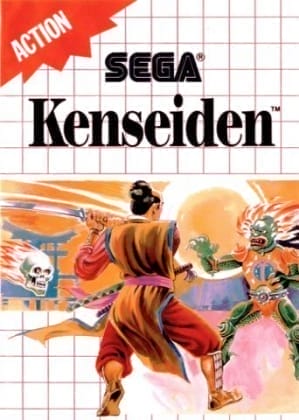
Kenseiden
Kenseiden is a 1988 action-platformvideo game developed and published by Sega for the Master System. The player controls the samurai Hayato in 16th century Japan as they attempt to retrieve five scrolls and a sacred sword from evil warlocks and spirits led by Oda Nobunaga. The game was released as Sword of the Hwarang in South Korea with multiple visual differences. Hayato is altered to look like a Hwarang warrior and the levels are changed to be set in Korea. Kenseiden received positive reviews from critics. Kenseidan is a side-scrollingaction-adventure game set in Japan. Each level is set in an ancient Japanese province where the player is tasked. After A certain point, the player can play levels in whatever order they choose, and can go back to previous levels at anytime except for the final level.
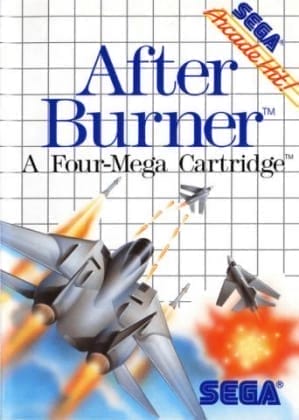
After Burner
After Burner is a 1987 rail shooter video game developed by Studio 128 and published by Sega for arcades. The player controls an American F-14 Tomcat fighter jet and must clear each of the game's 18 stages by destroying enemies. The plane is equipped with a machine gun and a limited supply of heat-seeking missiles. The game uses a third-person perspective, as in Sega's earlier Space Harrier (1985) and Out Run (1986). It runs on the Sega X Board arcade system which is capable of surface and sprite rotation. It is the fourth Sega game to use a hydraulic "taikan" motion simulator arcade cabinet, one that is more elaborate than their earlier "taikan" simulator games. The cabinet simulates an aircraft cockpit, with flight stick controls, a chair with seatbelt, and hydraulic motion technology that moves, tilts, rolls and rotates the cockpit in sync with the on-screen action. Designed by Sega veteran Yu Suzuki, After Burner was intended to be Sega's first "true blockbuster" video game.
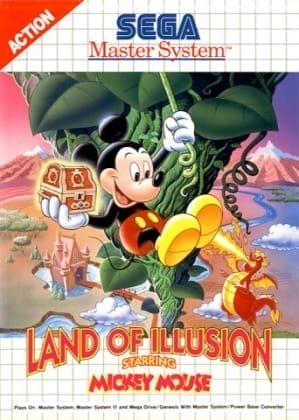
Land of Illusion Starring Mickey Mouse
Land of Illusion Starring Mickey Mouse, known in Japan as Mickey Mouse no Mahō no Crystal (ミッキーマウスの魔法のクリスタル), is a 1993 platform game developed and published by Sega for the Game Gear and Master System.
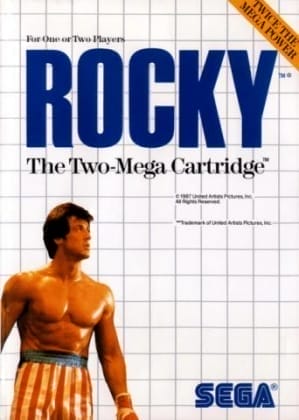
Rocky
Rocky is the second video game based on the popular Rocky franchise, developed and published by Sega and released for the Master System in 1987. The player must train Rocky Balboa before each fight to improve his skills. Rocky possesses a straight punch "Cross (boxing)"), a hook, an uppercut, and body punch as well as various combos.
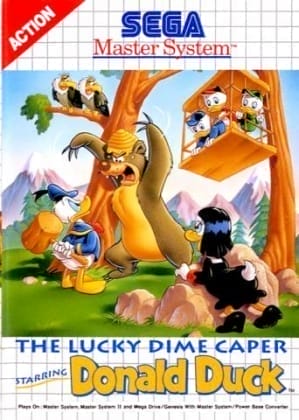
The Lucky Dime Caper Starring Donald Duck
The Lucky Dime Caper Starring Donald Duck is a 1991 platform game developed and published by Sega for the Game Gear and Master System. The player controls Donald Duck as he attempts to retrieve the Number One Dime from Magica De Spell. Another game featuring Donald Duck for the Game Gear and Master System, Deep Duck Trouble, was released in December 1993.
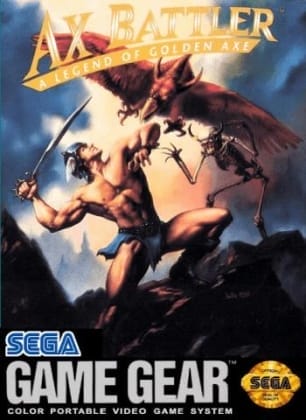
Ax Battler: A Legend of Golden Axe
Ax Battler: A Legend of Golden Axe is a 1991 action-adventuregame developed by Aspect Co. and published by Sega for the Game Gear. The game is a spin-off of the popular Golden Axe series. The protagonist is Ax Battler, the male barbarian character from the original Golden Axe "Golden Axe (video game)") game. The series' primary villain, Death Adder, is laying siege to the entire world. He steals the Golden Axe, a magical weapon that grants its wielder unimaginable power, from its hiding place in Firewood Castle. To prevent Death Adder using its powers to destroy the world, the king of Firewood Castle calls upon the help of his strongest warrior: Ax Battler. During his journey, Ax Battler must battle through the following "special landmarks": The Spooky Cave, Peninsula Tower, Turtle's Back, Death Pyramid, Evil Cave, Maze Wood, Gayn Mountain, Eagle's Back, Ice Cliffs and Death Adder's Castle.
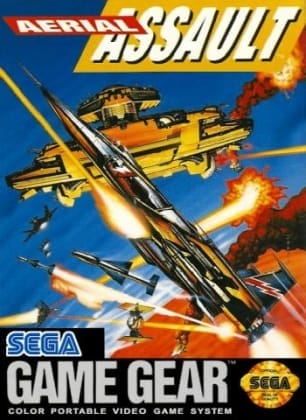
Aerial Assault
Text is available under the Creative Commons Attribution-ShareAlike 4.0 License; additional terms may apply. By using this site, you agree to the Terms of Use and Privacy Policy. Wikipedia® is a registered trademark of the Wikimedia Foundation, Inc., a non-profit organization. Privacy policy About Wikipedia Disclaimers Contact Wikipedia Legal & safety contacts Code of Conduct Developers Statistics Cookie statement Mobile view Edit preview settings Search Search - Toggle the table of contents Aerial Assault [](http://en.wikipedia.org/wiki/Aerial_Assault#)[](http://en.wikipedia.org/wiki/Aerial_Assault#)[](http://en.wikipedia.org/wiki/Aerial_Assault#)[](http://en.wikipedia.org/wiki/Aerial_Assault#)[](http://en.wikipedia.org/wiki/Aerial_Assault#)[](http://en.wikipedia.org/wiki/Aerial_Assault#)[](http://en.wikipedia.
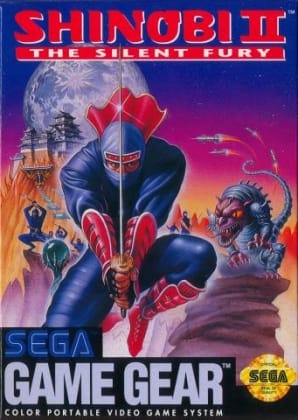
Shinobi II: The Silent Fury
The G.G Shinobi II: The Silent Fury is a 1992 platform game developed and published by Sega for the Game Gear. It is the sequel to The G.G. Shinobi, an offshoot of the Shinobi series created for Sega's portable platform. The player controls ninja Joe Musashi and his allies as they attempt to retrieve five elemental crystals from a group known as the Techno-Warriors. The gameplay largely follows on from its predecessor’s design, in which the player utilizes the abilities of five colored ninjas to progress through a series of levels. The G.G. Shinobi II received a positive reception from critics, who praised the game for improving upon its mechanics, level design, and difficulty compared to its predecessor.
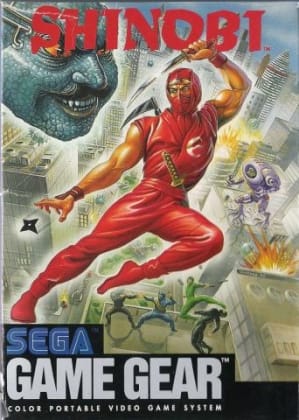
Shinobi
Shinobi is a 2002 action-adventure game developed by Overworks and published by Sega for the PlayStation 2. It is part of the Shinobi series. The game stars the master ninja Hotsuma, leader of the Oboro clan, who wields Akujiki, a sword that feeds on souls. He can also use ninja magic, shurikens, and special moves. Upon finding a golden castle after an earthquake, Hotsuma makes it his goal to defeat the powerful sorcerer Hiruko, who had summoned hellspawn creatures in Japan to destroy Tokyo. Hotsuma's mission is to stop Hiroko from destroying the world and avenge the death of his clan. Shinobi was originally planned for the Dreamcast, but due to the discontinuation of the console, the game was moved to the PS2. The game was designed to emphasize the action elements of action-adventure gameplay and appeal to the action market. Other gameplay elements resulted from a desire to mix old and new elements. Upon release, Shinobi was generally well received by critics.
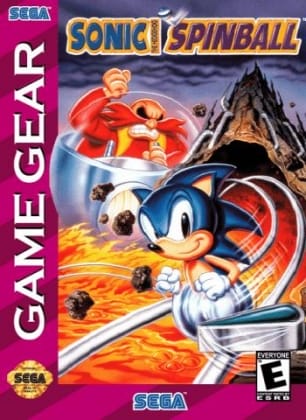
Sonic Spinball
Sonic Spinball, also known as Sonic the Hedgehog Spinball, is a 1993 pinball video game developed by Sega Technical Institute and published by Sega for the Sega Genesis. It is a spin-off of the Sonic the Hedgehog series. Players control Sonic the Hedgehog "Sonic the Hedgehog (character)"), who must stop Doctor Robotnik from enslaving the population in a giant pinball-like mechanism. The game is set in a series of pinball machine-like environments with Sonic acting as the pinball. It was developed by the American staff of Sega Technical Institute, as the Japanese staff was occupied with developing Sonic the Hedgehog 3 and Sonic & Knuckles. When Sega management realized that Sonic 3 would not be completed in time for the 1993 holiday shopping season, they commissioned another Sonic game. After a hasty nine-month development, Sonic Spinball was released for the Sega Genesis in November 1993, with ports for the Game Gear and Master System releasing in 1994.
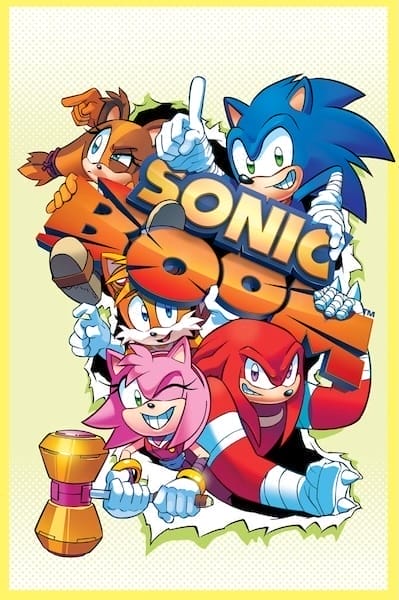
Sonic Boom
Sonic Boom (ソニック・ブーム, Sonikku Būmu) is a vertical scrolling shooter developed by Sega and released in the arcades in 1987. Home computer versions for the Amiga, Atari ST, Amstrad CPC, Commodore 64 and ZX Spectrum were released in 1990 by Activision. The original arcade version was released on the Sega Astro City Mini console in 2021.
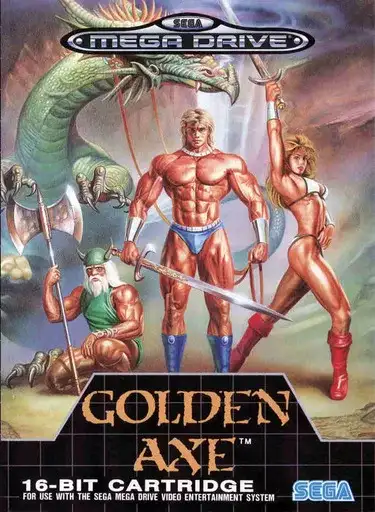
Golden Axe
Golden Axe is a 1989 beat 'em up video game developed and published by Sega for arcades on the Sega System 16B hardware. Players control one of three warriors who must free the fantasy land of Yuria from the tyrannical rule of Death Adder, who wields the titular Golden Axe. The lead designer was Makoto Uchida, who was also responsible for the creation of Sega's earlier Altered Beast (1988). Golden Axe was well received at the time of release, and was later ported to several home systems, including Sega's own Mega Drive/Genesis and Master System. The game's success spawned a franchise with several sequels and spin-offs, beginning with Golden Axe II in 1991.
Golden Axe II
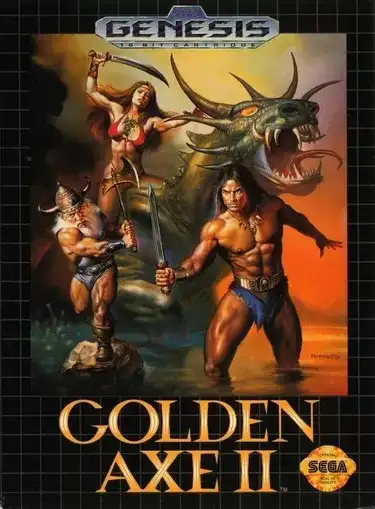
Golden Axe II is a 1991 beat 'em up video game developed and published by Sega for the Sega Genesis. It is a sequel to 1989's Golden Axe, and the second installment of the Golden Axe series. The player controls one of three warriors as they attempt to recover the Golden Axe by slaying Dark Guld and his loyal followers. Much like its predecessor, the gameplay is based around side-scrolling levels where the player fights enemies by using their melee weapon, while riding a beast, or utilizing elemental magic. The game revamps and introduces various gameplay mechanics from its contemporary including the ability to select the level of magic used and an attack that hits all around the player’s character. Upon release, the game received mixed reception from critics. They faulted its easier difficulty and the lack of meaningful improvements from its predecessor.
Golden Axe III
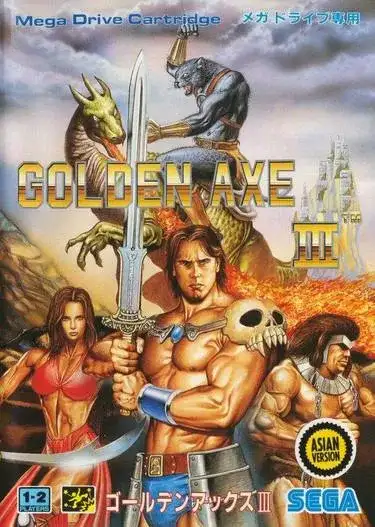
Golden Axe III is a 1993 beat 'em up game developed and published by Sega for the Sega Genesis. Originally exclusive to Japan, it was made available in North America via the Sega Channel online service in 1995. In this sequel to Golden Axe II, the player controls one of four warriors as they attempt to defeat the evil Damud Hellstrike, who has stolen the Golden Axe and kidnapped the princess of Yuria. Much like its predecessors, the game is based around side-scrolling levels where the player defeats enemies with their melee weapon or fists, while riding creatures known as Bizarrians, or through elemental magic. Several new offensive and defensive moves, like blocking and projectile attacks, can also be used. The game received negative reviews, being criticized for a lack of innovation and originality, as well as the graphics, which were seen as a downgrade from its predecessors.
Streets of Rage
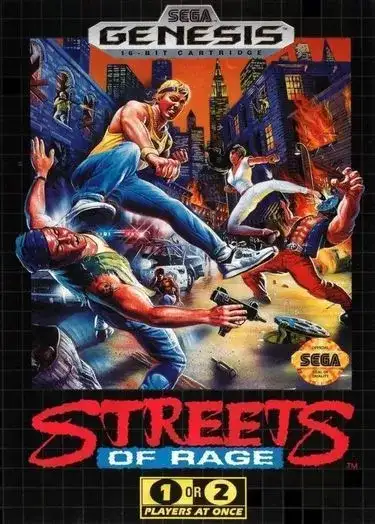
Streets of Rage#cite_note-3) is a 1991 beat 'em upvideo game developed and published by Sega for the Sega Genesis. Players control one of three former police officers turned vigilantes who battle a crime syndicate. It establishes many conventions of the Streets of Rage series, such as two-player cooperative play and an acclaimed techno soundtrack from composer Yuzo Koshiro. It was ported for the Game Gear, Sega CD and Master System and has been rereleased as part of various compilations and on download services.
Michael Jackson's Moonwalker
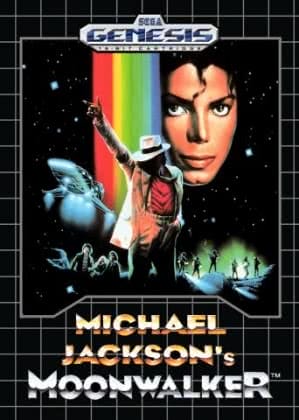
In North America, the game had a successful launch. It was the top-grossing new video game on the RePlay arcade charts in September 1990. The game received a positive review from RePlay magazine.
Browse our collection of 50 Sega retro games, all playable instantly in your browser. No download required. Play classic games online in your browser and save your progress anytime.