Sega
50 games — Sega
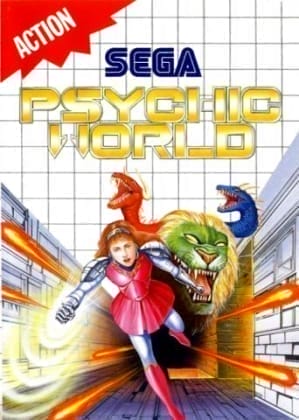
Psychic World
Psychic World (サイキック・ワールド) is an action platform video game co-developed by Hertz and Sanritsu and published by Sega. Originally released in Japan for the MSX2 as Psycho World (サイコ・ワールド) in 1988, it was later released as Psychic World on the Master System exclusively in Europe and Game Gear worldwide in 1991.
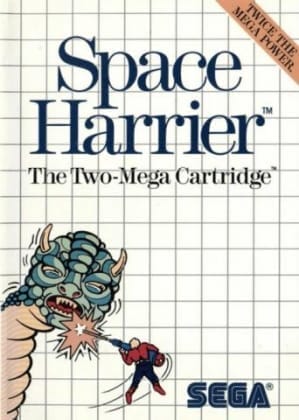
Space Harrier
Space Harrier#cite_note-22) is a 1985 rail shootervideo game developed and published by Sega for arcades. Designed by Yu Suzuki, the player navigates surreal landscapes while defeating enemies as a jet-propelled human character. It was conceived as a realistic military-themed combat flight simulation game, but technical and memory restrictions resulted in Suzuki redesigning it around a fantasy setting. The arcade game is controlled by an analog flight stick while the deluxe arcade cabinet is a cockpit-style linear actuatormotion simulator cabinet that pitches and rolls during play, for which it is referred as a taikan (体感) or "body sensation" arcade game in Japan. It was a commercial success in arcades, becoming one of Japan's top two highest-grossing upright/cockpit arcade games of 1986 (along with Sega's Hang-On).#cite_note-auto-23) Critically praised for its innovative graphics, gameplay and motion cabinet, Space Harrier is often ranked among Suzuki's best works.
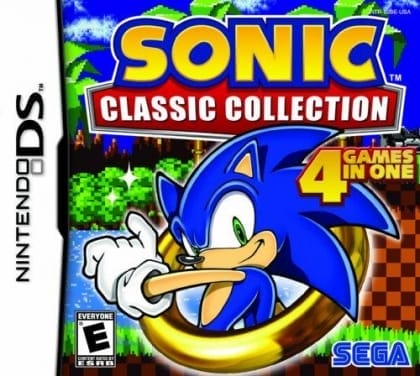
Sonic Classic Collection
Sonic Classic Collection is a 2010 video game compilation developed by Creative Assembly and published by Sega for the Nintendo DS. It contains the four main _Sonic the Hedgehog_platform games originally released for the Sega Genesis: Sonic the Hedgehog "Sonic the Hedgehog (1991 video game)") (1991), Sonic the Hedgehog 2 (1992), Sonic the Hedgehog 3 (1994), and Sonic & Knuckles (1994). Upon release, Sonic Classic Collection received mixed reviews. Sonic Classic Collection contains Sonic the Hedgehog "Sonic the Hedgehog (1991 video game)"), Sonic the Hedgehog 2, Sonic the Hedgehog 3, and Sonic & Knuckles. The Lock-on modes from the original Sonic & Knuckles cartridge (Knuckles in Sonic the Hedgehog 2 and Sonic 3 & Knuckles) are fully implemented and playable. The ability to save at any point, a feature absent in the original games, is also present. Alongside the main games, a gallery of character artwork from the Sonic series is viewable.
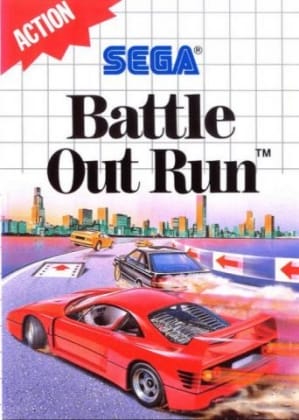
Battle Out Run
Battle Out Run is a 1989 video game released by Sega on the Master System. Despite being part of the Out Run series, this game plays little like its namesake and more like Chase H.Q., where the objective is to ram the cars of specified criminals. A notable feature is to enhance the car's attributes by buying upgrades that are inside of a truck that passes at certain moments and must be entered from the rear.
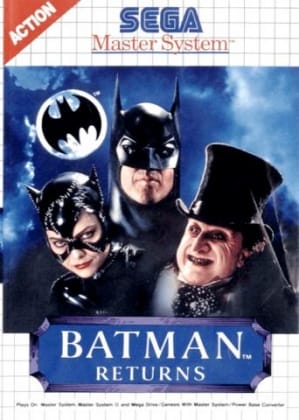
Batman Returns
Batman Returns is the name of several video games for various platforms based on the 1992 film of the same name. The Sega console versions (i.e. Sega Genesis, Sega CD, Master System and Game Gear) were published by Sega.
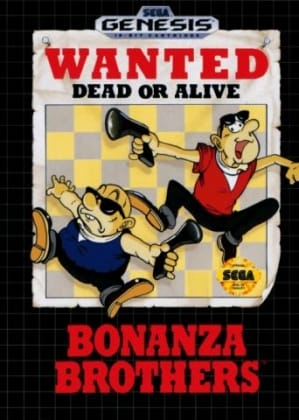
Bonanza Bros
Bonanza Bros. (sometimes written Bonanza Brothers) is a 3D-style, 2Dside-scrollingstealthaction game developed and released by Sega in 1990. It is one of the earliest arcade games powered by the Sega System 24arcade system board. It was ported to various home systems, including the Mega Drive/Genesis, Master System, PC-Engine/TurboGrafx-CD, and several home computers. Bonanza Bros. received praise for its graphics, soundtrack, and character dialogue. It has been remastered and rereleased several times. Bonanza Bros. is a side-scrollingstealthaction game, with shooter and platform game elements. The players take the roles of one or both of the brothers Robo (1P, red) and Mobo (2P, blue) (Mike and Spike in some PAL versions), who may have been modeled on The Blues Brothers.
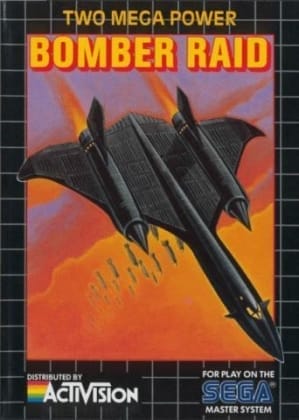
Bomber Raid
Text is available under the Creative Commons Attribution-ShareAlike 4.0 License; additional terms may apply. By using this site, you agree to the Terms of Use and Privacy Policy. Wikipedia® is a registered trademark of the Wikimedia Foundation, Inc., a non-profit organization. Privacy policy About Wikipedia Disclaimers Contact Wikipedia Legal & safety contacts Code of Conduct Developers Statistics Cookie statement Mobile view Edit preview settings Search Search - Toggle the table of contents Bomber Raid [](http://en.wikipedia.org/wiki/Bomber_Raid#)[](http://en.wikipedia.org/wiki/Bomber_Raid#)[](http://en.wikipedia.org/wiki/Bomber_Raid#)[](http://en.wikipedia.org/wiki/Bomber_Raid#)[](http://en.wikipedia.org/wiki/Bomber_Raid#)[](http://en.wikipedia.org/wiki/Bomber_Raid#)[](http://en.wikipedia.
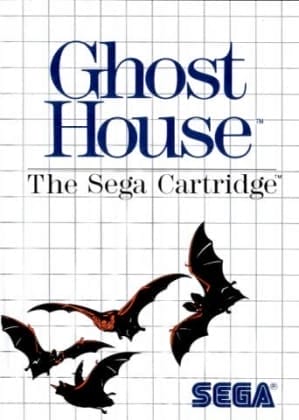
Ghost House
Ghost House (Japanese: ゴーストハウス, Hepburn: Gōsuto Hausu) is a side-scrollingplatform game developed and published by Sega, released for the Master System in 1986.#cite_note-ignhistory-4)Ghost House is loosely based on Sega's 1982 arcade video game, Monster Bash. The game was originally released in the Sega Card format, then re-released on cartridge. The player controls Mick/Mickey, a young vampire hunter out to destroy five vampires (or "Draculas" as the instruction book calls them) in each stage before proceeding to the next. In later levels Draculas may re-spawn. Everything is out to stop Mick/Mickey from completing this task and making his way out of the mansion. The player has to punch or jump on enemies to defeat them. Arrows fly from either direction after Mick/Mickey passes a fireplace and will attempt to hit him, and he must either duck or jump on them for extra points and eventually gain invincibility as per the amount jumped on (25).
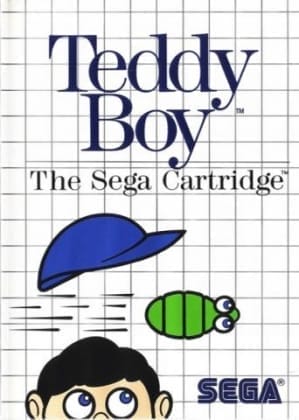
Teddy Boy
Teddy Boy Blues – Yohko Ishino (テディボーイ・ブルース / 石野陽子, Tedibōi Burūzu / Ishino Yōko) is a 1985 arcade video game made by Sega. It stars a young boy who is armed with a gun. Each level is an infinitely-repeating maze with several dice. Each die is filled with monsters which hatch out and the player must shoot to shrink, then collect them. If the player does not collect each shrunken monster quickly, it turns into a time-eating bug which flies to the time limit bar and consumes a chunk of it. If you touch one monster or run out of time then you lose a life. The game ends if all lives are lost. There are 50 distinct levels, called "rounds" in the game, even though the counter goes to 99 (the 100th level does not show). The player can play through the levels loops infinitely, with no apparent end. There are also "bonus rounds" every so often; in the Master System version, the player can shoot colored dice to reveal prizes and increase their score.
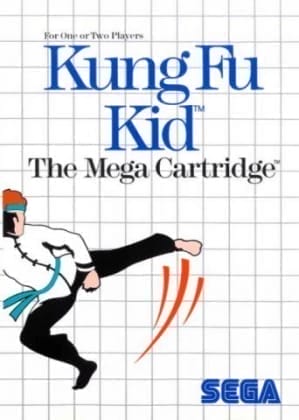
Kung Fu Kid
Kung Fu Kid, known in Japan as Makai Retsuden (魔界列伝), is a 1987 beat 'em upvideo game developed and published by Sega for the Master System. It is the follow-up to Dragon Wang for the SG-1000.
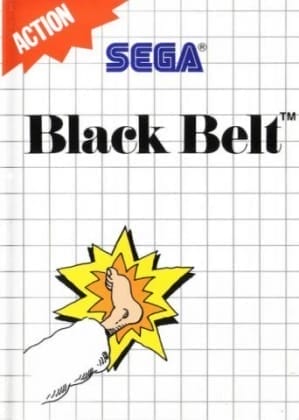
Black Belt
Black Belt in the American South, a region of highly fertile black soil in the American South that was the center of slavery, and continues to have a large black population into the 21st century Black Belt (geological formation) "Black Belt (geological formation)"), geological formation of dark fertile soil in the Southern United States Black Belt (region of Alabama) "Black Belt (region of Alabama)"), a geographic and socio-political region of Alabama Black Belt (region of Chicago) "Black Belt (region of Chicago)"), a historical region in Chicago, Illinois, in the South Side area
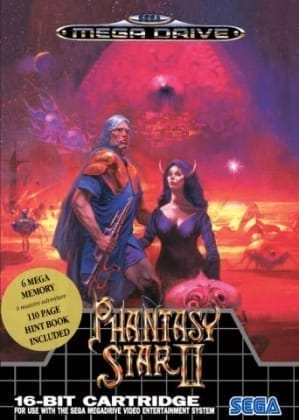
Phantasy Star II
Phantasy Star II is a science fantasy role-playing video game developed and published by Sega for the Sega Genesis. It was released in Japan in 1989 and North America and Europe in 1990. It was later ported to a variety of different platforms. An updated remake, Phantasy Star Generation 2, was released for the PlayStation 2 in 2005 in Japan. Phantasy Star II is the second installment in Sega's acclaimed Phantasy Star series and serves as a sequel to the original Phantasy Star for the Master System. Phantasy Star II takes place 1,000 years after the events of its predecessor and follows the journey of a government agent named Rolf and his friends, who are on a mission to discover why the protector of the planet Mota, Mother Brain, has started malfunctioning. Phantasy Star II was the first video game to use a 6 mega-bit cartridge, making it the biggest video game on a console at the time. Since its release Phantasy Star II has been the subject of critical acclaim.
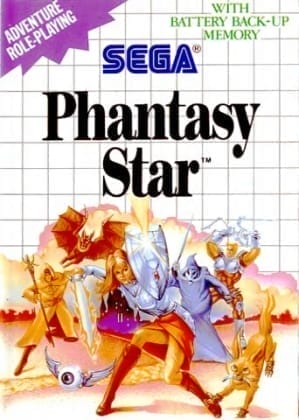
Phantasy Star
Phantasy Star#cite_note-8) is a 1987 role-playing video game (RPG) developed and published by Sega for the Master System. One of the earliest Japanese RPGs for consoles, it tells the story of Alis on her journey to defeat the evil ruler of her star system, King Lassic, after her brother dies at his hands. She traverses between planets, gathering a party of fighters and collecting the items she needs to avenge her brother's death and return peace to the star system. The gameplay features traditional Japanese RPG elements including random encounters and experience points. All the characters have predefined personalities and abilities, a unique element compared to the customizable characters of other RPGs of the era. Sega launched the development of Phantasy Star so their Master System could compete with the burgeoning popularity of console RPGs, particularly Dragon Quest "Dragon Quest (video game)") (1986) on the Famicom.
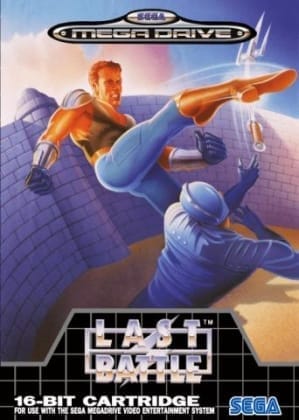
Last Battle
Last Battle: Legend of the Final Hero is a side-scrollingmartial artsbeat 'em up released for the Mega Drive/Genesis in 1989 by Sega. It was one of the six games that were available as part of the Genesis launch lineup in the U.S. The Japanese version, titled Hokuto no Ken: Shinseikimatsu Kyūseishu Densetsu (北斗の拳 新世紀末救世主伝説; lit."Fist of the North Star: The New Legend of the Post-Apocalyptic Messiah"), is based on the manga and anime series Fist of the North Star (Hokuto no Ken in Japanese). Since the international version did not retain the Hokuto no Ken license, the graphics and characters' names were altered. It was the second Hokuto no Ken game released by Sega, following the Mark III original, released internationally as Black Belt "Black Belt (1986 video game)"). Versions for the Commodore 64 and Amiga based upon Last Battle were developed and released by Elite in Europe in 1991. Last Battle is a side-scrolling action game similarly to its predecessor Black Belt.
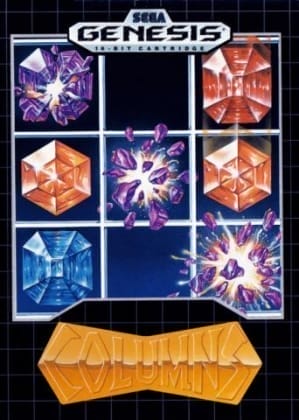
Columns
Columns was the first pack-in game for the Game Gear. This version was slightly different from the Genesis version, and its soundtrack was transposed and rearranged due to limitations of the handheld's sound chip. While the columns themselves were updated for the Genesis version, the overall decoration was less like a cartoon in the Game Gear version and instead more artistically designed. Lastly, the Game Gear version had a feature that let the player change the jewels to fruit, squares, dice, or playing card suits (clubs, diamonds, spades, and hearts). In 1990, Compile and Telenet Japan developed and published an MSX2 version. In November 2006, Columns was released as part of the game Sega Genesis Collection for the PlayStation 2, and later for PlayStation Portable. The same year on December 4, it was released on Nintendo's Virtual Console for Wii. It is also included on Sonic's Ultimate Genesis Collection for the PlayStation 3 and Xbox 360.
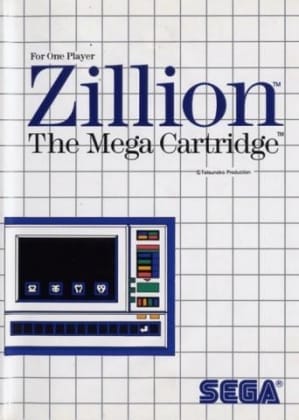
Zillion
Zillion, known as Akai Koudan Zillion (赤い光弾ジリオン; lit. Red Photon Zillion) in Japan, is a space adventure platform video game developed by Sega and designed for the Master System as a companion tie-in for Tatsunoko Production's Zillion anime series in 1987. The Zillion series prominently features Sega's egg-shaped mascot, Opa-Opa, who stars in the Fantasy Zone games, which are also available for the Master System. A sequel to the game, Zillion II was released in 1988.
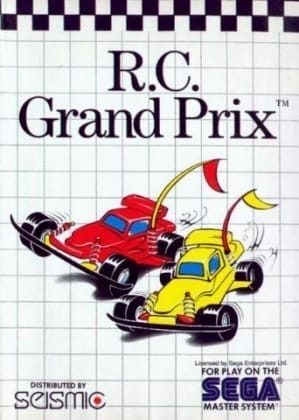
R.C. Grand Prix
R.C. Grand Prix is an isometric racing game. Depicting 1:10 off-road racing, the player controls a radio-controlled buggy and races against three other cars to become the grand champion. The player has to play through 10 increasingly difficult stages and buy new parts for the controlled car from the prize money awarded from each stage. If the player is placed last in a stage or does not complete the stage within the time-limit, the game is over. It is possible to play this game in multi-player mode with up to four players. The players play through each stage, one at a time, and the order of play is based on the current standings in the game. The game also features a drag race bonus stage which is only available in multi-player mode. Here, two players race each other for some bonus prize money.
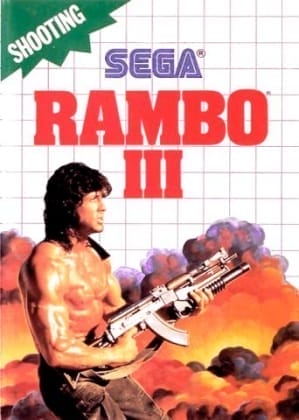
Rambo III
Rambo III is a series of video games based on the film Rambo III (1988). Like in the film, their main plots center on former Vietnam-eraGreen Beret "Special Forces (United States Army)")John Rambo being recalled up to duty one last time to rescue his former commander, Colonel Sam Trautman, who was captured during a covert operation mission in Soviet-controlledAfghanistan. Taito released an arcade video game based on the film. The console versions were developed and published by Sega, the IBM PC compatible version was developed by Ocean and published by Taito, and Ocean developed and published the other home computer versions: Atari ST, Amiga, Spectrum, C64, Amstrad CPC.
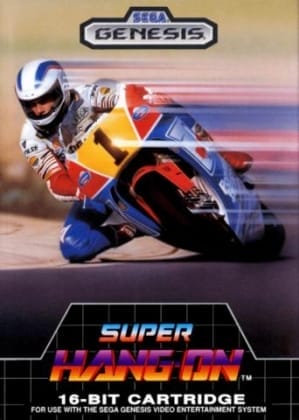
Super Hang-On
Super Hang-On is a 1987 racing video game developed and published by Sega for arcades. It is the sequel to 1985's Hang-On, and uses a simulated motorcycle arcade cabinet, like the original game. An updated version was released for arcades as Limited Edition Hang-On in 1991.
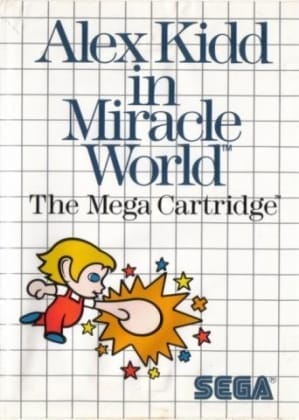
Alex Kidd in Miracle World
Alex Kidd in Miracle World is a 2D platform game. The player must finish levels and overcome obstacles and puzzles in both scrolling and single-screen environments. Throughout the 17 stages, Alex faces many monsters and the three henchmen of Janken the Great, before facing Janken himself. Alex's punching ability is used to destroy enemies and to break rocks in order to access new paths and to collect items such as money which can then be used to purchase other items including vehicles such as motorbikes and helicopters. At the end of many stages, Alex plays jan-ken-pon (rock-paper-scissors) with one of Janken's henchmen. Alex dies with one hit, or by losing a game of rock, paper, scissors. The game has no save system, but by holding the directional pad up and pressing the 2 button eight times at the Game Over screen, the player will restart the level with three new lives, at a cost of 400 Baums (the in-game currency).
Flicky
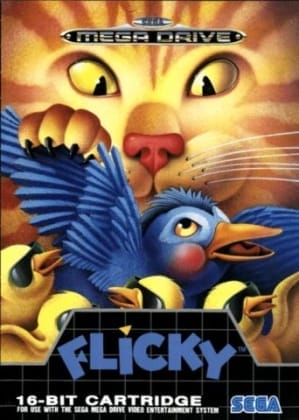
Flicky is a platform game developed by Sega and released as an arcade video game in May 1984. It was licensed to Bally Midway for distribution in the United States. In Flicky, the player controls the eponymous blue bird and must gather all the small birds called Chirps in each round and bring them safely to the exit. There are cat and lizard enemies which can disperse the Chirps and kill the player, but Flicky can use items on the playing field to protect herself and the Chirps from danger. The idea for Flicky came from Sega senior leadership, who wanted to exceed the success of Namco's Mappy (1983). Yoji Ishii and Yoshiki Kawasaki developed Flicky at Sega over one year. Originally, the game simply had the player catch ambiguous dots in a maze. Taking inspiration from a popular song in a Japanese variety show, Kawasaki gave the game an urban theme and bird characters. The game was originally titled "Busty", then "Flippy", before finally settling on "Flicky".
Shadow Dancer: The Secret of Shinobi
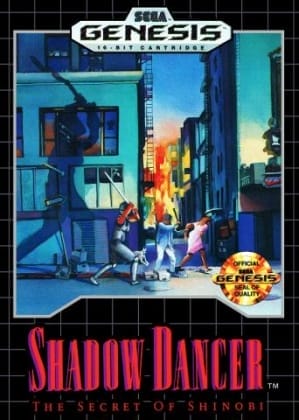
Shadow Dancer: The Secret of Shinobi (シャドー・ダンサー ザ・シークレット・オブ・シノビ), also known simply as Shadow Dancer, is a side-scrolling action game developed and published by Sega for the Sega Genesis in 1990. It is the second game in the Shinobi series released for the Mega Drive, following The Revenge of Shinobi "The Revenge of Shinobi (1989 video game)"). However, it is not a continuation of the previous game, but rather a loose adaptation of the 1989 arcade game Shadow Dancer "Shadow Dancer (1989 video game)"). Like in the original arcade game, the player controls a ninja followed by a canine companion. The Secret of Shinobi was well received by critics. The play mechanics are similar to the arcade version of Shadow Dancer "Shadow Dancer (1989 video game)"), with the main difference being the addition of a meter for the dog that accompanies the protagonist. In order for the dog to attack an enemy, the player must hold down the attack button until the meter is filled.
Turbo Outrun
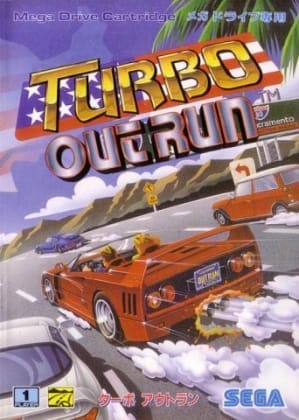
Turbo OutRun (ターボアウトラン) is a 1989 racing game developed and published by Sega for arcades. A follow-up to 1986's Out Run, it was released as a dedicated game, as well as an upgrade kit for the original Out Run board. Like its predecessor, Turbo OutRun has players driving a Ferrari, this time a Ferrari F40. Players traverse a set route across the continental United States from New York City to Los Angeles. In addition to a time limit, Turbo OutRun also adds a computer-controlled opponent driving a Porsche 959. The "Turbo" in the title plays a factor as players can press a button to receive a brief turbo boost of speed. Various power-ups which increase the vehicle's attributes can be chosen at various stages of the game. Ports of Turbo OutRun were released for home computers as well as Sega's own Mega Drive. Computer ports of the game were received with varying degrees of enthusiasm.
Defenders of Oasis
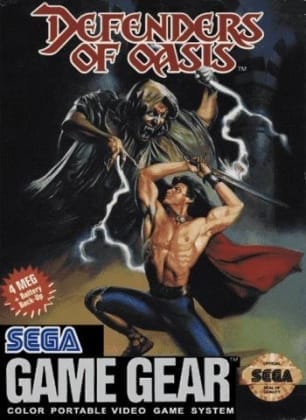
Defenders of Oasis is a role-playing video game developed and published by Sega for the Game Gear in 1992. The game's setting is based on One Thousand and One Nights, and the plot centers on a heroic prince and his companions, who set out to confront an empire attempting to revive the dark god Ahriman. The game was one of the few original RPGs made for the Game Gear, and features an overhead gameplay perspective, a command-based combat system, and an autosave feature. Defenders of Oasis was commercially successful and positively received by reviewers, who praised the game's visuals and level of detail.
Browse our collection of 50 Sega retro games, all playable instantly in your browser. No download required. Play classic games online in your browser and save your progress anytime.