Konami
43 games — Konami
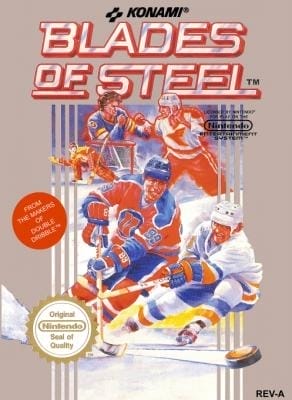
Blades of Steel
Blades of Steel, later released in Japan as Konamic Ice Hockey (コナミック アイスホッケー, Konamikku Aisu Hokkē), is an ice hockey video game released by Konami for North American arcades in 1987, and ported to the Family Computer Disk System and Nintendo Entertainment System in 1988. All teams are fictional but based out of real Canadian and American cities. The game is known for its fast-paced hockey action and especially for the fighting. It is a one or two player game. When playing against the computer, there are three difficulty levels to choose from: Junior, College, and Pro (with Pro being the most difficult and Junior being the easiest). Each team consists of three forwards, two defencemen, and a goaltender. Two sequels were released: NHL Blades of Steel '99 and NHL Blades of Steel 2000. The NES version was re-released on Nintendo's Virtual Console service on December 24, 2007. The arcade version was re-released on Microsoft's Game Room service on November 24, 2010.
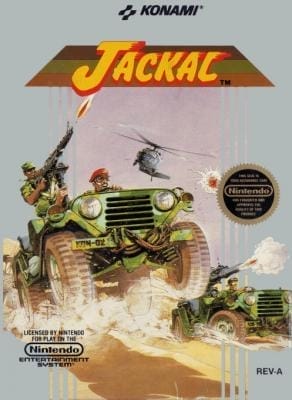
Jackal
Jackal,#cite_note-3) also distributed under the title of Top Gunner, is an overhead run and gun video game released for arcades by Konami in 1986. The player must maneuver an armed jeep in order to rescue prisoners of war (POWs) trapped in enemy territory. The Jackal unit is an elite group of four soldiers that have undergone a harsh training regimen to survive in any environment. The team is composed of Colonel Decker, Lieutenant Bob, Sergeant Quint and Corporal Grey. They have been given a mission to drive two armed jeeps into hostile territory in order to rescue and extract POWs.#cite_note-jackalchirashi-4) Jackal can be played by up to two players simultaneously. A second player can join in during play any time and the two jeeps are numbered on their hoods to indicate which player is in control.
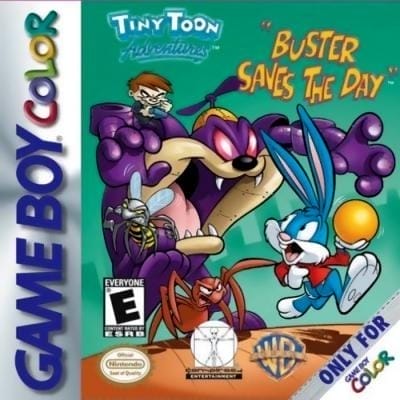
Tiny Toon Adventures: Buster Saves the Day
Tiny Toon Adventures: Buster Saves the Day is the first Tiny Toon Adventures game released on the Nintendo Game Boy Color. It was released on June 29, 2001, in Europe and July 27 in United States and was developed by Warthog and published by Conspiracy Games in North America and Swing! Entertainment in Europe.
Tiny Toon Adventures 2: Montana's Movie Madness
Tiny Toon Adventures: Montana's Movie Madness (released in Japan as Tiny Toon Adventures 2: Buster Bunny no Kattobi Daibouken) is the second Tiny Toon Adventures game released on the Nintendo Game Boy. It was released in 1993 and was developed and published by Konami.
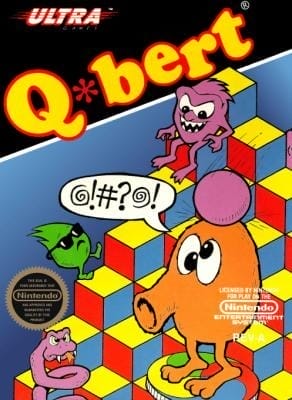
Q*bert
**Q*bert* () is a 1982 actionvideo game developed and published by Gottlieb for arcades. It is a 2Daction game with puzzle elements that uses isometric graphics to create a pseudo-3D effect. The objective of each level in the game is to change every cube in a pyramid to a target color by letting Q*bert, the on-screen character, hop on top of the cube while avoiding obstacles and enemies. Players use a joystick to control the character. The game was conceived by Warren Davis and Jeff Lee "Jeff Lee (video game artist)"), the latter of whom designed the titular protagonist and original concept, which was further developed and implemented by Davis. Q*bert was developed under the project name Cubes. Q*bert was well-received in arcades and among critics. The game was Gottlieb's most successful video game and is among the most recognized brands from the golden age of arcade games. It has been ported to numerous platforms.
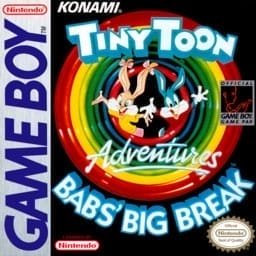
Tiny Toon Adventures - Babs' Big Break
Tiny Toon Adventures: Babs' Big Break is the first Tiny Toon Adventures game released on the Nintendo Game Boy. It was released in 1992 and was developed and published by Konami.
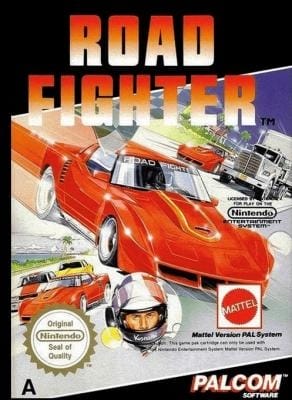
Road Fighter
Road Fighter is a 1984 racingvideo game developed and published by Konami for arcades. The goal is to reach the finish line within the stages without running out of time, hitting other cars or running out of fuel (which is refilled by hitting a special type of car). The game spawned a spiritual successor, Konami GT (1986), and two sequels, Midnight Run: Road Fighter 2 (1995) and Winding Heat (1996). A Japan-only sequel was also released 14 years later, Road Fighters (2010). The first two levels contain four courses, ranging from grassy plains to an over-water bridge to a seashore, mountains and finally a forest area. In the arcade version, six stages were contained. The player controls a red Chevrolet Corvette "Chevrolet Corvette (C4)") and pressing the B accelerates the car to around 224 km/h while the A button increases it to 400. The player has a limited amount of fuel points (equal to about 100 seconds) and can earn more by touching special multi-colored cars.
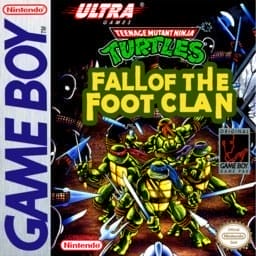
Teenage Mutant Ninja Turtles: Fall of the Foot Clan
Teenage Mutant Ninja Turtles: Fall of the Foot Clan is a 1990 action-platform game developed and published by Konami for the Game Boy. The game is based on the 1987 _Teenage Mutant Ninja Turtles_television series "Teenage Mutant Ninja Turtles (1987 TV series)"). The Turtles' first Game Boy game is a platforming-style game, where Leonardo, Michelangelo, Donatello, and Raphael must battle against Krang and Shredder and save their friend April O'Neil in the process. The game was re-released as part of Teenage Mutant Ninja Turtles: The Cowabunga Collection in 2022.
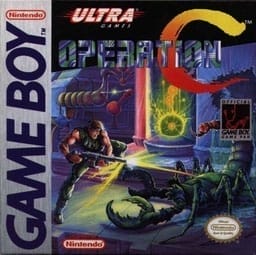
Operation C
Operation C (released as Contra (コントラ, Kontora)#cite_note-Jpntitle-3) in Japan and as Probotector in the PAL region) is a 1991 run and gun video game by Konami released for the Game Boy. It is a sequel to Super Contra, and the first portable installment in the Contra series "Contra (series)"). Operation C features gameplay and graphics similar to the Nintendo Entertainment System versions of Contra and Super Contra. The game has a total of five stages, many of which share design similarities to Super C (the NES version of Super Contra). The three odd-numbered stages (1, 3, and 5) are played from a side-view perspective, while the two even-numbered ones (2 and 4) are top-view. The soundtrack consists primarily of arranged background music from the original Contra, with the exception of a few tunes (namely the Area 2 theme, the Stage Select theme, the sub-boss theme in Area 3, and the ending theme).
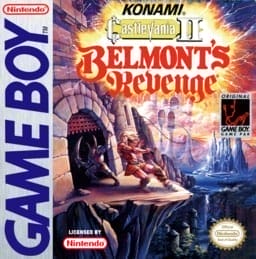
Castlevania II: Belmont's Revenge
Castlevania II: Belmont's Revenge is a 1991 platform game developed and published by Konami for the Game Boy. It is the second Castlevania title for the Game Boy and serves as a sequel to Castlevania: The Adventure. Belmont's Revenge is included in color in the European Konami GB Collection Vol.4 compilation. Set fifteen years after the events of Castlevania: The Adventure, Dracula returns and kidnaps Christopher Belmont's son Soleil at his coming of age feast, and turns him into a demon. With Soleil's mystical powers, Dracula retakes human form and rebuilds his castle, forcing Christopher to confront Dracula once again to save his son and Transylvania. Unlike the previous Game Boy title, sub-weapons in the form of holy water and axes (or the cross in the Japanese version) are available in the game. There are four initial levels, each taking place in a separate castle with a unique theme such as air, plant, earth, and crystal, and can be completed in any order, similar to Mega Man.
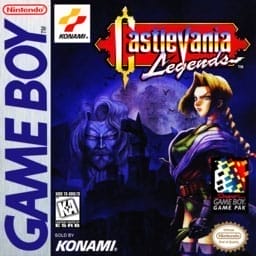
Castlevania Legends
Castlevania Legends is a 1997 action-platform game developed and released by Konami for the Game Boy. The third Castlevania game released for the system, the story follows Sonia Belmont, a vampire hunter battling the first incarnation of Count Dracula. The game was conceived as a prequel to all other games in the Castlevania series; however, it later became recognized as non-canon. Castlevania Legends was released in Japan on November 27, 1997 and in Europe and North America on March 11, 1998. The game received mixed to negative reviews, with criticism directed towards its lack of difficulty, short length, technical issues, and unoriginality. The game received its first official re-release on the Nintendo Classics service on October 31, 2023. Castlevania Legends is a side-scrollingplatformer where the protagonist, Sonia Belmont, armed with a whip, charges through five stages of Count Dracula's castle, filled with various enemies and candles containing items.
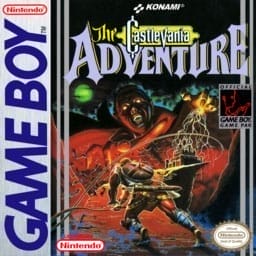
Castlevania: The Adventure
Castlevania: The Adventure is a 1989 platform game developed and published by Konami for the Game Boy. The game is the first in the Castlevania series to be released on a handheld game console. The game was re-released as part of the Konami GB Collection Vol.1 compilation in Japan and Europe, the latter version of which added color support. A remake titled Castlevania: The Adventure ReBirth was released as a WiiWare game for the Wii. The original game is included in the Castlevania Anniversary Collection, which was released in 2019.
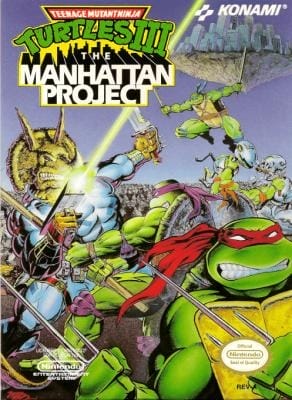
Teenage Mutant Ninja Turtles III: The Manhattan Project
Teenage Mutant Ninja Turtles III: The Manhattan Project is a 1991 beat 'em up game developed and published by Konami for the Family Computer (Famicom) in Japan and for the Nintendo Entertainment System in North America in 1992. It is the third video game iteration of the Teenage Mutant Ninja Turtles for the NES. The game features play mechanics similar to the previous game, _Teenage Mutant Ninja Turtles II: The Arcade Game#Nintendo\_Entertainment\System "Teenage Mutant Ninja Turtles (arcade game)"), but it is an original title for the NES without any preceding arcade version. It is based on the 1987 Teenage Mutant Ninja Turtles "Teenage Mutant Ninja Turtles (1987 TV series)") animated series, being released after the show's 5th season. The game was re-released as part of Teenage Mutant Ninja Turtles: The Cowabunga Collection in 2022. The game begins with the Turtles spending their vacation in Key West, Florida.
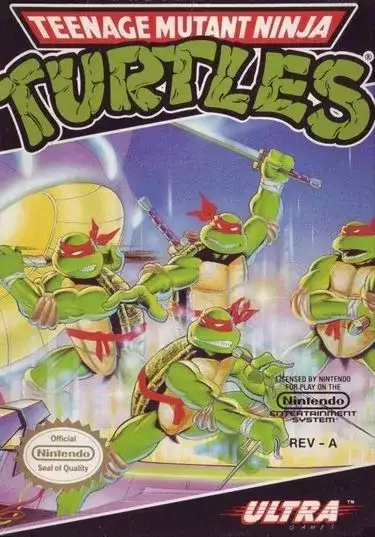
Teenage Mutant Ninja Turtles
Teenage Mutant Ninja Turtles is a 2003 beat 'em up game developed and published by Konami, based on the 2003 Teenage Mutant Ninja Turtles TV series "Teenage Mutant Ninja Turtles (2003 TV series)"). It loosely adapts the events of the show's first season. The game is the first Teenage Mutant Ninja Turtles video game to be developed by Konami in a roughly decade, following the release of Teenage Mutant Ninja Turtles: Tournament Fighters (1993). It was released for GameCube, PlayStation 2, Xbox and Windows in late 2003 in North America, followed by a European release the following April. A demo was also available via a special edition bonus disc packaged with Mario Kart: Double Dash (2003) in North America.#cite_note-2)#cite_note-3) The game received two sequels: Teenage Mutant Ninja Turtles 2: Battle Nexus in 2004, and Teenage Mutant Ninja Turtles 3: Mutant Nightmare in 2005. The player can play as either Leonardo, Donatello, Michelangelo or Raphael.
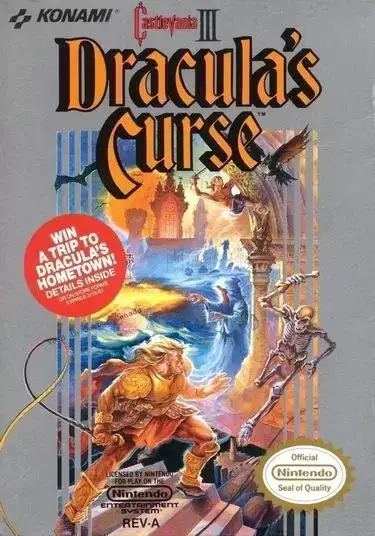
Castlevania III: Dracula's Curse
Castlevania III: Dracula's Curse is a 1989 platform game developed and published by Konami for the Nintendo Entertainment System. It was released on December 22, 1989, in Japan, September 19, 1990, in North America and in May 1992 in PAL regions by Konami's Palcom publishing label. Despite being the third numbered installment in the Castlevania series, Castlevania III: Dracula's Curse is a prequel to the original Castlevania (1986), being set a few centuries before its events. The game's protagonist is Trevor Belmont, an ancestor of Simon Belmont, who is called into action to vanquish the forces of Dracula. Relinquishing the role-playing and action-adventure elements from Castlevania II: Simon's Quest, the game returns to the action-platforming gameplay of the original Castlevania but also introduces new concepts to the formula such as branching level paths and multiple playable characters. Castlevania III received positive critical reception.
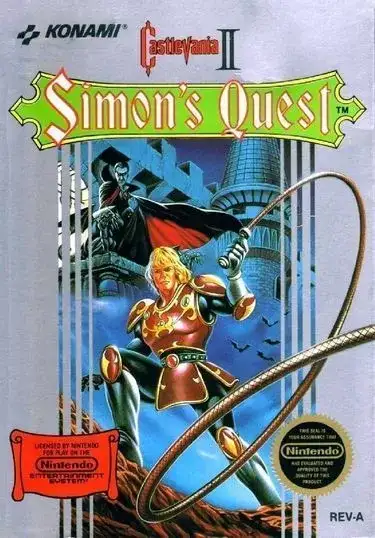
Castlevania II: Simon's Quest
Castlevania II: Simon's Quest is a 1987 action role-playing game developed and published by Konami. It was originally released in Japan in 1987 for the Famicom Disk System, and in North America in 1988 for the Nintendo Entertainment System. It is the second Castlevania game released for the NES, following the original Castlevania (1986). Set seven years after the events of the first installment, the player once again assumes the role of vampire hunter Simon Belmont, who is on a journey to undo a curse placed on him by Dracula at the end of their previous encounter. Dracula's body was split into five parts, which Simon must find and bring to the ruins of Castle Dracula in order to defeat him. The game deviates from the traditional platforming of its predecessor, incorporating role-playing and open world elements.
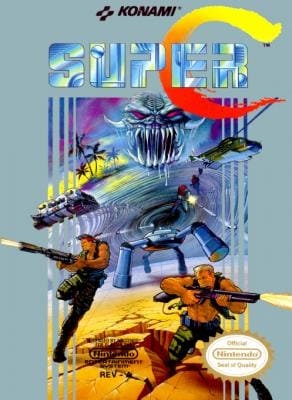
Super C
Super Contra, known as Super Contra: The Alien Strikes Back#cite_note-5) in Japan, is a 1988 run and gun game developed and published by Konami for arcades. It is the sequel to the original Contra and part of the Contra series "Contra (series)"). The game stars Bill Rizer and Lance Bean as they are sent to thwart another alien invasion from the vicious Red Falcon. It was ported to the Nintendo Entertainment System under the shortened title of Super C in North America and as Probotector II: Return of the Evil Forces in Europe. Both the arcade version and the NES version have been re-released for various other platforms since their original releases. A year after the battle with the Red Falcon Organization,#cite_note-6) Bill and Lance are sent on another mission. This time, the alien forces have taken over an allied military base, possessing most of its troops.
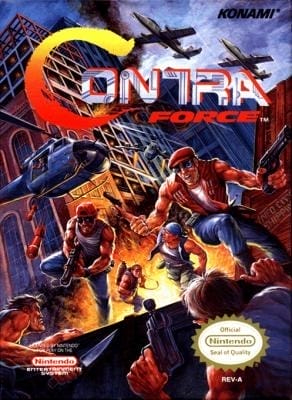
Contra Force
Contra Force is a 1992 run and gun game developed and published by Konami for the Nintendo Entertainment System in North America. It is a spinoff of the Contra series, being the third game in the series released for the NES following the original Contra and Super Contra. However, the game's plot and setting are unrelated to both previous and succeeding entries, as the villains in the game are human terrorists instead of an alien menace. The game was scheduled to be released in Japan under the title of Arc Hound (アークハウンド, Āku Haundo), with no ties to the Contra series, but was cancelled.
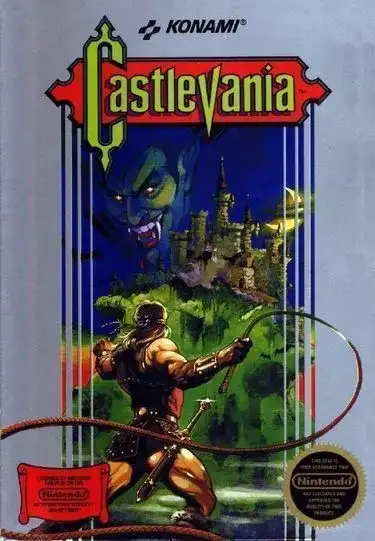
Castlevania
Castlevania, known in Japan as Akumajō Dracula,#cite_note-10)#cite_note-11) is a 1986 platform game developed and published by Konami. It was originally released in Japan for the Famicom Disk System in September 1986,#cite_note-''Famitsu''_staff-1986-12) before being ported to cartridge format and released in North America for the Nintendo Entertainment System (NES) in 1987 and in Europe in 1988. It was also re-issued for the Family Computer in cartridge format in 1993. It is the first installment in the Castlevania series. Players control Simon Belmont, descendant of a legendary vampire hunter, who enters the castle of Count Dracula to destroy him when he suddenly reappears 100 years after Simon's ancestor vanquished him.#cite_note-21)Castlevania was developed in tandem with the MSX2 game Vampire Killer, which was released a month later and uses the same characters and setting, but features different gameplay mechanics.
Browse our collection of 43 Konami retro games, all playable instantly in your browser. No download required. Play classic games online in your browser and save your progress anytime.