Hudson Soft
13 games — Hudson Soft
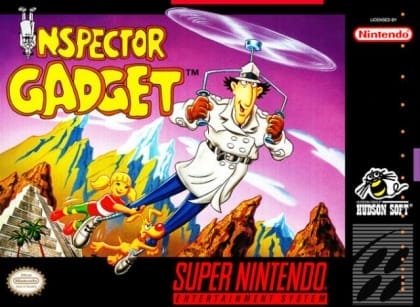
Inspector Gadget
Inspector Gadget is a 1993 side-scrollingaction video game for the Super Nintendo Entertainment System based on the television show of the same title "Inspector Gadget (1983 TV series)"). The game was released by Hudson Soft, with developers who also worked on Hudson's video game adaptations SWAT Kats: The Radical Squadron "SWAT Kats: The Radical Squadron (video game)") and An American Tail: Fievel Goes West "An American Tail: Fievel Goes West (video game)"). The normally bumbling Gadget is portrayed as fairly competent as he must rescue his niece Penny from the clutches of Dr. Claw and his M.A.D. terrorist organization. Dr. Claw's face makes a rare appearance in the game, unlike the cartoon, which keeps his face hidden.#cite_note-1) The player controls Inspector Gadget as he travels around the world to rescue his niece Penny, who has been kidnapped by the terrorist organization M.A.D. and its leader Dr. Claw.
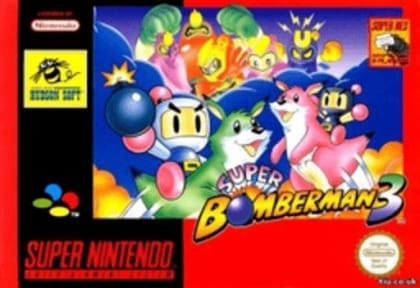
Super Bomberman 3
Super Bomberman 3 is a game released for the Super Nintendo Entertainment System in 1995. It is the third installment in the Super Bomberman series, and the third Bomberman game to be released for the system. Up to five players can play at the same time. The game was released in Japan and the PAL region, but not in North America due to the closure of Hudson Soft USA.
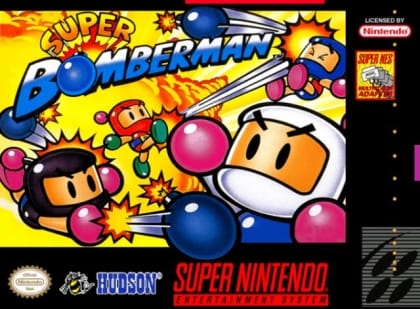
Super Bomberman
Super Bomberman is a 1993 action maze video game developed by Produce! and published by Hudson Soft for the Super Nintendo Entertainment System. Part of the Bomberman series, it is the first game in the series to retain the Bomberman title in Europe, instead of being renamed to Dynablaster or Eric and the Floaters. Super Bomberman spawned the Super Bomberman sub-series, of which seven more entries have been released: Super Bomberman 2 (1994), Super Bomberman 3 (1995), Super Bomberman 4 (1996), Super Bomberman 5 (1997), Super Bomberman R (2017), Super Bomberman R Online (2017), and Super Bomberman R 2 (2023). The game was re-released in 2026 as part of the Super Bomberman Collection compilation.
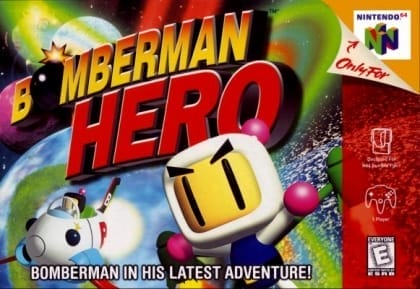
Bomberman Hero
Bomberman Hero is a platform video game developed by A.I Co., Ltd. and published by Hudson Soft for the Nintendo 64. It is the second Bomberman game to be released on the system, following Bomberman 64 (1997). It is notable for being a dramatic deviation from previous Bomberman titles, featuring predominant platforming gameplay as opposed to the series' traditional top-down strategy gameplay. Bomberman Hero received mixed reviews from critics, who criticized it for its graphics and absence of a multiplayer mode, though elements of its gameplay were praised. It was re-released through the Wii Virtual Console service in 2011.
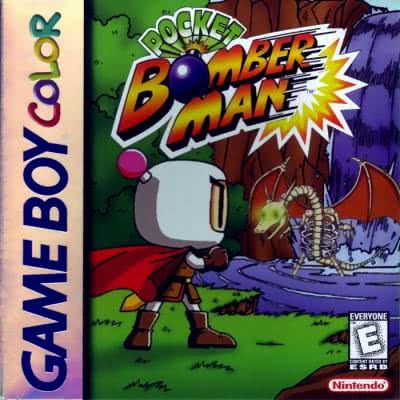
Pocket Bomberman
In contrast to the overhead view of other Bomberman titles, Pocket Bomberman features sidescrolling platformer gameplay. Like other Bomberman games, Bomberman must defeat all enemies in each stage to advance. The game features a total of 5 worlds spanning 25 levels. Each world follows a different theme, including forest, underwater, cloudtops and a dark underworld. At the end of each world is a boss fight. There is one mini game called Jump Mode in which players must guide Bomberman through an Easy, Medium, or Hard course. Bomberman will constantly jump and the player can only place bombs in this mode.
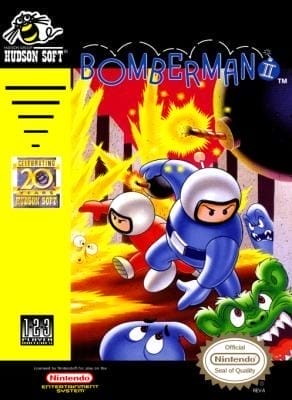
Bomberman II
Bomberman II, released in Europe and Australia as Dynablaster, is a maze video game developed and published by Hudson Soft for the Nintendo Entertainment System originally in Japan and Europe in 1991 and later in North America in February 1993. The Japanese version was re-released in 2026 as part of the Super Bomberman Collection compilation.
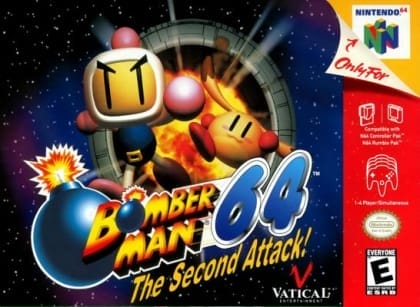
Bomberman 64: The Second Attack!
Bomberman 64: The Second Attack! is a 1999 action video game, the sequel to 1997's Bomberman 64.
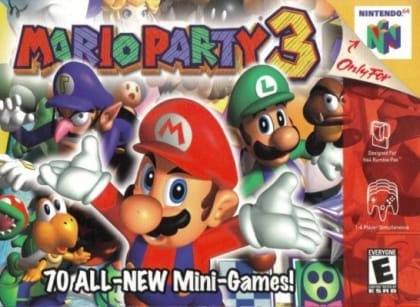
Mario Party 3
Mario Party 3 is a 2000 party video game developed by Hudson Soft and published by Nintendo for the Nintendo 64. The third installment in the Mario Party series, it was first released in Japan on December 7, 2000, in North America on May 7, 2001, in Australia on September 3, 2001, and in Europe on November 16, 2001. As with the previous installments, the player chooses between eight playable characters: Mario, Luigi, Princess Peach, Yoshi, Wario, and Donkey Kong "Donkey Kong (character)") from the first two games, alongside newcomers Princess Daisy and Waluigi. The game introduces duel maps, where two players try to lower each other's stamina to zero using non-player characters such as Chain Chomps. Mario Party 3 received generally mixed reviews, with critics divided on its new minigames and gameplay features, and whether it was a meaningful improvement over its predecessors.
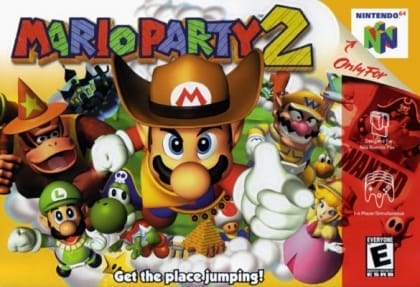
Mario Party 2
Mario Party 2 is a 1999 party video game developed by Hudson Soft and published by Nintendo for the Nintendo 64. The second game in the Mario Party series, it was released in Japan on December 17, 1999, North America on January 24, 2000, and in PAL regions on October 13, 2000. The game received mostly positive reviews from critics, who praised the improvements over the original, as well as the multiplayer and minigames, but criticized the lack of originality, while graphics received a mixed to positive response. Mario Party 2 features six playable characters: Mario, Luigi, Princess Peach, Yoshi, Wario, and Donkey Kong "Donkey Kong (character)") from the Mario series "Mario (franchise)") and the original Mario Party "Mario Party (video game)"), who can be directed as characters on various themed game boards. The objective is to earn the most stars of all players on the board; stars are obtained by purchase from a single predefined space on the game board.
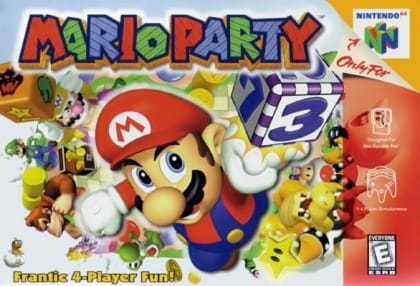
Mario Party
Mario Party is a 1998 party video game developed by Hudson Soft and published by Nintendo for the Nintendo 64. The game was targeted at a young audience. Mario creator Shigeru Miyamoto served as development supervisor. The game was released in Japan on December 18, 1998, North America on February 8, 1999, and in PAL regions on March 9, 1999. It received mostly positive critical reviews for its multiplayer mode, concept, and music; disapproval of its slow pacing; and mixed reviews of its graphics. It is the first installment in the Mario Party series and was followed by Mario Party 2 in 1999. The game received its first official re-release on the Nintendo Classics service in 2022. Content from this game was remastered as part of Mario Party: The Top 100 for the Nintendo 3DS, Mario Party Superstars and Super Mario Party Jamboree for the Nintendo Switch.
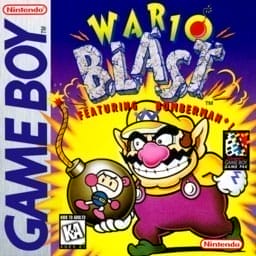
Wario Blast featuring Bomberman!
Bomberman GB is a sub-series of video games in Hudson Soft's Bomberman series released for the Game Boy. The first entry was Bomberman GB, released as Wario Blast: Featuring Bomberman! in North America and Europe, later succeeded by Bomberman GB 2, under the name Bomberman GB internationally, and Bomberman GB 3, which was only released in Japan.
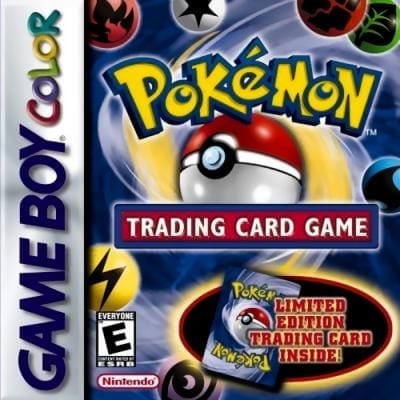
Pokémon Trading Card Game
The Pokémon Trading Card Game is a strategy-based card game that is usually played on a designated playmat or digitally on an official game client (usually Pokémon Trading Card Game Live) where two players (assuming the role of Pokémon Trainer) use their Pokémon to battle one another. Pokémon that have sustained enough damage from attacks–that reaches or exceeds its HP–is referred to as being "Knocked Out", granting the opponent a prize card; however, powerful card mechanics like Pokémon-V and Pokémon ex (which have higher HP and are harder to "Knock Out") grant extra prize cards when Knocked Out. Taking all six prize cards is the most common win condition. Other ways to win are by "Knocking Out" or by removing all opponent's Pokémon in play–the Active and those on the Bench (i.e.
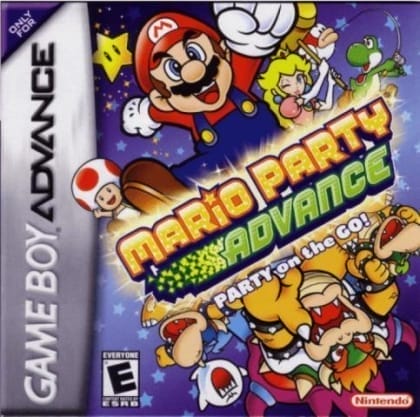
Mario Party Advance
Mario Party Advance is a 2005 party video game developed by Hudson Soft and published by Nintendo for the Game Boy Advance. It is the first handheld game in the Mario Party series and the seventh entry in the series overall. The game was released in Japan on January 13, 2005, North America on March 28, 2005, Europe on June 10, 2005, and Australia on September 15, 2005. The game was re-released on the Virtual Console for the Wii U in 2014. Mario Party Advance differs from other titles in the Mario Party series in its focus on one single-player mode rather than several multiplayer modes. However, traditional Mario Party gameplay is present in players choosing a character from the Mario franchise, moving around an interactive game board, and playing a variety of minigames. Upon release, the game received mixed reviews from critics, many of whom panned its single-player focus.
Browse our collection of 13 Hudson Soft retro games, all playable instantly in your browser. No download required. Play classic games online in your browser and save your progress anytime.