HAL Laboratory
14 games — HAL Laboratory
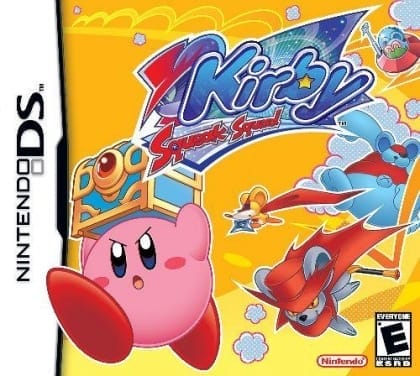
Kirby: Squeak Squad
Kirby: Squeak Squad is a 2006 platform game developed by HAL Laboratory and Flagship and published by Nintendo for the Nintendo DS. It is one of the mainline installment entries of the Kirby series and the second Kirby game released for the system. The game was released in Japan and North America in 2006 and in Europe, Australia, and South Korea in 2007. The game was later re-released for the Wii U's Virtual Console on June 25, 2015.
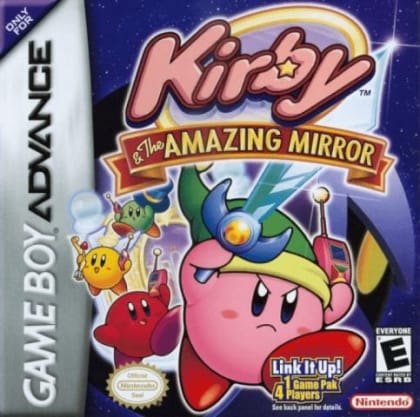
Kirby & the Amazing Mirror
Kirby & The Amazing Mirror is a 2004 platform game developed by HAL Laboratory, Flagship and Dimps and published by Nintendo for the Game Boy Advance. The seventh mainline Kirby entry, the game is notable for its unique Metroidvania playstyle and being the first in the series to support cooperative four-player multiplayer, and follows Kirby as he goes on a journey through the Mirror Dimension to reassemble a mirror after Dark Meta Knight traps Meta Knight inside it. Unlike the other Kirby games, Kirby & The Amazing Mirror features a nonlinear design, and is traversed in a Metroidvania style. The Mirror World is divided into nine themed areas. The player begins in an over-world with doors that connect to a few other areas. From there the game map branches out in several directions and, providing Kirby has the proper power at his disposal, he is able to go anywhere in almost any order, excluding the final sequence.
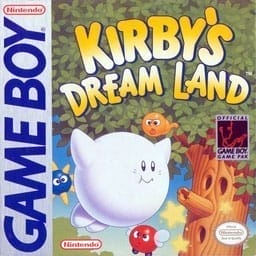
Kirby's Dream Land
Kirby's Dream Land is a 1992 platform game developed by HAL Laboratory and published by Nintendo for the Game Boy. It is the first game in the Kirby series and marks the debut of Kirby. It introduced many conventions that would appear in later games in the series. The game follows Kirby as he goes through five levels to retrieve the Sparkling Stars and food of Dream Land from King Dedede. Kirby's Dream Land was the debut game of designer Masahiro Sakurai. He intended it to be a simple game that could be easy to pick up and play by those unfamiliar with action games. For more advanced players, he offered additional optional challenges such as a hard mode and the ability to edit Kirby's maximum HP and starting number of lives. Kirby's Dream Land was re-released on the Nintendo 3DS via the Virtual Console in 2011; it is also one of the games included in the compilation game Kirby's Dream Collection for the Wii, released to celebrate the series' 20th anniversary.
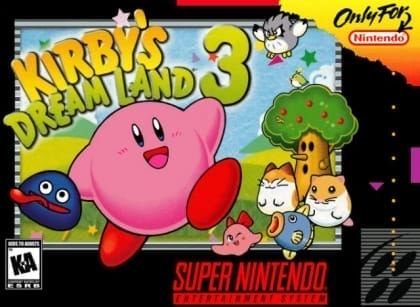
Kirby's Dream Land 3
Kirby's Dream Land 3 is a 1997 platform game developed by HAL Laboratory and published by Nintendo for the Super Nintendo Entertainment System. Starring Kirby, it is the fifth installment in the Kirby series "Kirby (series)") and the third game under the Kirby's Dream Land name. Although the first game was largely unrelated, Dream Land 3 features many similar characters to Dream Land 2. Dream Land 3 was followed by Kirby 64: The Crystal Shards in 2000. Kirby's Dream Land 3 was the last SNES game published by Nintendo in North America. Problems with the game's PAL conversion prevented it from being released in Europe and Australia for many years; it was eventually released for the Virtual Console in those regions in the form of an import from North America on July 24, 2009, for the Wii and on July 25, 2013, for the Wii U.
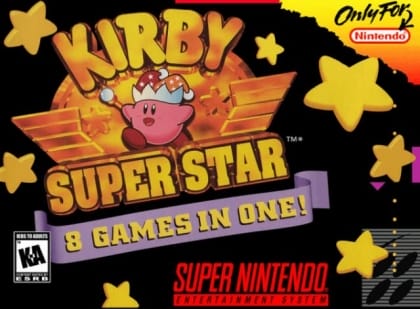
Kirby Super Star
Kirby Super Star, released as Kirby's Fun Pak in PAL regions, is a 1996 anthologyplatform game developed by HAL Laboratory and published by Nintendo for the Super Nintendo Entertainment System. It is part of the Kirby series of video games by HAL Laboratory. The game was advertised as a compilation featuring eight games: seven short subsections with the same basic gameplay, and two minigames. An enhanced remake titled Kirby Super Star Ultra was released for the Nintendo DS in 2008 and 2009 to commercial and critical success, selling just under 3 million copies. The original game has also been digitally rereleased multiple times. Kirby Super Star is a side-scrollingplatform game. Similar to previous entries in the Kirby series, the player controls the titular character Kirby to complete various levels "Level (video games)") while avoiding obstacles and enemies. Kirby can walk or run, jump, swim, crouch, slide, and inhale enemies or objects to spit them out as bullets.
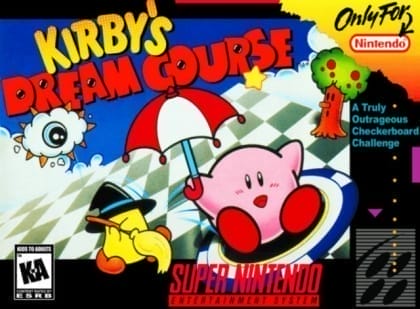
Kirby's Dream Course
Kirby's Dream Course is a 1994 miniature golf video game developed by HAL Laboratory and Nintendo EAD and published by Nintendo for the Super Nintendo Entertainment System (SNES). A spin-off of the Kirby series and the first released for the SNES, players control the pink spherical character Kirby through a series of courses by launching him towards the goal hole at the end. Kirby can hit enemies to collect power-ups that grant him unique abilities, such as those that allow him to destroy certain obstacles or fly around the level. HAL Laboratory originally designed Dream Course as a standalone game called Special Tee Shot. Though it was previewed in several magazines and displayed on the packaging for the console, HAL replaced the game's original characters with those from the Kirby series following its popularity on the Game Boy. Special Tee Shot was later released for the Satellaview peripheral in Japan.
Kirby's Dream Land 2
Kirby's Dream Land 2 is a 1995 platform game developed by HAL Laboratory and published by Nintendo for the Game Boyhandheld video game console. It was released in Japan on March 21, 1995, in North America on May 1, 1995, in Europe on July 31, 1995, and in Australia on November 22, 1995. Kirby's Dream Land 2 continues the adventures of Kirby from Kirby's Dream Land and Kirby's Adventure, adding three animal friends to aid Kirby in battle. It can be played on the Super Game Boy, and gives slight changes to the game, such as adding a custom color scheme, a special game border, and a few new sound effects. The game was re-released on the 3DS'sVirtual Console in Japan on February 15, 2012, in PAL regions on May 17, 2012, and in North America on August 1, 2013. Kirby's Dream Land 2 is also included in Kirby's Dream Collection for the Wii. The plot follows Kirby, a resident of Dream Land.
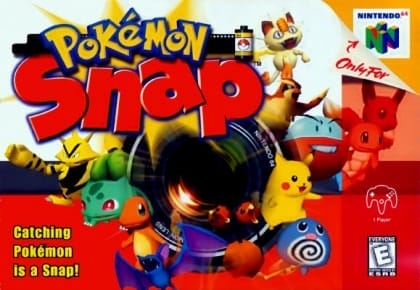
Pokémon Snap
Pokémon Snap is a 1999 photographyvideo game developed by HAL Laboratory and published by Nintendo for the Nintendo 64. It was first released in Japan in March 1999 and was later released in July 1999 in North America and in September 2000 for PAL regions. It is a spin-off "Spin-off (media)") game in the Pokémon "Pokémon (video game series)") series, being one of the first console-based games for it, and featuring many Pokémon rendered for the first time in real-time 3D. The game was re-released for the Wii's Virtual Console in December 2007, for the Wii U's Virtual Console in 2016, and for the Nintendo Classics service in June 2022. Originally announced as a Nintendo 64DD title, the development of Pokémon Snap was moved to the Nintendo 64 due to the 64DD's delays. The gameplay is similar to other first-person games, viewing from the perspective of protagonist Todd Snap as he moves automatically on a rail.
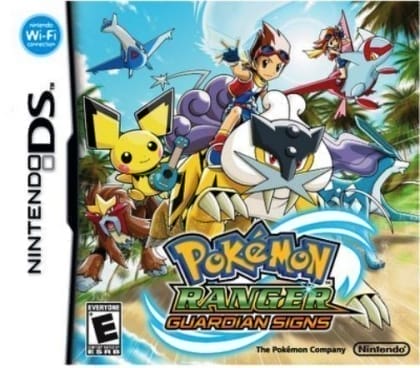
Pokémon Ranger: Guardian Signs
Pokémon Ranger: Guardian Signs (ポケモンレンジャー 光の軌跡, Pokemon Renjā Hikari no Kiseki; lit. "Pokémon Ranger: Tracks of Light") is an action role-playingvideo game developed by Creatures Inc. and published by The Pokémon Company in Japan and by Nintendo worldwide for the Nintendo DS. It is the sequel to Pokémon Ranger and Pokémon Ranger: Shadows of Almia, and the third installment in the Pokémon Ranger series. It was released in Japan on March 6, 2010, in North America on October 4, 2010, and in Europe on November 5, 2010, and was later released on the European Wii U Virtual Console on June 9, 2016. Gameplay revolves around capturing Pokémon with the Capture Styler by drawing circles around them. The game received mixed or average reviews, holding a score of 68 on Metacritic and 69% on GameRankings.
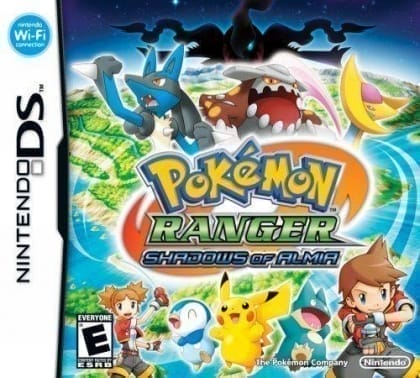
Pokémon Ranger: Shadows of Almia
Pokémon Ranger: Shadows of Almia (ポケモンレンジャー バトナージ, Pokemon Renjā Batonāji; lit. "Pokémon Ranger: Vatonage") is an action role-playing video game developed by Creatures Inc. and published by The Pokémon Company and Nintendo for the Nintendo DS video game console. It was announced in the January 2008 issue of CoroCoro and was released in Japan on March 20, 2008. It was announced at E3 2008 that the game would be released in the United States under the title Shadows of Almia on November 10, 2008. It was announced on September 25 that the game would be released in Europe under the title Shadows of Almia on November 21, 2008. It was released on the European Wii U Virtual Console on June 9, 2016, and was released on the North American Wii U Virtual Console on August 4, 2016. The game features 270 Pokémon, including new Pokémon which were not featured in the original Pokémon Ranger, from Pokémon Diamond and Pearl. The game utilized the Nintendo Wi-Fi Connection to download new missions.
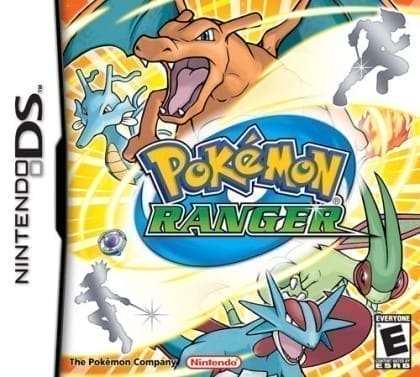
Pokémon Ranger
This game is a spin-off of the mainline series set in the Fiore region, featuring a new gameplay format and storyline. The battle system and capturing mechanics are different. Rather than conquering Pokémon Gyms, the Elite Four, and Champion, the player completes missions to advance the plot. It is compatible with Pokémon Diamond and Pearl, HeartGold and SoulSilver, and Platinum, allowing players to transfer the mythical PokémonManaphy’s egg to those games. Upon release, Pokémon Ranger received mixed reviews. It was praised for its lengthy mission-based plot but received various criticisms, such as for its use of player-produced sound as a game mechanic.
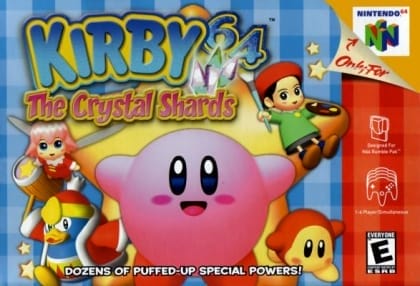
Kirby 64: The Crystal Shards
Kirby 64: The Crystal Shards is a 2000 platform game developed by HAL Laboratory and published by Nintendo for the Nintendo 64 (N64). It is the first Kirby game to feature 3D computer graphics and follows Kirby as he attempts to reassemble a sacred crystal shattered by Dark Matter "Dark Matter (Kirby)"). Gameplay is viewed from a 2.5D perspective and is similar to previous Kirby titles; the player traverses levels "Level (video gaming)") and obtains powers by eating enemies. Kirby 64 introduces Power Combos, the ability to mix powers to create more powerful ones. In a multiplayer mode, up to four players can compete in three minigames. Development began in September 1997. The game was intended for the N64's 64DDadd-on, but became a standard N64 title after the add-on failed. HAL initially planned to use the N64 controller's analog stick for Kirby 64, but switched to the D-pad about a year before release.
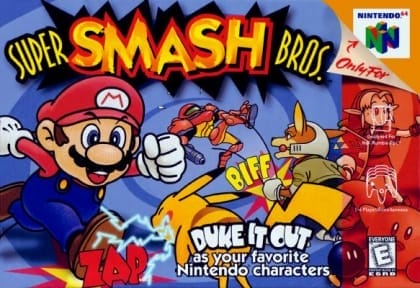
Super Smash Bros
Super Smash Bros.#cite_note-3) is a 1999 crossoverfighting game developed by HAL Laboratory and published by Nintendo for the Nintendo 64. It is the first game in the Super Smash Bros. series and was released in Japan on January 21, 1999; in North America on April 26, 1999;#cite_note-IGNrels-1)#cite_note-GSrel-2) and in Europe on November 19, 1999. It was later released for the iQue Player in China on November 15, 2005. The game is a crossover between different Nintendo franchises, including Mario, The Legend of Zelda, Star Fox, Yoshi, Donkey Kong, Metroid, F-Zero, Mother, Kirby and Pokémon "Pokémon (video game series)"). It presents a cast of characters and locations from these franchises and allows players to use each character's unique skills and the stage's hazards to inflict damage, recover health, and ultimately knock opponents off the stage. Super Smash Bros. received generally positive reviews upon its release.
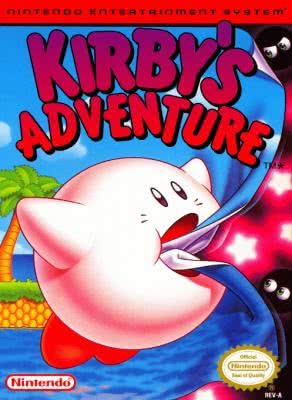
Kirby's Adventure
Kirby's Adventure is a 1993 platform game developed by HAL Laboratory and published by Nintendo for the Nintendo Entertainment System (NES). It is the second game in the Kirby series after Kirby's Dream Land (1992) on the Game Boy and the first to include the Copy Ability, which allows the main character Kirby to gain new powers by eating certain enemies. The game centers around Kirby traveling across Dream Land to repair the Star Rod after King Dedede breaks it apart and gives the pieces to his minions. Masahiro Sakurai returned as director after serving the same role for Kirby's Dream Land. He conceived the copy ability to add more challenge and replay value after the last game received criticism for its simplicity. Because the NES hardware had greater graphical power than the Game Boy and programmers were skilled with the now antiquated hardware, HAL Laboratory was able to create impressive visuals. Kirby's Adventure is the first game to depict Kirby in color.
Browse our collection of 14 HAL Laboratory retro games, all playable instantly in your browser. No download required. Play classic games online in your browser and save your progress anytime.